@snstv_yungunc “Is someone who supports Israel really saying this to me? If it bothers you so much, then you should also be bothered by what’s being done in Gaza. You don’t get to condemn violence selectively and then pretend you stand for justice.
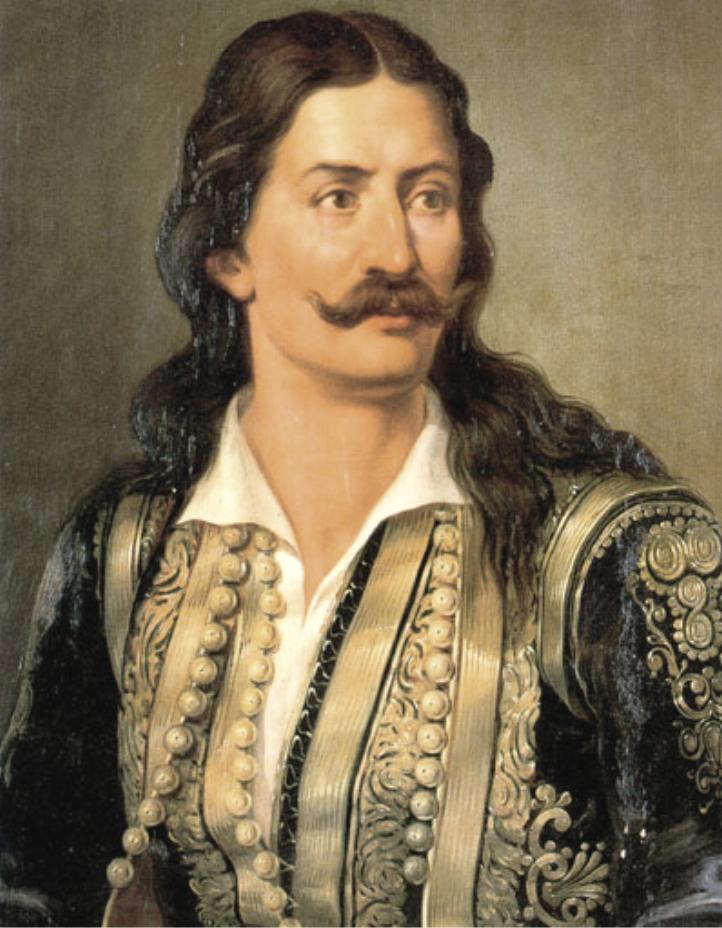
Durin the Ottoman period, the Muslim Turks, in order to terrorize the Greeks, impaled and roasted alive Athanasios Diakos. But, they gave him a chance: "Will you become a Turk, Diakos? Will you change your faith? Will you pray in the mosque and abandon the church?"
He replied to them: "Go away, you and your faith, may you perish, you heathens! I was born a Greek, and as a Greek I shall die."
According to eyewitness accounts of the time, two Turks kindled a fire beside the stable and set an iron grate over it, with a large copper cauldron of oil above the flames. They then lifted Diakos, still bound, and seated him on an old wooden stool. His legs were raised. The Turks began to mock him and put questions to him. At every negative nod they drove nails into his feet. Afterward they took the boiling oil and poured it first over his bare feet.
Seeing that he gave no reaction, they tore his clothing and began pouring the oil over his back and chest. He groaned quietly under the pain. The soldiers, ordered not to kill him, used needles to burst the blisters that the boiling oil raised on his skin. This went on for hours, until the following morning.
Exhausted, he was dragged through the town to be put to death. The execution was carried out in public view, by leave of Halil Bey, so that the Greeks would be warned of the fate awaiting anyone who dared to rise in revolt. Diakos’s mother was present at his torture.
After he had been tied backward onto a saddle with his legs forced apart, the executioner began pressing the sharpened point of a wooden stake into his groin and then drove it slowly deeper, through the length of his body, until it emerged near his right ear. The executioner worked with care, under orders not to kill him quickly; with every thrust of the stake, Diakos’s cries showed that he was still alive.
When the executioner had finished, the Turks bound the body tightly to the stake so the skin would not tear, and propped him nearly upright against a tree.
As he was dying, he is said to have spoken these sorrowful lines: "Look at the hour Death has chosen to take me, now, when the branches are in blossom and the earth brings forth grass."
(Sources: Spyridon Trikoupis "History of the Greek Revolution", Aristotelis Valaoritis "Athanasios Diakos" 1867, Georg Gottfried Gervinus "History of the Revolution and Rebirth of Greece", Songs of the Greek People 1821)
Halil Bey ordered a fire to be lit beneath him and the body turned slowly, so that he would be roasted alive like an animal.
After many hours of torment, the Greek chieftain died on April 24, 1821.
When the Greeks learned of his story and his martyrdom, they were filled with even greater rage and strength to liberate themselves from the barbarous Muslims and Islam.
Athanasios Diakos is one of the most important heroes in the Greek history.
If you want to support me in the effort I’m making, please consider becoming a subscriber to my X account for only $2. I write about the ancient, medieval, and modern history of Greece and what Christians went through in Asia Minor, Greece, and Cyprus because of Islam. Thank you very much to those of you who support me and read me.
- Homer Pavlos
Ellerinde k**rdistan paçavrası ağızlarında k**rdistan naraları bakın bunlar bu ülkede Türkiye Cumhuriyeti sınırları içinde yaşanıyor yer diyarbakır - malabadi köprüsü .
Ah ces Turcs… Ils n ont apparemment jamais connu le moindre succès dans leur vie leur économie est mauvaise alors ils font des choses pour se motiver en marchant leur pantalon tombe peut être qu ils nont même jamais mangé de viande de toute leur vie 😂