Azerbaijani tea is not just a beverage; it’s an integral part of the country’s culture and daily life. Grown in the fertile lands along the Caspian Sea, particularly in the Lankaran and Astara regions, Azerbaijani tea has a rich history. However, the story of tea in Azerbaijan became more complicated under the rule of the Soviet Union. While the Soviets made large investments to increase tea production, they also heavily interfered with Azerbaijan’s traditional farming practices and culture.
The roots of Azerbaijani tea production were planted in the 1880s. In 1912, a farmer named M.O. Novoselov succeeded in cultivating tea, which led to the rapid expansion of Azerbaijan’s tea industry. However, after Azerbaijan fell under Soviet control, the growth of tea production was subjected to centralized Soviet planning. While tea production did increase, this growth came at the expense of local autonomy. The traditional farming methods and culture of the people were pushed aside as the Soviets took over control of the land.
The Soviet era may have brought tea production to its peak, but it also represented a period of loss for the Azerbaijani people. Tea, which could have been a source of local pride and cultural expression, was instead used primarily for economic gain by the Soviet authorities. Despite the economic benefits, the real cost was the suppression of local agricultural traditions and the loss of freedom over the land.
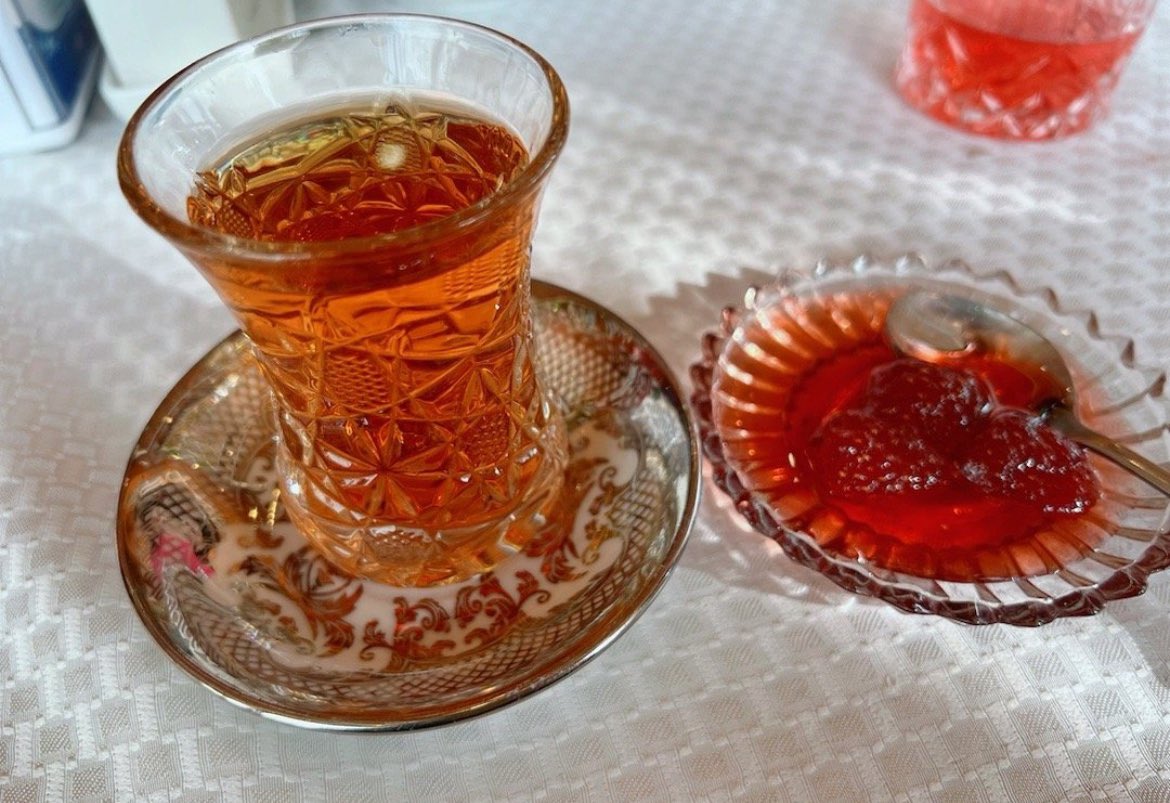
Tea in Azerbaijan is not just about the drink itself; it’s about tradition, hospitality, and building social bonds. Tea is often served to guests, and it’s common to find jam, lemon, and sometimes sugar accompanying the tea. The ritual of drinking tea reflects the warmth and generosity of Azerbaijani hospitality. Alongside tea, traditional sweets such as dried fruits, cookies, or sometimes “pakhlava” are served, further enhancing the experience.
Although tea production is currently limited, Azerbaijani tea still holds a special place in the country’s culture. It symbolizes the social ties within families, among friends, and even in business settings. In recent years, the Azerbaijani government has begun efforts to revitalize the tea industry, bringing this cultural treasure to international recognition once again. Tea, more than just a drink, serves as a reminder of Azerbaijan’s past, resilience, and its connection to the future. Today, Azerbaijani tea is not only appreciated for its taste but also for the cultural legacy it carries.