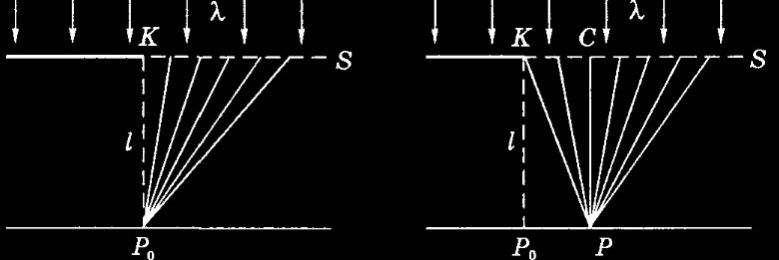
Einstein's relativity predicts superluminal contraction of the measured length of objects in certain cases, which contradicts experimental data & the speed of light limit:https://t.co/L6xiOv7Nuo
If the prediction is wrong, then the theory is wrong.
Details:https://t.co/4uMYAQr9tA
@skdh Probabilities are merely consequences of conducting a series of experiments with different initial and external conditions at the quantum level. Quantum mechanics is a consequence of the lie that a series of identical experiments are being conducted.
@martinmbauer It's true that science is based on experimental data. Therefore, it is precisely experimental data that proves that in a series of quantum mechanics experiments, we conduct different experiments at the quantum level.
@martinmbauer True. This statement is not based on exp data. Just like the statement that probabilities are the result of conducting a series of identical experiments at the quantum level. We know very well that in all experiments atoms and other particles are not in an identical state.
@skdh Quantum mechanics is a misinterpretation of what's happening. Do you really believe a series of identical experiments are being conducted at the quantum level?
Indeed, quantum mechanics is based on the lie that a series of identical experiments are carried out at the quantum level.
According to experts, atoms, electrons, and other particles are in identical states in each specific experiment...))
Alas, if quantum mechanics is not fundamental -- which I don't think it is -- then the speed of light limit also is not fundamental. I wish there was more research on this.
@skdh Indeed, quantum mechanics is based on the lie that a series of identical experiments are carried out at the quantum level.
According to experts, atoms, electrons, and other particles are in identical states in each specific experiment...))
Science is about experimental data. There's nothing experimentally suggesting the possibility of moving an object from one point in space to another faster than the speed of light. Wormholes and hyperdrives are pure fantasy, unrelated to experimental data.
I am optimistic that we will one day make contact to extraterrestrials because I don't think that the speed of light is a fundamental limit. Here I explain why and I have a brief summary below.
@skdh Science is about experimental data. There's nothing experimentally suggesting the possibility of moving an object from one point in space to another faster than the speed of light. Wormholes and hyperdrives are pure fantasy, unrelated to experimental data.
Time depends not on acceleration, but on velocity relative to inertial frame of reference. In fact, clocks measure not time, but the number of periods in a cesium-133 atom. Duration of a period depends on velocity relative to an absolute frame of reference:https://t.co/kLUxIYb289
In general relativity, the time an object experiences depends on its acceleration. But time in quantum physics is a universal parameter. Physicists say they want to use a special type of clock to test the difference.
https://t.co/8PyUcPYNeO
@skdh Time depends not on acceleration, but on velocity relative to an inertial frame of reference. In fact, clocks measure not time, but the number of periods in a cesium-133 atom. And the duration of a period depends on velocity relative to an absolute frame of reference.
True. For example, in physics, the probabilistic nature of the universe is not questioned. Although, in essence, all series of "identical" experiments are essentially different experiments at the quantum level.
Some branches of neuroscience (and science in general) are unlikely to see real progress for a long time. This stagnation stems from an academic echo chamber that very effectively silences dissent. young researchers introducing new ideas are often marginalized or driven out before they can establish themselves. There must be quite a few of these people who left academia this way and are now working in industry. The current institutional framework simply won't fund or validate anyone bold enough to challenge entrenched ideas. It's a conformist paradise gated by tenure. BTW these stagnant areas tend to have dominant senior people who have never been wrong and shall remain "authorities" forever.
@HenryYin19@skdh True. For example, in physics, the probabilistic nature of the universe is not questioned. Although, in essence, all series of "identical" experiments are essentially different experiments at the quantum level.
Of course, QM is an unnecessary complication. Probabilities are merely consequences of conducting a series of exps with different initial & external conditions. Consequences of violating Bell's inequality stem from a misunderstanding of how polarizers work:https://t.co/SZp7OskugV
@skdh Of course, QM is an unnecessary complication. Probabilities are merely consequences of conducting a series of experiments with different initial and external conditions. And the consequences of violating Bell's inequality stem from a misunderstanding of how polarizers work.
Quantization is a physical reality, but wave-particle duality is a misinterpretation of experimental data. There are no waves, and everything observed is quantum dynamics:https://t.co/AdVgpYbut9
The quantisation of the electromagnetic field doesn’t just affect emission and absorption. It explains blackbody radiation, scattering, indirect effects of the electromagnetic field, for example the way energetic charged particles interact or precision measurements of fundamental constants, etc
And not just qualitatively, but in agreement with some of the most precise measurements in history.
It’s not a dumb question, many don’t appreciate how extraordinarily strong and consistent the evidence for photons is
@martinmbauer Quantization is a physical reality, but wave-quantum duality is a misinterpretation of experimental data. There are no waves, and everything observed is quantum dynamics:https://t.co/AdVgpYbut9
Did you know that all the consequences of the violation of Bell's inequality come from a misinterpretation of the operation of polarizers? Details:https://t.co/SZp7OskugV
@martinmbauer Did you know that all the consequences of the violation of Bell's inequality come from a misinterpretation of the operation of polarizers? Details:https://t.co/SZp7OskugV