The part I keep turning over is the dependency. Cursor proved the demand so clearly that the model provider had every reason to walk straight into the category. Makes me wonder how any app-layer company protects itself when the platform underneath can see all the data and just build the same thing.
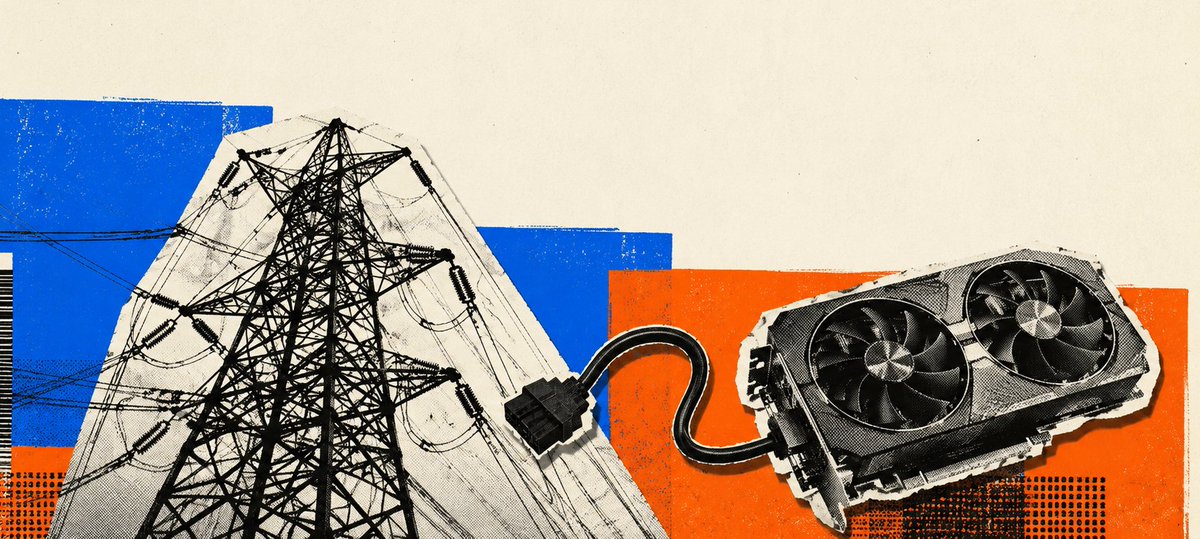
Everyone is still watching GPUs. The real bottleneck in AI quietly moved to something almost nobody is pricing in: power.
For two years the story was simple. Whoever had the most Nvidia chips won. That era is ending. The constraint now isn't compute. It's electricity, and the aging grid that delivers it.
The scale is hard to picture. Global data center electricity hit roughly 485 TWh in 2025, up about 17% in a single year, and the IEA expects it to nearly double by 2030. In the US alone, data centers could climb from around 4% of all electricity to as much as 12% by 2028.
The grid was never built for this. Interconnection queues now run five to seven years. Transformer lead times have stretched to as long as four years, with prices climbing fast. Equipment and permitting already threaten a big share of the US capacity planned for 2026.
So the smartest money stopped chasing chips and started chasing electrons.
Microsoft, Google, and Amazon are signing nuclear deals. Hyperscalers are building their own gas plants behind the meter just to skip the grid. The four biggest spent around $400 billion on data centers in 2025, and are guiding toward $600 billion or more in 2026.
Even capital is reorganizing around it. Last week, a $35 billion deal led by Apollo and Blackstone began financing more than 20 gigawatts of AI compute for frontier labs. AI infrastructure is now funded like a power project, because that is basically what it has become.
Here is what most people miss. The next winners in AI may not be decided by who has the best model. They may be decided by who can plug it in. Intelligence is getting cheap. The power to run it is not.
Now the part that should worry people. For most of the last decade, computing scaled to the entire planet while its electricity use barely moved. Compute grew over 500%. Energy use rose about 6%. Efficiency quietly absorbed the rest.
AI just broke that bargain. The next limit isn't the code. It's the grid.
The headline misses the why. This wasn't about model quality. Anthropic gave up a massive contract rather than let its models power mass surveillance and autonomous weapons. Plenty of companies claim they have red lines. Very few hold them when the money lands on the table. Credit where it's due.
The number everyone quotes is 500 million learners, but the bigger legacy might be everyone it gave permission to. Before OCW, sharing your curriculum felt reckless. After it, it felt normal. Dozens of universities followed. The real impact isn't just who learned from MIT, it's how many institutions stopped guarding the gate.
@CoffeeStocksGuy The reason OUST keeps showing up is simple. It's one of the few lidars actually cleared for US defense use. So anyone building gov autonomy has a tiny list of approved options, and OUST is on it. That's the moat. Makes an ONDS crossover feel less like if and more like when.
The missing fintech piece stood out to me too. Personal financial management has been a bit of a startup graveyard, but the hard part was never the dashboards, it was trust and behavior change. That's exactly where your point 3 lands. An AI with real life context could finally coach money decisions instead of just visualizing them.
@vandell33 The hard part isn't believing the shift comes, it's staying solvent and sane long enough to still be around when it does. Curious how you personally keep conviction without sliding into just hoping.
The "is competition rational?" one is the quiet killer. A market can tick every other box and still be brutal if everyone's racing to the bottom on price. Curious which of these you've found hardest to read before actually being in the market. For me it's pricing power, since margins you can lift off incumbents, but whether customers let you hold a price only shows up once you're charging.
Anthropic, the company behind Claude, just published "Policy on the AI Exponential."
And the headline isn't the jobs plan. It's the reversal.
For years, its CEO argued AI companies should only have to disclose their risks. Now Dario Amodei says disclosure isn't enough.
His new ask: regulate frontier AI like aircraft.
Independent third parties test the most powerful models before release, and the government can block any that fail on cybersecurity, bioweapons, loss of control, or AI that automates AI research.
A safety hawk asking to be reined in. That's rare.
On jobs, he's careful: not predicting doom, not promising it's fine. He says lasting job loss may be an unavoidable property of a technology that substitutes for human thinking itself.
So the goal isn't to stop it. It's to buy time:
→ track displacement with real data
→ keep people employed through wage insurance and retention credits
→ and if it gets bad, fund something like UBI through higher taxes on AI companies
The line that ties it together: he rejects the idea that public fear of AI is a marketing problem. People are scared, he says, because the risks are real, and that concern is a feature of democracy, not a PR failure to manage.
The catch worth flagging: the essay landed a day after Anthropic shipped a new model, and critics were quick to call it regulatory capture. Mandatory testing, conveniently, is easiest for the biggest labs to absorb.
So here's the real question: a genuine safety stance, or a moat dressed up as one?
@Seyipeter171@RayDalio Exactly. Contrarian alone isn't the edge, contrarian and right is. The defense is simple: write your reasoning down before you enter. Then when the trade moves against you, you can tell whether an assumption actually broke or you're just early. That distinction is the whole game.
@HowToAI_ What rings true from building real systems: the win never came from one model doing everything, it came from specialized pieces that adapt fast. The gap the paper leaves is orchestration. A hundred superhuman specialists still need something deciding which runs when.
Broadcom grew AI revenue 143%, guided to $16B next quarter, and fell 12%. Not because the business cracked. Because the street wanted $17.2B. When 200% growth reads as disappointment, the market is no longer pricing results, it is pricing the durability of a narrative.
@HowToAI_ Good survey. It names what everyone shipping agents learned the hard way: reliability lives in the harness, not the model. But code gets free verification from the compiler. Sales, ops, research have no compiler. Curious if anyone has seen a real attempt at verification there.
@Chandra65S@ispaceflight_in@INSPACeIND@isro Good reference point with HAL/SSLV. The catch is LVM3 is a whole different beast, that cryogenic upper stage is notoriously hard to transfer, which is probably why it’s 42 months here vs SSLV’s 24. You’re right to wait and see. The cryo stage is the real test of the timeline.
Meta AI has shockingly grown 2.5x in the last 2mos and is poised to be the #3 AI consumer app in the world behind Gemini and ChatGPT.
Sadly, this growth is very likely inorganic given it has by far the worst retention by a mile: only 4.5% users stay in 30 days.
@Rainmaker1973 The stability through reconfiguration is the part that impresses me. Makes me curious where they take it next: holding formation outdoors in wind is where modular flight usually gets brutally hard, and if they crack that, this stops being a demo and starts being infrastructure.
42 months of ISRO handholding + full tech transfer is a serious head start. Whoever wins this could become India's first private heavy-lift operator. Turnover threshold pre-selects established players over startups. Smart de-risking, but I wonder if it narrows the pool too much.
HUGE news for Indian space industry! @INSPACeIND has opened an Expression of Interest (EOI) for the technology transfer of @isro's LVM3 India's heavy-lift workhorse to a private Indian entity for end-to-end realisation, operation & commercialisation. The selected private entity gets full tech transfer + ISRO handholding support for 42 months (or until 2 LVM3 launches). #ISRO #LVM3 #INSPACe #IndianSpaceflight
Eligibility:
• 7+ years operational
• Space/Aerospace experience (5+ yrs)
• Avg. turnover >₹800 Cr OR valuation >₹2000 Cr
• Deadline: 29 June 2026