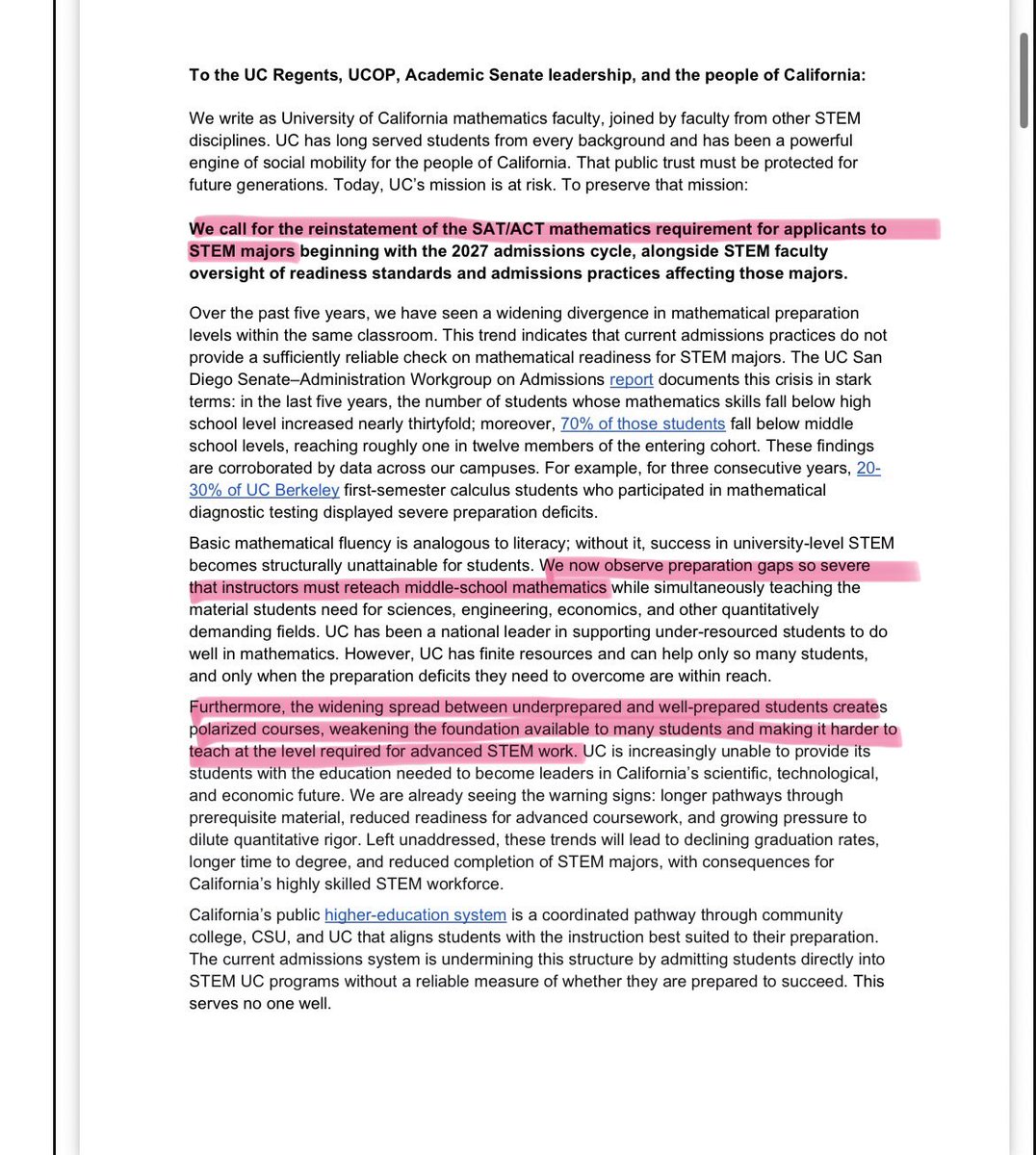
University of California STEM professors want standardized tests back due to severe math deficiencies among students:
“We now observe preparation gaps so severe that instructors must reteach middle school mathematics”
“The current admissions metric, based primarily on GPA & essays, can no longer reliably distinguish readiness for university-level STEM majors in an era of severe grade inflation & AI assisted application essays”
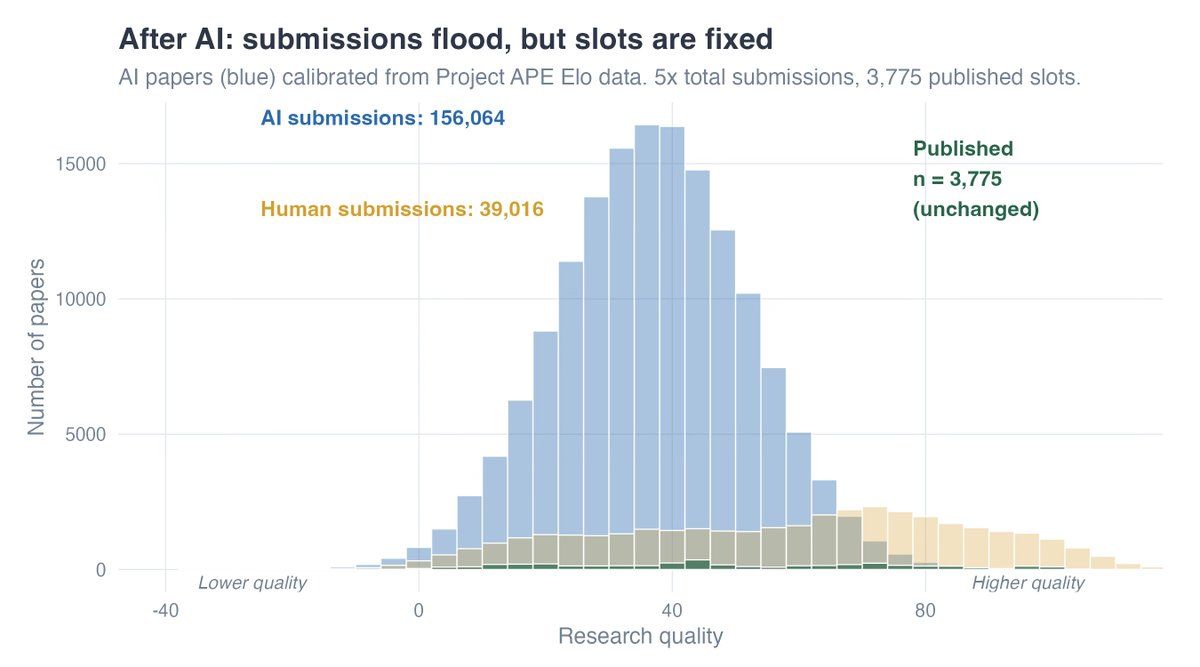
@cmatthes_econ This makes me pessimistic on two fronts. 1) Obviously, models are getting scary good and 2) Are labs going to be making most scientific progress while normal academics only have access to models that are say 6mo-1year behind the frontier??
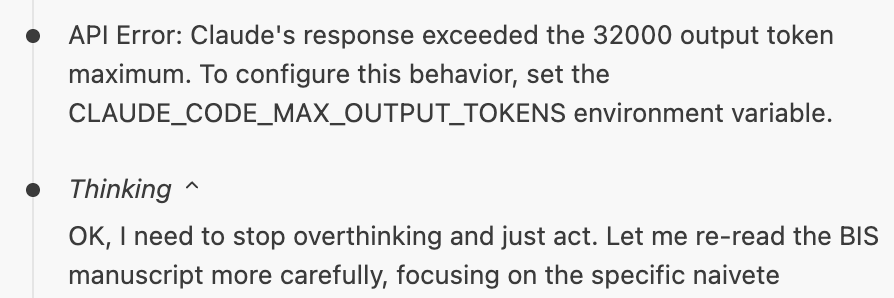
Some used to give Dynare a bad rap for enabling DSGE-slop (not my view), but it was an important verification engine (and symbolic!) even in the pre-LLM era. Now that we’re speed running macro research with AI agents, I think it’ll become more and more important.
Advice for PhD students in economics about using AI, from the brilliant Isaiah Andrews. This should probably be circulated to all PhD cohorts
https://t.co/07xEbmx5n5
I was teaching this plot of a correlation of life satisfaction vs GDP in an undergrad macroeconomics class today (yes cardinal utility blah blah), and out of curiosity I asked students to rate their own life satisfaction. To my pleasant surprise, most students rated 8 to 10 range. The kids are alright!
@lucasian76 I think the rule of thumb is you increase the number of layers until the test errors stop decreasing. Unfortunately I found no good intuition for which activation function to use, although I found LeakyReLu or Tanh tends to perform reasonably well for econ applocations
Saturday, I gave a talk at ASSA 2026 on my new paper ``Macroeconomic Effects of Production Networks: A Deep Learning Approach,’’ with @cmatthes_econ, @hpfilter, and @MacroInPieces.
Several attendees asked for a copy of the slides I used (sorry, we are still a few weeks away from circulating a completed draft), so I am linking them here:
https://t.co/bQZq7T0XMe
There has been a lively debate over the last few weeks on X about what deep learning can do in macro. I think this is a good example of what we can now study.
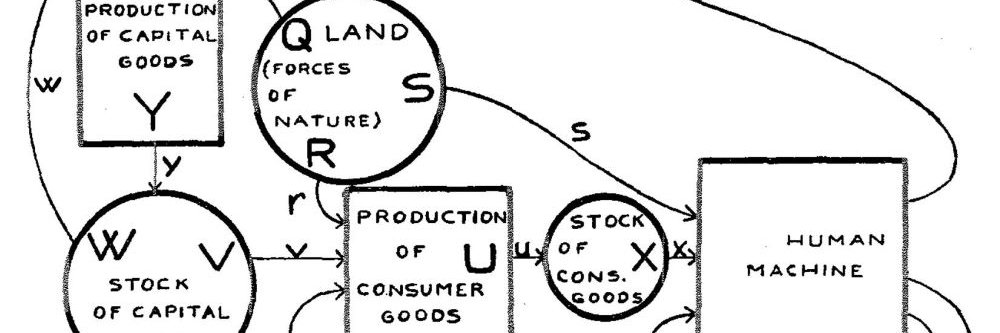
Dynamic stochastic models with non-trivial input-output structures are a beast to compute. They are inherently nonlinear, and you need to carry not only aggregate state variables but also all the sector-specific variables, such as sectoral productivity and sector-specific capital. If you have, as we do in the paper’s calibration to match U.S. input-output tables, 37 sectors, you end up with at least 74 state variables. Even very aggressive sparse-grid allocations, such as Smolyak, will struggle with that.
A deep neural network can deal with this problem, especially if you build it using the symmetry (or, if you prefer, exchangeability) ideas I discuss here:
https://t.co/Uv33AbaTlo
with @MahdiKahou, @jlperla, and Arnav Sood.
We also show that adopting a deep learning approach changes the answers you get relative to more traditional solution methods. More concretely, we capture endogenous changes in relative prices across sectors that perturbation solutions largely miss. That leads to materially different elasticities of output, investment, and labor supply to sectoral shocks.
In our benchmark calibration, we find substantial attenuation of sectoral shocks, precisely because of these relative price changes. When steel becomes too expensive following a productivity shock in the steel industry, car manufacturers switch to more plastic.
This result resonates with my own earlier work on the macroeconomics of wars. One lesson from wars over the last 120 years is how resilient modern economies have been to large disruptions from mobilization, blockades, or bombing. What looked like bottlenecks that would stop production turned out to be inconveniences, because there are many ways to produce a tank or an airplane. Some alternatives were less efficient than the optimal one, but the productivity losses were not as large as pre-war planners envisioned when they took a static view of resource allocation.
Our results replicate that intuition inside a standard stochastic multi-sector business cycle model.
Of course, we could throw wrenches into the economy’s reallocation process, but, at this moment, I think the insight is robust.