🇦🇲 Since Armenian Genocide denial continues to be spread, let’s remember where our families came from.
📍Comment below with the town, village, or region your family was from.👇
#Armenia#ArmenianGenocide
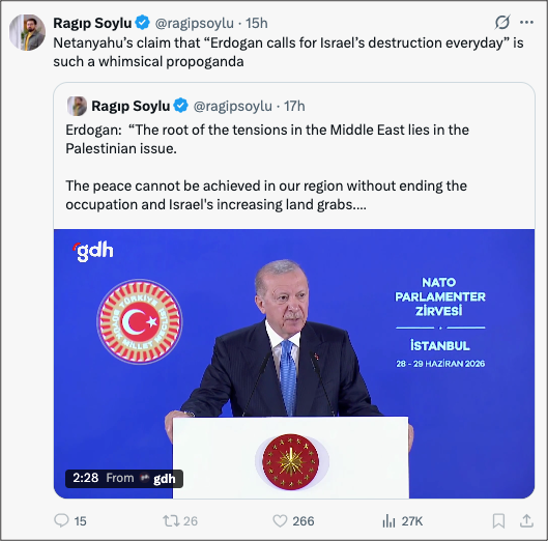
Another ridiculous "lecture" on peace by Turkey's Islamofascist President, @RTErdogan. Turkey, that occupies parts of Syria, Iraq, and Cyprus. Turkey, that harbours and promotes the thugs of the Muslim Brotherhood and Hamas.
This time and again, promoted by Erdogan's mouthpiece, @ragipsoylu, @MiddleEastEye's Bureau Chief in Turkey, supposedly an impartial journalist.
Ragip Soylu, the "impartial journalist", making a laughing stock out of himself, calls @netanyahu's reactions of Erdogan's regular threats against Israel "whimsical".
Islamofascists such is Erdogan, and their mouthpieces such is Ragip Soylu exist and thrive because of those Western and other "leaders" that do not only put up with them but encourage them by their appeasement to invade, occupy, rape, slaughter, murder.
| #Turkey #Syria #Iraq #Cyprus #Israel #Islamism #Jihadism #Hamas #MuslimBrotherhood
Adjacent to the Holy Mother of God the Mighty Church stands the Chapel of Saint Ananias, one of the oldest surviving structures in Yerevan. The chapel houses the sacred relics of Saint Ananias, brought to Armenia by Saint Gregory the Illuminator in the early fourth century.
Clergy serving at the church recount numerous testimonies of believers who came to the chapel with health struggles, prayed for the saint’s intercession, and later returned to share stories of their recovery. For centuries, this sacred place has remained a destination for pilgrims, where faith, history, and prayer come together.
301 brings this story to light as part of its ongoing commitment to preserving and sharing Armenia’s rich spiritual and historical heritage with a wider audience.
You won’t find a single word here about:
The brutal human rights violations in Turkey, which were on display again just weeks ago when a Turkish court removed the newly elected leader of the main opposition party from office; peaceful protesters being met with force and mass detentions; Erdoğan’s main challenger remaining behind bars; opposition mayors being arrested; journalists facing mounting restrictions; and political opponents being increasingly targeted through the courts.
A masterclass in hypocrisy.
It is time for the UK Government to formally recognise the Armenian Genocide. The words of the great British historian Arnold J. Toynbee remain clear evidence of the atrocities committed by the Ottomans:
“In April 1915, the Ottoman Government began to put into execution throughout Turkey a systematic and carefully prepared plan to exterminate the Armenian race.”
"ISRAHELL RECOGNIZES THE ARMENIAN GENOCIDE".
WHAT HYPOCRISY BY A BUNCH OF "TERRORISTS" AND "GENOCIDAL" PSYCHOPATHS. ISRAEL WAS THE CAUSE OF 120,000. ARMENIAN CITIZENS IN ARTSAKH TO FLEE THEIR HOMES, BEING ATTACKED BY ISRAELI DRONES & WHITE PHOSPHORUS JUST A FEW YEARS AGO.
As an Iranian Jew with many Armenian friends, I thank you & Israel's gov't for finally taking this courageous step to recognize the Turkish genocide of 1.5 million innocent Armenians in 1915.
The Jewish nation must always stand with the Armenian nation!👏👏🇮🇱🇦🇲
coin of King Tamar of Georgia, found at the Amberd Fortress, Armenia
King Tamar Bagratuniani (later Bagrationi) — King of the Georgians, Armenians, Ranians, and Shirvans
Tamar was never simply the ruler of the Georgians. Her royal title embraced a realm of many nations—Georgians, Armenians, Ranians, Shirvanians, and others—bound together under one crown.
Among them, the Armenians held a special place. Throughout her reign, Armenia's noble houses, warriors, and cities became vital pillars of her kingdom. Armenian princes stood beside her in battle, Armenian generals led victorious campaigns, and Armenian communities flourished under her protection.
Tamar did not seek to erase the identities of the peoples she governed. She strengthened them. She defended their lands, respected their traditions, and rewarded loyalty regardless of ethnicity. For countless Armenians, her reign became an era of security, prosperity, and renewed hope.
That is why her legacy belongs not to one nation alone. She is remembered as a monarch whose greatness was measured not only by the lands she ruled, but by the many peoples who found justice, dignity, and protection beneath her crown.
ISRAEL RECOGNIZES THE ARMENIAN GENOCIDE, TURKISH BORN CENK UYGUR ADMITS IT HAPPENED AND EXPOSES TURKEY’S SCHOOL PROPAGANDA🚨
Cenk Uygur was born in Turkey and as you can see in the video below he says it plainly, the Armenian Genocide did happen.
He also calls out exactly what Turkish schools do, teach students propaganda and deliberately hide the truth about the mass extermination and deportations of up to 1.5 million Armenians by the Ottoman Empire.
This matters even more right now because Cenk spends every single day relentlessly condemning Israel and has shifted from earlier positions where he was more supportive of Israel regarding Gaza. Yet on this core historical fact his own words line up with Israel’s decision.
Israel’s cabinet unanimously voted to formally recognize the Armenian Genocide, a long overdue stand for truth after years of avoiding it to avoid upsetting Turkey.
Cenk hasn’t responded to Israel’s formal recognition yet, why?
The truth doesn’t care who says it or which country finally recognizes it but ask yourselves, how many more decades does Turkey get to rewrite history while the rest of the world faces it?
p.s, to avoid a misunderstanding, I’m no fan of Cenk Uygur, neither his co host @AnaKasparian
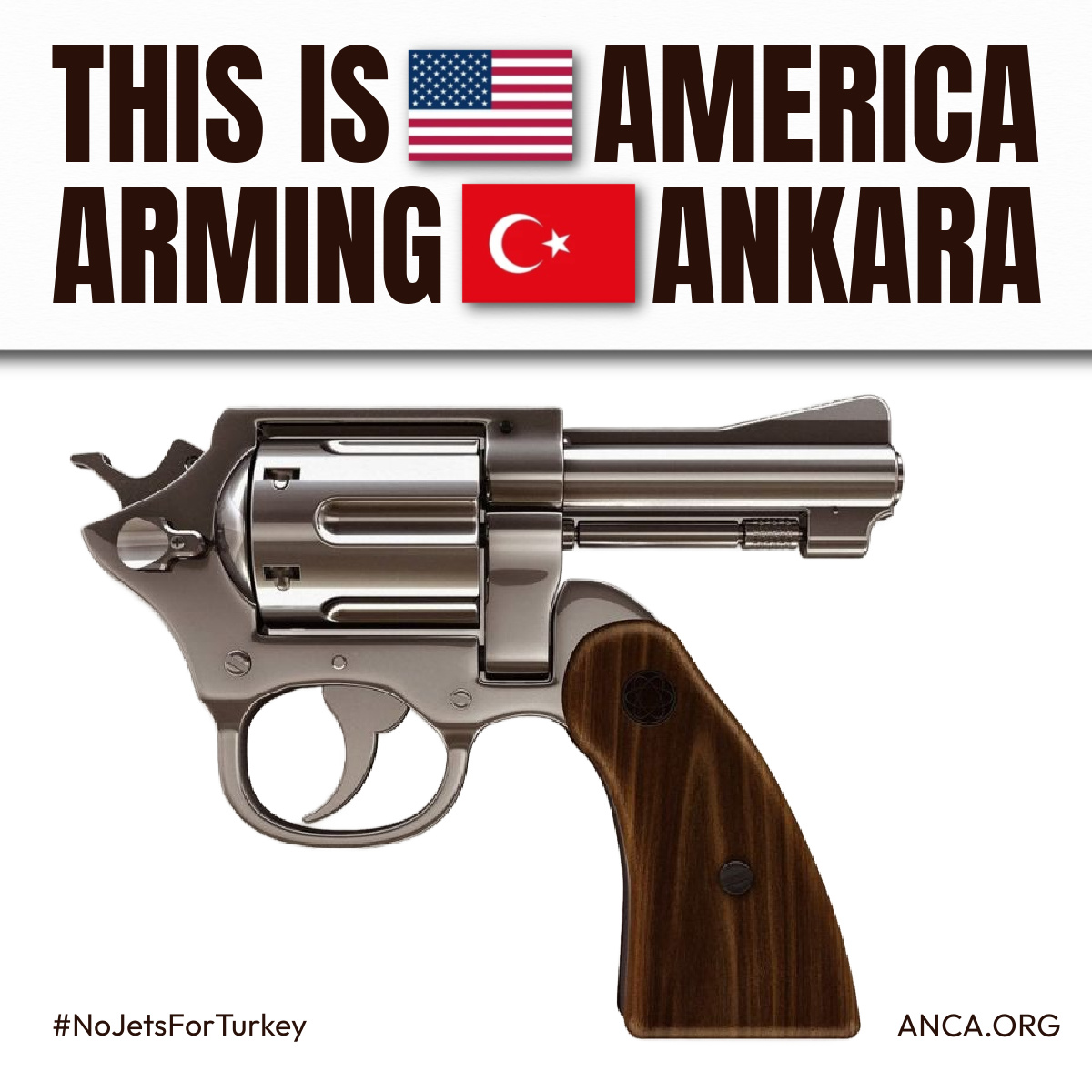
At today’s @TLHumanRights hearing on human rights in Turkish-occupied Cyprus, Chairman Chris Smith (R-NJ) recalled the threats and pressure surrounding U.S. recognition of the Armenian Genocide - underscoring why the United States must take a firmer stance when a NATO ally undermines human rights, denies genocide, occupies territory, and enables aggression.
From Cyprus to Armenia and Nagorno-Karabakh, Turkey’s record demands accountability, not silence.
🚨In the last 24 hours turks have massacred 6 innocent civilians in a mother-child welfare facility in Stade Germany
turkey🇹🇷 exporting terrorists to massacre Europeans is a daily occurrence
What was the Armenian Genocide carried out by the Ottoman Turks, and why does Turkey deny responsibility for it?
The Armenian Genocide was the systematic destruction of the Armenian population of the Ottoman Empire during World War I, carried out primarily between 1915 and 1917. It's recognized by most historians and many governments as the first genocide of the 20th century.
The Ottoman government, controlled by the Young Turks (Committee of Union and Progress), targeted its Christian Armenian minority. On April 24, 1915, hundreds of Armenian intellectuals and community leaders were arrested in Constantinople and later killed. This date is now commemorated as Genocide Remembrance Day.
The main methods included mass shootings, and death marches into the Syrian desert where hundreds of thousands died of starvation, dehydration, exposure, and disease. Able-bodied men were often killed outright, while women, children, and the elderly were deported on foot. Concentration camps existed at the end of these routes. Estimates of the death toll range from roughly 600,000 to 1.5 million, with 1 million to 1.5 million being the figure most commonly cited.
The killings extended to other Christian groups as well (Assyrians and Greeks), and forced conversion, abduction of women and children, and seizure of property accompanied the deportations.
The official Turkish position acknowledges that many Armenians died but disputes the characterization. The denial rests on several arguments and motivations:
1. National identity and founding narrative. The modern Republic of Turkey was founded in 1923 by figures connected to the late Ottoman state. Accepting the genocide label implicates the country's foundational generation and conflicts with the national self-image.
2. The "civil war" framing. Turkey's official line is that the deaths occurred during wartime chaos, mutual ethnic conflict, famine, and disease, not a centrally planned extermination. It points to Armenian groups that sided with invading Russian forces, framing the deportations as a wartime security measure rather than genocidal intent.
3. Legal and financial liability. Formal recognition could open the door to demands for reparations, property restitution, and territorial claims, creating concrete material stakes.
Acknowledging the genocide has long been politically taboo. Article 301 of the Turkish penal code has been used to prosecute people for "insulting Turkishness," and discussing the genocide openly has carried legal and social risk. Journalist Hrant Dink, who spoke about it, was assassinated in 2007.
Turkey actively lobbies other governments against official recognition and has historically threatened diplomatic and economic consequences for countries that use the term.
The scholarly consensus, including the International Association of Genocide Scholars, holds that the events meet the definition of genocide established in the 1948 UN Genocide Convention.
https://t.co/Oky86Xu6A9
Forbes Features Armenia as a Rising Global Capital of Fashion, Art, Cuisine, Design & Hospitality 🇦🇲
➖➖➖
Forbes has dedicated a 27-page feature spotlighting Armenia's emergence as one of the region's most dynamic creative destinations, presenting the country through the lens of fashion, art, cuisine, design, and hospitality. Published in the Austrian edition of Forbes and produced by the agency Elite Reports with the support of the Tourism Committee of Armenia, the report marks the first time Armenia is presented this way to an international audience, charting a fast-rising creative culture that is increasingly shaping how the world sees Yerevan.
Titled "Fashion Forward Armenia: Creativity in Motion," the feature explores Armenia's creative community, entrepreneurs, and cultural leaders who are redefining how the country is perceived internationally, not simply as a place of history and craftsmanship, but as a destination of innovation and meaningful cultural exchange. It was edited by Jeb Adams, who also wrote its central essays, with much of the accompanying fashion photography shot by Mariam Kach, and the wider Elite Reports team behind the project included Managing Director Melinda Snider, Production Manager Carla De Malezieux du Hamel, Creative Director Paulo Couto, and Production Assistant Íñigo López González. Structured around a long opening travel essay and a series of profile interviews, the report hands the microphone to many of the founders, designers, chefs, and artists shaping the country's creative life.
The feature opens by acknowledging the lens through which Armenia has long been viewed internationally, one defined by history, geopolitics, diaspora, and resilience, before arguing that another story has become impossible to ignore. A generation of designers, chefs, architects, artists, musicians, and entrepreneurs, many of whom spent years abroad before returning, is reshaping the country's cultural identity in a way that feels organic rather than manufactured, Adams writes, describing a contemporary scene where the boundaries between industries remain fluid and where some of the most important conversations still happen informally, over long dinners and chance encounters.
Fashion anchors the report. Elen Manukyan, co-founder and team lead of the Fashion Chamber of Armenia and a driving force behind Yerevan Fashion Week, frames the stakes simply. "Culture builds identity, and fashion is one of the most visible languages of culture," she said. The feature traces a maturing ecosystem of concept stores and independent platforms, from the 5 Concept Store, which works with more than 70 designers and marks its tenth anniversary this year under creative director Irina Kavanyan, to Rien-à-Porter, the Yerevan platform now expanding internationally through its parent company Maison Marom, led by cultural strategist Mareta Gevorkyan. Designers including Arevik Simonyan of Kivera Naynomis and the founders of the cultural zine DASEIN, Vanane Borian alongside Anna Vahrami and Ina Abrahamyan, round out a portrait of an industry built on individuality rather than imitation. "Armenian fashion always existed," Kavanyan said. "What was missing was belief."
Design and innovation form another thread. The report profiles Anna K. Gargarian, head of strategy, design, and development at the Fine Arts Academy Dilijan Campus, who makes the case for reconnecting Armenian craftsmanship, textiles, and material knowledge with contemporary ideas around sustainability and ecological design, while pointing to a creative economy that increasingly runs parallel to Armenia's growing technology sector and companies such as Picsart, Krisp, and Renderforest. That sensibility runs across the feature, from the architecture of the country's new hotels and resorts to the concept stores that double as design spaces, where Armenian makers are shown reinterpreting heritage through silhouette and material rather than using it decoratively.
The report devotes equal attention to hospitality and Armenian cuisine, presenting Yerevan as a city increasingly defined by experience and positioning Armenia as a serious gastronomy and wine destination for a new kind of lifestyle traveler. It profiles The Alexander, a Luxury Collection Hotel, whose general manager Lasaro Ryumin describes a property intertwined with the life of the city, and the nearly century-old Grand Hotel Yerevan, where general manager Gurgen Muradyan frames the hotel as a place where guests experience part of Armenia's history. Both feature alongside Seven Visions Resort and The Dvin, whose founder Artak Tovmasyan describes a vision of "Monaco glamour, Vegas energy, Macau prestige, yet uniquely Armenian," reborn through contemporary architecture, entertainment, and immersive experiences.
On the food and nightlife side, Yeremyan Group, with two decades and 18 restaurants across 13 concepts behind it and represented by deputy general director Lusine Yeremyan, anchors the cuisine story through its farm-to-table philosophy and its immersive dining destination Livingston, where live music and choreographed performances turn dinner into theater. The Lebanese-Armenian founders of Turntables Hospitality Group, Aren Deyirmenjian and Nareg Sfeir, behind the restaurant Camilla, and Pabló beverage director Nareg Aroyan round out a scene built around atmosphere, entertainment, and community.
Armenia's art world is given its own platform. Nina Hovnanian and Fabio Lenzi, co-founders of the Yerevan Biennial Art Foundation, make the case for the city as a contemporary art center, with Lenzi noting that Armenia has become a recognized hub for technology, innovation, and entrepreneurship and arguing that "the Caucasus' next cultural chapter begins in Yerevan." The feature also profiles artists including Arshak Sarkissian, Kevork Mourad, Armine Harutyunyan, and Baron Scancelli, alongside luxury entrepreneur Armen Pogossian, whose brands include Jardins d'Arménie, each presented as evidence of a country whose creative voice is increasingly visible on the international stage.
Running through the entire report is a single argument, that Armenia's creative momentum is less a passing trend than a long-term investment in the country itself, powered by a returning diaspora and a belief that culture creates identity, influence, and economic value. The feature closes where much of its reporting seems to have happened, around a dinner table at Camilla, where one of the founders explained why the city's creative community felt less like a business and more like a family. "That is our secret ingredient," he said. "Community."
Archaeologists excavating the medieval Amberd Fortress in Armenia have unearthed a rare coin bearing the likeness of Queen Tamar, one of the Caucasus's most formidable historic rulers.