How should PhD students leverage AI in their research? First, you should write papers where you leverage AI to analyze something at scale. There are many low-hanging fruit because gen AI is essentially still a new thing. Exploit it!🧵
Eleição após eleição há discussão sobre erros nas pesquisas. Eu e o Henrik temos um novo working paper mostrando que, sim, há erros, mas onde eles ocorrem não é tão óbvio. Explico 🧵
https://t.co/8Px6y5aBH9
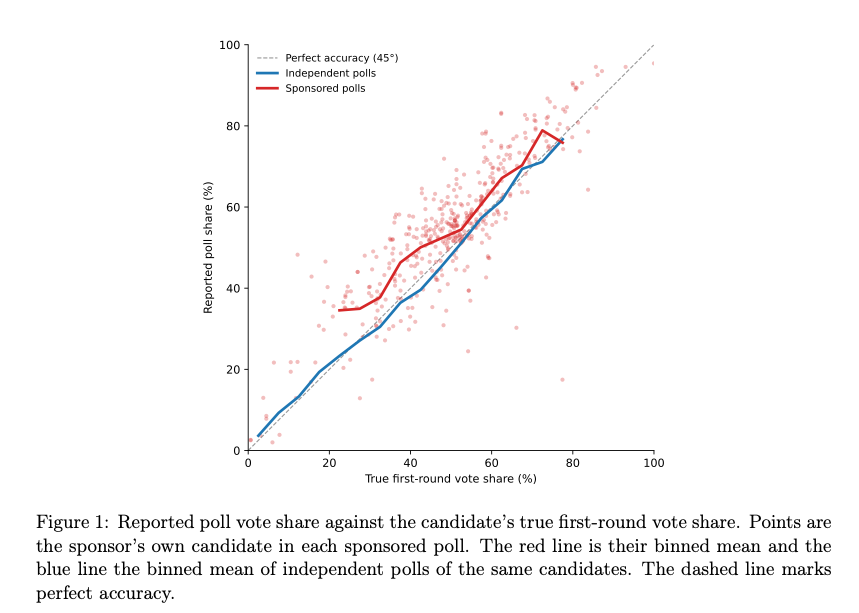
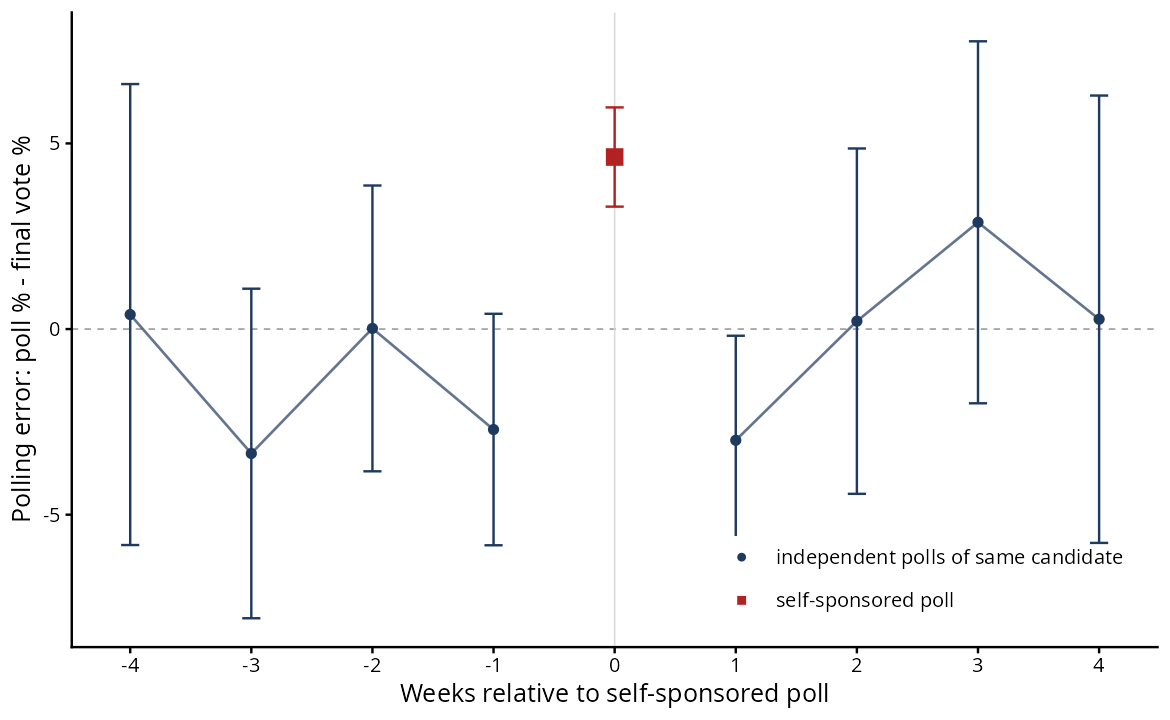
The bias can't be explained by the poll's declared design or methodology, so compliance with formal rules doesn't solve the problem. But we do find suggestive evidence that pollsters' reputational concerns can limit the bias. Full paper: https://t.co/w4cfIpaeEv
Do candidates tilt the polls measuring their own support? Yes. In a new WP with @meirelesff, we find that in Brazil's 2024 mayoral elections at least 1 in 8 polls are paid for by a candidate or party in the race. Those polls overstate their sponsor by ~8 points.
HOW TO REFORM ECON REFEREEING WITH AI
Frontier AI is clearly extremely useful in the review process, but it should be done right. The right model is not that all referees ask ChatGPT to point out strengths and weaknesses of the paper. (The point of asking human referees is to get their human judgement.) The right model is something along these lines (helpfully illustrated by Astra in the flowchart):
1. If the editor plans to send the paper out for review, they first generate a frontier AI report (e.g. using a modified version of my open source paper reviewer. I think open source is nice here because the journal can modify it to their purposes.)
2. The authors then get the AI report back from the journal and are given the opportunity to provide comments, explain how they plan to address the points in the report (if they agree with them), and push back on any points they disagree with.
3. The journal then sends out the initial manuscript, the AI-generated frontier report, and the response from the authors.
This makes everything constructive and avoids cheap duplication of AI efforts as well as removing the incentives of referees to suggest comments that most good AI systems are likely to flag in any case. The next extension should be to require authors to submit a full replication package with code and data at the submission stage to check consistency between the paper, code, data, and reported results.
I’m really excited about this paper! Some of my work has pointed out problems in empirical work, but this one is all about new 🔧s.
If you (or your referees) want to know about the mechanisms by which a treatment affects an outcome, you may be interested. A 🧵.
A possibly useful resource for people working on empirical papers in Brazil: https://t.co/PziCOAqmWO
A reference on the legal and political institutions — courts, procedure, MP, elections, procurement, corruption statutes — and how they work in practice.
If you're feeling a bit down about social science after that Nature article, consider the new approach to econometrics we outline in this paper. There's lots of valuable work to be done to reduce the problem.
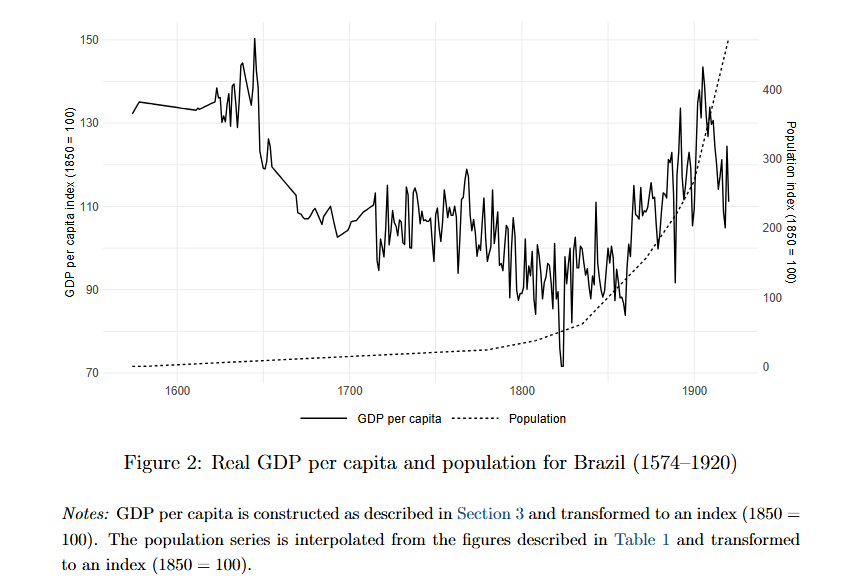
📢New paper: 𝐇𝐨𝐰 𝐚 𝐧𝐚𝐭𝐢𝐨𝐧 𝐰𝐚𝐬 𝐛𝐨𝐫𝐧: 𝐁𝐫𝐚𝐳𝐢𝐥𝐢𝐚𝐧 𝐞𝐜𝐨𝐧𝐨𝐦𝐢𝐜 𝐠𝐫𝐨𝐰𝐭𝐡, 𝟏𝟓𝟕𝟒–𝟏𝟗𝟐𝟎.
Joint with @glambais.
We built the first long-run GDP per capita series for Brazil, using 30,000+ archival price and wage observations across major regions🧵
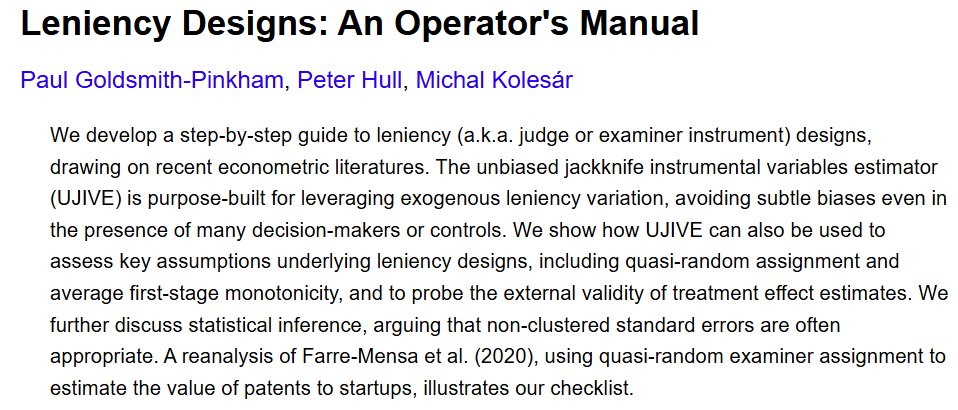
Paul G-P (@paulgp), Michal Kolesár, and I have a new guide to leniency designs (aka judge/examiner IVs), prepared for the JEP
The bottom line? Keep calm and UJIVE on!
Os tribunais são essenciais para eleições livres, mas candidatos podem usar ações judiciais para difamar oponentes ou desacreditar a eleição. Em novo artigo com @glambais & Moya Chin, apresentamos um estudo sistemático sobre ações eleitorais nas eleições municipais do Brasil.
Devemos restringir o acesso aos tribunais eleitorais para evitar abusos? Provavelmente não—os tribunais são vitais para a integridade eleitoral. Mas regras como sucumbência, multas por litigância de má-fé e a limitação de ações pré-eleitorais podem conter processos infundados.