Powell Press Conference Post-December Fed Decision | 13 Dec 2023
FED: “Today, we decided to leave our policy interest rate unchanged [cf. decided unanimously the federal funds target range at 5.25% to 5.5%] and to continue to reduce our securities holdings [a decrease of more than $1 trillion]...We will make decisions about the extent of any [indicative of the pivot?] additional policy firming and how long policy will remain restrictive based on the totality of the incoming data, the evolving outlook, and the balance of risks [non-committal, data dependent stance].”
FED: “While we believe that our policy rate is likely at or near its peak for this tightening cycle…ongoing progress toward our 2 percent inflation objective is not assured. We are prepared to tighten policy further if appropriate…We remain committed to bringing inflation back down to our 2 percent goal and to keeping longer-term inflation expectations well anchored.”
LGFVs are large and opaque, thereby can pose structural risks.
IMF: operation of LGFV is opaque, and the formal legal distinction between LGFV and state-owned enterprises is absent.
Based on the financial statements of bond issuers classified as LGFV, IMF estimates LGFV debt reached 39% of GDP in 2020.
LGFV has significant exposure to the Chinese property sector.
IMF: Traditionally LGFV is primarily associated with infrastructure projects, yet firm-level financial data show LGFV is involved supporting local firms and real estate markets.
LGFV channel significant financial resources to real estate markets; LGFV’s inventories—equivalent to 30% of GDP—consist primarily of land and real estate assets.
The accumulation of inventory in access of realized sales show LGFV provides considerable support to the Chinese real estate market in terms of net demand.
Opaqueness of LGFVs and non-financial firms’ exposure to LGFVs poses contagion risks.
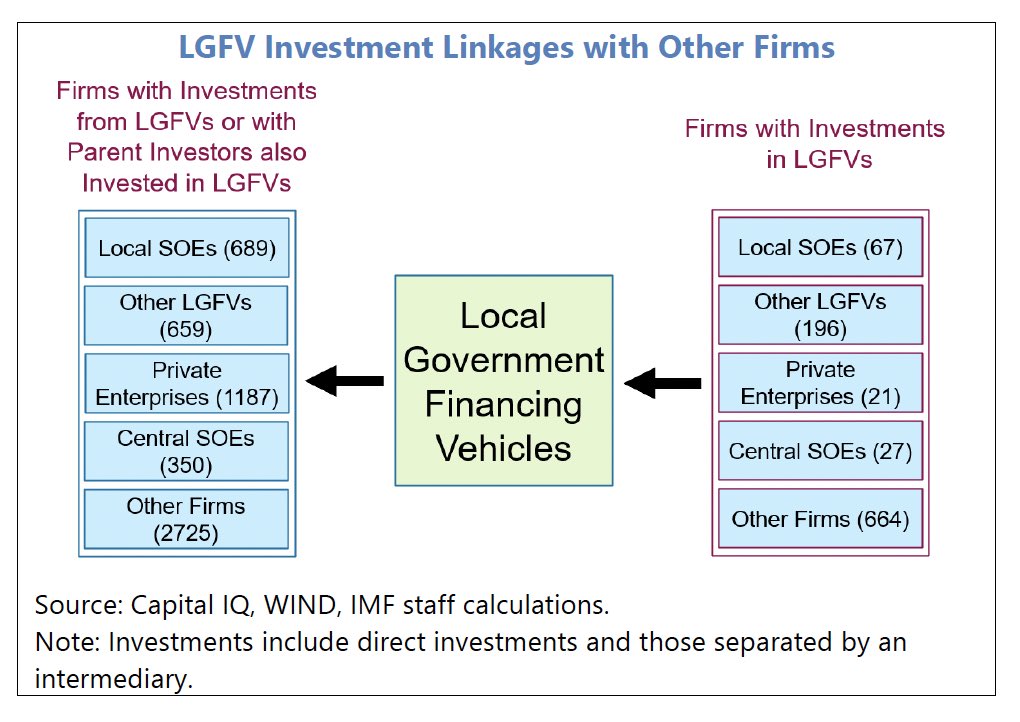
IMF: LGFVs invest in other non-financial firms. LGFVs’ estimated equity and debt exposure to other enterprises—excluding deposits and cash-like securities—amounts to at least 12% of GDP, and likely higher.
Nearly, one thousand firms and funds have direct or indirect claims on LGFVs, likely in the form of equity or equity-like investments. 3/3
https://t.co/nuLWHNA1C7
Moody’s changes China outlook to negative, no longer stable.
What are local government financing vehicles (LGFVs)? What is the nature of risks posed by them, relevant for the downgrade? How severe are these risks?
The LGFV risks seem severe enough to warant the central government action.
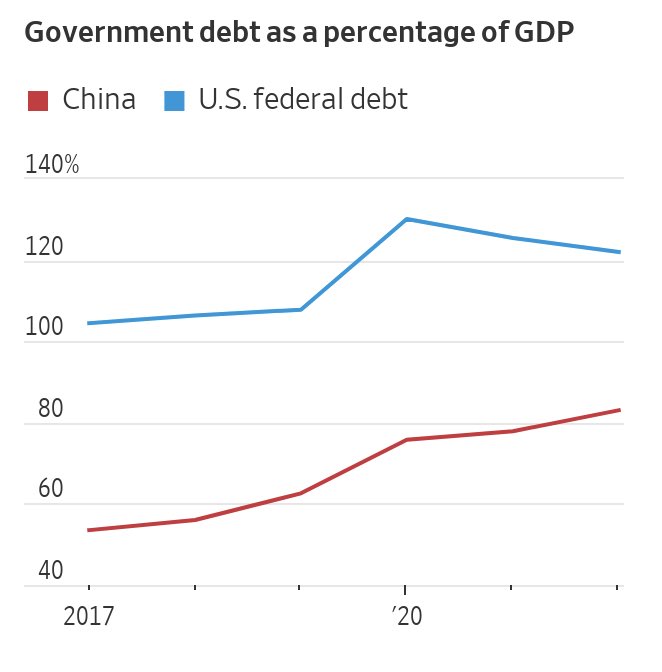
BLOOMBERG: The central government is increasing its deficit-to-GDP to 3.8%, surpassing long-adhered 3%; sells $140 billion sovereign bonds for support. Local governments are swapping/refinancing their off-balance-sheet debt. 1/N
https://t.co/RJRWKPNryq
#china #economy #markets
LGFVs’ defaults could pose risk of financial crisis, given their opaqueness and size and given domestic banks’ exposure to them.
WSJ: IMF and Wall Street estimate the total outstanding off-balance-sheet government debt at $7 trillion to $11 trillion, inclusive of LGFV bonds.
WSJ: “The big worry is that a wave of defaults could spread losses far and wide. That could quickly snowball into a nationwide financial crisis if credit markets seize up and retail and corporate depositors start to get worried about the financial stability of banks that hold a lot of local-government bonds.”
WSJ: “A recent UBS report said domestic banks’ total exposure to local-government financing vehicles at the end of last year was equivalent to about $6.9 trillion—representing about 13% of the banking sector’s total assets.”
WSJ: “Most local-government financing vehicles currently depend on subsidies or capital injections from local governments and external funding.” 2/N
https://t.co/MTkvUcjL4F
https://t.co/IkOX0D9zVB
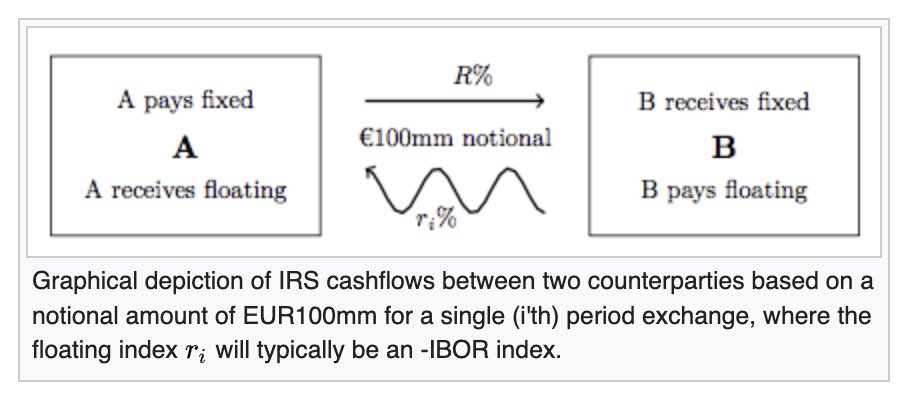
SHIFT IN FED EXPECTATIONS, BONDS RALLY. Market expectations on Fed moves show ~1.25pp easing in 2024 based on overnight index swaps and SOFR futures. The market may expect in either scenarios of soft landing or recession in 2025, Fed would be inclined to cut rates. Non-farm payroll data (Dec 18); UMich consumer sentiment, inflation expectation (Dec 18); Fed policy meeting (Dec 13) are events coming up relevant for continuation of the bond market rally. https://t.co/aGRmn3knkU
Overnight index swap. https://t.co/ayeK5MHDRx
SOFR. https://t.co/9FFLyMtggW
Intro to SOFR from NY Fed https://t.co/X4LLQaq6Ah 
CURATED NEWSFEED | MARKET DRIVERS | Mon Dec 4
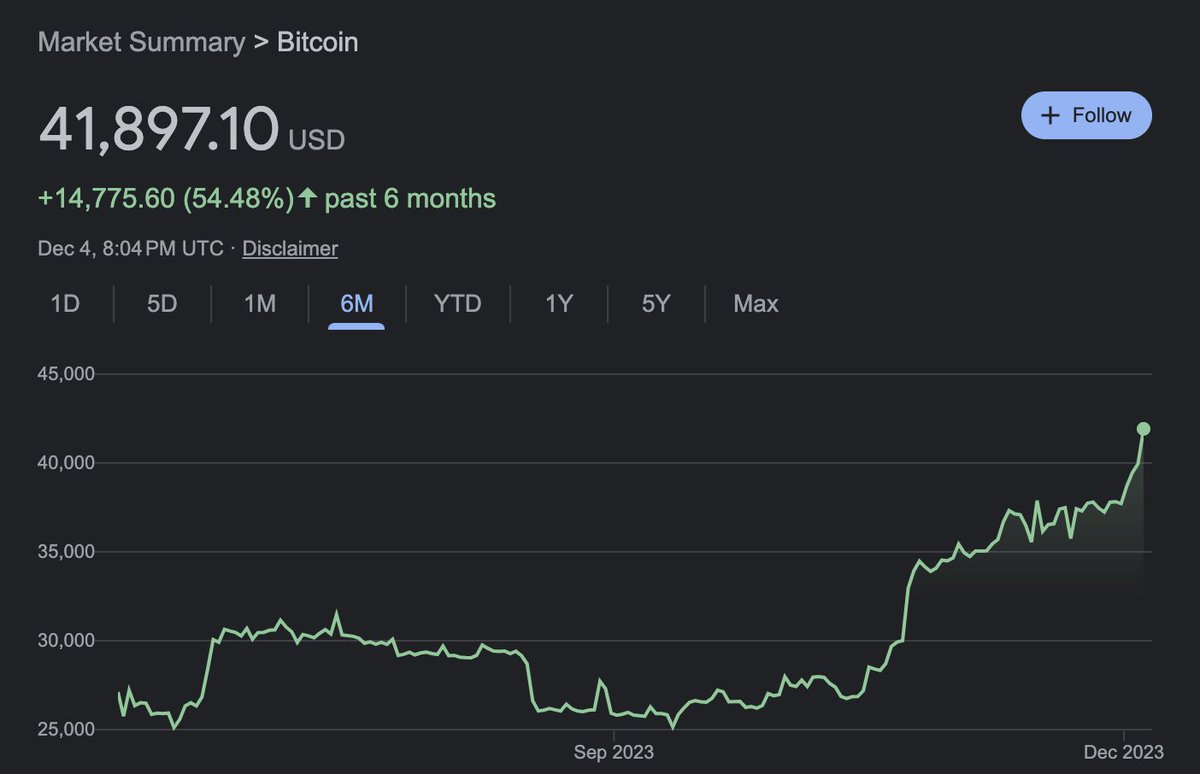
BITCOIN RALLY. Bitcoin broke $42,000. Cici Lu McCalman, a blockchain adviser (Venn Link Partners), thinks bitcoin has room to run to $50,000. What are the catalysts? (1) Expectation of positive outcome on the first US spot Bitcoin ETFs from BlackRock et al. There is an expectation that these products will win SEC approval by January. (2) Bitcoin having. Bitcoin halving—the reward for mining bitcoin (ie validating transactions) halving—is due 2024. The event occurs every 4 years, the previous halving came in 2020, and the last halving is expected in ~2140, thereby guaranteeing the total supply of bitcoin at 21 million. (3) Expectation of Fed rate cuts in 2024. Historically, there is a sense in which bitcoin price behaves similarly to growth stocks where most of cash flow is expected in the deep future (thus being susceptible to rate moves). 1/N
https://t.co/1jwTfourpE
@rovercrc A sensible modern date run I guess? At this point I would be distrustful of exchanges but guess funds would first flow to Coinbase and such? Think maybe self custody is the answer?
@mikealfred New to bitcoin here and considering getting in this cycle. But I do worry how bitcoin ownership is concentrated. Eg like how anonymous satoshi owns a big portion. Is there risk of those owners liquidating unexpectedly?
@VolumeDynamics Are you suggesting a crash is necessary for a rate cut (making a contrarian bet a la market expectation)? Not so sure, the fed might want to return to a natural rate (ie lower) rate at some point albeit not next year? Ideally, before any crash of any kind, ie soft landing?
@francoisfleuret Maybe the heart of math is at definition? Ie, asking the right questions (cf hitchhikers’ guide)? I can see AIs surpassing humans in deductive logic but don’t see how they could learn to ask the right Qs? Maybe humans in the end need to evaluate the output
MARKET DRIVERS | Fri Dec 1
Cybertruck. As Elon @elonmusk delivers his “go fuck yourself,” Tesla $TSLA delivered its first Cybertrucks on Thursday (Reddit co-founder got one). Tesla #TSLA (@Tesla) is taking reservations for All-Wheel Drive model at $79,990 ($68,890 after tax, gas savings) with 340 mi range; Cyberbeast at $99,990 ($96,390 after savings) with 320+ mi range, delivery in 2024. The cheapest Rear-Wheel Drive model at $60,990 ($49,890 after savings) is expected in 2025. Cyberbeast has 2.7 sec 0-to-60, ~850 hp.
Cybertruck outruns Porsche 911, carrying a Porsche 911
https://t.co/SyMcC28ydz
On the flip side, it could mean that $TSLA being growth stock—sensitive to interest rates on its own—and $TSLA being exposed to such industry risk (ie, being a interest rate sensitive car company) separately, could mean that once the market turns to the lower interest rate environment (“if” it does), Tesla the stonk is, maybe, well positioned to bag those returns. Maybe?






![hsljohn's tweet photo. Powell Press Conference Post-December Fed Decision | 13 Dec 2023
FED: “Today, we decided to leave our policy interest rate unchanged [cf. decided unanimously the federal funds target range at 5.25% to 5.5%] and to continue to reduce our securities holdings [a decrease of more than $1 trillion]...We will make decisions about the extent of any [indicative of the pivot?] additional policy firming and how long policy will remain restrictive based on the totality of the incoming data, the evolving outlook, and the balance of risks [non-committal, data dependent stance].”](https://pbs.twimg.com/media/GBZ_P7rXgAAv-3g.jpg)