They also shared examples of advising interactions that led to negative outcomes. We discuss student-informed recommendations for improving advising to better support first-generation college students in STEM. Check it out and please RT! 3/3 https://t.co/UOkzrAQIlW
Back from @SABERcommunity SABER East! There, I presented work that Desiree Forsythe, Quaylan Allen, @ACMoors & I led on first-generation college students’ experiences w/advising in STEM. Paper now out in @CBELifescied! 1/3 https://t.co/UOkzrAQIlW
We explore how advising shapes first-gen students’ academic journeys, using community cultural wealth. Students described balancing independence w/pressure to succeed, drawing on identity as a source of motivation & empowerment, & seeking reassurance & support from advisors. 2/3
New paper alert! We investigate how students in introductory bio conceptualize a fundamental question: what does it mean to be alive? We share instructional implications for supporting more coherent, scientifically aligned understandings. Check it out!
https://t.co/mfiOhaGXrz
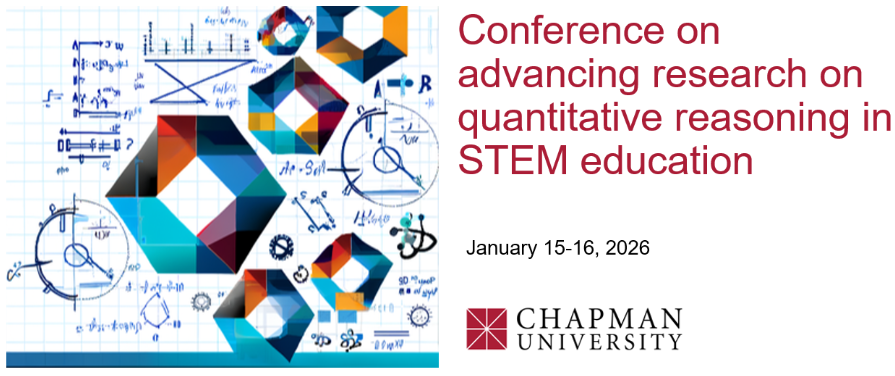
That's a wrap! Thank you to everyone who came to @ChapmanU for our conference on advancing research on quantitative reasoning in STEM ed! We had nearly 100 attendees from 46 institutions and 26 states, and an engaging and intellectually stimulating two days of conversations!
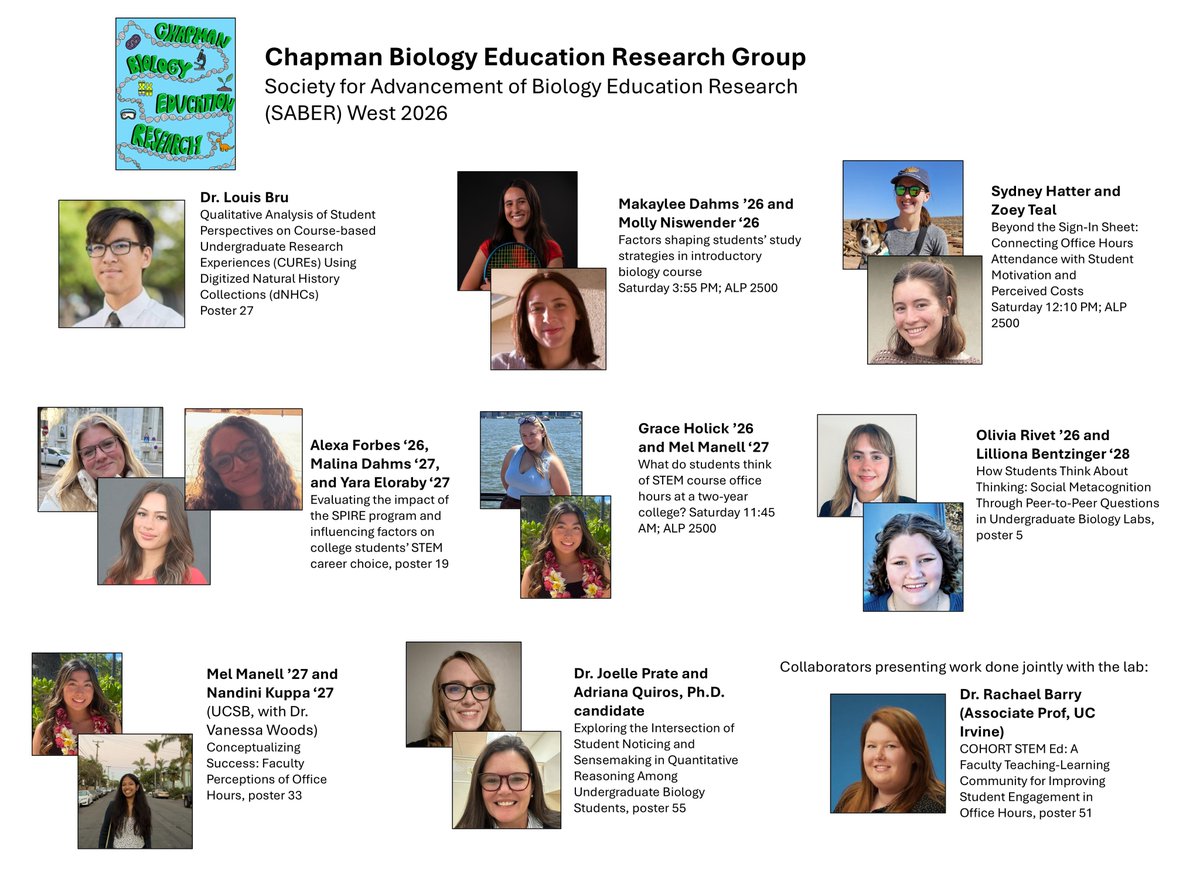
Next, our lab is attending the @sabercommunity SABER West conference. Our group is giving 3 oral talks and 6 posters. Check out the lineup below, which includes many undergraduate students presenting their research! 2/2
What an exciting week for the Chapman Biology Education Research Group! First, we're hosting a conference on advancing research on quantitative reasoning in STEM ed. We have 5 keynotes, 30 talks, and 10 posters, w/nearly 100 attendees from 46 institutions across 26 states! 1/2
A reminder about the upcoming abstract deadline (extended to 11/1) for our conference on advancing research on quantitative reasoning (QR) in STEM education in January! We welcome research & innovations in teaching/assessing QR. Works in progress welcome! https://t.co/78WuUlr2ZP
Call for Papers: Teaching Integrative & Organismal Biology! Integrative and Organismal Biology is excited to announce a collaboration b/w @SICB_ & @SABERcommunity. Manuscripts submitted by 2/28 will form the core of the collection. More info here: https://t.co/989emAWhJ4
We are hiring for a postdoc in STEM education research to join us at Chapman University! The postdoc will join a team researching STEM course office hours and ways to improve office hours. Please RT - more info here! https://t.co/kZObX6Cgdj
📚 Bottom line: Office hours have powerful potential—and we can play a major role in helping students understand them and feel welcome to attend.
Read the full work below. Please RT and share this work! @ChapmanU#ChapmanSciences
https://t.co/Z9ohDhjvFo
7/7
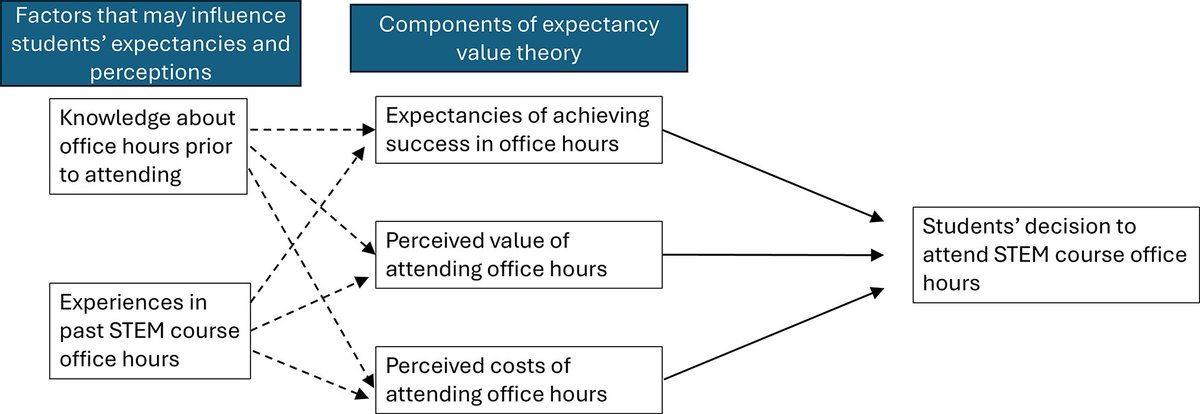
What do first-year students think about STEM course office hours? How do these perceptions change over time? So excited to share a new paper in the International Journal of STEM Education where we conducted a longitudinal study to find out! 1/7
https://t.co/Z9ohDhjvFo
2️⃣Invite students early and often! Frequent reminders made students feel more comfortable and likely to attend.
3️⃣Lower fear of negative evaluation by encouraging all questions, telling students to come listen to questions, and inviting students to attend w/friends.
6/7
Abstract submission for joint NABT @NABT_News & @SABERcommunity SABER Midwest Biology Education Poster Session (in St. Louis, 11/1) extended to 8/15! Any work on bio teaching & learning welcome; includes student competitions for bio ed research & more! https://t.co/3BL5MGjxfA
Check out our paper! We conducted interviews w/ STEM undergrads to explore what motivates some students to go to office hours and why others don’t, and investigate what shapes office hour experiences. We include recommendations for instructors based on our work. Please share/ RT!
Curious why students do—or don’t—attend office hours? Interviews reveal it's about high school habits, syllabus signals, and confidence levels. Key findings and tips from Chapman University’s Jeremy Hsu:
@ChapmanU 👉 https://t.co/Is1bmAxVpf