Operación Muralla de Hércules, así podría responder #España a una agresión militar de #Marruecos contra la soberanía española en #Ceuta y #Melilla
Acción combinada terrestre, naval y aérea que lograra asegurar un territorio en el norte del actual Marruecos..
𝐒𝐨𝐦𝐨𝐬 𝐫𝐚𝐫𝐨𝐬. 𝐏𝐨𝐫 𝐬𝐮𝐞𝐫𝐭𝐞 ❤️🔥
Porque tampoco somos una tierra cualquiera.
Somos una tierra rara. De esas que cuesta explicar si nunca las has vivido.
Un pequeño rincón donde caben muchas culturas, muchas tradiciones, muchas formas de entender la vida y una misma manera de sentir nuestra tierra.
Somos convivencia. Somos respeto. Somos diversidad.
Somos la gente que hace de Ceuta un lugar único.
Y precisamente en los momentos difíciles es cuando más orgullosos debemos estar de aquello que siempre nos ha definido: 𝐩𝐞𝐫𝐦𝐚𝐧𝐞𝐜𝐞𝐫 𝐣𝐮𝐧𝐭𝐨𝐬, 𝐫𝐞𝐬𝐩𝐞𝐭𝐚𝐫𝐧𝐨𝐬 𝐲 𝐜𝐮𝐢𝐝𝐚𝐫 𝐥𝐨 𝐧𝐮𝐞𝐬𝐭𝐫𝐨.
Hoy celebramos nuestra historia.
Pero, sobre todo, celebramos a nuestra gente.
𝐏𝐨𝐫𝐪𝐮𝐞 𝐝𝐢𝐟𝐞𝐫𝐞𝐧𝐭𝐞𝐬 𝐡𝐞𝐦𝐨𝐬 𝐬𝐢𝐝𝐨 𝐬𝐢𝐞𝐦𝐩𝐫𝐞. 𝐘 𝐚𝐡𝐢 𝐞𝐬𝐭𝐚 𝐩𝐫𝐞𝐜𝐢𝐬𝐚𝐦𝐞𝐧𝐭𝐞 𝐥𝐨 𝐞𝐱𝐭𝐫𝐚𝐨𝐫𝐝𝐢𝐧𝐚𝐫𝐢𝐨.
Feliz Día de Ceuta. 🤍🖤
Siempre Ceuta. Siempre España. 🇪🇸
🔴ÚLTIMA HORA | La Fiscalía confirma 21 agresiones sexuales a mujeres y niñas migrantes en Ceuta desde la entrada masiva
Informa @mariolalourido
https://t.co/KQUvxvyHhL
Si @orange_es no retira de inmediato este anuncio de la AP-7 (dirección Elche-Valencia), publicando en territorio español el mapa expansionista del régimen marroquí que incluye el Sáhara Occidental y las ciudades españolas de Ceuta y Melilla como si fueran suyas, se organizará la campaña de bajas masiva más grande que jamás haya visto ni imaginado esa compañía.
Es inconstitucional, es una provocación; intolerable y es una falta de respeto a España y los españoles.
Información vía @TalebSahara
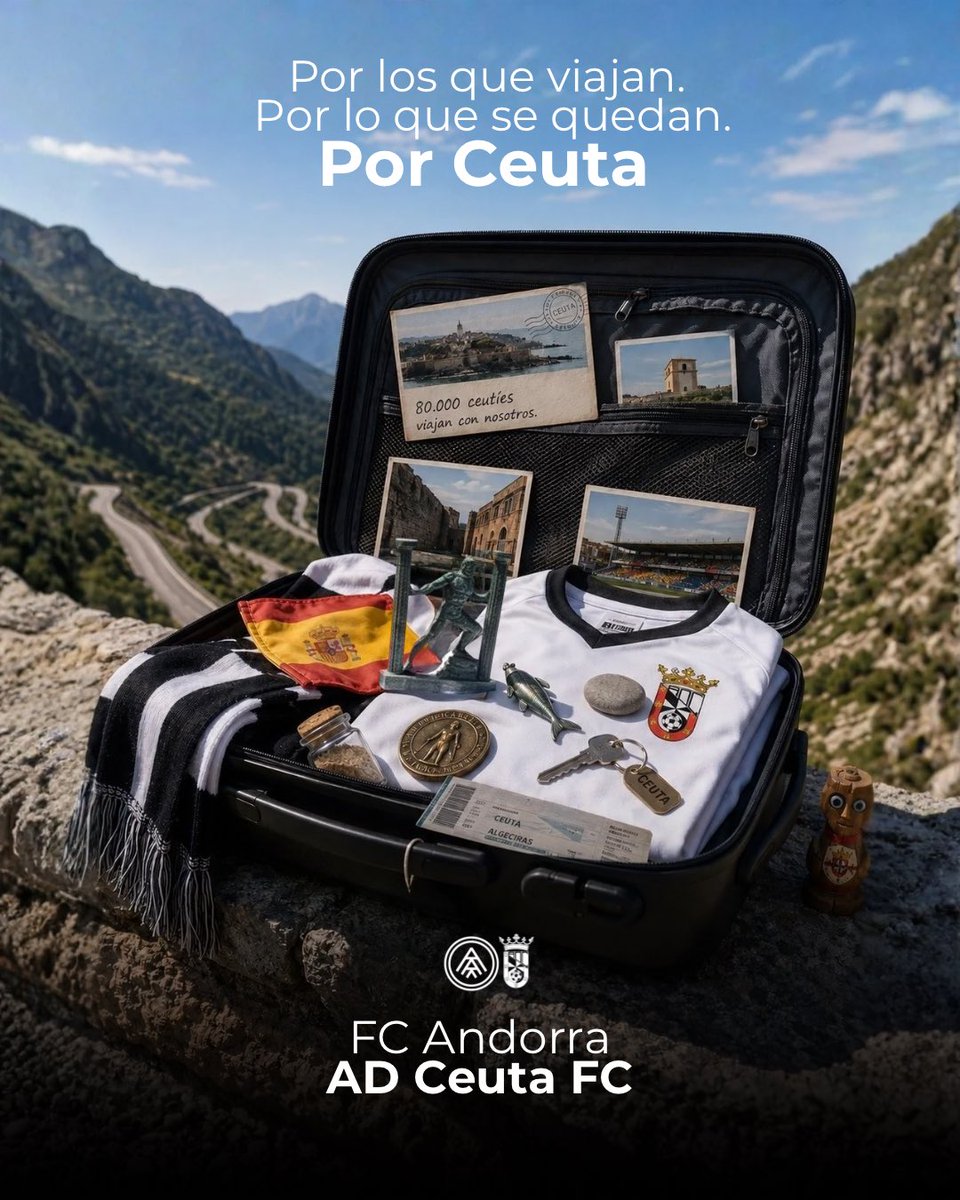
Hay cosas que no caben en una maleta.
Nuestra historia. Nuestros símbolos. Nuestra forma de ser. El orgullo de pertenecer a una tierra única. Y, sobre todo, nuestra gente.
Hoy cruzamos el Estrecho y recorremos kilómetros para volver a competir. Pero no lo hacemos solos.
Con nosotros viajan más de 80.000 ceutíes. Los que están. Los que sienten. Los que, ahora más que nunca, llevan a Ceuta con orgullo.
Porque cada vez que este escudo sale de nuestra ciudad, tenemos el privilegio y la responsabilidad de llevar su nombre por toda España. Y hoy, incluso más allá de sus fronteras.
Ceuta es nuestra casa. Ceuta es nuestra gente. Ceuta es España.
Y allá donde juguemos, viaja con nosotros.
Allá donde juguemos, juega con nosotros.
Por Ceuta.
🤍🖤
Creen que las fiestas de Moros y Cristianos de Alicante es un "agradecimiento", cuando lo que se celebra en ellas fue que fueron expulsados de esos territorios.
Los únicos "marroquíes" fueron los almohades y el recuerdo que se guarda es nefasto.
No hay mafias ahí. Están en otros sitios.
Las mafias existen y están perfectamente documentadas. Lo que ocurre es que tienen tarifas.
Cruzar de Argelia a Baleares llega a costar cuatro mil quinientos euros. En la ruta atlántica, montar una expedición en cayuco cuesta decenas de miles de euros y se factura por múltiplos de esa cifra.
Bordear a nado un espigón que te lleva a Ceuta cuesta Cero. Por eso el argumento de las mafias no cuadra en el balance. Una red criminal opera donde hay algo que cobrar, y por Ceuta y por Melilla pasa precisamente quien no tiene con qué pagarle a nadie.
La ruta gratuita selecciona por abajo. Atribuir a bandas organizadas un flujo de gente sin recursos tiene además una ventaja evidente para quien lo afirma: convierte un problema de gestión política en un problema policial, y un problema policial siempre es un problema de otro.
Por mucho que insistan, en ese punto el asunto es otro.
Y lo saben...
Virtually any ship entering the mediterranean from the west (not the canal) enters through the Spanish territorial waters. Why would spain or even the EU give up so much power?
WHY CEUTA IS EVERY BIT AS SPANISH AS CÁDIZ OR OVIEDO (or even more so)
Where Does Its Sovereignty Come From? Does Morocco Have a Legitimate Claim?
Let’s begin with the dates. Ceuta entered the Iberian sphere on August 21, 1415, when King John I of Portugal captured the city alongside his sons, including Prince Henry the Navigator, in the campaign that is often regarded as the beginning of European overseas expansion. In 1580, with the union of the Portuguese and Spanish crowns under Philip II, Ceuta became part of the Spanish Monarchy, just like Lisbon and Porto. That might have been the end of the story in 1640, when Portugal revolted under the House of Braganza and regained its independence.
Here’s the interesting part: Ceuta was the only territory in the entire Portuguese Empire that chose to remain with Spain. It was neither conquered nor occupied by a Spanish army. Rather, it was Ceuta’s own garrison and inhabitants who pledged their allegiance to Philip IV. That act of loyalty earned the city the title “Most Faithful” (Fidelísima), which still appears on its coat of arms.
The Treaty of Lisbon (1668)—the very treaty in which Spain recognized Portugal’s independence—made this exception explicit. All Portuguese possessions reverted to Portugal except Ceuta, which remained under Spanish sovereignty, as it had already been for twenty-eight years by its own choice. Even today, Ceuta’s flag preserves this heritage: it is the black-and-white gyronny banner of Lisbon with the Portuguese quinas at its center, a reminder of the city’s origins flying over a Spanish city.
No other city in Spain can claim quite the same distinction: to be Spanish because it consciously chose to be, a decision documented in writing, backed by six centuries of continuous Iberian history.
Now let’s look across the Strait.
The Alaouite dynasty, which still reigns in Morocco today, came to power when Moulay Rashid entered Fez in 1666—two years before the Treaty of Lisbon. In other words, Spain’s sovereignty over Ceuta is as old as the Moroccan state that now claims it, while the Iberian presence in the city predates that state by roughly two and a half centuries.
The Alaouites also tried repeatedly to take the city by force. Sultan Moulay Ismail besieged Ceuta beginning in 1694, maintaining the siege—with interruptions—until 1727, a total of thirty-three years, often cited as one of the longest sieges in history. Yet the city never fell.
The historical fact is straightforward: the dynasty that claims Ceuta today has never governed it for a single day in its history. When Morocco gained independence in 1956, Ceuta had already been under formal Spanish sovereignty for 288 years, and had enjoyed 541 consecutive years of Iberian rule.
That is why Ceuta was never part of the Spanish Protectorate of Morocco (1912–1956). Its status as Spanish territory predated the protectorate and was explicitly excluded from it. It is also why Ceuta does not appear on the United Nations list of Non-Self-Governing Territories awaiting decolonization.
Gibraltar DOES appear on that list. The comparison that Rabat frequently makes does not withstand scrutiny when the legal histories are examined side by side. Gibraltar was seized from Spain during a war and ceded to Britain under the Treaty of Utrecht (1713). Ceuta, by contrast, passed from Portugal to Spain through dynastic union, the voluntary loyalty of its inhabitants, and a treaty between the two crowns—at a time when the modern Moroccan state did not yet exist.
That leaves geography, arguably Rabat’s strongest argument. ⬇️
La única solución en estos momentos es mano dura. A. Cierre absoluto de la frontera con Marruecos. B. Expulsión de sus diplomáticos y los de los países que están apoyando ( ISR y EEUU vais a la lista). C. Devolución en frío congelado de todo invasor a playas de Marruecos a pie por Ceuta y Melilla tras toma datos biométricos para ser baneados de por vida entrada a España D. NO hay paso del estrecho este año. Cerrado en los Pirineos paso a marroquís. E. Expulsión de todo ciudadano marroquí sin residencia en España hacia la frontera de su elección ( si quieren Francia, todo suyo, si no con el resto en ferry militarizado hasta Ceuta/Melilla- pagando ellos los gastos- y mismo procedimiento invasores. F. Incautación de todos los bienes en España propiedad de la familia real Marroqui. G. Investigación exhaustiva de nacionales españoles que hayan colaborado o recibido fondos de Marruecos. H. Plan de choque económico para Ceuta y Melilla con art 155 para analizar infiltración y depurar Administración local por parte Marruecos. Zona de libre comercio y foco en mar y finanzas. Diseñar plan que haga su economía una verdadera generadora de Riqueza. I. Moción de Censura inmediata.