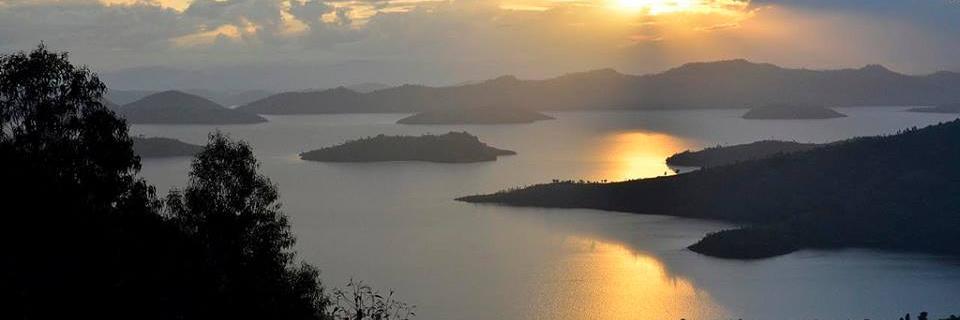
“It might not seem possible for a nation to heal from genocide so quickly. And some might think that our reconciliation is surface level. But it runs deeper than that. If we were truly a nation playing ‘make believe,’ our progress would have been impossible. Rwanda’s...:
“There was a huge puzzle after the genocide. How do you pursue justice when the crime is so great? You can’t lose one million people in one hundred days without an equal number of perpetrators. But we also can’t imprison an entire nation. So forgiveness was the..."
As we've shared Damas's story on HONY, we've been holding a fundraiser to help him continue his work helping underprivileged and traumatized children. If you've been inspired by his story, please consider contributing: https://t.co/BATPWr0pLo
(6/7) “After people were discovered in the orphanage ceiling, the militia determined that I was a collaborator. They held a high level meeting and passed a resolution to kill me. I barely slept that night. And the next morning I awoke to my name being called out over the..."
(5/7) "One night I was walking the property when I heard the children screaming. They were saying, ‘Papa! Papa! Papa!’ The screams were coming from inside the office. When I ran to see what was happening, I found that a group of killers had entered the..."
(4/7) “The militias would usually grow tired of killing people by 3 PM, and they would rest for the day. That’s when I’d take people out of the ceiling to stretch their legs. I’d circle the property. I’d walk to a nearby pit where they threw dead bodies. I’d listen..."
(3/7) “Our most desperate problem was water. The government had cut off our supply. And we were packed so densely that the heat was unbearable. Whenever we brought out jugs of water, one hundred liters would be consumed in less than a minute. After two weeks we’d..."
(2/7) “Over the next few days, the situation grew worse. Bombs were being dropped all around us. The streets had grown very loud. The killers would chant and scream while they chased people. All of the children were terrified. We couldn’t hide the truth from them..."
(1/7) “I inherited this orphanage from my father. I was in my twenties at the time. I had other dreams for my life, but the responsibility fell on me. When my father passed away, he begged me: ‘Damas, please don’t abandon the children.’ So I promised him that I never..."
(9/9) “This is a picture of my father before the genocide. He’s surrounded by his Hutu friends. They’re sharing beer. They’re talking. They always viewed him as a good person. They’d even come to our home and flatter us. They’d tell my sisters and me how good of..."
(8/9) “There were twelve people in my family before the genocide. I’m the only one who survived. We recovered eight of the bodies. And we buried the bones we were able to find. I didn’t trust anyone after the genocide. Even when I was rescued by the..."
(7/9) “I woke up to find that I’d been discovered by a soldier. He dragged me to my feet and led me down the street to this alleyway. He pointed his gun at me, and told me to say goodbye to my life. At that point I felt ready to die. But that’s when Mary came running..."
(6/9) “The next morning, I heard people calling my name and I decided to show myself. I was too exhausted to resist. They told me there had been a general pardon for women and children. And all of us who believed the rumor were taken to this place-- the house of a..."
(5/9) “On the day I watched my father die, this is the skirt I was wearing. I was only twenty-one years old. I completely lost my will to live. I walked down the street like a zombie. I came to this house. The owner wasn’t home at the time because she was busy looting..."
(4/9) “Our family was a top target because my father was so prominent. So when the genocide officially commenced, the killing squads came straight to our home. One of our neighbors peeled away from the group and ran ahead to warn us. He came down our street, screaming at..."
(3/9) “If you are being hunted, this bush is one of the best places to hide. Every genocide survivor in Rwanda can tell you about this type of bush. It’s full of thorns. But if you crawl on your stomach, you can get inside. And if you can get inside— you can finally take..."
(2/9) “When the presidential plane was shot down, people began to gossip about the impending genocide. The streets were empty. Nobody was travelling long distances. We started to hear tales of violence. Relatives from other regions would arrive on our doorstep with..."
(1/9) “My father was well respected in the community. He was a university lecturer and a choir member. But he was always working, so my mother was primarily the one who raised us. Her name was Consolee. She had this deep sorrow about her. She was an orphan because her..."
She’s created a small fundraiser, which I’ve kicked off with a $5,000 donation from the HONY Patreon. If you’d like to empower Nyanja in the next phase of her life, and help improve healthcare for children in Rwanda, you may do so here: https://t.co/rB0SINu2EA
If you are wondering why Nyanja is back in Rwanda, it’s because she has founded an organization called Little Hills—which aims to improve health services for children in Rwanda. Her ultimate goal is to build a children’s hospital.