US hospitals, 457,950 COVID patients.
AI found long COVID in 16.28%, about 1 in 6, with 89.31% developing chronic conditions.
Coding misses over half of cases.
https://t.co/prqZnFk72R
Large study (av age 45) shows people with #LongCovid are 4.48x more likely to have a Major Adverse Cardiovascular Event (stroke, pulmonary embolism, heart failure) & 53% more likely to die.
True regardless of age, BMI, vaccination, variant. Risks last 3+ years from infection. 1/
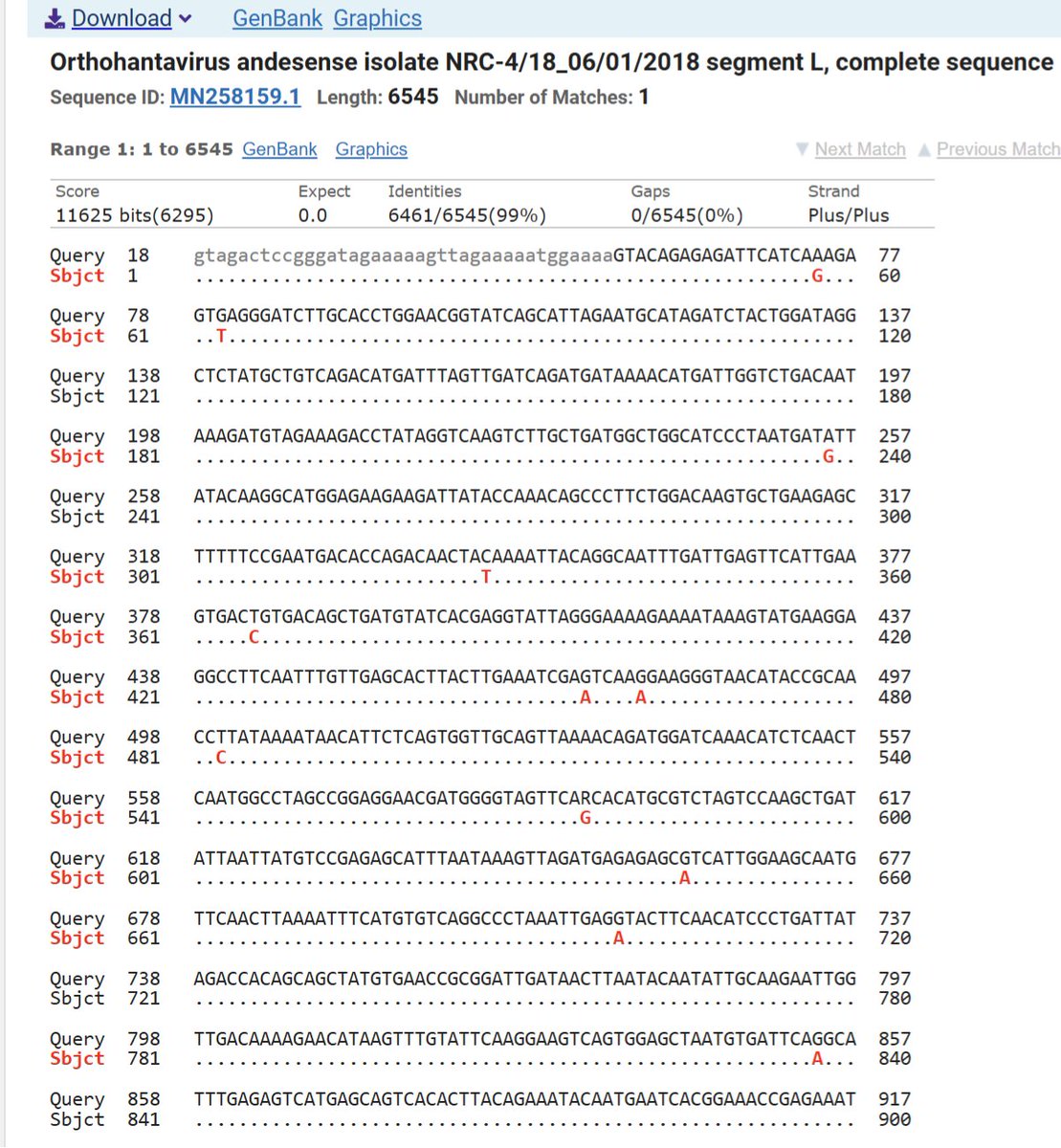
BREAKING: First sequencing of the Hantavirus from the outbreak.
-99% identical to a June 2018 case from a patient in Argentina
-10.4 SNV/year mutation rate
- The Andes genome is about 12 kb across three RNA segments. At 10⁻⁴ to 10⁻³ substitutions/site/year, that translates very roughly to 1-12 SNV per year
-Completely in line with a natural spillover in Argentina from the rodent host in 2018 and now in 2026
Source: https://t.co/WFEkPqAoKW
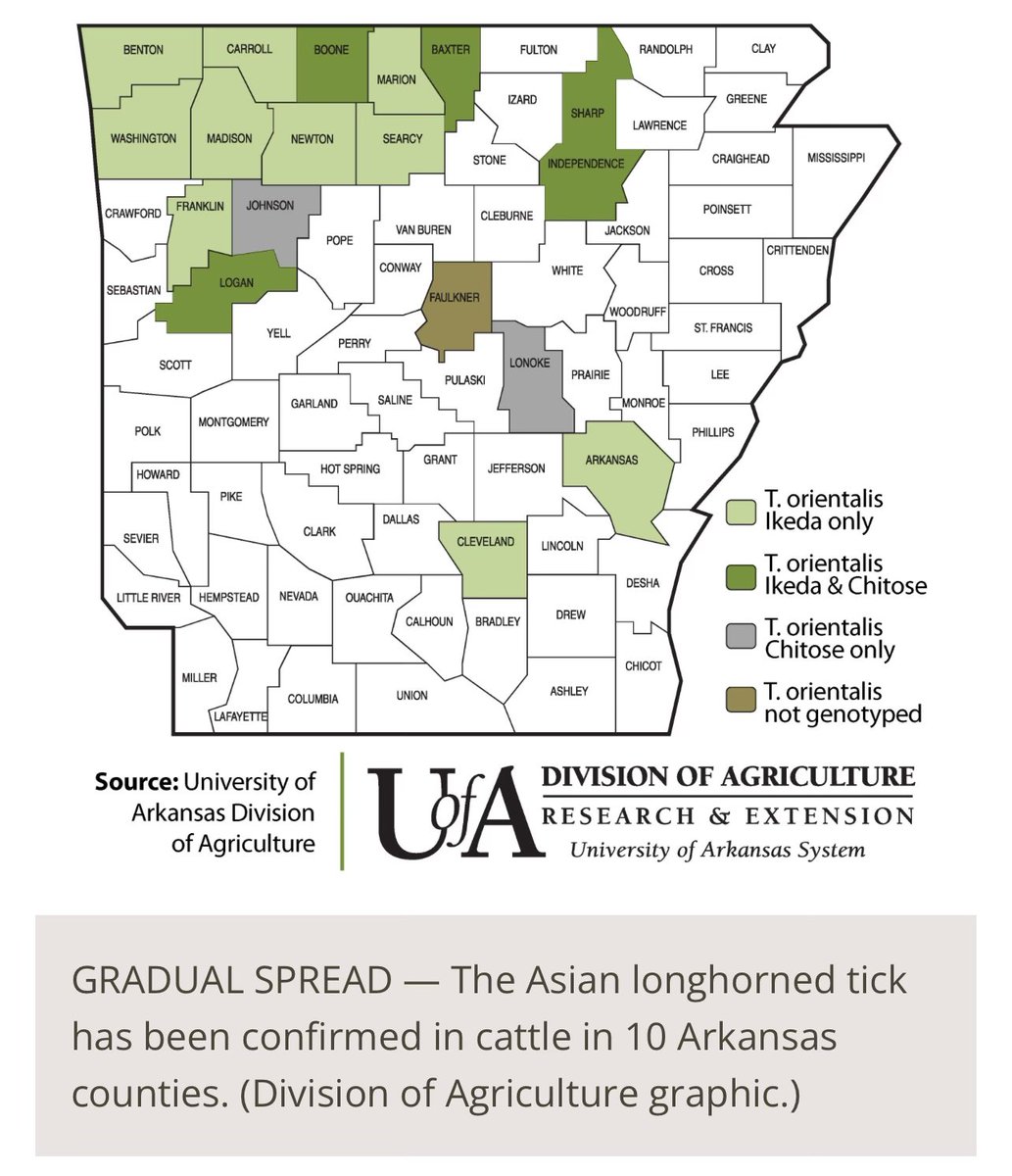
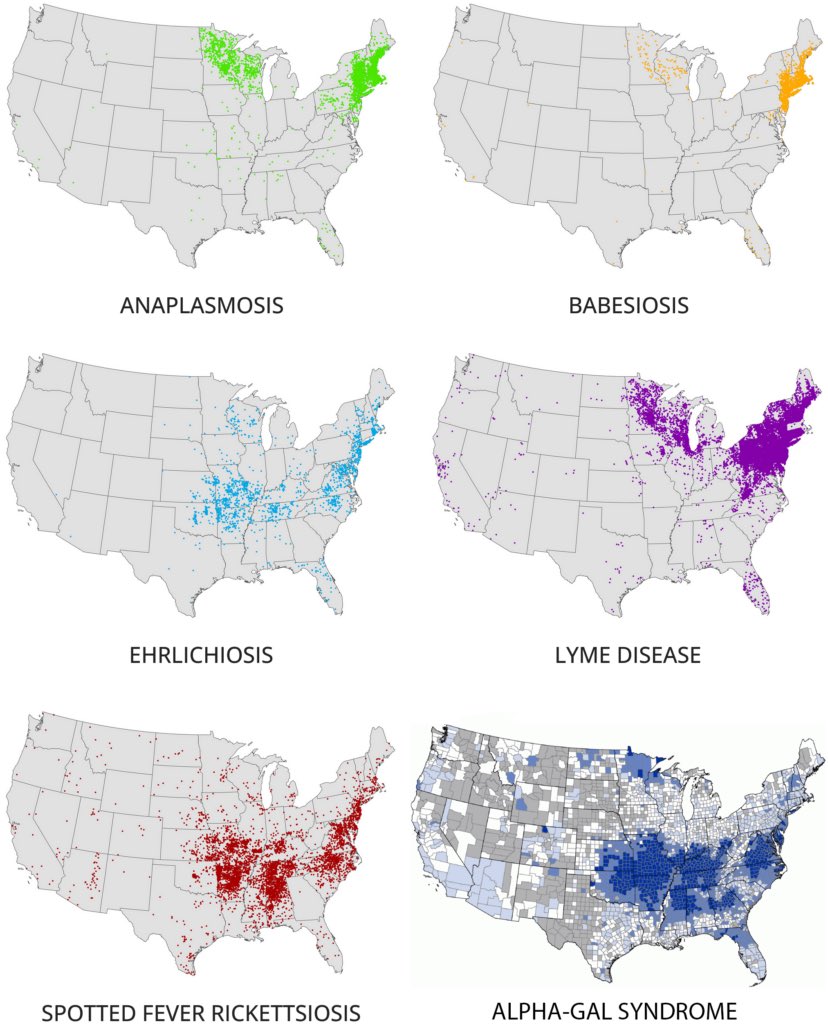
It’s time to seriously talk ticks here in the Ozarks. My buddy in Benton County who used to diagnose a couple cases of Alpha-Gal a month—now multiple per day. Everybody’s dog has ehrlichiosis, and highest ER visits ever for rocky mtn tick fever in Arkansas last year.
I'm just going to say it again once, as simply as I can, for everyone who is slow to understand this:
Covid infection damages the vascular endothelium, the delicate lining inside your blood vessels.
Hantavirus *targets* the vascular endothelium.
COVID shedded before you felt ill.
That’s why it spread so efficiently. You’re infectious before you know you’re sick.
Hantavirus doesn’t appear to shed before you have symptoms. Even if they are 2 weeks or 8 weeks after exposure.
But fatality rate alone does not determine outbreak risk.
A virus that kills 30 % of the people who contract it but barely spreads to anyone else is less dangerous to society than one that kills 0.1 % but infects everyone.
See: COVID.
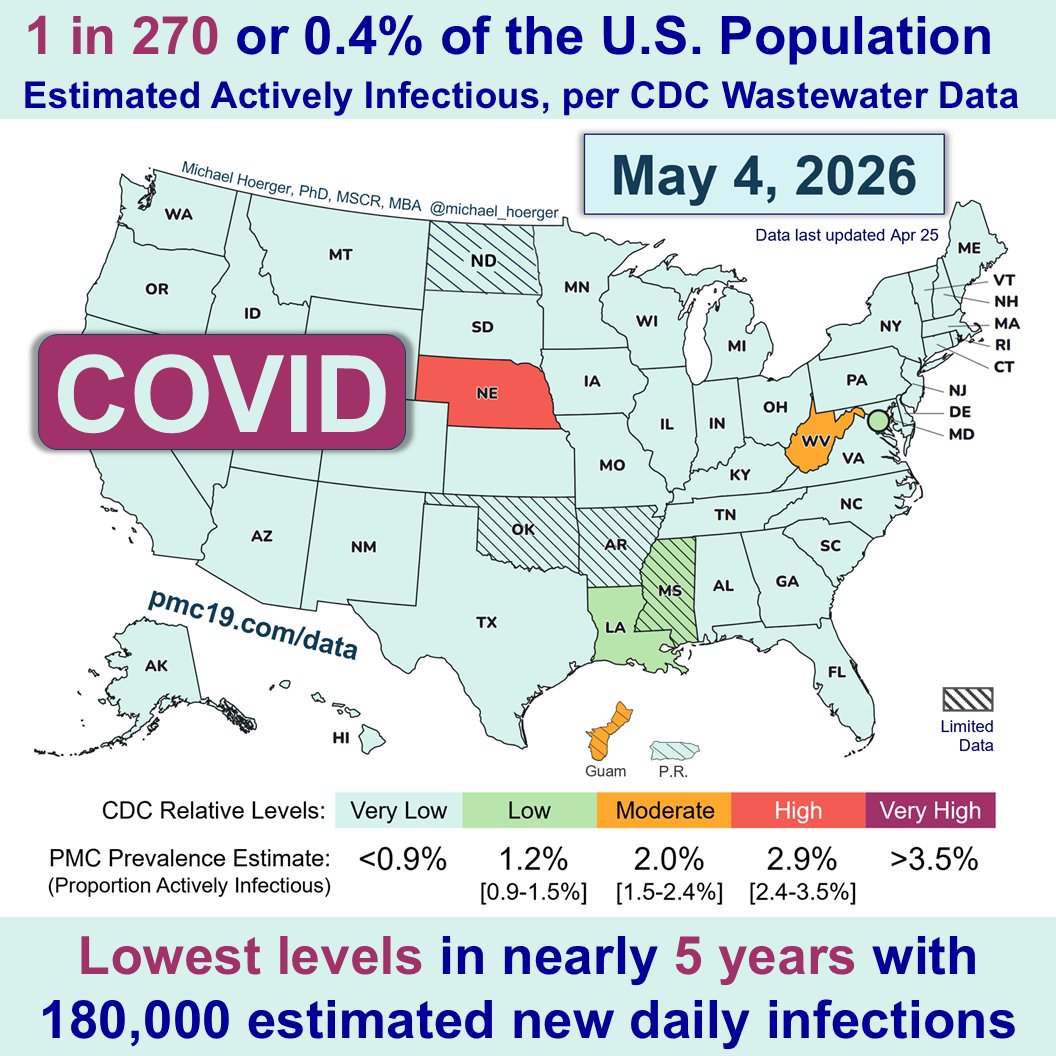
May 4, 2026 (PMC COVID Update)
SARS-CoV-2 transmission has slowly declined to an estimated 180,000 new daily infections.
This is the lowest estimate since July 13, 2021. It's 3x the pandemic low of late May 2021.
🧵THREAD 1/4
The cost of sequencing a human genome dropped from $100M to less than $100 in about 25 years.
That's a million-fold decrease, which outpaces even Moore's Law.
We're about to enter the era of personalized medicine.
Fireball uptick in early 2026 likely isn’t one object or “event.”
Data points to Earth passing through the antihelion corridor—a region of overlapping debris streams (comet + asteroidal). Not a swarm. Not random. A structured debris field shift. #fireballs#meteors
A groundbreaking study has pinpointed a microscopic culprit behind the debilitating fatigue, brain fog, and other persistent symptoms of long COVID: abnormal, sticky microclots embedded with neutrophil extracellular traps (NETs) in patients' blood.
These microclots—tiny aggregates of clotting proteins—are small enough to obstruct the body's tiniest blood vessels (capillaries), restricting oxygen delivery to tissues and organs without triggering obvious large-scale clotting events. In long COVID patients, researchers observed a dramatic ~20-fold increase (median 19.7 times higher) in the number of these microclots compared to healthy controls, with the clots also tending to be larger.
What sets this finding apart is the discovery that these microclots are structurally intertwined with NETs—web-like structures of DNA, enzymes (such as myeloperoxidase and neutrophil elastase), and proteins released by neutrophils (a type of white blood cell) to ensnare pathogens. Normally, NETs form temporarily and then dissolve, but in long COVID, they persist and become physically embedded within the microclots, creating highly resistant, "gummy" structures that evade the body's natural clot-breaking processes (fibrinolysis). This creates a chronic thromboinflammatory state, where blocked microcirculation and ongoing low-grade inflammation may sustain symptoms like exhaustion and cognitive impairment.
The differences were so pronounced that machine learning models analyzing anonymized blood samples (via fluorescence microscopy for markers like ThT for amyloid-like structures, DNA stains, and MPO for NETs) could distinguish long COVID patients from healthy individuals with 91% accuracy—offering a potential objective biomarker for a condition that has long evaded reliable diagnosis through standard tests (e.g., normal D-dimer, PT/INR, or aPTT levels despite significant microclot burden).
This work, led by teams including Prof. Etheresia Pretorius (Stellenbosch University) and Dr. Alain Thierry (Montpellier University), reframes long COVID as a tangible, blood-based disorder driven by dysregulated coagulation and innate immunity rather than vague "post-viral malaise." Targeting NETs or microclots—perhaps with therapies to degrade NETs or prevent their stabilization—could open doors to treating root causes instead of merely alleviating symptoms.
[Thierry, A. R., Usher, T., Sanchez, C., Turner, S., Venter, C., Pastor, B., Waters, M., Thompson, A., Mirandola, A., Pisareva, E., Prevostel, C., Laubscher, G. J., Kell, D. B., & Pretorius, E. (2025). Circulating Microclots Are Structurally Associated With Neutrophil Extracellular Traps and Their Amounts Are Elevated in Long COVID Patients. Journal of Medical Virology, 97(10), e70613. DOI: 10.1002/jmv.70613]
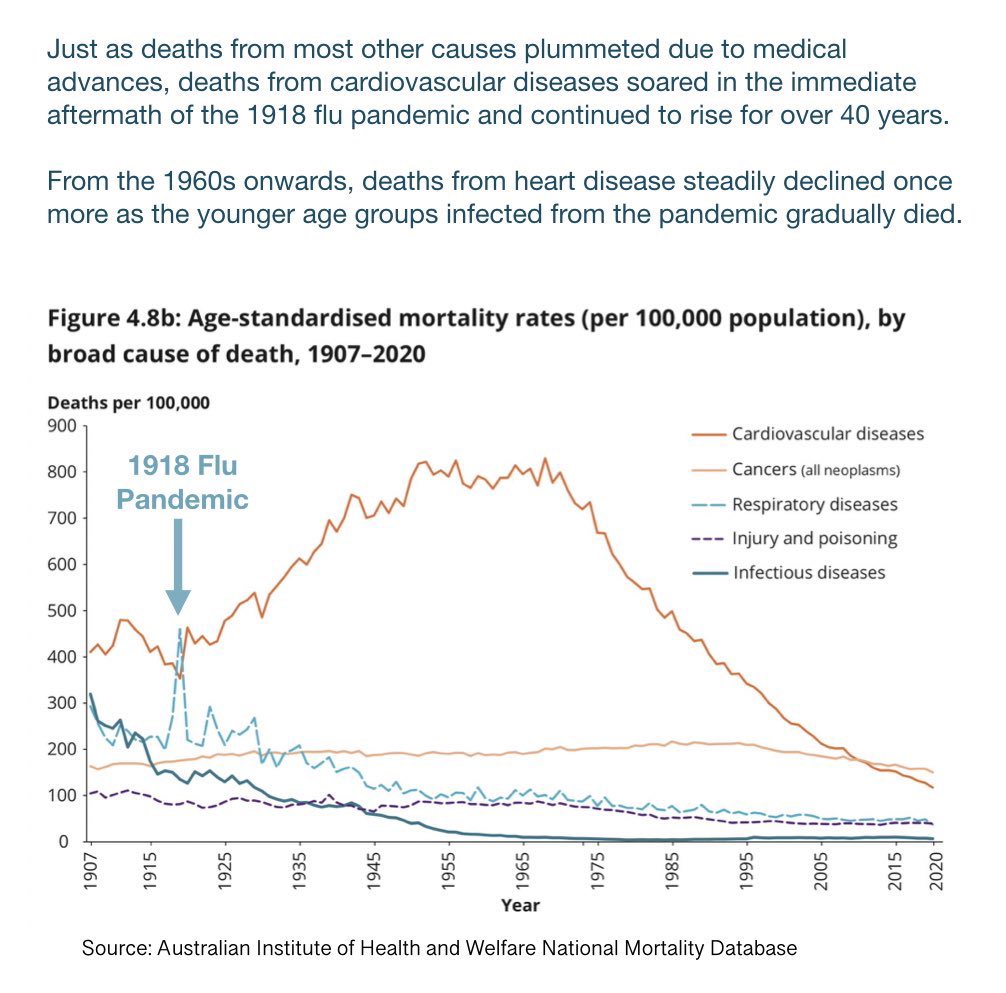
Did you know that, in the aftermath of the 1918 flu pandemic, deaths from cardiovascular diseases soared and continued to rise for over 40 years?
From 1960 onwards, deaths from heart disease steadily declined as the younger age groups infected during the pandemic gradually died.
A microscopic tardigrade, also known as a water bear, walking across a glass slide.
Extremely resilient, it can survive decades without food or water and are the only known animal that can survive in direct exposure in space.
[🔬 Tobin Sparling]














![Rainmaker1973's tweet photo. A groundbreaking study has pinpointed a microscopic culprit behind the debilitating fatigue, brain fog, and other persistent symptoms of long COVID: abnormal, sticky microclots embedded with neutrophil extracellular traps (NETs) in patients' blood.
These microclots—tiny aggregates of clotting proteins—are small enough to obstruct the body's tiniest blood vessels (capillaries), restricting oxygen delivery to tissues and organs without triggering obvious large-scale clotting events. In long COVID patients, researchers observed a dramatic ~20-fold increase (median 19.7 times higher) in the number of these microclots compared to healthy controls, with the clots also tending to be larger.
What sets this finding apart is the discovery that these microclots are structurally intertwined with NETs—web-like structures of DNA, enzymes (such as myeloperoxidase and neutrophil elastase), and proteins released by neutrophils (a type of white blood cell) to ensnare pathogens. Normally, NETs form temporarily and then dissolve, but in long COVID, they persist and become physically embedded within the microclots, creating highly resistant, "gummy" structures that evade the body's natural clot-breaking processes (fibrinolysis). This creates a chronic thromboinflammatory state, where blocked microcirculation and ongoing low-grade inflammation may sustain symptoms like exhaustion and cognitive impairment.
The differences were so pronounced that machine learning models analyzing anonymized blood samples (via fluorescence microscopy for markers like ThT for amyloid-like structures, DNA stains, and MPO for NETs) could distinguish long COVID patients from healthy individuals with 91% accuracy—offering a potential objective biomarker for a condition that has long evaded reliable diagnosis through standard tests (e.g., normal D-dimer, PT/INR, or aPTT levels despite significant microclot burden).
This work, led by teams including Prof. Etheresia Pretorius (Stellenbosch University) and Dr. Alain Thierry (Montpellier University), reframes long COVID as a tangible, blood-based disorder driven by dysregulated coagulation and innate immunity rather than vague "post-viral malaise." Targeting NETs or microclots—perhaps with therapies to degrade NETs or prevent their stabilization—could open doors to treating root causes instead of merely alleviating symptoms.
[Thierry, A. R., Usher, T., Sanchez, C., Turner, S., Venter, C., Pastor, B., Waters, M., Thompson, A., Mirandola, A., Pisareva, E., Prevostel, C., Laubscher, G. J., Kell, D. B., & Pretorius, E. (2025). Circulating Microclots Are Structurally Associated With Neutrophil Extracellular Traps and Their Amounts Are Elevated in Long COVID Patients. Journal of Medical Virology, 97(10), e70613. DOI: 10.1002/jmv.70613]](https://pbs.twimg.com/media/HGRfjgfW0AMG95k.jpg)