Always appreciate when a liberal takes time to put down the burning flag to let us know some military ceremony isn’t being carried out to the satisfaction of their sense of patriotism
This isn't even an exaggeration. The talking points that get you labeled a 'Nazi' today were just vanilla Democrat talking points not even twenty years ago.
Under capitalism, socialists are free to build socialism.
Under socialism, capitalists aren’t free to build anything.
Nothing stops a group of socialists pooling their money, forming a company, and splitting every wage and every pound of profit perfectly equally.... Or to donate all profit to the government.
It’s legal. It’s easy. Owning the means of production is as simple as setting up a company.
Marx wrote his manifesto before the invention of limited liability companies. Back then “seize the factory” meant seizing it from the handful of families who could afford one.
That argument expired the day anyone could start a company with limited liability, raise investment and hire who they want.
Socialists are free to lead by example and demonstrate their system works. They can out-recruit, out-motivate, out-build and out innovate based on their ideas if they like. It would prove the philosophy works. Capitalism will happily host their experiment.
The fact that nobody does this tells you a lot.
Another point about our cultural decline. We started watching the show Widow’s Bay. It’s really good. Fantastic writing. Perfect blend of comedy and horror. Last night’s episode was legitimately one of the finest episodes of television I’ve seen in years.
If this same exact show came out in 2002, we’d probably remember it as an all time classic. But in 2026 most people haven’t even heard of it. It’s a blip on the radar. Another piece of content in the endless sea. You see it, or you don’t, and then it’s forgotten.
It’s not that good stuff isn’t made anymore. It’s that even when good stuff is made, we don’t have any shared experience of it. There’s plenty of good music you can find on Spotify, recent stuff, but you experience it in your little algorithmic silo. Almost nothing breaks containment to become a bonafide cultural phenomenon. That’s what made Project Hail Mary so unique. Severance maybe also achieved escape velocity. But even in those cases the escape is fleeting.
For the most part we experience the culture through the narrow pathway constructed for us by the algorithm. It might intersect with other people’s pathways, but only briefly. When we feel nostalgia for the Before Times, this is why. It’s not simply that we had a “better” culture back in the 90s or whenever. It’s that we had a culture at all.
This is the ultimate midwit healthcare take.
No, 32 countries have not “figured out” universal healthcare.
The UK has “free” healthcare, and roughly 1 in 3 cancer patients in England still fail to start treatment within 62 days of urgent referral.
Canada has “free” healthcare, and the median wait for neurosurgical treatment is around a year.
Australia has “free” healthcare, and over half the country still buys private insurance despite paying for a public universal system with their taxes.
Switzerland has universal coverage, because residents are required to buy private insurance. There is no government system where benevolent bureaucrats tuck you in at night with a warm blanket and an MRI appointment.
The actual lesson from other wealthy countries is not “they figured it out.”
America’s system has huge problems. Our prices are insane, insurance markets are distorted, and hospital systems are cartelized. Our regulations make care more expensive than it needs to be.
Yet we still guarantee access to even the 8% who don’t have coverage. We give easy routes to qualify for medicaid for those with disabilities.
Pretending the rest of the world solved healthcare because they slapped the word “universal” on a rationing scheme is not analysis.
It is bumper sticker policy for people who think access means having a card in your wallet while you wait a year to see the doctor you need.
@EndWokeness "The problem with the world is that the intelligent people are full of doubts, while the stupid ones are full of confidence.” Charles Bukowski
I am the Chairman and CEO of Vornado Realty Trust. Eighty-four years old. Seven buildings in Midtown Manhattan. I said what I said.
I said "tax the rich" is the equivalent of a racial slur. I said it at REBNY. Into the microphone. Eight hundred people. Median net worth in that room was north of $240 million, I know because our CFO ran the guest list through a Bloomberg terminal as a joke, and then it wasn't a joke. And when I said it, twelve people applauded. The rest nodded. One woman in the third row mouthed, "Finally." I saw her.
Sharon, my communications advisor, Columbia, $430,000 a year, very bright, Sharon wants me to walk it back. She drafted something. "Mr. Roth's comments were intended to highlight the emotional impact of political rhetoric on business communities." I read it. I put it in the trash can on my desk. Not the recycling. The trash. Here's my clarification: I understated it.
"Tax the rich" is worse than a slur. A slur is just a word. It doesn't come with a CBO score. Nobody is introducing a bill called the Racial Slur Implementation Act of 2026. But there are seventeen active proposals in Congress, I had Sharon count them, seventeen proposals designed to take more of my money. My money. Mine. Money I acquired by being better at acquiring Manhattan commercial real estate than anyone alive for four consecutive decades. That is not a crime. That is a record.
I pay property taxes on $18.2 billion in assessed assets. $412 million a year. Say it again: four hundred and twelve million. I carry that number. It's the first thing I think about when I see a protest sign. I think: I pay more in property tax than the entire annual budget of the city of Fort Lauderdale. I looked this up. Fort Lauderdale: $408 million. Steve Roth: $412 million. I am a small city. And the city doesn't get screamed at.
My effective tax rate last year was 11.4 percent. I say this because I believe in transparency and because I'm not ashamed of it. The rate reflects the legal structure of real estate investment trusts, depreciation schedules Congress established in 1986, and carried interest provisions that both parties have voted to preserve for forty years. I did not write these laws. I organized my entire financial existence around them with the help of nine full-time tax professionals who have offices on the 38th floor of 888 Seventh Avenue, which I also own. Their office is in my building. Their work protects my buildings. This is not a loophole. Sharon calls it a loophole. I've told her: a structure maintained by nine attorneys across four decades is not a loophole. A loophole is something you slip through once. This is architecture. This is the foundation. This is the building.
Last Tuesday, same as every Tuesday, I walked past 1290 Sixth Avenue. My building. And there was a man. Same man as last week. Same sign: "Billionaires Pay Your Fair Share." He was standing on my sidewalk. My literal sidewalk — my company owns the ground lease. He was maybe thirty. He was wearing a jacket I would estimate cost $60. My lunch that day was $114. For one. I am telling you this not to boast but because these are facts. He has decided I'm his enemy. Based on a number he saw on a Forbes list. He doesn't know what I pay. He doesn't know what my buildings cost this city in construction jobs and lease revenue and foot traffic. He knows one number. He has made one judgment.
I see him every Tuesday. I've started to notice things. He brings coffee from the cart, not the Starbucks. He has a backpack that looks heavy. He doesn't look unhealthy. He looks like he probably works somewhere, but not on Tuesdays. I've wondered: does he have a job? Does he have a building? Does he have anything that depends on him the way 4,200 employees depend on me? I suspect not. And yet he has opinions about my tax rate.
I gave $22 million to charity last year. The Met. NYU Langone. Mount Sinai. I gave a building to NYU. Not money for a building — a building. The Steven Roth Residence Hall. It houses 400 students. That man with the sign has never housed 400 students. He hasn't housed one. He gives cardboard. I give structures. This is not a comparison I'm making to flatter myself. It's just arithmetic.
When I said what I said at REBNY, I was saying what every person in that room believes and none of them will say publicly because they have communications advisors and the communications advisors all went to Columbia and they all say "unhelpful." I'm eighty-four. I'm too old for helpful. I'm too old to perform restraint for people who hate me for something I can't change.
I didn't choose to be rich. I chose to be good at one thing for a very long time, and this is what happened. You don't punish someone for that. You don't legislate against someone for that.
My net worth fluctuates between $3.8 and $4.1 billion depending on the quarter. I fluctuate more in a fiscal week than that man on my sidewalk will earn in his life. Both of these are facts. Only one of them is considered polite to say.
They want me to apologize.
I'll be dead in ten years. Twenty if I'm lucky. And they'll still be renting my buildings.
Let's settle the debate over socialism.
We'll split a country in half. One half socialist, another capitalist.
They will have the same language, ethnicity, and culture. And for the fun of it, we are giving the slightly richer half to the socialists.
And check back in 70 years.
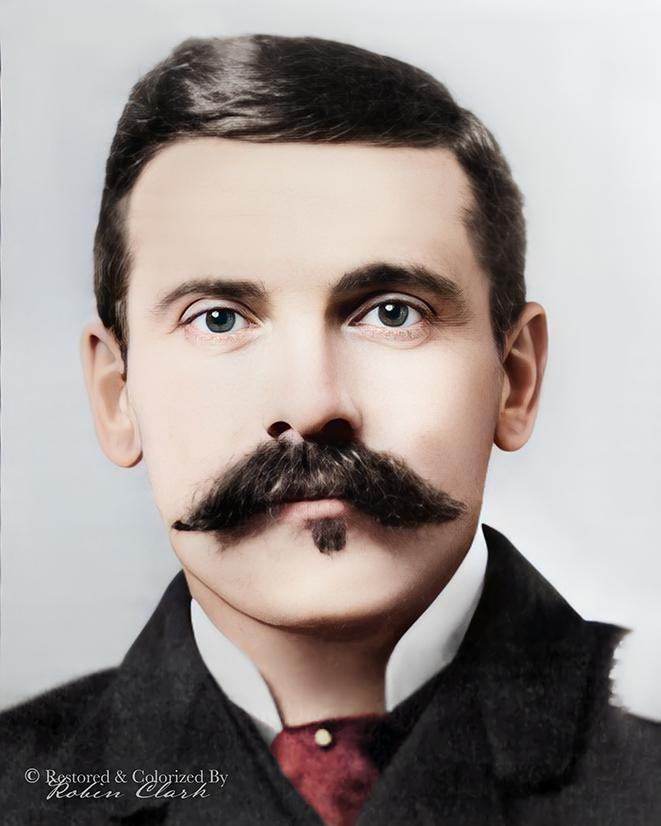
Doc Holliday was a dentist with a classical education in Greek and Latin who killed his first man at 19, coughed blood into a handkerchief for the next 17 years, and died in bed with a glass of whiskey, saying, "This is funny."
Funny because he'd spent his entire adult life expecting to die in a gunfight. He never did.
John Henry Holliday was born in Griffin, Georgia in 1851. He came into the world with a cleft palate and a partial cleft lip, a deformity that in 1851 was usually a death sentence for an infant. His uncle, a surgeon named John Stiles Holliday, performed the corrective surgery himself when the baby was two months old. His mother Alice spent the next several years patiently teaching the boy to speak clearly. She taught him piano. She taught him manners. She taught him how to bow to a woman and how to address a gentleman. By the time he was a teenager, John Henry could quote Virgil in the original Latin, play Chopin from memory, and dance a quadrille.
Then she died of tuberculosis when he was 15, and so did the small, soft world she'd built for him.
He was sent to Philadelphia to study dentistry. He graduated from the Pennsylvania College of Dental Surgery in 1872 at the age of 20, one of the youngest in his class, and his entry "Diseases of the Teeth" was considered exceptional. He won an award at a dental fair for "Best Set of Artificial Teeth in Gold." His diploma still exists. You can look at it.
He moved back south, set up a practice, and started coughing.
By 1873 the diagnosis was unmistakable. Pulmonary tuberculosis. The same disease that killed his mother. Doctors gave him a few months, maybe a year. They told him his only chance was to move west, where the dry air might slow the lungs from drowning. He kissed his cousin Mattie goodbye. He had been in love with her for years. She would later become a Catholic nun, Sister Mary Melanie, and she was the woman Margaret Mitchell would model Melanie Hamilton on in Gone With the Wind. They wrote each other letters until the day he died. Nobody has ever found those letters. The family burned them.
He went to Dallas. He set up a dental office. And his patients, watching this thin polite young man cough blood into a handkerchief between extractions, stopped coming.
So he turned to cards.
Faro, mostly. Poker when he could find it. He had a gambler's gift and a dying man's nerve, and within two years he was making more in a week at the tables than he'd made in a year pulling teeth. He moved through Texas and into the Colorado mining camps, then New Mexico, then Arizona. He drank an estimated two to three quarts of whiskey a day, partly because it numbed the lungs and partly because nothing else did.
Here is what made him terrifying.
Most gunfighters in the Old West were cowards in expensive boots. They picked fights they could win and avoided fights they couldn't. Doc Holliday already knew he was dying. There was nothing you could threaten him with. There was no future you could take from him. He would walk into a room of armed men with that thin slow smile and a Colt and a knife and sometimes a sawed off shotgun under his long grey coat, and the math running behind his pale blue eyes was simple. Every day he was alive was already stolen. The men across the table had something to lose. He had nothing.
He weighed about 135 pounds. He was five foot ten. He was usually drunk. And by the time he reached Tombstone, men crossed streets to avoid him.
His common law wife was a Hungarian woman named Mary Katharine Horony, better known as Big Nose Kate. She had been born to nobility in Budapest, run away as a teenager after her parents died, worked as a prostitute in Iowa, and ended up on the frontier with a temper that matched his. He once got her out of jail by bribing a guard. She once got him out of jail by setting fire to the hotel next door as a distraction, then walking him out at gunpoint. They fought constantly. They loved each other in the way two people love each other when they both know one of them is going to die soon.
He met Wyatt Earp in Fort Griffin, Texas, in 1877. The friendship that followed would shape both their lives. The legend goes that Doc saved Wyatt's life in Dodge City, walking out of the Long Branch Saloon to find Wyatt surrounded by cowboys with guns drawn, and putting his pistol to the leader's temple before anyone saw him move. Wyatt later said he owed Doc his life. He said Doc was "the most skillful gambler, and the nerviest, fastest, deadliest man with a six gun I ever knew."
Wyatt Earp said that. About a tubercular dentist who could quote Cicero.
At the OK Corral on October 26, 1881, the fight lasted thirty seconds. Doc was carrying a 10 gauge coach gun under his coat. He killed Tom McLaury with both barrels. When Morgan Earp was assassinated months later in retaliation, Doc rode with Wyatt on what history would later call the Vendetta Ride, a three week killing spree across Arizona that left every man they believed responsible dead in the dirt. They were never caught. They were never tried. They simply rode out of the territory and disappeared.
By 1887 the disease had finally caught up with him. He was 36 years old. He weighed less than 120 pounds. He had outlived nearly every man who had ever tried to kill him, and most of the ones who had only thought about it. He checked into the Hotel Glenwood in Glenwood Springs, Colorado, where the sulfur springs were said to ease the lungs. They didn't.
On the morning of November 8th, the nurse brought him a glass of whiskey. He had always sworn he would die with his boots on, the way a gunfighter was supposed to die. He looked down at his bare feet under the white hospital sheet. He looked at the whiskey. He started to laugh.
"This is funny."
Then he drank it.
And he died.
Thank you Germany 🇩🇪and Britain 🇬🇧 for sacrificing your economies to save the planet.
China appreciates you exporting your manufacturing to provide jobs for their citizens.
The DOJ has ONE WEEK left to charge Anthony Fauci for the worst cover-up in modern medical history.
He lied to Congress about funding gain-of-function research in Wuhan. Millions died. Trillions were spent. And Fauci walked away with book deals and fawning media coverage instead of handcuffs. I re-upped my criminal referral to the DOJ because the evidence is overwhelming, and justice has been delayed long enough.
RT if you’re ready to see Fauci behind bars.
100 years ago, this photo would have ended every newspaper headline on Earth.
Today it'll get scrolled past in 2 seconds.
This is a photograph of Mars. Taken today.
140 million miles away from us.
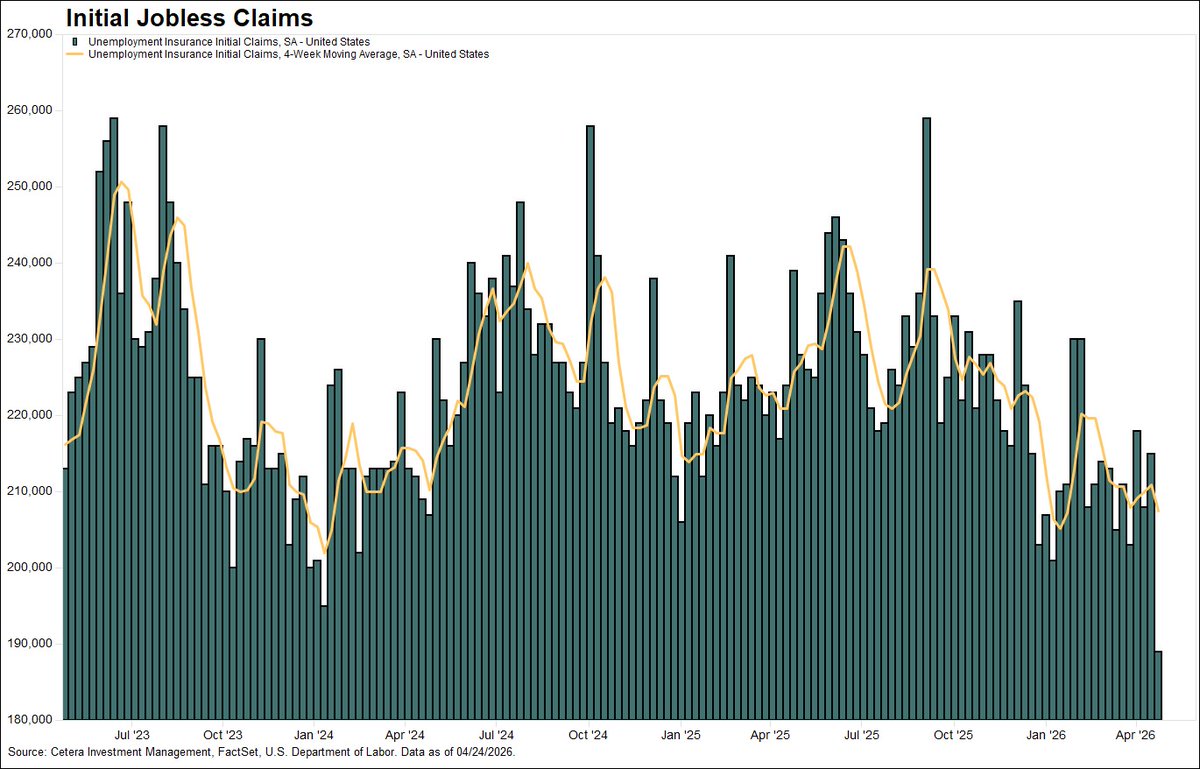
Initial jobless claims fell to 189,000 last week. The last time unemployment claims were this low, Marvin Gaye’s “I Heard it Through the Grapevine” topped the charts in December 1968.
How Canada’s Liberal Party wrecked a once prosperous, safe. and happy country in a decade.
13 charts that tell a grim story.
A warning for America.
Courtesy of @nationalpost https://t.co/enDCvjjofN