Glad you're keeping us updated on the details and potential pitfalls.
.eamtancFinZethefmenevechiahugikelundSoaunlthitequsthacautious.
@Acurast@zerufinance@NucleusCodes
GM fam
If decentralized AI ultimately remains entirely dependent on centralized cloud servers, then the underlying issue of computational dependency has not truly been resolved.
True decentralization requires transferring computing power from a few data centers back to every ordinary person.
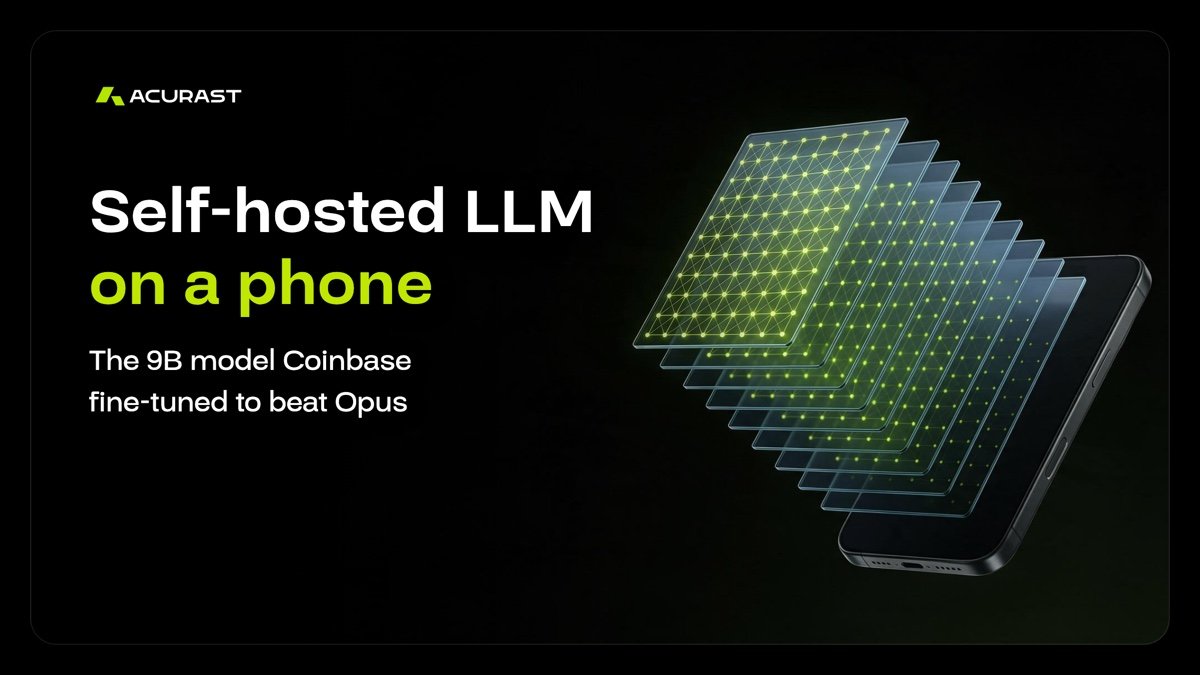
@Acurast is working on turning ordinary Android phones into decentralized computing nodes, so that the devices you might otherwise have idle can continuously provide real computational power to the network.
It is not about occasionally "contributing some resources casually," but rather allowing you to dedicate your phone specifically to network computing, becoming a sustainable form of personal participation.
When the device actually performs computational tasks, it will also receive additional rewards, truly embodying the principle of "contribution leads to rewards."
Through methods such as pledging, it is also possible to further increase the personal return ratio.
The most direct way for ordinary people to participate in decentralized infrastructure.
Who can I help with what problem?
@NucleusCodes@zerufinance@Polymarket
Morning fam
Half-burned and with $3,000 in financing, how genuine is the so-called "fair issuance"?
The claiming of zETH from Zeru Finance has officially begun, and the Uniswap v4 pool has also launched at the final auction price of $0.0000166.
@zerufinance has directly dashed the ideal of "fair and decentralized issuance"—it is more like a small-scale experiment rather than an asset truly recognized by the market.
What needs to be done now is not to chase price increases, but to first settle the accounts clearly: any purchased zETH can be claimed, and any unused USDC can be refunded. This is basic procedure.
A portion of the transaction fees goes to early miners, and another part is used for buyback and destruction. This sounds like a beautiful closed-loop system, but if trading volume fails to pick up, these mechanisms are just theoretical concepts. Only official contract addresses are recognized; there are many tokens with the same name, so beware of scams.
This design effectively implements the principles of "the team does not hold tokens" and "unsold items are destroyed," reducing many hidden pitfalls compared to most projects, which is commendable.
After claiming and reviewing the positions, then decide whether to continue playing in this shallow pool—this is more important than any narrative.
Who can I help with what problem?
@NucleusCodes@Acurast@Polymarket
gm art
All the love for BAYC. When I truly began writing about MAYC, I realized how stubborn this kind of love is.
BAYC has never been just an image. It represents a complete narrative of "boredom, rebellion, wealth, and leisure"—yachts, gold chains, cigarettes, and that perpetually lazy expression. In 2021, it transformed NFTs from collectibles into status symbols, with its floor price soaring to 153 ETH at its peak. Celebrities queued up to join, and the entire community celebrated. Later, prices collapsed, and now the floor is around 6 ETH, while MAYC has dropped to near 0.8 ETH. The bubble burst, many speculators left, but those who truly stayed delved deeper into that backstory.
I started writing MAYC because the storyline involving the mutation serum is more interesting.
Some choose to mutate, while others stick to the original version. At this moment, the community is torn apart and then reassembled. The price has dropped from 40 ETH to its current level, and many early holders have suffered heavy losses. Yet ApeFest still takes place every year as scheduled.
In 2026, a one-night event was held at the Beeple Studio in Charleston. The scale was much smaller than the previous year's event in New York featuring Snoop and Eminem, but tickets were still claimed based on the number of holdings, with deposits refundable. The veteran enthusiasts still flew in from all over the world.
I'm really looking forward to ApeFest in 2027. It's not because I believe it will achieve another triumph, but because I want to see for myself what those people are still holding onto, even after the price has halved and halved again, who are still willing to fly over.
Gathering in the same place to form a Bored Ape Yacht Club—this phrase sounded like a slogan in 2021, but in 2026, it feels more like an obsession.
The value of NFTs can drop to zero, but for some people, the feeling of being "on the same ship" never fades.
The community is still writing stories, organizing activities, and recognizing each other's avatars.
Morning
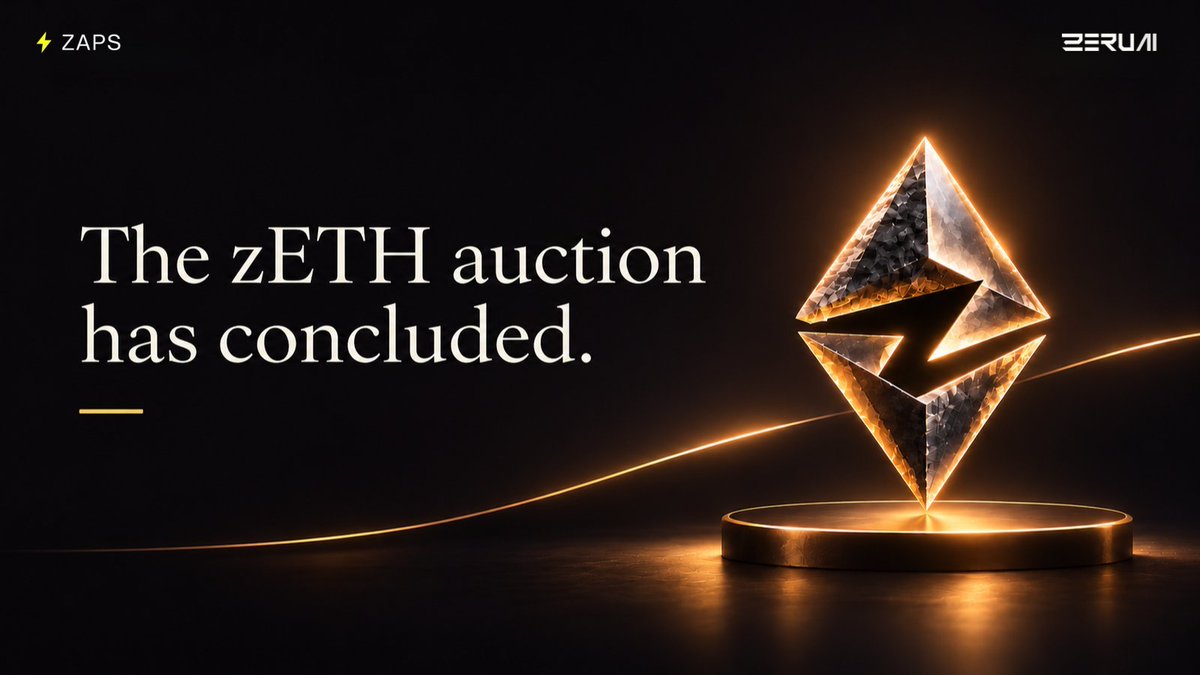
The zETH auction has officially concluded, and Activity Markets is moving into its next phase.
Is @zerufinance circular model driven by genuine market demand, or does it primarily rely on token trading among participants?
Uniswap v4 liquidity pools will open at the final auction price of $0.0000166.
This means that zETH will move from a limited auction environment to the open market.
Auctions address issues with initial pricing, while liquidity pools truly need to contend with continuous buying and selling, market depth, and genuine trading demand.
I pay more attention to the latter, because the initial transaction price does not prove that a token has long-term value.
Bitcoin's pulsed reaction and the restructuring of hedge positions on Polymarket.
Who can I help with what problem?
@NucleusCodes@Acurast
Good Morning
Turn idle smartphones into decentralized AI computing nodes.
If decentralized AI ultimately remains entirely dependent on centralized cloud servers, then the underlying issue of computational dependency has not truly been resolved.
@Acurast is attempting to transform ordinary Android phones into dedicated computing nodes, enabling idle devices to also provide real computational resources to decentralized networks.
It allows users to dedicate their Android phones, which might otherwise remain idle for extended periods, specifically for network computing, rather than merely contributing resources occasionally during free time.
Utilize idle time on your daily mobile phone to participate in calculations.
Use compatible mobile phones specifically as computing devices.
In terms of rewards, the base ACU earnings are related to the equipment's hardware capabilities and effective operating time, while actually executing computational tasks may also bring additional rewards.
Enable ordinary people to participate in building distributed computing infrastructure.
Polymarket, however, is being mercilessly proven wrong by its sluggish recent transaction prices.
Who can I help with what problem?
@NucleusCodes@zerufinance
GM fam
This weekend, take a break from screens and go out to touch the grass🌿
There are more and more things I'm interested in: cryptocurrencies, NFTs, Labubu, Pokémon cards, and Hong Kong stocks.
From Web3 to trendy collectibles, and then to traditional financial markets, these seem like completely different domains, but I've discovered they share a common thread: value comes not only from price but also from culture, scarcity, community, and genuine demand.
Cryptocurrencies have drawn my attention to technology and financial innovation, NFTs make me reflect on art ownership and the creator economy, Labubu and Pokémon cards show me the vitality of collectible culture, while Hong Kong stocks remind me that investment ultimately comes back to corporate value and market fundamentals.
NFTs once embodied the dreams of many people.
The market has experienced ups and downs, but I still believe that digital collectibles, identity rights, and cross-application utility have room for exploration.
However, both investment and collecting require maintaining one's own judgment; there is no need to chase every trending topic or constantly monitor prices.
This weekend, give yourself some time.
Spend less time looking at K-line charts, browse a bit less on NFT floor prices, and go out for a walk to see the real world.
Morning
The zETH auction has officially concluded, and Activity Markets is moving into its next phase.
Is @zerufinance circular model driven by genuine market demand, or does it primarily rely on token trading among participants?
Uniswap v4 liquidity pools will open at the final auction price of $0.0000166.
This means that zETH will move from a limited auction environment to the open market.
Auctions address issues with initial pricing, while liquidity pools truly need to contend with continuous buying and selling, market depth, and genuine trading demand.
I pay more attention to the latter, because the initial transaction price does not prove that a token has long-term value.
Bitcoin's pulsed reaction and the restructuring of hedge positions on Polymarket.
Who can I help with what problem?
@NucleusCodes@Acurast
Good Morning
Turn idle smartphones into decentralized AI computing nodes.
If decentralized AI ultimately remains entirely dependent on centralized cloud servers, then the underlying issue of computational dependency has not truly been resolved.
@Acurast is attempting to transform ordinary Android phones into dedicated computing nodes, enabling idle devices to also provide real computational resources to decentralized networks.
It allows users to dedicate their Android phones, which might otherwise remain idle for extended periods, specifically for network computing, rather than merely contributing resources occasionally during free time.
Utilize idle time on your daily mobile phone to participate in calculations.
Use compatible mobile phones specifically as computing devices.
In terms of rewards, the base ACU earnings are related to the equipment's hardware capabilities and effective operating time, while actually executing computational tasks may also bring additional rewards.
Enable ordinary people to participate in building distributed computing infrastructure.
Polymarket, however, is being mercilessly proven wrong by its sluggish recent transaction prices.
Who can I help with what problem?
@NucleusCodes@zerufinance