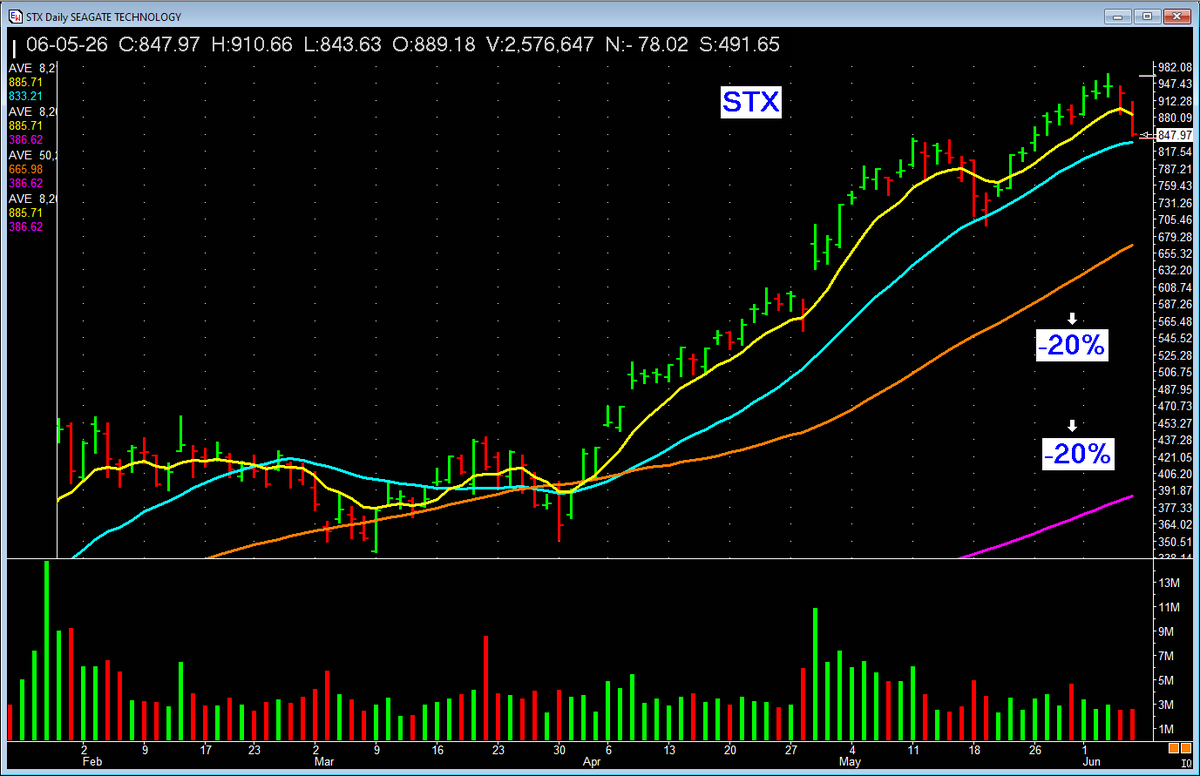
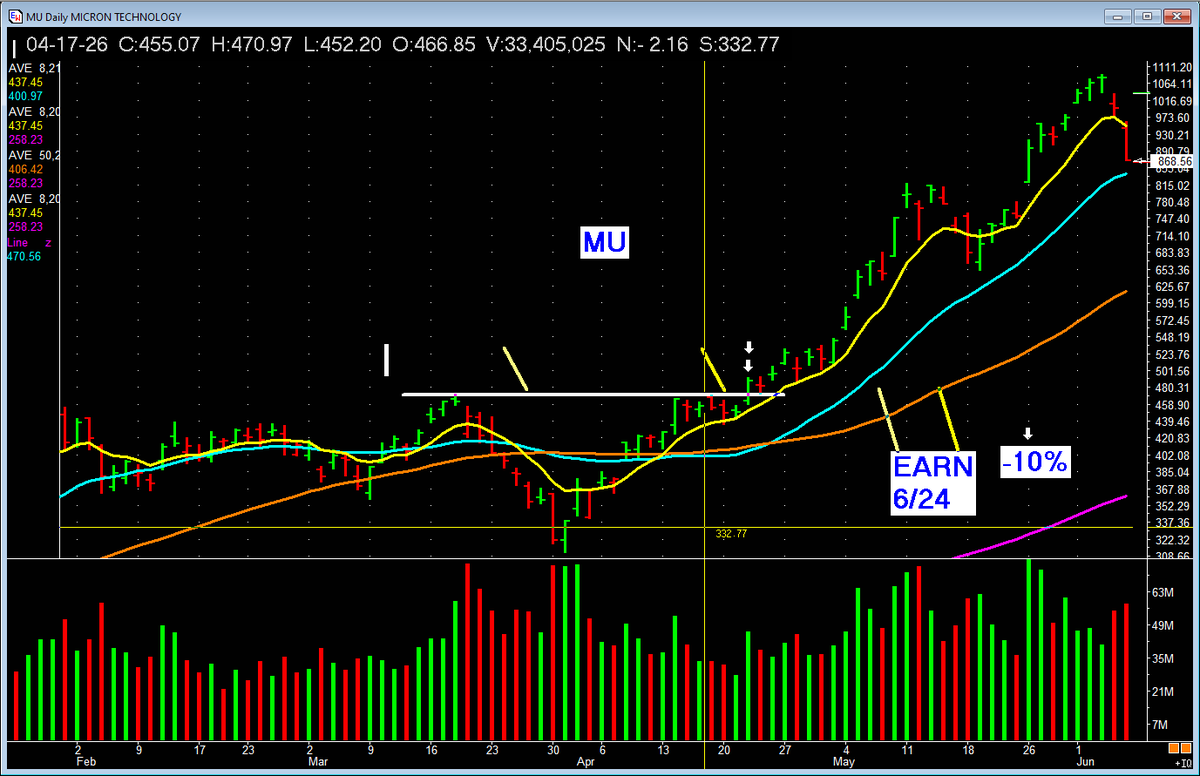
@tradewithvcp Few stocks on the other hand from good sectors have given a BO today which shows market is indecisive at the moment. But if today’s breakouts sustain for few days we might see another leg up.
@tradewithvcp Many stocks breaking down below key 10 and 20ema levels but many are also holding the same. Indecisive market. Not bearish yet but 100% cash same. If we set up here we might get another good bull leg.🤞🏻
You may not be able to trade all the opportunities the market gives you, but you can study all of them.
The weekend is one of the best times to go through recent market moves and see what is actually working in the current environment. Study the stocks that made moves. Look at how they set up before the move, where the entry was, how volume behaved, and what the price action looked like.
The goal here is to train your eyes.
Every chart you study becomes a reference point. When a similar setup appears again in the future, you recognize it faster and trade it with more confidence.
Never miss the opportunity to study a past winner. The more examples you collect, the better your understanding becomes. Over time, that knowledge turns into conviction, and conviction helps you execute when the next opportunity shows up.
#Trading
@RoyLMattox Interesting comparison with 8/1/25.
My only concern is that this time we're seeing much more weakness in semis and EM-related names. SMH, EWY, Samsung and SK Hynix are all breaking hard at the same time while the USD is strengthening.
Check out the 8/1/25 nasty pullback and the 10/29/25 top. Wes and I think today resembles the 8/1/25 situation. In addition we are in this powerful IBD powertrend. We are breaking the 21 day ema in the Nasdaq today. Often we use a stop the second day low of breaking the 21 day ema. Monday would be day 2. That's why Monday's low is crucial to hold on Tuesday. A violation of Monday's low would challenge our thesis. Right now we are buying a Monday weakness looking for a key reversal day.
HERE’S THE EXACT STRONG STOCKS SCAN
BUILT FROM SCRATCH TO CATCH WINNERS
Tool used: @tradingview (I run ALL my scans on TV)
Bookmark this post right nown.
I will drop the direct scan link for you to copy-paste in Comments.
Most days in trading, it can feel like every decision goes against you, and you’re left questioning what you did wrong.
The past three sessions were exactly that for me. Sharing my losing trades transparently, just like I do with the winners (nothing really worked for the past three sessions):
1. GRAPHITE (29/04/2026)
Demand was there, but it failed to push higher. Closed the same day, acceptable loss.
2. SCI (04/05/2026)
Entered in the morning, got stopped out as it pulled back, only to push higher and close near day highs.
3. NATCOPHARM (04/05/2026)
Second trade of the day. Pushed initially, but ended around breakeven. Still holding with minimal profits.
4. DATAPATTNS (04/05/2026)
Got the entry right, but exited at breakeven due to weakness in other positions. It moved ~6% after my exit. Worst ever feeling.
5. TRITURBINE (04/05/2026)
Third attempt in two weeks, stopped out again. Chose this over SYRMA, which actually worked. This happens more often than you think, you choose a stock over others only to see the one chosen by you hit SL while other perform spectacularly well.
6. NETWEB (04/05/2026)
Existing trade from last month. Exited final quantity at my planned trailing SL while still in profit. A few minutes later, it bounced.
7. GMDCLTD (05/05/2026)
Multiple attempts today, but no follow through. Closed the trade.
There are lot of things I could have done differently thinking back. From nailing entries but exiting early, to picking the wrong names, to getting stopped out before moves it felt like everything went wrong. And honestly, this isn’t new and it has happened many times.
Everyone talks about the good side of trading, but this is the other side, the mental grind when nothing works. At the same time, there will be phases where almost everything goes right as it happened with me in the month of April where almost every trade worked. That's the beauty of trading and if you have chosen this as your career you have to embrace both.
On to the next trade.
VERY IMPORTANT ANNOUNCEMENT.
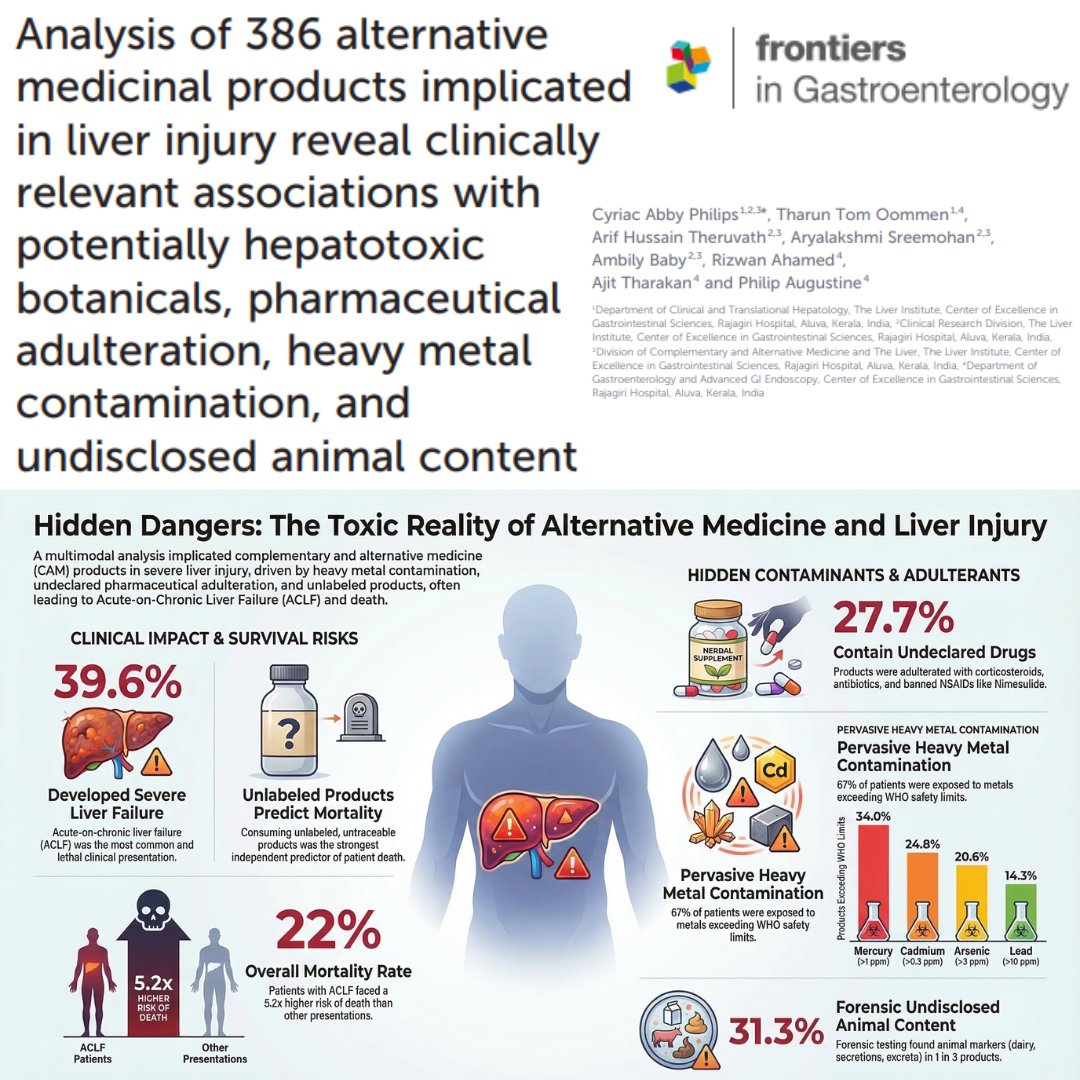
Dear friends, we have published the largest analytical study of Ayurveda, Homeopathy, Siddha, Unani and Folk-Traditional Medicinal products that have harmed patients - presenting with liver damage - to our department. This is the most exhaustive analytical study that correlated clinical outcomes in such patients.
Interestingly, one of the Reviewers who peer-reviewed our paper (notification after paper publication) and cleared it for publication is a senior professor of Ayurveda (Rasashastra and Bhaishajya Kalpana) at All India Institute of Ayurveda. This makes our paper even more impactful.
Here is a plain language summary of the study's major findings, highlighting what patients and the public need to know about the safety of alternative medicines:
Severe Liver Damage is a Major Risk: The study looked at 386 alternative and complementary medicines taken by patients who experienced liver damage. It found that these products frequently triggered a severe, life-threatening form of liver failure, called Acute-on-chronic liver failure (or ACLF) which resulted in death for nearly 40% of the patients who developed it.
Unlabeled Products Can Be Deadly: Taking "unlabeled" products—those sold without proper ingredient lists, manufacturer details, or batch numbers—was a strong predictor of death. The risk of dying increased the more unlabeled products a patient consumed, showing how dangerous an unregulated supply chain can be. Data revealed a dose-response relationship where death rates escalated progressively, reaching 42.9% among patients who consumed three or more unlabeled products.
Dangerous Levels of Heavy Metals: A shocking number of the tested products were heavily contaminated with toxic metals like mercury, lead, arsenic, and cadmium, often at levels far above safety limits. Exposure to cadmium, in particular, was strongly linked to patients developing the most severe form of liver failure. Exposure to cadmium was strongly and significantly associated with the development of ACLF (75.9% in exposed versus 22.6% in unexposed patients).
Hidden Prescription Drugs: Almost one-third of the products secretly contained modern pharmaceutical drugs, meaning patients were taking them without knowing. These hidden drugs included steroids, antibiotics, and painkillers, and some were even banned or well-known to cause liver damage.
"Natural" Doesn't Always Mean Safe: Over 40% of the products contained plant ingredients that are medically documented to be toxic to the liver. Well-known herbs like Giloy (Tinospora cordifolia) and Ashwagandha were among the most common potentially harmful plants found in the products.
Secret Animal Ingredients: Testing revealed that nearly a third of the products contained undisclosed animal ingredients (such as dairy, marine products, or animal extracts). This is a major concern for vegans, vegetarians, and people with religious dietary restrictions who believe they are taking plant-based medicines.
Risks from Concentrated Plant Extracts: The study discovered that high concentrations of certain common plant fats and compounds (called phytosterols) were tied to higher rates of severe liver failure. This shows that highly concentrated "natural" extracts can act differently in the body and become harmful, even if they come from everyday plants.
Lead Reseacher: @arifhussaintm
FULL PAPER (free to read): https://t.co/3RIqoZdXyD
For the public and patients, please do not stop vaccinating your children. You don't want polio to come back. You don't want measles to kill your child like it is doing in the US because boomer uncles in charge of US Health Departments have become anti science.
The conclusions of this study are not credible either. The "authors" who themselves are a bunch of antivaxxers, funded by an antivaxx organization, who published the study on their own antivaxx website. Not peer reviewed, not scrutinized.
The low IQ authors have selectively amplified weaker associations while dismissing robust epidemiological data from millions showing no vaccine-autism link.
The largest study ever on this, a Danish study found no association between childhood vaccines and 50 different health conditions, including autism, asthma, and autoimmune diseases. Here is the evidence, unlike the pathetic links shown by the other guy.
https://t.co/qZmeF0roUo
I had already called out this barefoot walking, urine-guzzling loving CEO boomer uncle before on his bullshit on medical and science, but it seems like he needs to bad mouth science and medical discoveries to keep his head floating above water level on social media considering the fact that his Arattai Messenger App and his Zohodotcom email is going the Koo way right into the gutters.
These health Illiterates have themselves taken these vaccines, given their children their vaccines, and saw them enjoy longevity and now advising others to consider stopping vaccinations. How selfish and bigoted can this get?
Uncle ji, a wise Gujarati chessmaster once told me, "Stay in your Lane", before he got busted out of his game trying to glorify pseudoscience. You also do the same and use the X payout from this engagement to fix your Arattai and Cherattai and whatever third rate app you are cooking up to fool your spinal level thinking bhakt pals. Ok?
Delete your post you lime soda without fizz.
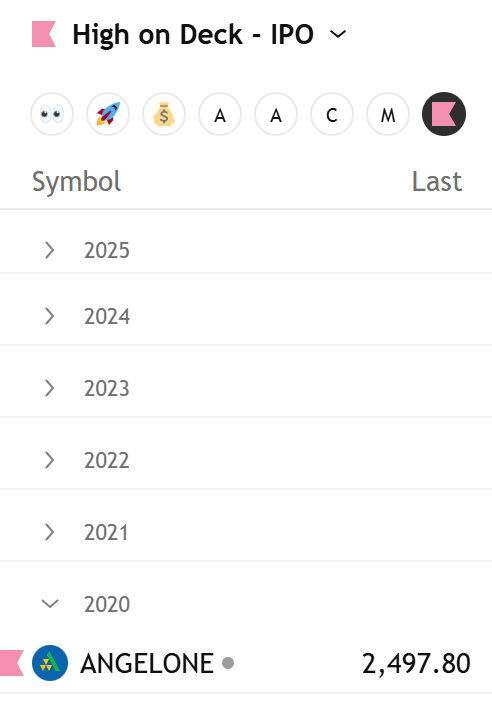
✅Full IPO list year wise in 1 place, I've made it easy for you.
✅ Reply "rich" & retweet, and I'll send you the watchlist link (you need to follow for DM)
Securities Transaction Tax (STT) is the biggest tax that traders pay, and it's much higher than brokerage fees.
At Zerodha, the STT we collect and pass on to the government is higher than the brokerage we earn.
Trading volumes are highly sensitive to the STT. The level of STT also affects whether traders trade more in cash equities, futures, or options. There's a lot of concern that Indian options volumes have exploded; I don't think it would be a stretch to say that STT is a big factor in this.
Until 2008, the STT on options was based on contract value, making it impossible for anyone to trade options. After that, STT was charged on the premium, and options became more cost-effective compared to futures, and volumes shot up.
By the way, the idea of @zerodha came about when the STT for options was brought down to a premium value. The bet was that people would trade more options. It did play out the way we had thought it would. 😬
We've had several STT changes over the years. This has had a more significant impact on cash and futures than on options because STT was on premium value, and on cash/futures, it was on total value. And yes, the introduction of weekly expiry and restriction on intraday leverage for stocks added a lot of fuel to the fire of option trading volumes.
So yeah, I wish we had no STT, but I guess that's not a solution. 😃 But if STT were brought down for cash and futures and intraday leverage were increased (from the minimum 20% now to as much as futures), I think the trading volumes in cash and futures would automatically go up.
It is a much better strategy to increase cash/futures volumes than to reduce trading volumes in options.