A typical peace lover, passionate about the Ugandan political scene, muslim, brother. I only retweet a few important tweets, but I mostly only observe!
We've just been informed of the abduction of @NinyeTabz from Kamwokya a short while ago. He has been whisked away in a drone. The lawlessness continues!
#FreeUgandaNow
I'm one of those Ugandans who will probably be branded a foolish Ugandan because, even when I know fully well that the outcome of the election is largely predictable, I will still go and vote.
We all know for a fact that Mr. 1986 will be announced the winner, irrespective of the actual results. It will be a cold day in hell before anyone else is announced. But I will still go and vote against him, at the very least. I will sleep well at night knowing I did my part—no matter how inconsequential my single vote may be.
I am voting for two important reasons.
First of all, it is my duty as a citizen to exercise my rights, and I will not voluntarily disenfranchise myself because the process is flawed (which it very much is). The entire process is shabby. Reforms have not been put in place. Rigging might happen left, right, and center. The results are probably already known. But I will still do my part and vote. I owe it to no one but myself.
Secondly, I am hopeful that a time will come when the electoral process will be more trustworthy. And when that time comes, we shall need people to vote. But where are young people going to learn about the importance of voting if they have grown up seeing us abscond from our duty because we thought the process was flawed or the results predetermined?
The lesson we will have taught them is this: if you have doubts about the electoral process, don’t vote. I don’t know how valuable such a lesson is.
I don’t vote because I think my candidate will win. I vote because it is my duty. And in the future, when elections are actually trustworthy, we shall have a population that has learned—not just from reading, but from seeing—that voting is important.
You cannot devalue the process of voting today and expect young people to attach value to voting tomorrow. The things we hold in high regard are the things they will hold in high regard.
The circumstances today do not favor a free and fair election. The circumstances tomorrow might. No matter what the circumstances are, it should always be your duty to vote. You don't only exercise love for your country when it is convenient. You do it even when it hurts. Now is such a time.
I can’t say I don’t understand people who are against voting because it legitimizes this draconian and despotic regime. They also rightly say that if you are voting in an election whose results you already know, what is the point?
As I usually say, hate the regime but love the country. In essence, we are voting so that we can carry on the tradition of attaching value to the process for the sake of future generations. Our circumstances today are unfortunate; theirs might not be. If they are going to learn one thing from us, let it be this: voting is your duty as a citizen, whether your candidate is projected to win or not.
On Thursday, go and vote—if not for you, then for those coming after you.
General observation:
People who live in poverty, fear, and oppression generally tend to work as little as possible. The simple reason is that they don't see themselves amassing any wealth, and even if they do, it's likely to be taken away by the oppressors or thieves. A society that has been hit by wars, insurgencies, slavery, heavy taxes, or similar issues has little chance of rooting out the lack of desire to work hard and accumulate wealth because people generally feel that anything can be taken away from them at any time.
This part relates to Uganda:
This is why it is necessary to have some parameters in place. Minimum wage is necessary.
The safety of life and property is necessary.
Social care (to include education and healthcare) is necessary.
These are the basic needs people require to feel safe and respected. Only when these needs are satisfied can someone think of working hard to accumulate wealth.
Wealth creation is based on the ability to save and put the savings to meaningful and gainful use.
I can discuss at length what I think of the recent government programs, but the summary is: throwing money at a select few while others struggle to survive is not a solution.
Levelling the playground for many people, especially those in formal employment in urban areas, is the solution.
As you were.
One of the biggest downfalls of any government is the illusion of absolute power, the “just a little more won’t hurt” mindset. Today it’s the shop owners in Nakivubo cheering development, tomorrow it’ll be the same voices crying when power and private interest collide.
When a President gives a single investor the blessing to build over a public drainage channel, we’re no longer talking development, we’re talking precedent. And precedents don’t break overnight… they break societies slowly.
Uganda deserves progress, not privilege disguised as patriotism. 🇺🇬
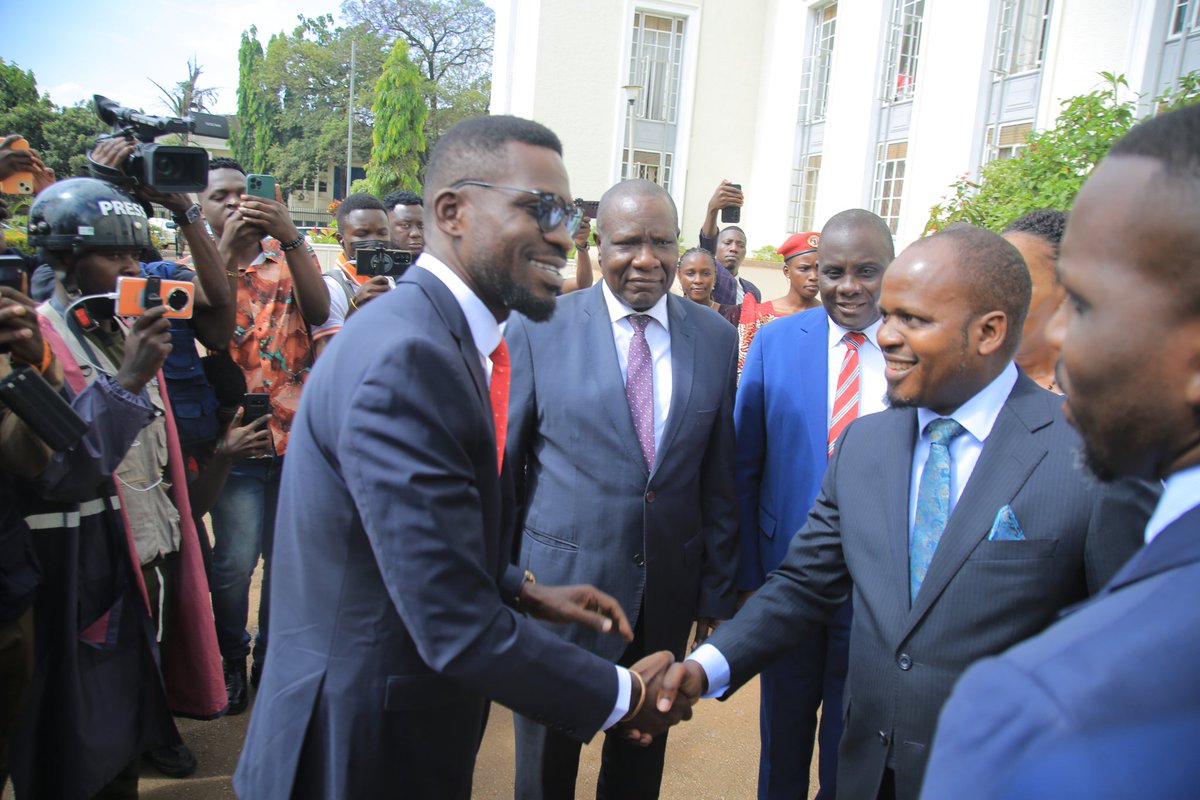
We have noted with great concern the disturbing news that journalists from the @DailyMonitor, @ntvuganda, and other media platforms under the Nation Media Group have been unilaterally blocked from accessing and covering Parliament, in addition to their earlier ban from covering any activities involving dictator Museveni. We strongly condemn this unconstitutional action, and urge the leadership of Parliament to immediately reverse it.
While no formal justification has been given for the ban, we have reason to believe that it is a retaliatory measure against the Nation Media Group for news stories that it has published recently exposing the blatant abuse of power and corruption of ongoing electoral processes by the disgraceful Annet Anita Among and other 'leaders' at Parliament.
The ban is not just a cowardly attack on the Ugandan people’s right to know how they are governed, but also an unjustified assault on Article 29 of our Constitution which guarantees the twin freedoms of speech and the press. It represents yet another desperate attempt by the regime, acting through Anita Among, to silence the truth and shield itself from public scrutiny.
The clampdown on independent media has gone beyond bans: journalists have also been repeatedly beaten (as was the case during the Kawempe by-election) and threatened just for doing their jobs. Clearly, these attacks are not isolated incidents but part of a systematic effort by the regime to instill fear and force self-censorship in the media. Targeting journalists in this violent and brazen manner is intended to send a clear message to them to "back off!".
Having spent years abusing state power to muzzle dissenting voices of opposition leaders, members of the civil society, artistes, religious leaders, and now journalists, the regime is now treating journalists as enemies of the state just for doing their constitutional duty. By banning independent media from covering public activities funded by taxpayers and beating those who dare to report the truth, the regime is openly admitting that it has something to hide. In so doing, it forgets that no regime, however powerful it imagines itself to be, can win a war against the truth forever.
We stand in full solidarity with the brave journalists of Nation Media Group, and all other media practitioners in Uganda who continue to report the truth despite the serious risk of personal and professional harm they face for doing so.
In the @NUP_Ug, we reaffirm our commitment to defending media freedom and protecting all journalists.
They actually had that speech drafted on an iPad and she was reading it off the iPad screen held by Obore.
You thought you were pulling off a smart move but this is not the usual pulling that Anita Among does to please Kabanda, Obote and once in a while to please Magogo too!