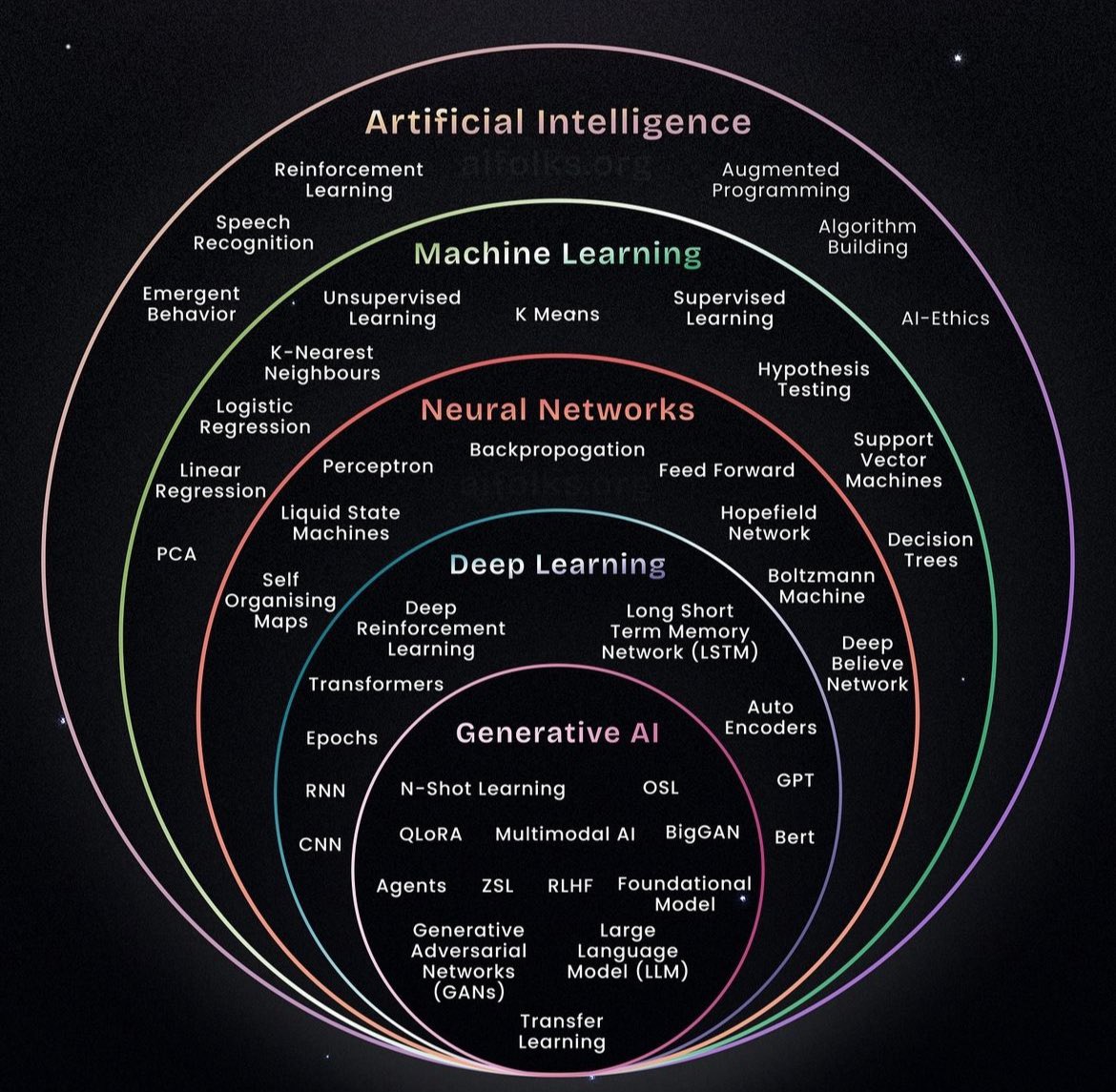
🧠 Still confused between AI, ML, DL, LLMs, GenAI & Agentic AI?
You're not alone. Here's a crash course 🧵
Let’s break it down — plain & simple ↓
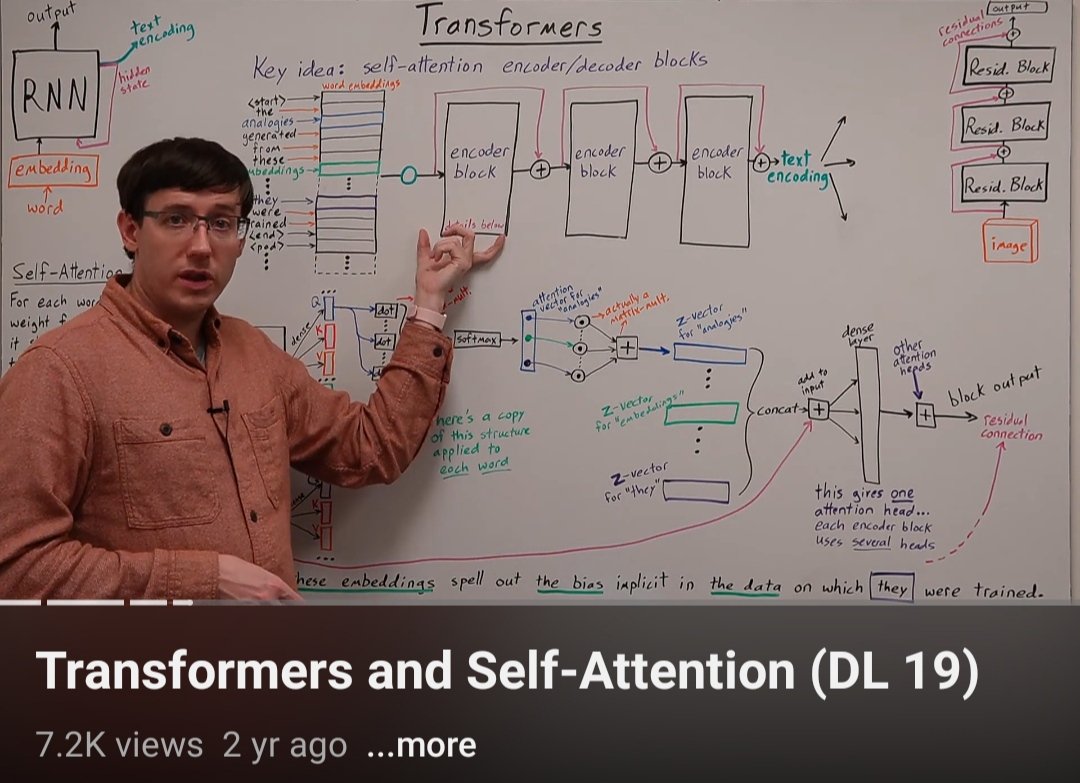
Nobody can explain Transformers and Self-Attention like professor Bryce...
He's one of the Hidden gems of YouTube, his all videos are packed with knowledge and he teach with enthusiasm and dedication.
Below 👇🏻 link in comments.
🆕 LLM Course 2025 edition!
I updated the LLM Scientist roadmap and added a ton of new information and references.
It covers training, datasets, evaluation, quantization, and new trends like test-time compute scaling.
💻 LLM Course: https://t.co/q5XtSIC7nL
Great overview of how to build your own Document Chat RAG!
Here's what you'll need:
1️⃣ A knowledge base
A collection of relevant and up-to-date information that serves as a foundation for RAG. It can be a database, a set of documents, or a combination of both. In this case it would be the collection of your documents.
2️⃣ Chunking strategy
Chunking is the process of breaking down a large input text into smaller pieces. This ensures that the text fits the input size of the embedding model and improves retrieval efficiency.
Two hyperparameters that you need to take care of are the `chunk_size` & `chunk_overlap`.
3️⃣ Embeddings strategy
The chunked data is converted into embeddings (vector representations), here you need to decide what embedding model to use.
4️⃣ Document retriever
A document retriever is a crucial component that performs the task of searching and retrieving semantically similar documents or chunks based on a given query.
5️⃣ Context generation
Now you need to create a context based on the retrieved, here's what we usually do:
- keep top-k chunks
- put a similarity cutoff
- filtering based in metadata
- reranking chunks using a reranker model
6️⃣ Prompt template
Use a custom prompt template to guide the response from LLM and ensure it aligns with the context provided.
7️⃣ Choose Your LLM
Next, select the LLM you want to use. It will generate the final response based on the prompt you created in the last step.
8️⃣ Evaluating the responses
Now considering all the hyperparameters that we have, we tune them by trying different combinations, here are some of the metrics for evaluating the final response:
- BLEU score
- METEOR score
- BERT score
- ROGUE score
Finally you select the best model & deploy this system into production!
Credits: @abacusai