China is on the board.
The world's most closed market still sets a street price for the dollar every day, in the gray market its capital controls cannot reach. For years you could only hear about that number. HWAN just opened it: it lives on Solana now, beside the ten countries already on the board, where anyone can read it.
And the oldest rivalry in crypto finally trades. The kimchi premium against the china premium, Seoul against Shanghai, is one market now, and it settles itself on chain.
https://t.co/6HrDE736xz
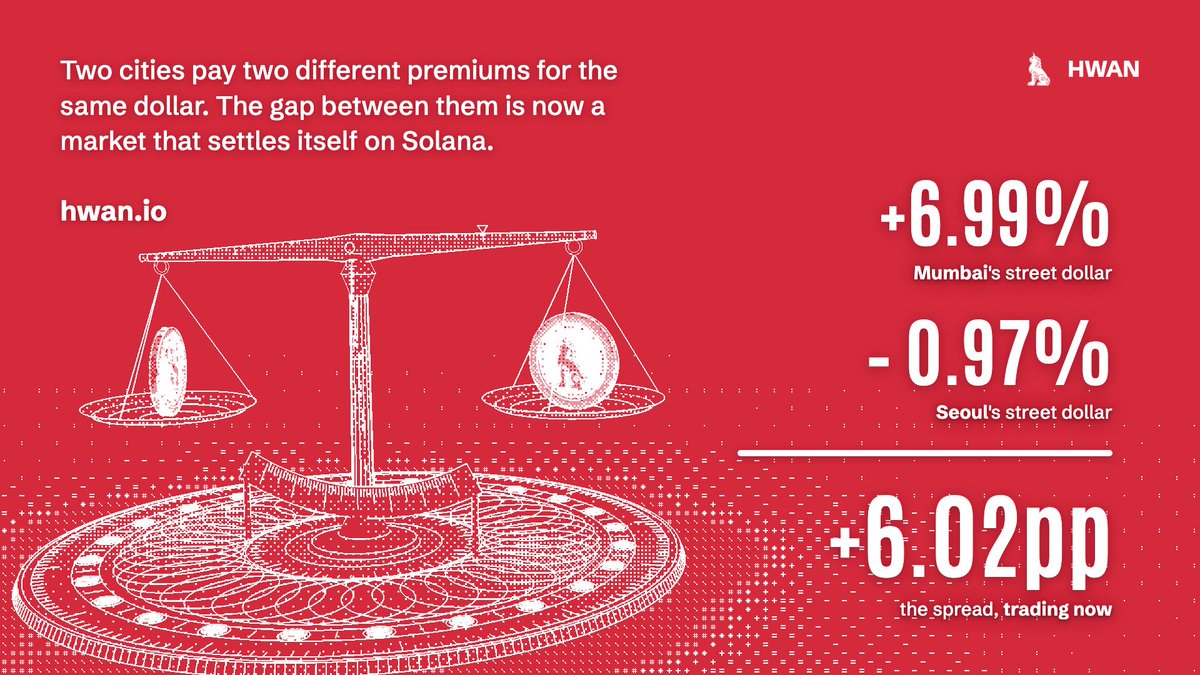
A dollar runs +6.99% past its official rate in Mumbai and +0.97% in Seoul. Both numbers have markets on HWAN already. Now the distance between them has one too.
Spread markets trade the gap between two street dollars. The index is a Solana account that takes Mumbai's premium minus Seoul's from the two feeds and computes the difference itself, so it can never say anything the feeds do not. When a series expires, the program reads that account and settles on its own, with no reporter and nothing to dispute, the same path the World series proved.
The opening pairs: Mumbai over Seoul at +6.0pp, and the heavyweight, Tripoli over Maputo at +48.9pp. Friday weeklies, a $300 pair fully collateralized, and a side can never lose more than it put in. Relative value between the world's second dollar prices has never been a tradeable thing before, on a chain or off one.
https://t.co/6HrDE736xz
HWAN's first settlement is hours old and it already exists twice. It went to its cap at +0.90pp on chain, and then it was computed again inside a RISC Zero zkVM, which reran the exact integer arithmetic over the published 64 KB of candles and produced a cryptographic receipt that anyone can check in a fifth of a second.
Then the receipt went somewhere receipts rarely go. Compressed to an 833-byte Groth16 proof, it was handed to a verifier program on Solana mainnet, which verified it in a single pairing computation for a 5,000-lamport fee and recorded the settlement, the hash of the inputs and the prover's fingerprint in an on-chain account.
Follow the chain of custody and the usual weak link is missing. The reporter posted a bond, your browser can redo the arithmetic on https://t.co/pmJfapYMpW, the zkVM proved it, and now Solana itself has checked the proof. The number +0.90 sits on chain with no one standing behind it, because nothing needs to.
https://t.co/6P3LwyCxbK
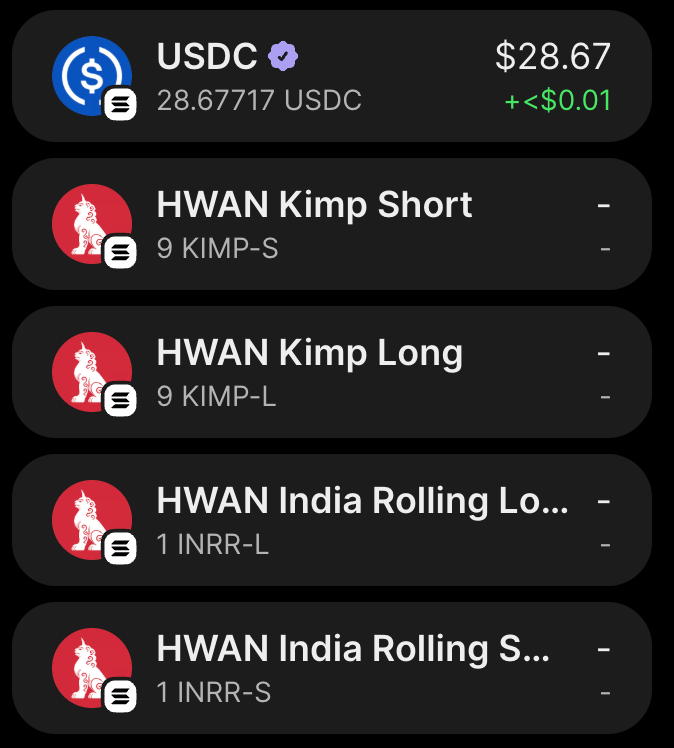
Under the USDC line in this Phantom wallet sit four of HWAN's rolling pairs. KIMP-L gains when Seoul's dollar premium rises and KIMP-S gains when it falls, INRR does the same for India's, and any long handed back together with its short returns the pair's full value in USDC from the program.
Phantom prices the USDC to the cent and prints a dash next to these, because no exchange trades them. The program prices them just as exactly: nine KIMP pairs riding Seoul make $900, one INRR pair riding India makes another $100, and every dollar of it sits in a market vault on Solana. They are the pairs we minted to test the exit, and they have not moved since.
Most tokens are worth whatever the last trade said. These are worth whatever the vault holds, and the vault holds all of it.
https://t.co/6HrDE736xz
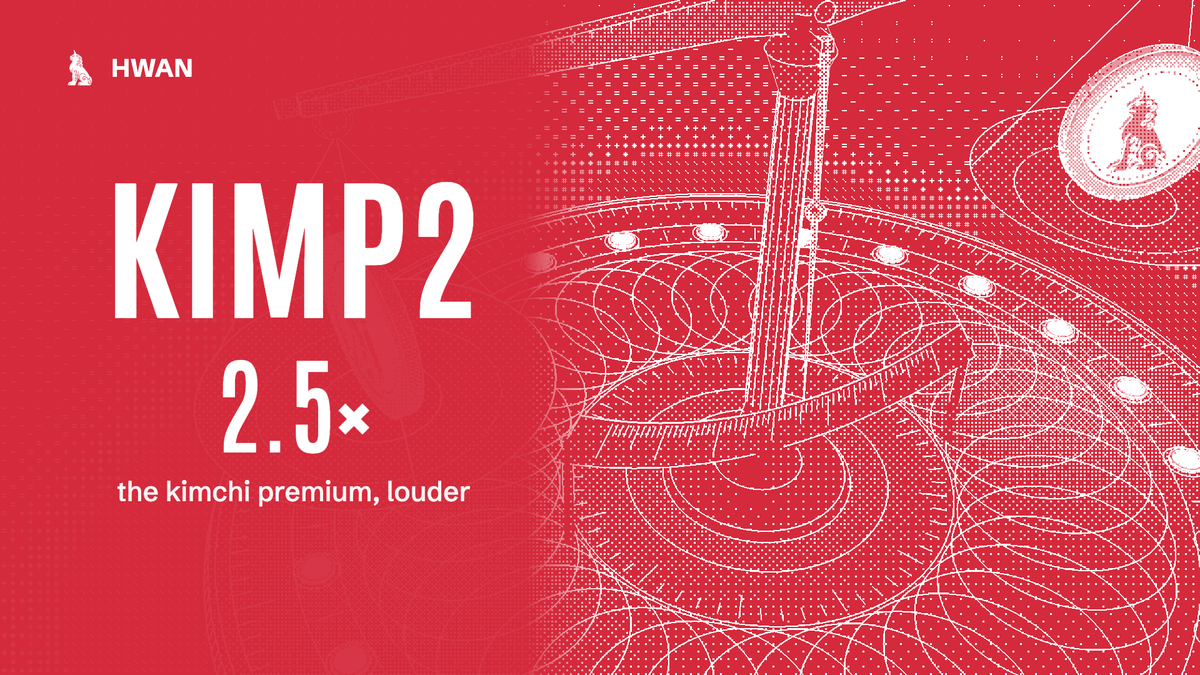
Every leveraged product in crypto ships with a liquidation price, and KIMP2 ships without one. It plays Seoul's dollar premium at two and a half times the swing of KIMP, and the most a holder can ever lose is what they paid for their side of a $40 pair. Each pair spans two points either side of zero, so every point Seoul moves still swings $10 against $40 of collateral instead of $100.
We wanted ten times, and our own data talked us out of it. Over the index's last 200 days, a band half a point wide would have left the premium pinned against one of its walls on 74% of days, while a two point band touched a wall on 5% of them. Leverage without liquidation has a ceiling, and the ceiling is set by how far the number actually wanders, which is why we stopped at two and a half.
Seoul's premium reads +1.53% as this goes out, which puts KIMP2-L at about $35 of its $40 pair. Like every HWAN pair it rolls itself forward each week and pays out its whole value whenever you hand both halves in.
KIMP2-L: https://t.co/gwhqJS0u6H
KIMP2-S: https://t.co/UUeFxkGUEz
https://t.co/6HrDE736xz
The dollars that walk into crypto without a narrative come from savers. Since April about $24 billion of USDT has traded against won at Seoul’s two big exchanges alone, roughly $120 million every day, and in Karachi and La Paz people pay roughly 1% to 5% above the official rate for the same digital dollar because it holds up better than the money they earn.
That markup is the live price of demand from outside crypto, and HWAN tracks it across ten countries and lets anyone trade it.
https://t.co/PwRQvcIWII
Crypto is in the post dot com bubble bursting phase where none of the shitty ideas worked out and retail got burned one too many times
There's no new bullish narrative to make anything pump, tokenization isn't going to do it because that doesn't bring a single dollar into the coins we hold, same with stablecoins, like great you figured out how to move USD around, who gives a fuck.. All the current narratives are bearish as hell, quantum fears and AI hacks are all anyone talks about.. The KOLs are all either scammers, retards, or both
The only bullish narrative we have right now is privacy and the general public doesn't give a fuck about that so we're prob topped out on that too
Very very bleak point for the industry, I've personally shifted millions into real estate and stocks over the past few years.. Still holding BTC and ZEC but honestly bored with all of it.
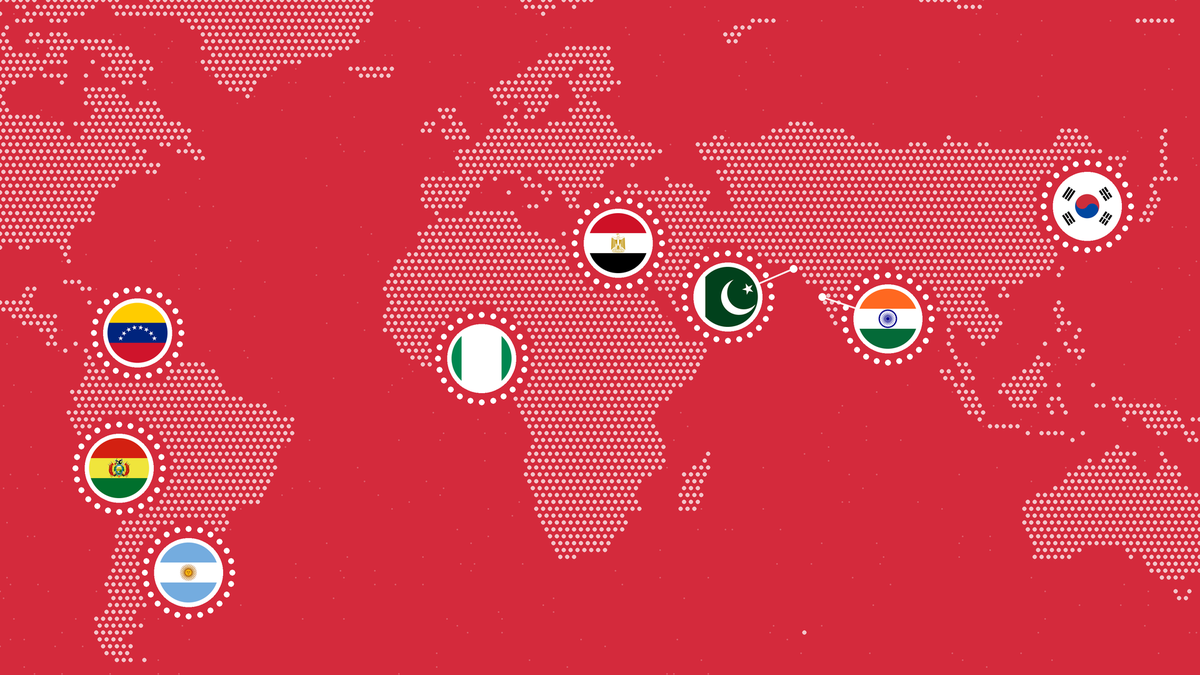
HWAN’s feed now reads ten countries, and Libya went straight to the top of the board: getting one USDT there takes about 65% more dinars than Tripoli’s posted rate. Mozambique came in beside it at +17%, the cost of a dollar shortage that has run since 2023.
The Wall Index, our live average of every second dollar on the feed, moved from +5.4% to +12.6% the moment they arrived. That jump comes from a wider lens, with two more countries where people pay heavily for a dollar now counted in the number.
https://t.co/PwRQvcIWII
November is going to be HWAN’s month. In its first eleven days the kimchi premium got its first market anywhere, India and Argentina joined it on the same evening, and a World market now trades a single average of eight national dollar gaps.
Since then KIMP and INRR have turned the premium into tokens you keep in a wallet, a counter sells either side of it in one signature, and anyone can rerun our settlement math at https://t.co/pmJfapYMpW.
https://t.co/6CFcoh59Om
HWAN went live on Solana mainnet at 16:40 UTC on November 8 with a single country, Korea. Four and a half hours later the same program also listed Argentina and India, a second program was recording what a dollar costs on the street in eight countries, every 15 minutes, on chain, and every position could be held as a LONG or SHORT token in any wallet.
The next day https://t.co/PwRQvcIWII turned those eight readings into a live world map. Fifteen markets are trading now, each fully collateralized and settled on public exchange prices, and every step above is a transaction you can open on Solscan.
https://t.co/PklbyPJSly
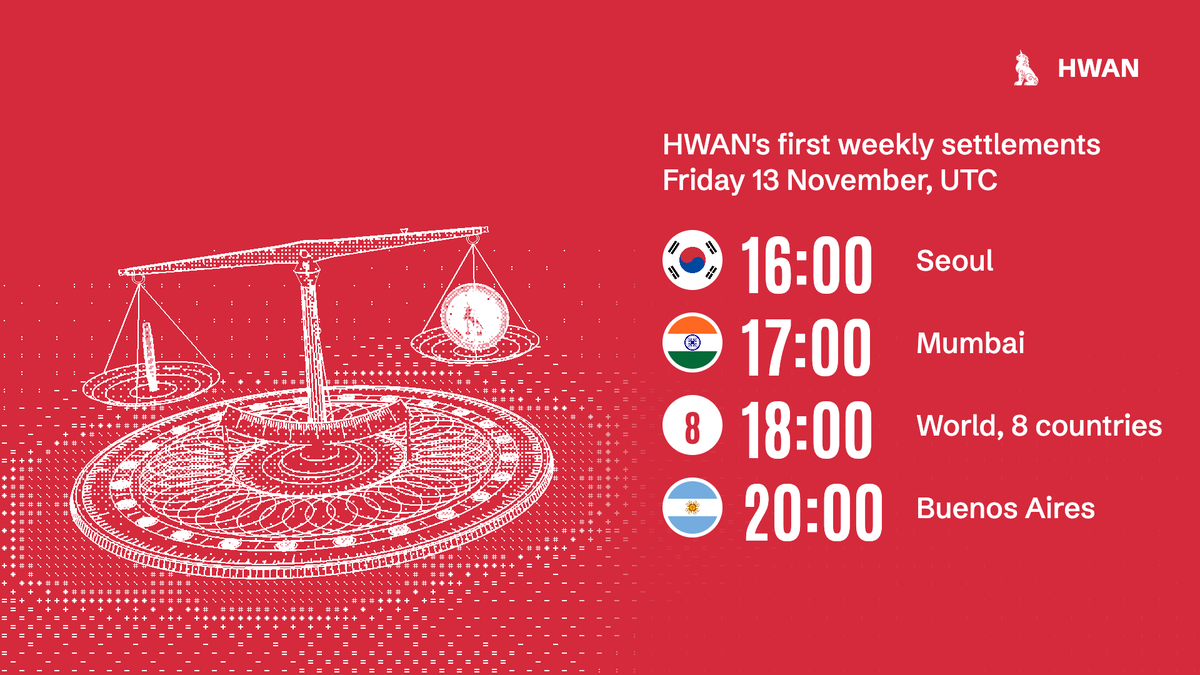
This Friday brings HWAN’s first payday, with four markets expiring inside four hours. Seoul goes first with a 16:00 UTC close, then Mumbai at 17:00, the eight country World market at 18:00 and Buenos Aires at 20:00, each one closing on its own day long average of street dollar prices, with every position paid in USDC from its market’s vault once the number is final.
Three of them run the bonded report with its six hour challenge window, while the eight country market settles itself from the Wall Index on chain, so Friday evening puts both of HWAN’s settlement paths on screen at once.
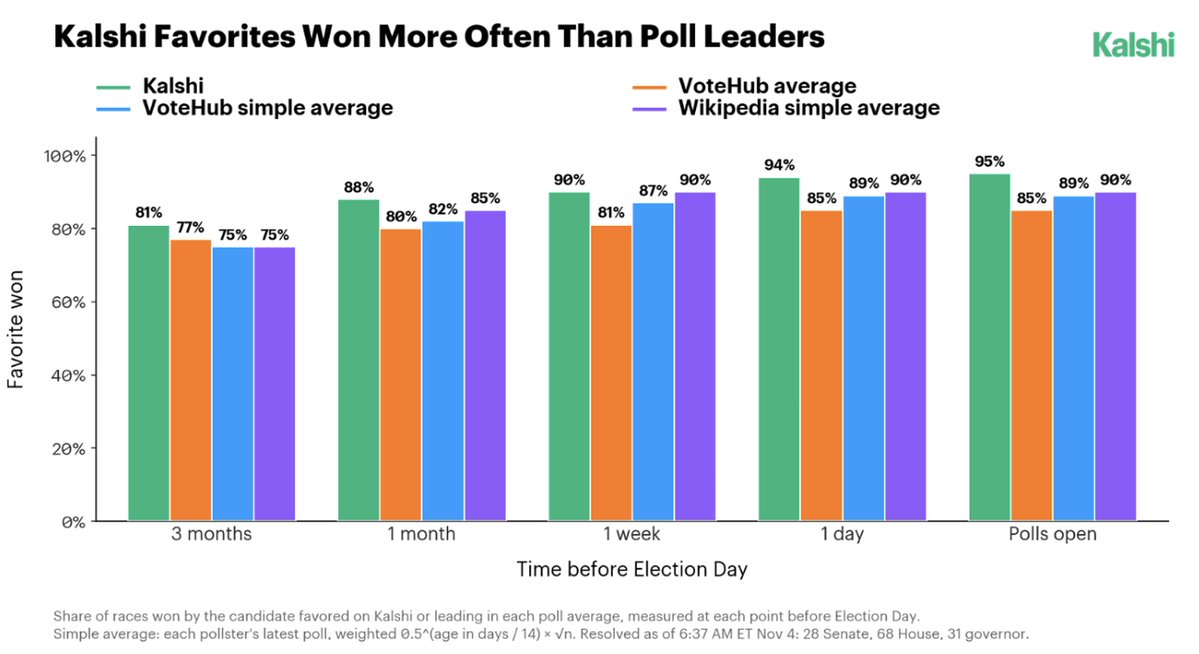
Markets called 479 of 487 races because every price has money standing behind it. Street dollars have worked the same way for decades: in a country with two exchange rates, the price people pay for a dollar on any given day is the most honest poll there is on their own currency, taken every minute with real money on the line.
HWAN counts that poll across eight countries around the clock and lets anyone take a side.
https://t.co/PwRQvcIWII
The favorite on Kalshi won 479 of 487 midterm races so far.
That’s 98%, forecasted before a single vote was counted.
The markets beat the polls and the models. The data 🧵
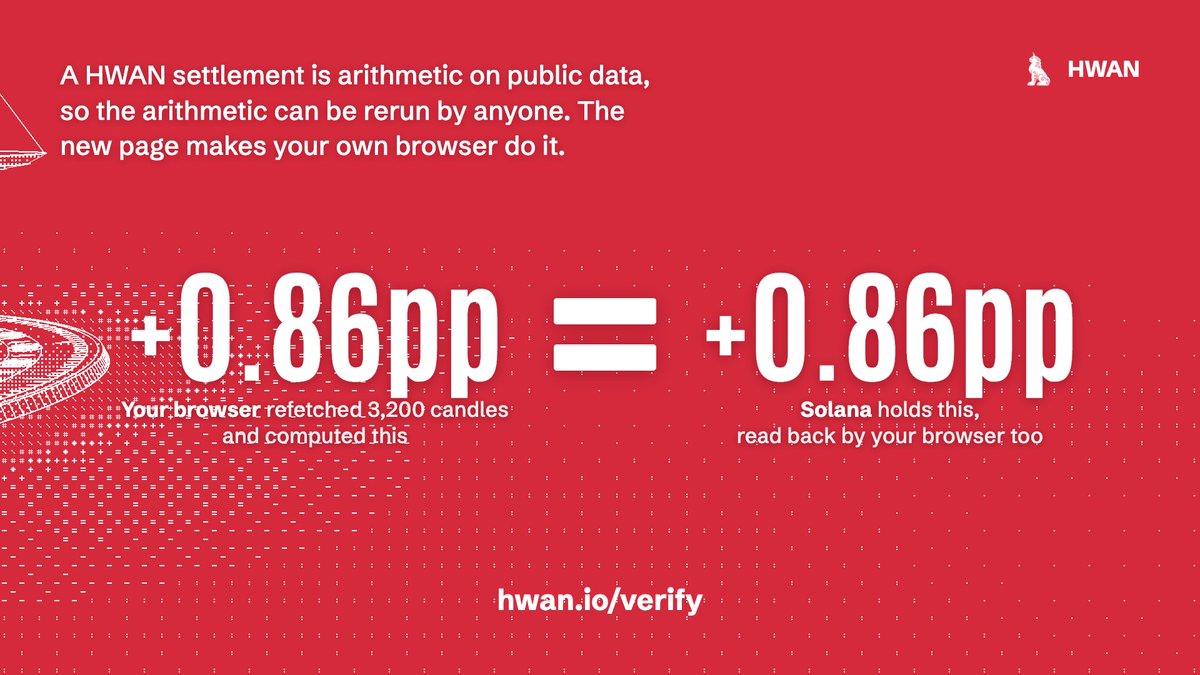
Every settlement system ends at the same sentence, which is trust the oracle. HWAN now ships the opposite sentence as a page. Pick a series on https://t.co/pmJfapYMpW and your own browser refetches the candles and the official rate, reruns the settlement arithmetic to the last integer, and sets its answer beside the value on Solana.
While it works, the page prints a receipt, and every line names where the data truly came from. Upbit, Bithumb, the ECB, Binance and the BCRA answer your browser directly; the two venues that refuse browsers are marked as relayed; even the value on chain is read back by your browser instead of being taken from us.
The first series in HWAN's history expires today at 16:00 UTC, and the button will be waiting.
https://t.co/pmJfapYMpW
The Wall Index arrived as a number to watch. WALLR makes it a thing to hold.
Two tokens, no expiry: WALLR-L rises when the world's street-dollar markup climbs, WALLR-S when the walls come down. Underneath is the machine KIMP runs on: a pair strikes for about $60 of USDC, walks itself forward to the next World series every Thursday, and unwinds to its full value whenever its holder asks.
Consider what the short actually is. Eight countries keep the street's dollar dearer than the official one, and that distance prices their capital walls. Until now nobody could hold the walls themselves, a position that rises as controls tighten and falls as a country opens up. As far as we can tell, WALLR-S is the first instrument anywhere that pays when the world gets freer.
WALLR-L: https://t.co/MlHBluzWtG
WALLR-S: https://t.co/cgXXSsRsJa
https://t.co/6HrDE736xz
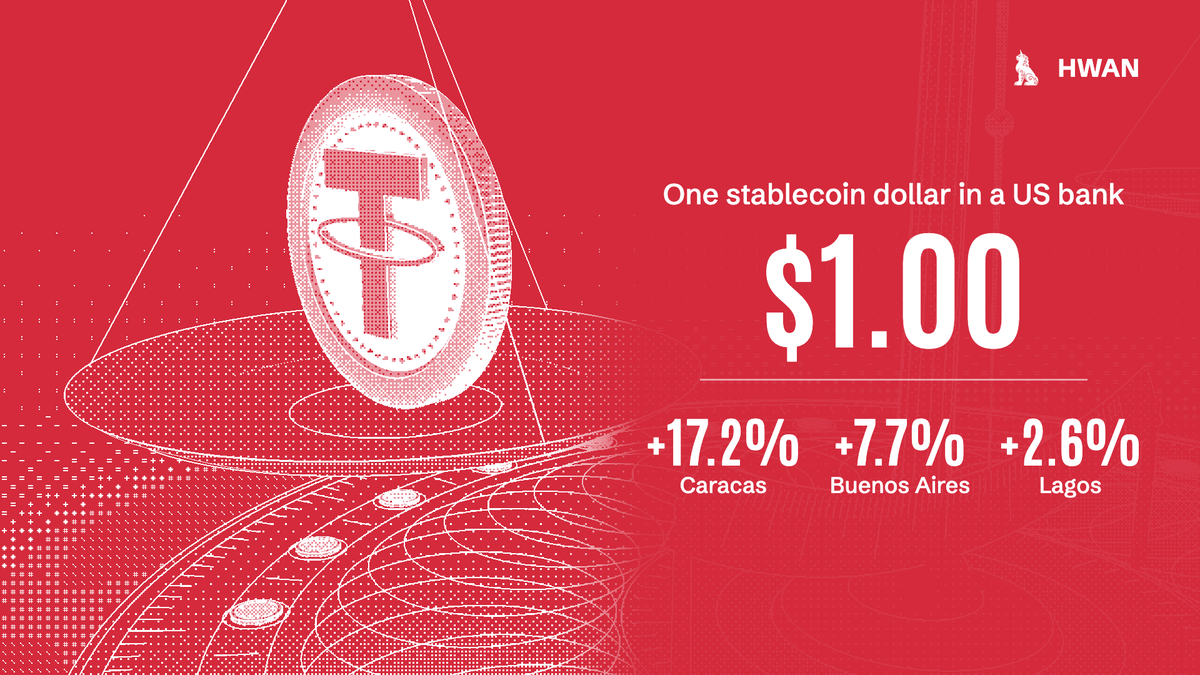
Inside an American bank a stablecoin dollar is simply a dollar. Carry the same coin to Buenos Aires and it fetches 7.7% more pesos than Argentina’s posted exchange rate, in Caracas for 17% more bolívars, in Lagos for 2.6% more naira.
As banks like PNC start settling payments in stablecoins, the local price of a digital dollar turns into a number the whole payments world will need. HWAN already reads it in eight countries every fifteen minutes and turns it into markets anyone on Solana can trade.
https://t.co/PwRQvcIWII
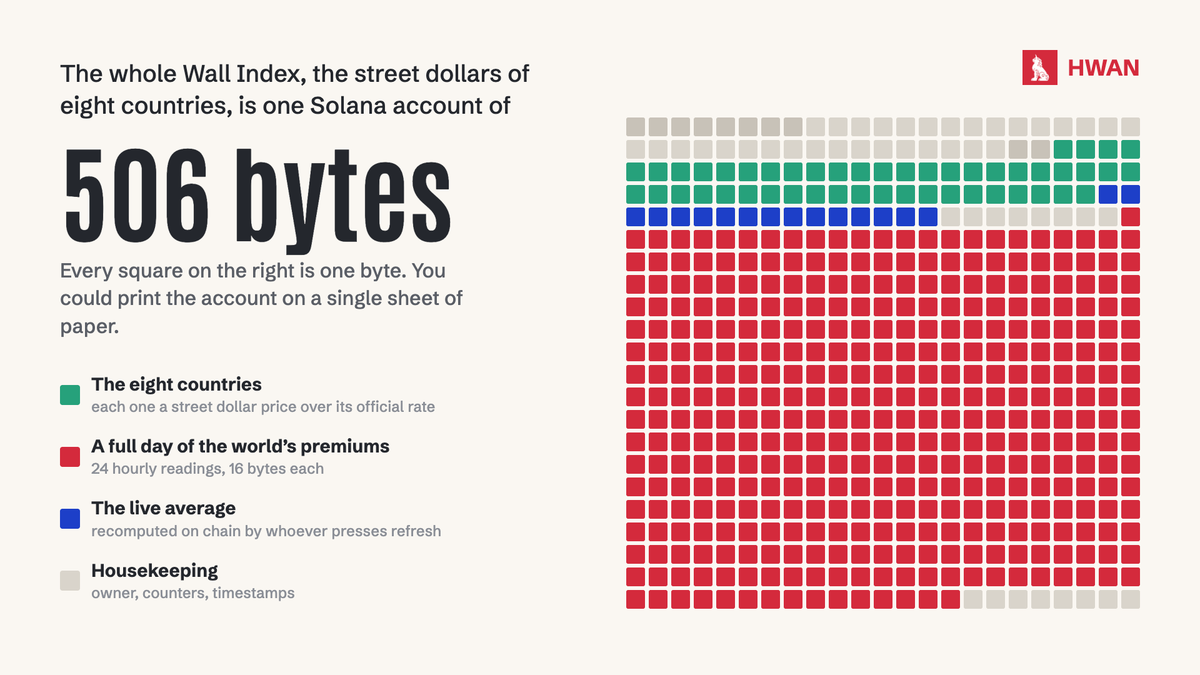
The Wall Index, the live average of eight street dollars with Caracas at one end and Seoul at the other, lives on Solana in a single account of 506 bytes. You could print the whole thing on one sheet of paper.
Most of it is a ring of 24 slots, one per UTC hour. Every fresh reading lands in its hour’s slot and the newest one wins, so the account carries an entire day of the world’s premiums with no database behind it and nothing to prune. The slot arithmetic is the archive.
Nobody writes the number. Pressing refresh only pays the fee: the program walks the eight feed accounts and computes their average itself, inside that same transaction, so the presser has no say in what lands. A world series opens those bytes at expiry, averages the day, and settles right there.
One account as oracle, archive and referee. Read it yourself at https://t.co/kSdZB25lB7, rendered live on https://t.co/PwRQvcIWII.
More than two billion people live in the eight countries HWAN reads, and in all eight a dollar on the street costs more than the official rate says. Nobody could tell you what that markup came to across the world at any given minute, because no such number existed.
It exists now. The Wall Index averages the street dollar premium of all eight countries, Caracas to Seoul, and this hour it reads +5.4%. It lives in one Solana account that anyone on earth can refresh, and the averaging happens inside the chain itself, so the index can never drift from the eight live markets underneath it.
Economic indicators come from offices. This one comes from a formula running on a public chain, and you can watch it breathe at https://t.co/PwRQvcIWII.
Every crypto trader checks the Fear and Greed index in the morning. Seoul publishes a sharper one around the clock, in what one dollar of USDT costs a Korean buyer compared with the official exchange rate.
When Bitcoin slid from $81,400 to $64,000 between May 6 and June 3, that premium fell from +1.25 points to a 3.06 point discount. By September 9, with Bitcoin back at $78,300, it stood at +1.81 again. Korea’s retail crowd trades its mood in dollars, and the gap writes it down every day.
HWAN turned that gap into a Solana market paid out in USDC, so the mood of Korean crypto finally has a price you can hold.
https://t.co/6HrDE736xz
Fresh from the workbench: the counter.
Today a trade on HWAN needs a counterparty. The counter removes that. Ask it for the long of the premium and it strikes a complete pair on the spot, hands you your half and shelves the other, pricing both halves by how lopsided its shelf has grown. A vending machine for opinions, and one whose books anyone can audit from the chain: every token on its shelf is half of a pair it minted itself, so its matched inventory is always worth the full hundred behind it. Anyone can stock the shelf and earn its fee.
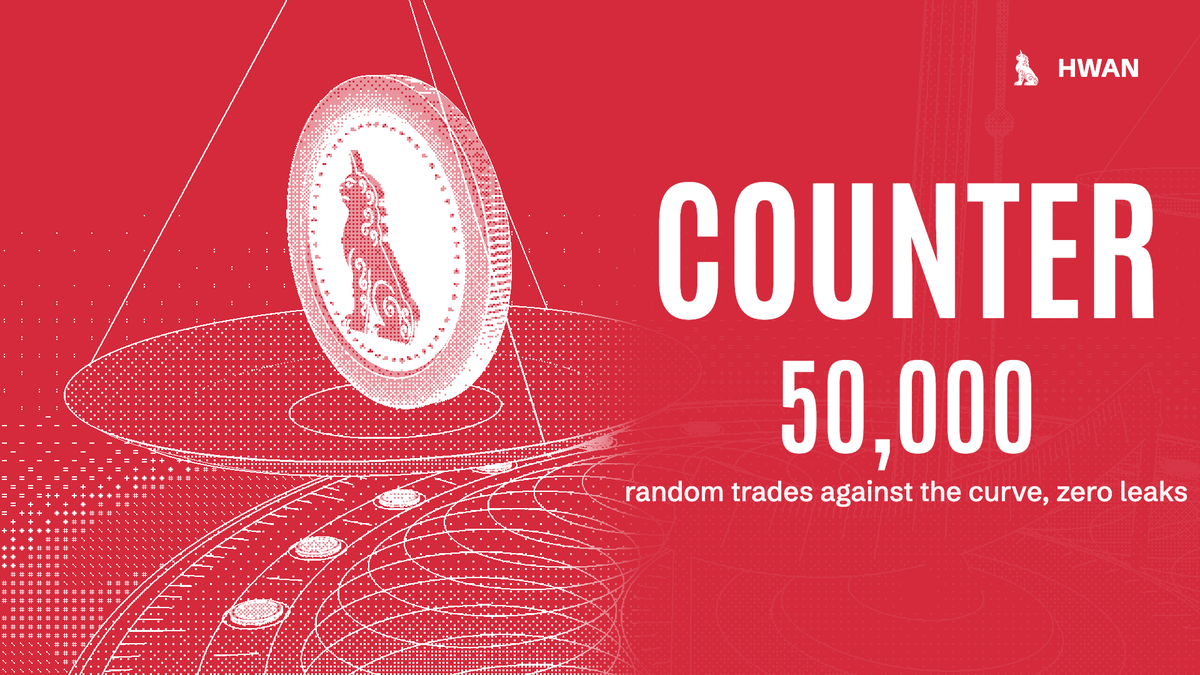
The build left us one war story. A 50,000-case random test kept failing until we saw that the sell formula's square root must round up, never down: floored, the machine would leak value one unit at a time. Nobody would ever have noticed, which is exactly why the test exists.
Code complete, every suite green. It ships with the next program upgrade.
HWAN now carries the dollar premiums of eight countries. Seoul, Mumbai and Buenos Aires already trade on their own markets, and from today the street dollars of Lagos, Caracas, La Paz, Cairo and Karachi trade beside them through the new World market, every one of them read from its street price onto Solana every fifteen minutes.
Those gaps run from 17% in Venezuela down to under 1% in Korea, and the World market folds all eight into one number that settles itself: at expiry the program averages the Wall Index’s last 24 hours on chain and settles every position on exactly that.
https://t.co/6HrDE736xz
HWAN’s daily markets now have a price waiting on both sides. Our own market maker rests a buy 0.10 points under Seoul’s live dollar premium and a sell 0.10 points over it, so a trade fills the moment you sign it in Phantom.
The book follows the index by itself. Last night Seoul’s premium rose from +0.61 to +0.68, and both quotes stepped up to +0.58 and +0.78 on their own.
https://t.co/6HrDE736xz
Every KIMP token rests on a single number out of Seoul, so here is what it would take to fake one. In 2022 one trader pushed a thin price for a few minutes and walked out of Mango Markets with over $100M, and every settlement design gets judged against that day.
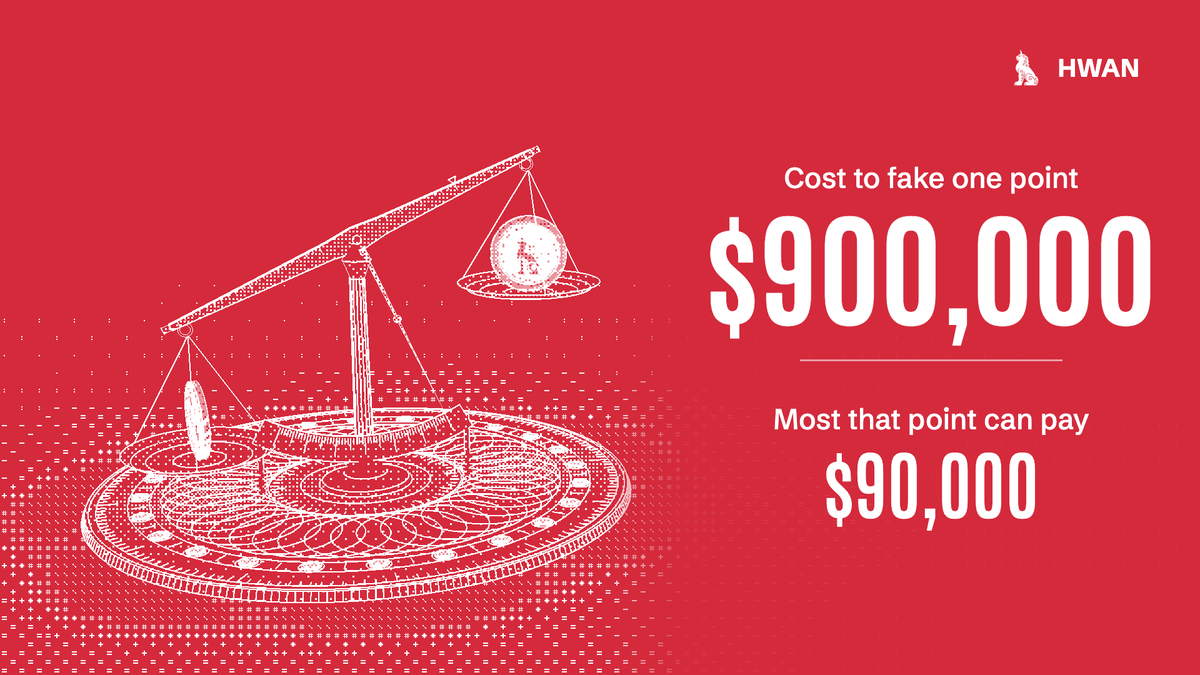
HWAN settles on a full 24 hours of USDT trading on Korea’s two largest exchanges. When we measured those books before launch, holding that average a single point off for one day needed $90M to $257M of working capital and burned about $0.9M to $2.6M along the way. A Korean series caps out at 9,000 contracts, so that same point moves $90,000 across the entire market, and the attack costs at least ten times what it could ever collect.
https://t.co/ecXc3PxjpK