Blackbox fuzzing: sends random data. Fails 99.9% of the time on programs with specific constraints.
Graybox fuzzing: knows the interface. Gets further, but doesn't understand logical sequences.
Neither knows that a withdrawal needs a deposit first.
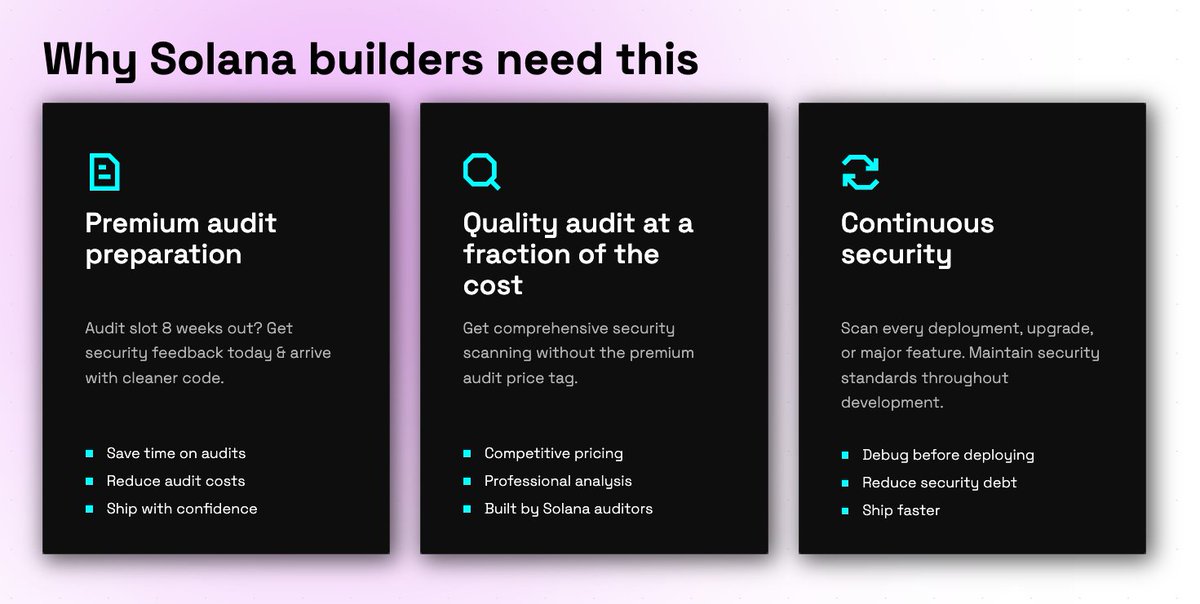
Not every team can wait 8 weeks for an audit slot.
Not every team has the budget for a full manual audit today.
Trident Arena serves both, and the space between.
Thread ↓
Security issues don't announce themselves in the file you're currently editing.
Wake's Security Overview panel surfaces every detected vulnerability across your whole project — severity-sorted, always current, no terminal required.
Thread ↓
Four AI auditing tools. Fourteen protocols. The shape tells the story.
Wake Arena 3.1's blue area contains the other three on every axis.
Where all systems struggle — Burve, Notional — the gap closes.
Where the work matters — Lend, Munchables, Virtuals — the edge is visible and consistent.
What the chart doesn't show: 49 of the 63 found vulnerabilities were confirmed by more than one Wake Arena agent independently.
The shape reflects consensus, not a single model's guess.
Learn more ↓
Your Solana program lives in a GitHub repo.
Trident Arena turns it into a security report with severity ratings, affected code, and remediation guidance.
No audit slot.
No weeks of waiting.
Thread ↓
Why did we build the Solana VS Code extension?
CLI tools require a manual run.
Most developers skip them.
The Solana VS Code extension detects vulnerabilities on every save.
70-80% of audit findings are low/medium issues caught during development.
Get it now ↓
Passing sysvars as instruction accounts is a deprecated Solana pattern.
It's also exploitable — an attacker can pass a spoofed account address.
The VS Code extension flags this automatically.
Thread ↓
Security is only as strong as the weakest link.
You can have great fuzzing and still lose funds to:
• weak access control
• unsafe dependencies
• missing monitoring/response
• social engineering in ops
Treat security as a system: code quality + testing + fuzzing + audits.
Your tests pass.
But which code paths were actually executed?
The Solana VS Code extension shows which lines your Trident tests covered.
And which they missed.
Thread ↓
“Audit the program” is not the full job.
Good audits:
• understand the system (on-chain + off-chain)
• review architecture + dependencies
• go from shallow scan to deep manual review
• rate issues by impact + likelihood
• check patch quality and incident response readiness
You can prompt Claude or GPT to review your Solana code.
Or you can ask Trident Arena.
One catches ~33% of critical/high vulnerabilities.
The other 70%.
Same code. Same task. Very different outcomes.
Thread ↓
Overflow protection shouldn’t be accidental.
The Solana VS Code extension includes an Unsafe Math detector to flag unchecked arithmetic as you code.
Thread ↓
Most extensions wait for you to hover.
Wake's code lenses surface function selectors, security markers, and structural metadata directly in your code — no extra clicks.
Here's what that looks like in practice:
Thread ↓
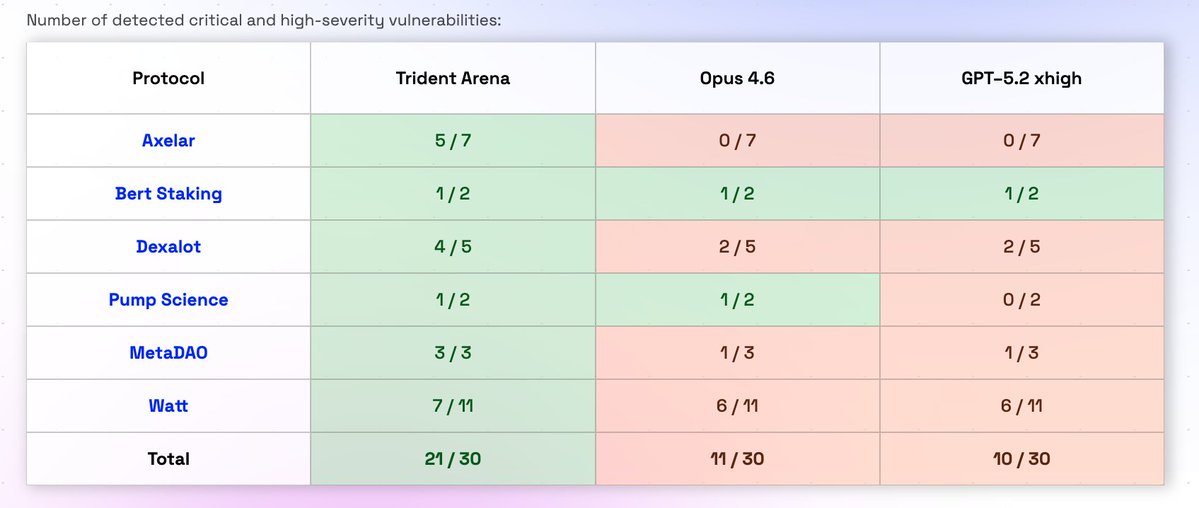
Trident Arena is a multi-agent AI security scanning solution.
21 out of 30 critical/high-severity vulnerabilities found across 6 open source Solana code bases in benchmarks.
70%+ true positive rate.
During a manual audit, TridentArena helped us find a critical-severity issue (later fixed), making @MetaDAOProject even more secure.
Built by the School of Solana senior auditors, securing leading protocols.
Time to IBRL of Solana security audits!
Launch blog post: https://t.co/TNmRLtKQXl
Request access → https://t.co/4dQzD1qiJH
Watch the walkthrough ↓
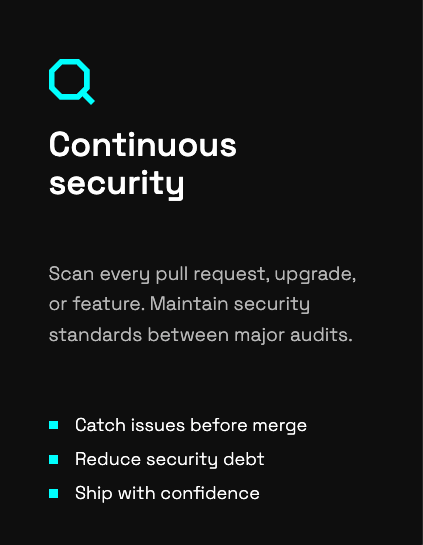
Upgrades introduce a category of bug that fresh code reviews miss.
Not because the new code is wrong, but because it interacts with the existing state in unexpected ways.
Wake Arena's continuous security use case is designed for exactly this:
Thread ↓
Audits don’t start with a report.
They start with your codebase.
Well-structured code helps everyone:
• you navigate faster
• new teammates onboard faster
• auditors understand logic faster (and miss less)
If it’s all in one file, you’re paying an “audit tax.”