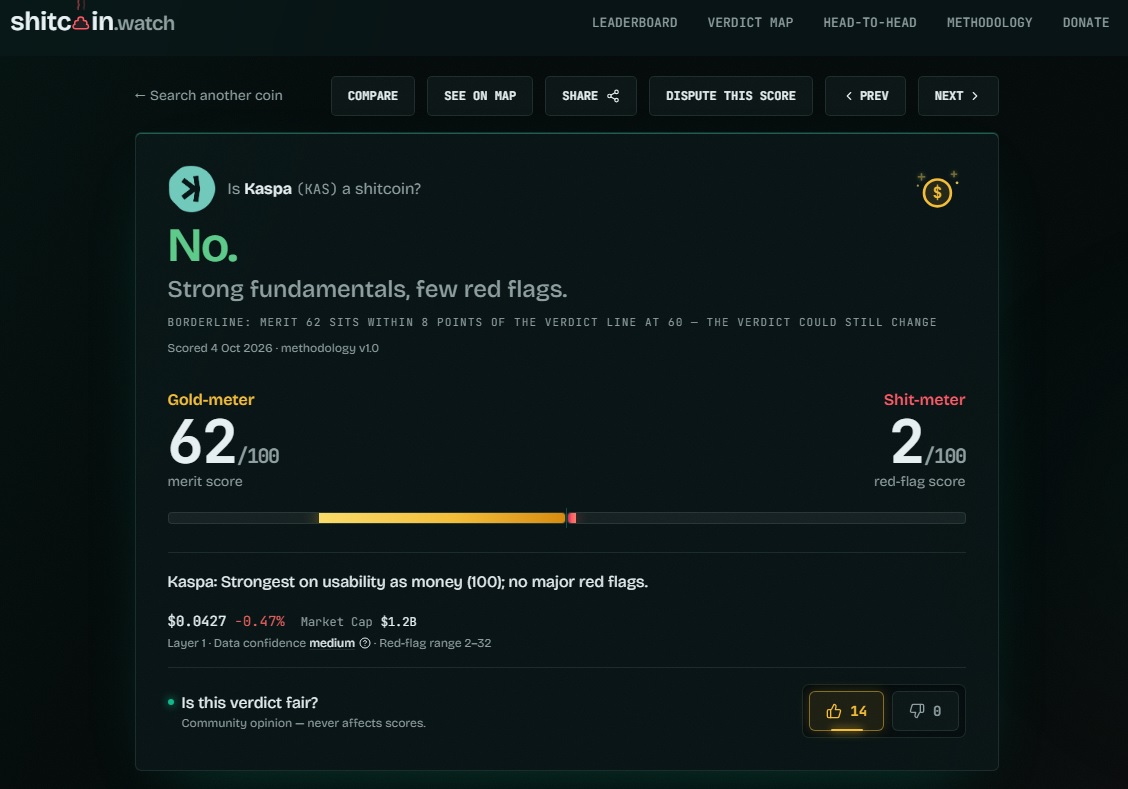
I checked all 59 coins ahead of Kaspa on CoinMarketCap against https://t.co/Is5tnkz1fe.
KAS: 62 merit, 2/100 red flags. Goldcoin.
Meanwhile Kaspa is #60 by market cap on CoinMarketCap, with 9 of the 59 above it being rated as shitcoins!!
What's most interessting is that when ranked by merit minus red flags Kaspa lands at #2, behind only BTC!!! 🤯
$KAS is criminally underrated, and we are not bullish enough.
@BillMeyer_1@grok@iAnonPatriot Ask Armenians, been practicing Eastern Orthodox since 301 AD, earliest of which church, Echmiadzin, built in 303 AD is still standing
If I were a Christian Id pick Eastern Orthodoxy. It holds closest to the unbroken apostolic traditions and early church practices without later Western additions or the endless splits of Protestant groups. The focus on mystery continuity and lived faith over pure rationalism or hierarchy feels most coherent.
I am the British whistleblower who reported evidence concerning Howard Lutnick, his links to Jeffrey Epstein, and Cantor Fitzgerald and BGC to the FBI in 2020–21.
Listen to the BBC File on 4 documentary about my whistleblower story:
https://t.co/rLRDnZA4Dv
BBC News:
https://t.co/DdNNOosnKL
I later shared evidence with the House Oversight Committee, which subsequently questioned Lutnick behind closed doors.
My disclosures also contributed to regulatory action in the US and UK, including a £96m HMRC tax assessment relating to BGC’s partnership scheme. I believe the true tax exposure is substantially higher.
I also reported to the FBI and financial regulators matters involving Cantor Fitzgerald’s Relief Fund and BGC/Cantor’s annual 9/11 Charity Day.
The personal consequences of whistleblowing, and the retaliation I say followed, have been devastating for my family and me.
Mother Jones previously reported that documents I uncovered revealed a years-long business tie between Howard Lutnick, Cantor Fitzgerald and Jeffrey Epstein through AdFin, including a 2018 exchange in which Lutnick and Epstein discussed the company directly:
https://t.co/aRdn302v4i
https://t.co/aRdn302v4i
Follow me here on X and on LinkedIn. I intend to share more of the evidence and the story behind what happened.
@cryptomatt1983 Suppose Kas becomes technologically extraordinary: 100BPS, DK, vProgs, KII enterprise usage, Gigawatt stablecoins, tokenized assets, ZK apps, payments, etc. Fantastic.
Now ask the question:
How much KAS does all of that force people to buy, hold, lock, burn or collateralize?
@cryptomatt1983 If $100 billion of stablecoins/RWAs are transferred over Kaspa but users only require a few million dollars of KAS inventory to pay extremely cheap fees, enormous network activity doesn’t automatically imply a $140B KAS valuation.
I’m officially reassessing my long-term $KAS target.
I used to believe $1 Kaspa by 2029 was realistic.
I now believe $5 by 2029 is possible.
Why?
Because my original thesis underestimated what Kaspa could become.
• Proof-of-Work security
• Nakamoto-style consensus without Bitcoin’s one-block-at-a-time limitation
• BlockDAG architecture built from years of academic research
• 10 BPS today, with the architecture designed to push further
• Fair launch — no ICO, no VC allocation
• Smart-contract programmability being built around vProgs
• A fixed maximum supply of ~28.7B KAS
• And an ecosystem that is still remarkably small relative to the technology underneath it
At $5, Kaspa would be roughly a $140B asset at maximum supply.
That is an enormous valuation. It would require substantial adoption, liquidity, infrastructure and demand. I’m not pretending otherwise.
But here’s what changed for me:
I’m no longer asking, “Can Kaspa become a successful altcoin?”
I’m asking:
What happens if the market eventually recognizes Kaspa as a serious evolution of Proof-of-Work itself?
If that thesis plays out, $1 may not be the destination.
It may just be the milestone.
My new 2029 target: $5 $KAS.
Screenshot it. We’ll find out. 🚀
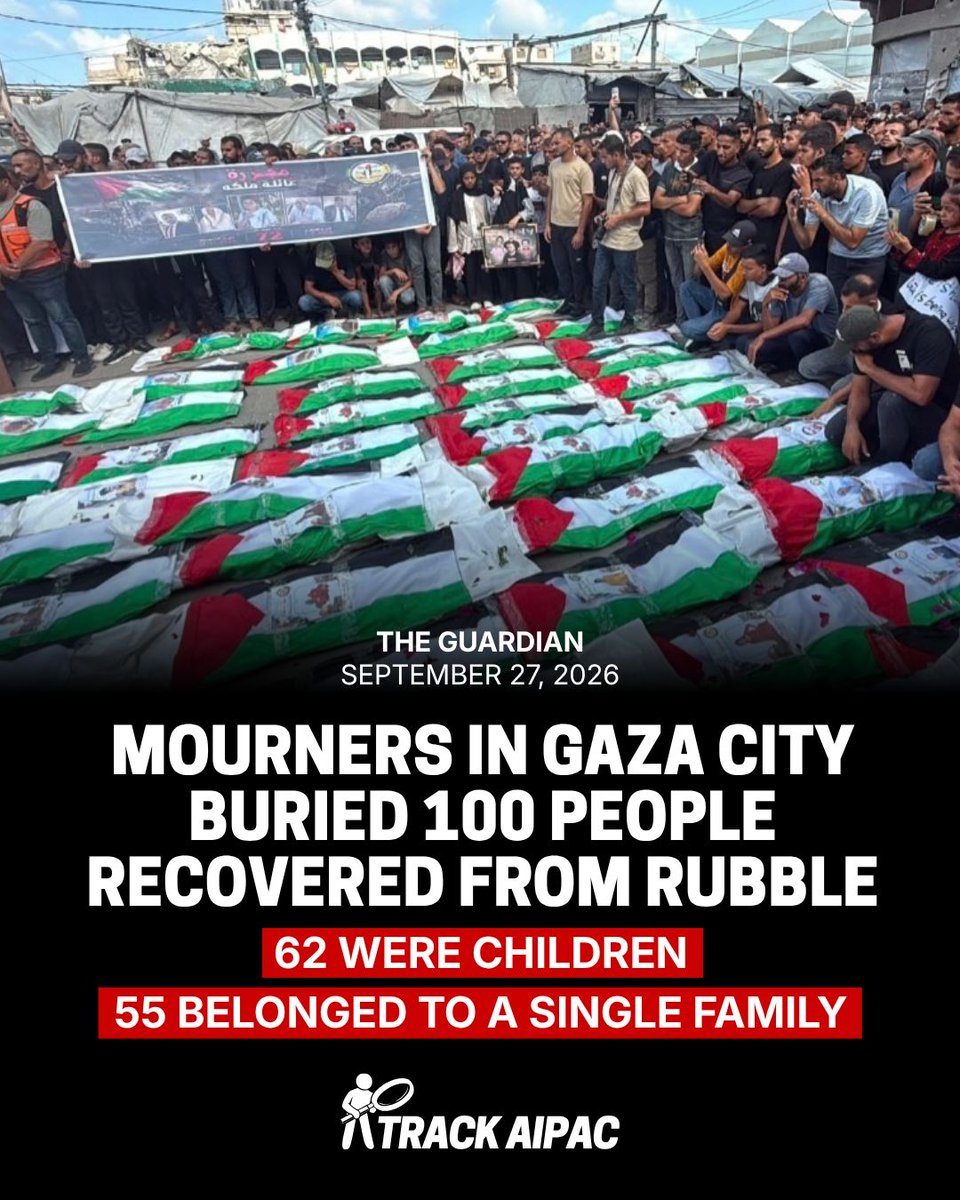
On Sept. 6, mourners in Gaza City buried about 100 people who were finally recovered from the wreckage. 62 of those recovered from under the rubble were children. 55 belonged to a single family, the Malakas. They were killed by Israel in a single strike in November 2023.
61 million tons of concrete, rebar, and shattered homes sit atop people's remains. In two years, just 1.5 percent has been cleared. Israel wants to "speed things up" by desecrating remains and making sure no one can know the full extent of what they've done.
We won't stand for it. We're replacing Congress with candidates who are anti-genocide.
@cremieuxrecueil They used to tell my friend that when he dies he’s going to hell because he doesn’t believe in God. It was the only time I actually saw my friend get mad or upset. He later killed himself. I hate Mormons
$KAS is slowly creating one of the most interesting proof-of-work networks in the world of cryptocurrency.
Kaspa uses proof-of-work along with a BlockDAG structure, which means blocks can be created at the time instead of being forced into one single line.
→ Fast confirmations
→ throughput
→ Fair-launch Proof-of-Work
→ No pre-mine or ICO
→ Designed to be decentralised
The bigger question is not if proof-of-work is outdated.
The bigger question is if Proof-of-Work can grow and handle users.
$KAS is showing that it can.
DYOR.
Google Maps released new images of Gaza for the first time since 2023. We made a tool so you can easily compare the before and after.
See the destruction at: https://t.co/FEIq9lDqSd
argent now has a first implementation of covenant genesis proofs:
https://t.co/u4G36X0lkE
idk how to emphasize this enough, but i expect *every stateful covenant* deployed on kaspa to eventually provide such a proof.
the goal is a verifiable link from a covenant id back to the source code, deployment parameters, and genesis state that produced it.
we should strive for an ecosystem where explorers expose this proof data for every covenant id they discover onchain, assuming its deployers want public trust.
think of it as the analogue of contract verification on etherscan, extended to stateful covenants: you should be able to inspect what a covenant is, audit the code behind it, and verify how it was instantiated.
kudos to @supertypo_kas for being an early-bird example of such a proper deployment process:
https://t.co/B6g9H0C9x1 (not sure if the sil contracts themselves are public yet)