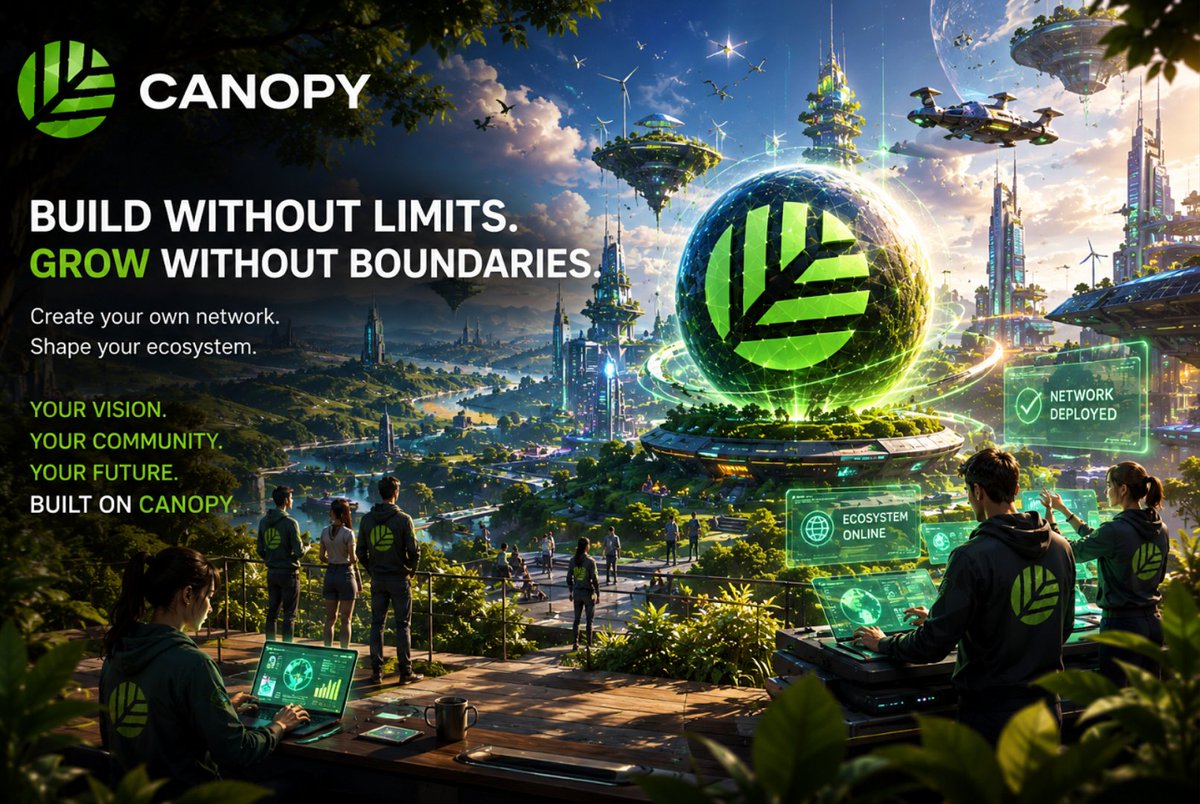
Canopy makes creating your own network more accessible than ever.
Instead of dealing with complex infrastructure from scratch, users can launch and develop their own network within the Canopy ecosystem, giving it its own identity, community and direction.
Create. Customize. Build. Grow.
Canopy opens new possibilities for communities, developers and creators who want to go beyond simply using Web3 and start building their own ecosystems.
Your idea. Your network. Your future. 🌱
@CNPYNetwork
Real-world assets are moving on-chain, but the real opportunity is much bigger than simply putting assets on a blockchain.
The next step is building infrastructure that can make these assets usable at scale , compliant, programmable, secure and connected across different ecosystems.
That’s what makes @SimpleChain_RWA
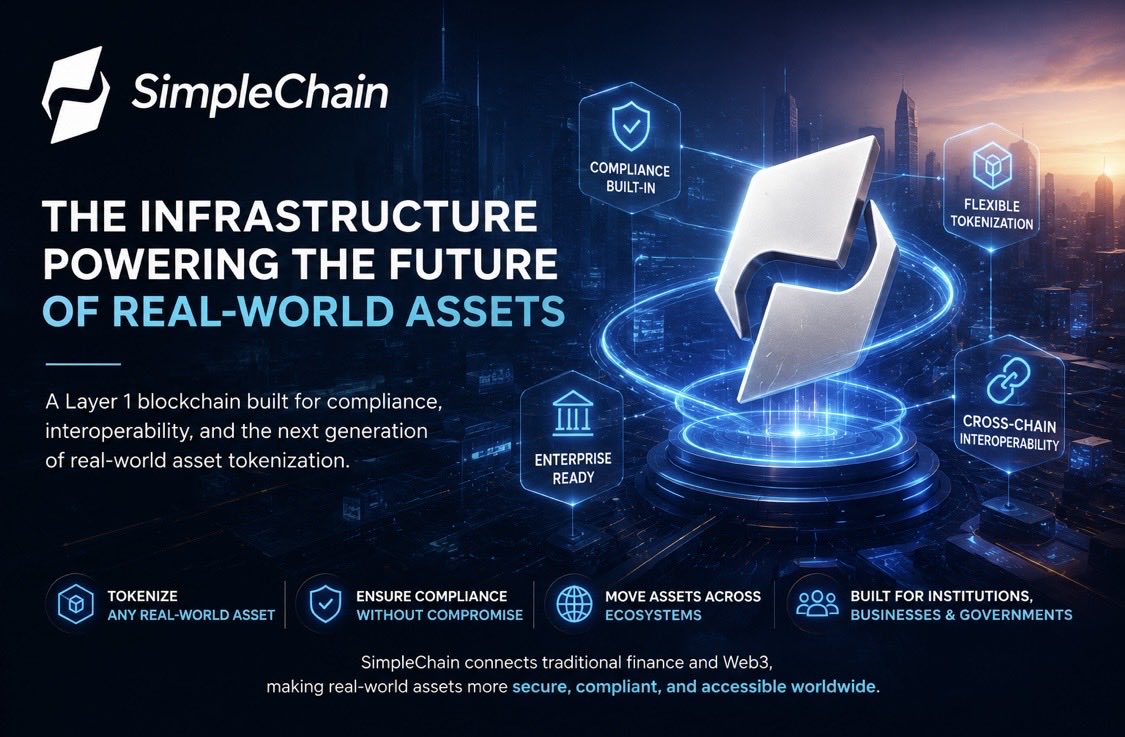
SimpleChain is building a Layer 1 focused on the RWA economy, with tools designed for real-world adoption:
🔹 Flexible tokenization 🔹 Compliance built into the infrastructure 🔹 Enterprise-ready architecture 🔹 Cross-chain interoperability
The potential here goes far beyond crypto.
Imagine real estate, financial products, commodities, business assets and other real-world value becoming programmable and globally accessible through blockchain infrastructure.
We’re still early in the RWA cycle.
The projects building the infrastructure today could become the rails for a much larger financial system tomorrow.
SimpleChain is building for that future. ⚡
Building on Canopy just got a lot easier.
The new TypeScript SDK gives developers a fully typed and documented toolkit to query the chain and start shipping apps faster.
No need to reinvent the wheel ,install it and start building:
npm i canopynetwork/canopy-ts
Better tooling → faster development → more builders on Canopy.
The ecosystem grows when building gets simpler. 🌲
@CNPYNetwork@github
BREAKING: Ethereum core developers schedule EIP-8141 account abstraction for the Hegotá upgrade.
EIP-8141 has moved from “Considered” to “Scheduled,” signaling that Account Abstraction is now expected to ship with Hegotá.
The move comes as EIP-8130 emerges as a competing design and is set to launch on Base in September, raising concerns about fragmented standards across Ethereum L1 and L2s.
Developers are now working toward a shared transaction standard that preserves L1 flexibility while allowing L2s to optimize for performance and DoS resistance, with the goal of making accounts interoperable across Ethereum’s ecosystem.
What is Plume Network?
Plume (@plumenetwork) is a blockchain built specifically for bringing real-world assets onchain and making them usable in DeFi.
Unlike blockchains that treat tokenization as just another application, Plume is building an entire financial ecosystem around real-world assets, or RWAs.
Treasuries, private credit, commodities, funds, and other traditionally illiquid assets can be represented as blockchain-based assets and then used across decentralized financial applications.
Plume calls this model RWAfi, or real-world asset finance.
So what makes Plume different?
(1) ) It is purpose-built for RWAs
Plume launched its Genesis mainnet in June 2025 as a permissionless blockchain designed around RWA finance. In October 2025, Plume was approved by the SEC as a registered transfer agent, a regulatory step most general-purpose chains don't hold.
The network is EVM-compatible, allowing developers to use familiar Ethereum tooling while accessing lower-cost execution.
(2) It focuses on more than tokenization.
Plume wants tokenized assets to actually do something once they reach the blockchain.
Its ecosystem allows RWA-backed assets to be used for lending, borrowing, trading, staking and yield strategies.
Its flagship Nest protocol, for example, lets users gain exposure to institutional-backed assets through yield-bearing RWA positions that can then become useful across DeFi.
(3) Compliance is built into the infrastructure.
Real-world assets come with regulations, investor restrictions and identity requirements that ordinary DeFi tokens usually do not face.
Plume has therefore built compliance and screening capabilities directly into its network rather than treating them as an afterthought.
Its blockchain includes protocol-level AML, ATF and sanctions screening infrastructure.
(4) It is trying to make institutional assets composable.
A tokenized Treasury or private credit position does not have to sit idle in a wallet.
The goal is to make these assets usable across different financial applications, similar to how USDC, ETH and other crypto assets move through DeFi today.
Plume's Portal already allows users to swap, lend, borrow, loop and earn against RWA-backed assets.
(5) Plume is also building cross-chain infrastructure.
Its SkyLink infrastructure is designed to distribute RWA yields across other blockchain networks.
That means Plume does not necessarily need every investor to move onto Plume itself.
Instead, the network can act as infrastructure for bringing institutional yield into other ecosystems.
(6) The network has attracted major institutional names.
Apollo Global Management, WisdomTree, Hamilton Lane and Securitize are among the institutions connected to Plume's ecosystem.
Securitize, for example, announced plans to deploy assets through Plume's Nest protocol, linking institutional tokenization infrastructure with Plume's RWA holder base.
So where does PLUME fit in?
$PLUME is the network's native token.
It can be used for gas, staking, governance, collateral and ecosystem access.
Plume also says protocol fees can eventually support token buybacks, ecosystem incentives and further network growth.
Plume is betting that the next major phase of crypto adoption will not only involve digital-native assets.
It will involve putting traditional financial assets onchain and making them programmable.
The challenge is turning that vision into deep liquidity, compliant infrastructure and genuine demand.
If Plume can solve those problems, it could become an important piece of the infrastructure connecting traditional finance with DeFi.