"TRADING DECIPHERED"
And factors affecting trading performance🔎📝
Even if 2 traders trade the same setup on the same stock & timeframe, their performance is most likely to differ due to one/multiple of these reasons:-
- STYLE
They could be an intraday, or a swing, or a positional trader. The %-move in stock price they are playing for and the time horizon of being in the trade is different. The entries and exits might also differ for 2 traders leading to different results.
- MARKET CYCLE
Life of a market cycle is divided in 4 stages namely: Accumulation, Advancing, Distribution and Declining. Generally speaking, advancing stage is where the economy as a whole is booming. Companies are consistently posting excellent quarterly results and most stocks and indices are in a clear uptrend. It can be described as Stage-2 in the chart below. Just like the economy, individual stocks can have their own stage cycle as well.
(Note: To explore further and go deeper into this topic, study Dow theory, Wyckoff market cycles and Stan Weinstein's stage analysis.)
A long-only swing or positional trader has the highest odds of making consistent profits in this stage. In other stages, the market is either choppy (volatile) or down-trending which will seriously hamper the win-rate.
Knowing how young or old a market trend is in its stage-2 is important because as the market keeps going higher, it keeps getting nearer to stage-3, or the distribution stage. As a trend matures, choppiness keeps getting violent with every swing higher and finally leads to an increase in squats and breakout failures. So it is very logical to conclude that for both swing trading and positional trading, being aggressive at or near the start of stage-2 (advancing) would provide maximum odds of success. Many stocks give multibagger returns during this stage, and if caught at the right time (early) can prove to be big portfolio movers. Short-term swings can be targeted till stage-2 is intact, i.e. the trend continues.
- SITUATIONAL AWARENESS
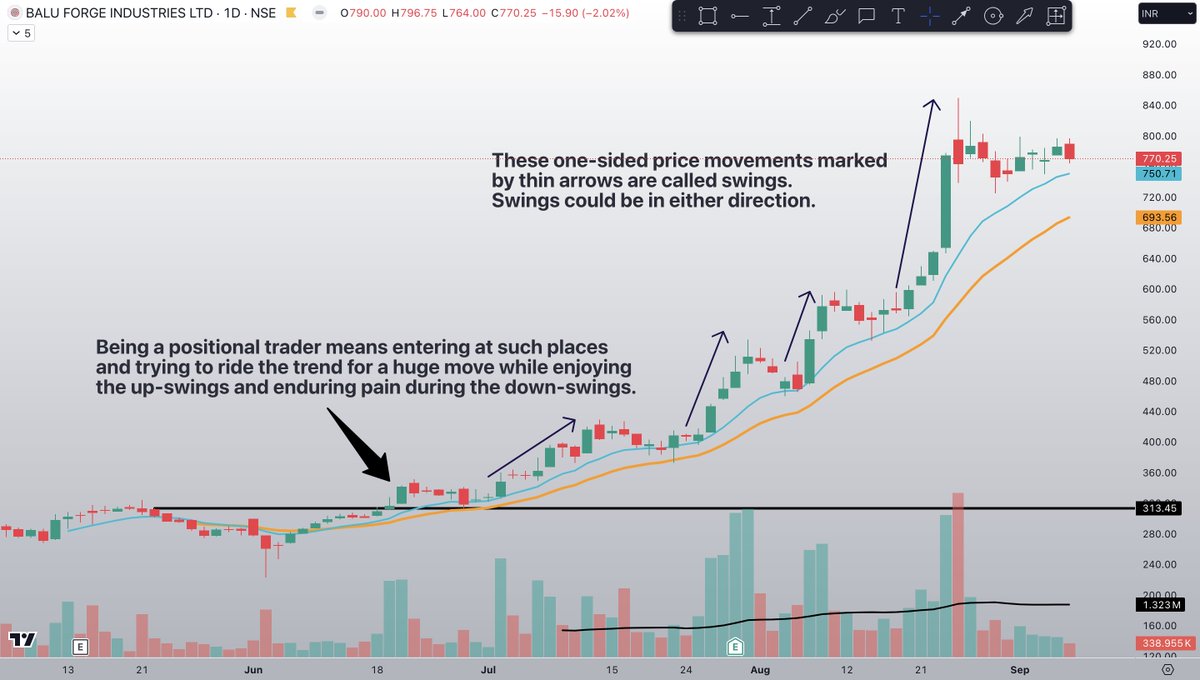
Situational awareness helps a swing trader in assessing whether it is a good time or not to be taking trades as per their setup/strategy. If you study any chart in stage-2, clear phases of consolidation followed by one-directional move (swing), further followed by consolidation and hence forth can be observed. An idea of what most of the stocks in your universe are doing, and whether they are behaving in the way as they should, will guide you in deciding whether you should be cautious while entering positions, sit on the sidelines with cash or enter trades aggressively to push your PF.
Below is a picture depicting a stock in stage-2 with its swings and consolidation bases marked.👇
On a broader market level, if many stocks are breaking out higher on big volumes and following-through in the next few days, if many stocks are closing 5% or higher than the previous day continuously, then clearly it is a good time to be aggressive. Similarly, if majority stocks are acting choppy with failed breakouts or are falling continuously then it is not a good time to be trading. Trading yields best returns when practiced in periods providing high odds of success, and curbed when odds don't prevail.
- POSITION SIZE
How one allocates their capital makes a massive difference on the net returns made. If you catch a 50% move on a 5% size, the impact on PF is 2.5%. Whereas if you catch even a 20% move on 50% size, it moves your PF by a huge 10%.
However, having a higher position size per trade would mean the account can accommodate lesser number of positions. This can lead to many missed opportunities. Hence traders should find a balance between these aspects so as to carry on with sound trading decisions. Remember that in a strong market many stocks will be flying and nobody can catch all of them. Learn to be satisfied with what you get.
__________________________________________________
Follow me @TheTradeScout if my tweets help you | shorten your learning curve in any way.😃 |
-------------------------------------------------------
- WIN RATE
Win-rate plays a big role in determining portfolio impact per trade. It simply means how many trades, out of a total, leave a profit after your exit. Mostly traders have a win-rate in the range of 25-45%. To be profitable with a win-rate as low as 25%, one needs to have big Reward:Risk ratio on an average, at least >4 to get a meaningful return. If your win-rate is high and you manage to keep your Reward:Risk ratio >=2 then you can call yourself a golden goose.
- RISK MANAGEMENT
The % risk per trade on PF depends on the trader’s style, risk appetite and personality. If you’re an intraday or a swing trader with a low win-rate, a high RPT like 1% or more could open the possibility of bigger drawdowns on a string of losing trades, thus weaken the confidence especially for beginners who are tying to find their way in the market. Whereas a winning streak can enormously lift the equity curve.
On the flip-side, low RPT like 0.2-0.25% will be very helpful in controlling drawdowns but return-wise performance won't be as great. Hence RPT and PF-level volatility are directly correlated.
- STOPLOSS
The % SL a trader uses differentiates their performance from other traders by affecting their reward vs risk relationship and their win-rate. There are both pros and cons for the stoploss size a trader uses.
A small SL (1-3%) gives you the opportunity to make 5x-10x of your RPT in a short period of time depending on your style of trading and how strong a bull-run is. If you catch a bunch of these fast-movers in a strong market, it can escalate your equity curve sharply. Win-rate is usually on the lower side while trading with small stops. Requires very good execution.
A larger SL (7%+) can’t give you those fast gains, but on the positive side, a 7%+ stop doesn’t get hit easily. Thus you might get a higher win-rate. You have to be a positional trader for hitting such huge gains of 50% or more to get a 7R+ gain as gains these big require either a very strong bull-run with stable trend in price or a fundamental catalyst or sectoral tailwinds for the stock you’re trading. But if you’re adept at finding out opportunities backed by such facts then you might catch multiple multibaggers on the way if you follow a trailing stop. Trend-followers can grow their accounts multi-fold when they catch 2-3 big winners in a cycle.
- TRADE EXECUTION/MANAGEMENT
A timely entry in a stock with the least possible risk along with managing to ride it while the move lasts can give you the best bang for your buck in terms of impact on PF. Depending upon how deeply you’ve practised or back-tested your trade entries/exits as per your setup and style, you can improve your win-rate and the probability of catching a big chunk of the move, thereby increasing your profits.
-EXIT
Final step of the trade is to exit at the most probable end of the move. According to a trader’s style, they must understand how a winning trade completes its up-move before starting a down-trend and losing a majority of what it has gained. They must have a fair idea of how often (frequency), how much (%), and for how long (hours/days/weeks...) the stock moves after their entry. The objective is to capture a major slice of the cake (move). The trader who exits at the best possible time in most of their trades makes the maximum impact on PF and hence has the superior-most performance.
MY TWO CENTS:
Learn how to use google search for maximum learning. Start educating yourself by reading books and articles written by successful traders/investors. Study their methods, concepts and try applying them on historical charts to gain a deeper understanding. Study winning stocks of the past. History often repeats itself.
Find time to do all this yourself if you want to become an independent decision maker, take charge of your trading/investing journey now!✍️
-----XXXXX-----XXXXX-----XXXXX-----XXXXX-----
Appreciation and doubts are welcome in the comments section. Kindly repost the tweet so that it reaches the whole trading community.😇
Follow me @TheTradeScout if my tweets help you shorten your learning curve in any way.
Youtube: https://t.co/kHukx3AFvq
More content on the way.🤠✌️
#trading #SwingTrading #stockmarketsindia #BreakoutStock #StockMarketindia #investing
Manas Arora is overrated.
His strategies don't work.
Is what his jealous haters say.
But I took his 1-On-1 Mentorship and it transformed my trading.
Here are 8 powerful ideas I learned that you won't find anywhere else on X👇
David Ryan won the US Investing Championship 3 years in a row.
No insider edge.
No prediction magic.
Just leaders, timing, pyramiding, and brutal discipline.
Here are 8 lessons from how he traded. 🧵
If you are a swing trader in the Indian market, one thing you should be careful about is stocks that suddenly move 40% to 50% in just a few days. When a stock makes back to back big candles, the price often moves too far away from the 20 EMA.
In such situations, waiting for a close below the 20 EMA can be costly. By the time that signal comes, a large part of your profit may already be gone.
This is mainly a concern for swing traders, not long term investors. Investors are usually willing to sit through bigger pullbacks if they believe the long term story is still intact.
What I have noticed is that when a stock rises very quickly in a short period, it often gives back a large part of that move later. Not always, but often enough to deserve attention. That is why swing traders should think about protecting profits instead of relying only on a moving average exit after an explosive move.
As the market improves, the number of setups and breakouts also increases. And when too many stocks start moving at once, it becomes very hard to track everything properly.
One of the best ways to tackle this “problem of plenty” is by having a well organized watchlist.
In this video, I have shared how you can create a clean and structured watchlist in TradingView so you can stay organized before your trading day begins.
Watch it and learn a thing or two.
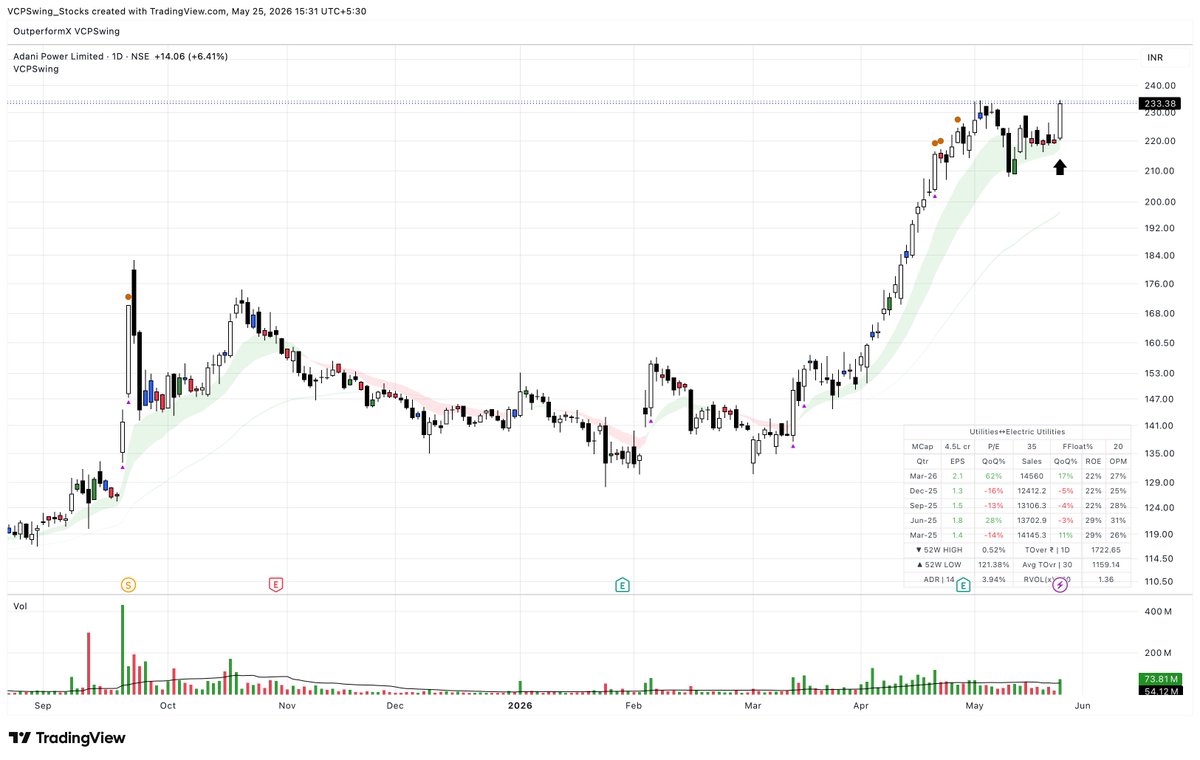
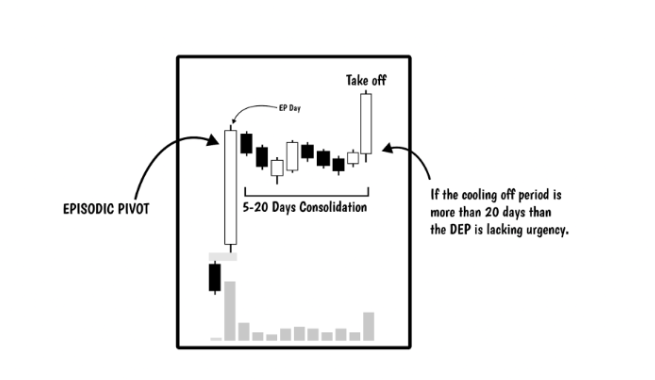
A good delayed EP setup usually takes off within 5 to 20 days. If it is taking longer than that, then many times the main element behind the setup is missing, and that element is urgency.
The entire delayed EP structure is built around urgency.
A neglected stock suddenly reacts strongly after earnings. Maybe you cannot fully see the reason in the numbers, but the price and volume reaction tells you that somebody is interested. Somebody sees something.
That sudden shift in behavior is what makes the setup attractive in the first place.
But if the stock keeps moving sideways for more than 20 days after the earnings reaction, then the urgency starts fading away.
At that point, it is usually better to drop the idea and focus on other available setups instead of forcing conviction.
Because when you trade delayed EPs, one thing you are heavily betting on is momentum building quickly after that earnings reaction.
If that quick follow-through is missing, then many times the stock is simply not ready.
Idea Credits - @PradeepBonde
#DelayedEP
📌Price and volume are all you need — everything else is noise. 📊
Most #traders make this way too complicated.
❌They stack indicators
❌They search for “perfect tools”
❌They wait for confirmation from 5 different signals
And still… they hesitate.
Simplicity in Trading in Highly Underrated.
10/20 MA RIDERS ARE THE STRONGEST STOCKS OUT THERE
They need no fancy indicators, no complicated setups, and absolutely no overthinking. Just two moving averages rising together with price riding on top of them. That’s the entire filter.This one simple screen alone has shown me the biggest runners before they really take off, time and time again. When a stock stays above its rising 10/ 20 MA, it tells you the momentum is still alive and the buyers are in control.
The 10 MA acts as immediate support and the 20 MA gives you the bigger trend direction. When both are sloping up and price respects them, you know the supply is drying up and demand is winning. No guesswork.
I look for these every single day because they catch the cleanest momentum plays early, the ones that go on to deliver the real outsized moves while the rest of the market is still catching up.
It keeps me out of weak names and forces me to focus only on the highest probability setups.
Trade less, but trade the absolute best.
𝗛𝘆𝗱𝗿𝗮 𝗾𝘂𝗶𝘁 𝗵𝗶𝘀 𝟵-𝟱 𝗝𝗼𝗯 𝘁𝗿𝗮𝗱𝗶𝗻𝗴 𝘁𝗵𝗶𝘀 𝗠𝗼𝗱𝗲𝗹
I have 𝟮𝟬+ 𝗖𝗹𝗲𝗮𝗻 𝗲𝘅𝗮𝗺𝗽𝗹𝗲𝘀. Do you need it?
Like, Repost, Comment "PDF" for instant delivery to your inbox
(𝘔𝘶𝘴𝘵 𝘧𝘰𝘭𝘭𝘰𝘸 𝘴𝘰 𝘟 𝘢𝘭𝘭𝘰𝘸𝘴 𝘮𝘦 𝘵𝘰 𝘋𝘔! )