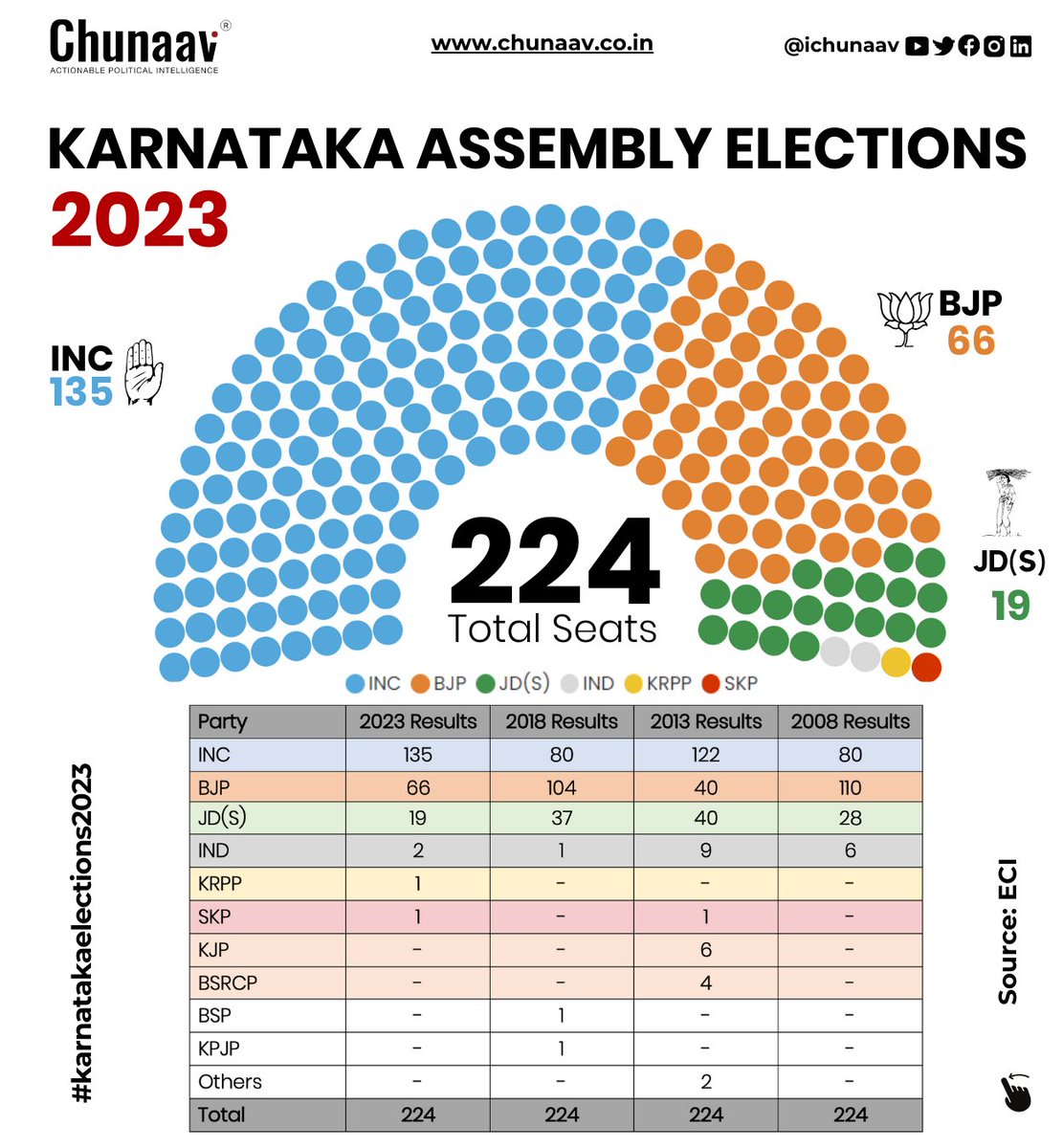
#KarnatakaElectionResults | Seat Count Comparison 2023, 2018, 2013, and 2008 Vidhan Sabha Elections.
Last time @INCKarnataka won such a massive mandate with 178 seats and 43.76% vote share in the 1989 Vidhan Sabha Elections.
INC: 135
BJP: 66
JD(S): 19
IND: 2 (Independent)
KRPP: 1 (Kalyana Rajya Pragathi Paksha)
SKP: 1 (Sarvodaya Karnataka Paksha)
INC winning 135 seats is the highest since 1989 #KarnatakaElections . No other party has gotten 135+ seats since 1989 elections. The BJP's tally came down from 104 to 66.
कर्नाटक चुनाव | कांग्रेस पार्टी
#KarnatakaResults #DKShivakumar #MLAs #karnatakabjp #RahulGandhi
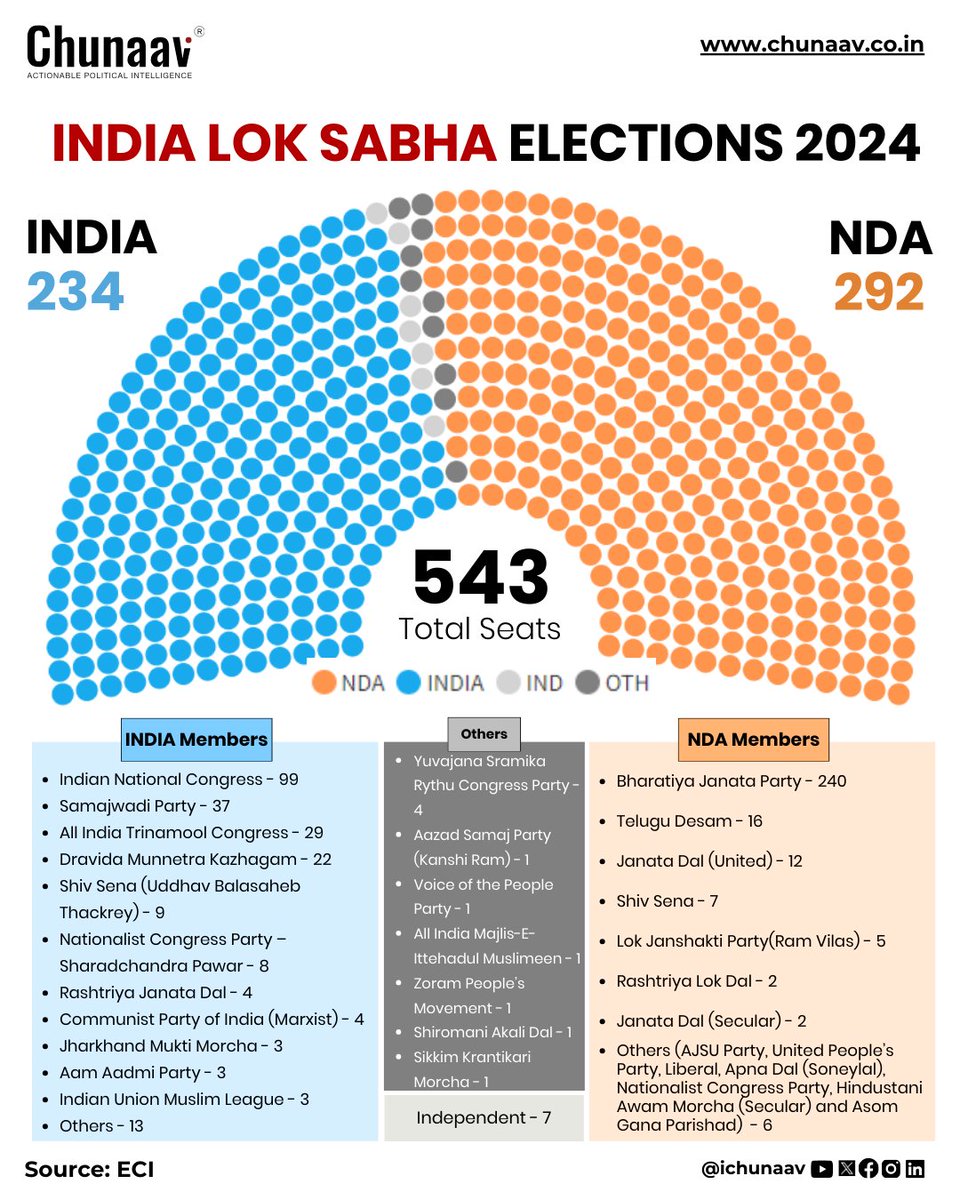
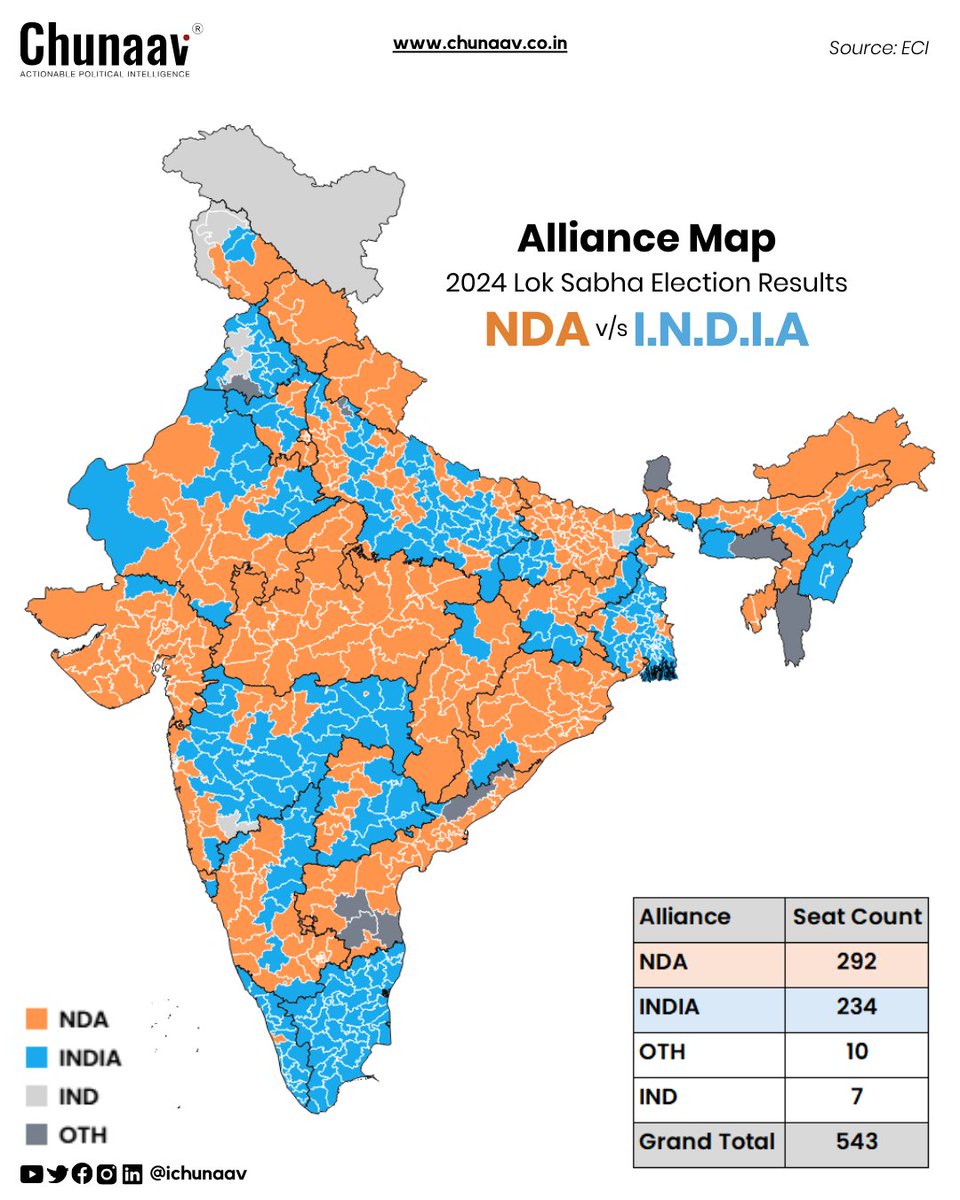
#BJP stands as the single largest party after winning 240 seats out of the 543 Parliamentary constituencies in India in the 2024 Lok Sabha Election. Although none of the parties that contested the election had the majority of 272 seats to form a government, NDA (National Democratic Alliance) with its partners crossed the benchmark and as a coalition secured 292 seats.
The INDIA Alliance, which secured a total of 234 seats. The alliance was led by the #INC party contributing a total of 99 seats, followed by 37 seats won by the Samajwadi Party, #AITC with 29, and #DMK (Dravida Munnetra Kazhagam) with 22.
#loksabhelection #LokSabhaEelections2024 #electionresults
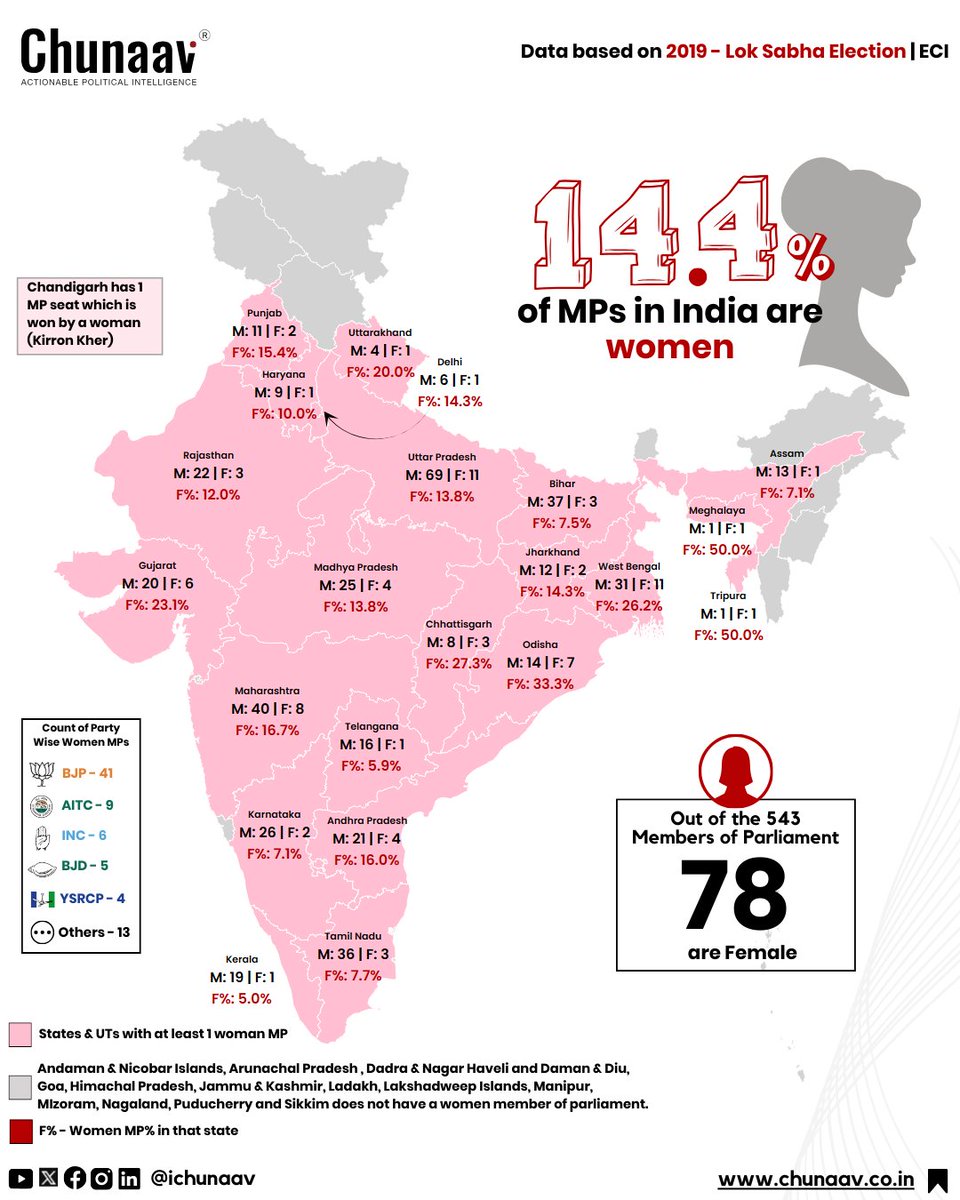
Representation of Women in Indian Parliament
Out of the 543 parliamentary constituencies, 78 of them are won by a woman as per the 2019 Lok Sabha Election. This constitutes less than 15% of MPs as women in India.
Out of the 303 seats won by Bharatiya Janata Party in 2019, 41 were won by a female candidate. In case of INC, only 6 women candidates were able to secure a win out of the 52 seats won by INC in 2019 Lok Sabha Election.
Notable seats secured by a women candidate in Lok Sabha – 9 by AITC in West Bengal, 5 by BJD in Odisha and 4 by YSRCP in Andhra Pradesh.
#WomenEmpowerment #woman #women #LokSabha #LoksabhaElection2024 #LokSabhaElections2024
Congress governs three states individually, namely Telangana, Karnataka, and Himachal Pradesh. In Bihar, Jharkhand, and Tamil Nadu, the Congress plays a pivotal role within political alliances that have come to power, such as the Mahagathbandhan (MGB) in Bihar and Jharkhand, and the Secular Progressive Alliance (SPA) in Tamil Nadu. Nevertheless, with the exception of Jharkhand where the Congress holds the second-largest party position after JMM, its political sway in Bihar and particularly in Tamil Nadu remains relatively constrained.
#LokSabha #Congress #RahulGandhi #LoksabhaElection
The Bharatiya Janata Party (BJP) has not only established a commanding presence in eleven states (Rajasthan, Gujarat, Uttar Pradesh, Uttarakhand, Madhya Pradesh, Chhattisgarh, Arunachal Pradesh, Assam, Tripura, Goa, and Manipur) governing them independently, but also has influential alliances in other regions. Notable examples include Haryana, Maharashtra, Nagaland, and Puducherry, where the BJP wields considerable political influence as part of coalition governments.
#LoksabhaElection #LoksabhaElection2024 #LokSabhaElections2024 #BJP
Chief Ministers - India (12th December 2023)
@BJP4India now has 12 CMs, @INCIndia has 3, @AamAadmiParty has 2, and 13 Chief Ministers belong to other political parties.
Bhajanlal Sharma (MLA, Sanganer) becomes the new Chief Minister of Rajasthan @BhajanlalBjp.
#RajasthanCM #RajasthanNewCM #MadhyaPradeshCM #BhajanlalSharma #RevanthReddy #vishnudsai #pulalduhoma
In 2018, there were only 10 seats where female
voters outnumbered males, but in 2023, this numbered 44.
Also, female voter turnout rose by 2%, which tilted the scales. In 2018, 74% of women had stepped out to vote, this time it's over 76%.
The 2023 MP election was a women-centric one and this fits into the narrative.
While Ladli Behna proved to be a game-changer, the voter sex ratio was significantly improved in these polls — having jumped from 917 in 2018 and 918 in 2019 to 945 in 2023.
For Congress, it wasn't a happy story — in 2018, nine of the 30 women it fielded had won, this time only six as the saffron wave swept the state.
The 230-seat MP assembly now has 12% women MLAs. It’s still a far cry from the promised 33% but a step forward nevertheless.
Of the 57 women candidates, 47% won — an impressive strike rate BJP fared better as 21 of its candidates emerged victorious, a big jump from
2018 when only 14 of its 27 women candidates had won.
For the first time, the Madhya Pradesh assembly will have more than 10% women legislators as 27 women won the 2023 election.
Its an increase of nearly 30% over 2018 when 21 female MLAs made it to the House. The incumbent BJP had given tickets to 27 women, and Congress to 30.
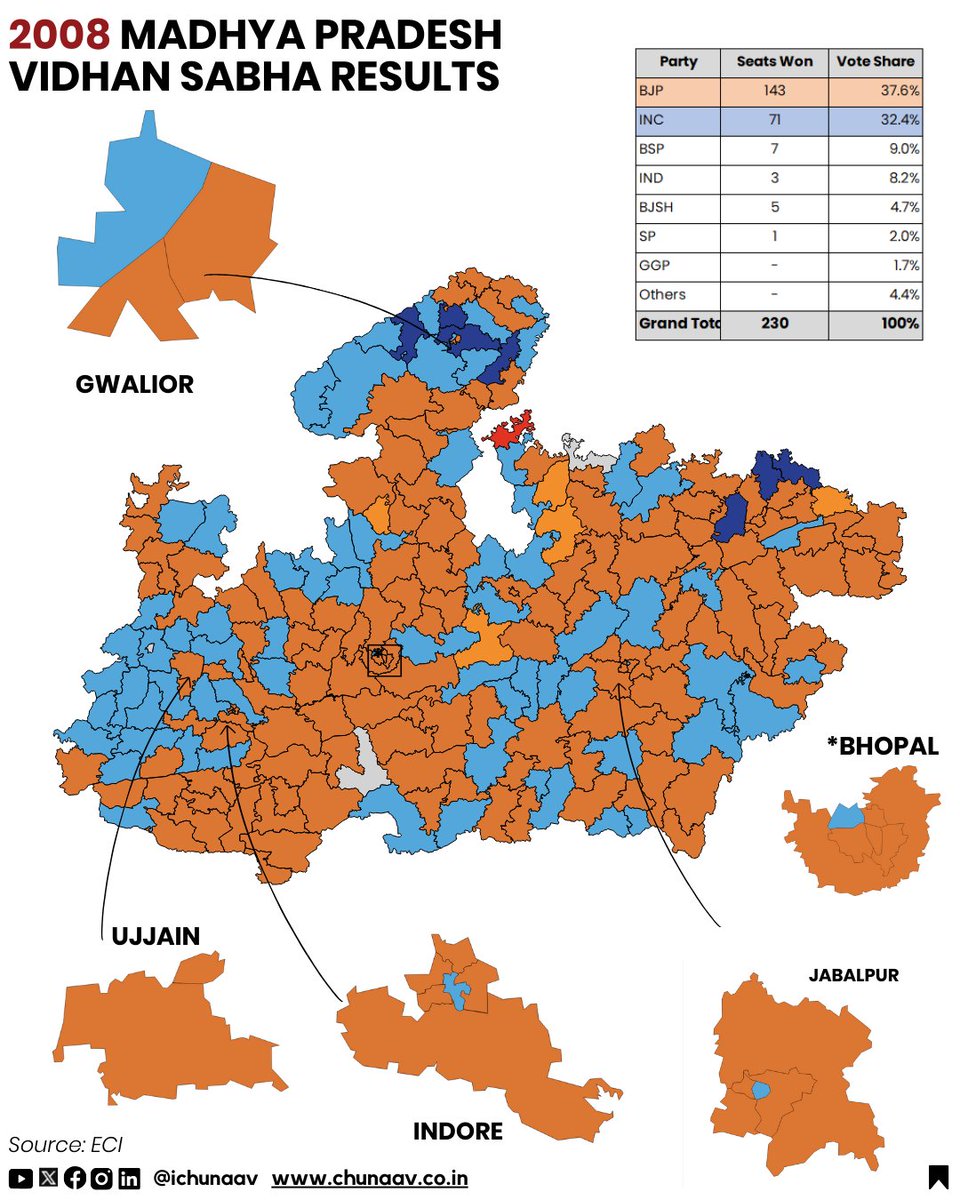
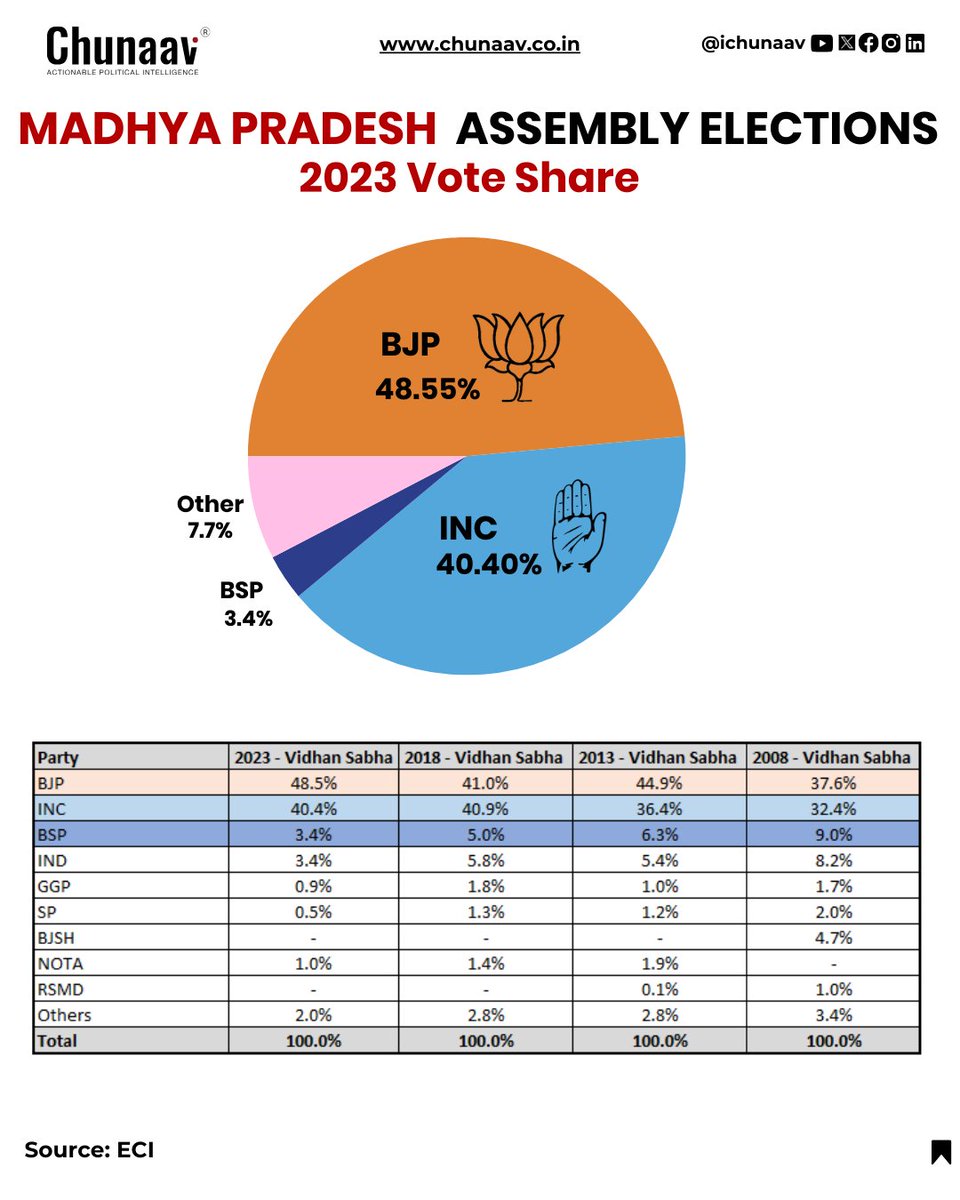
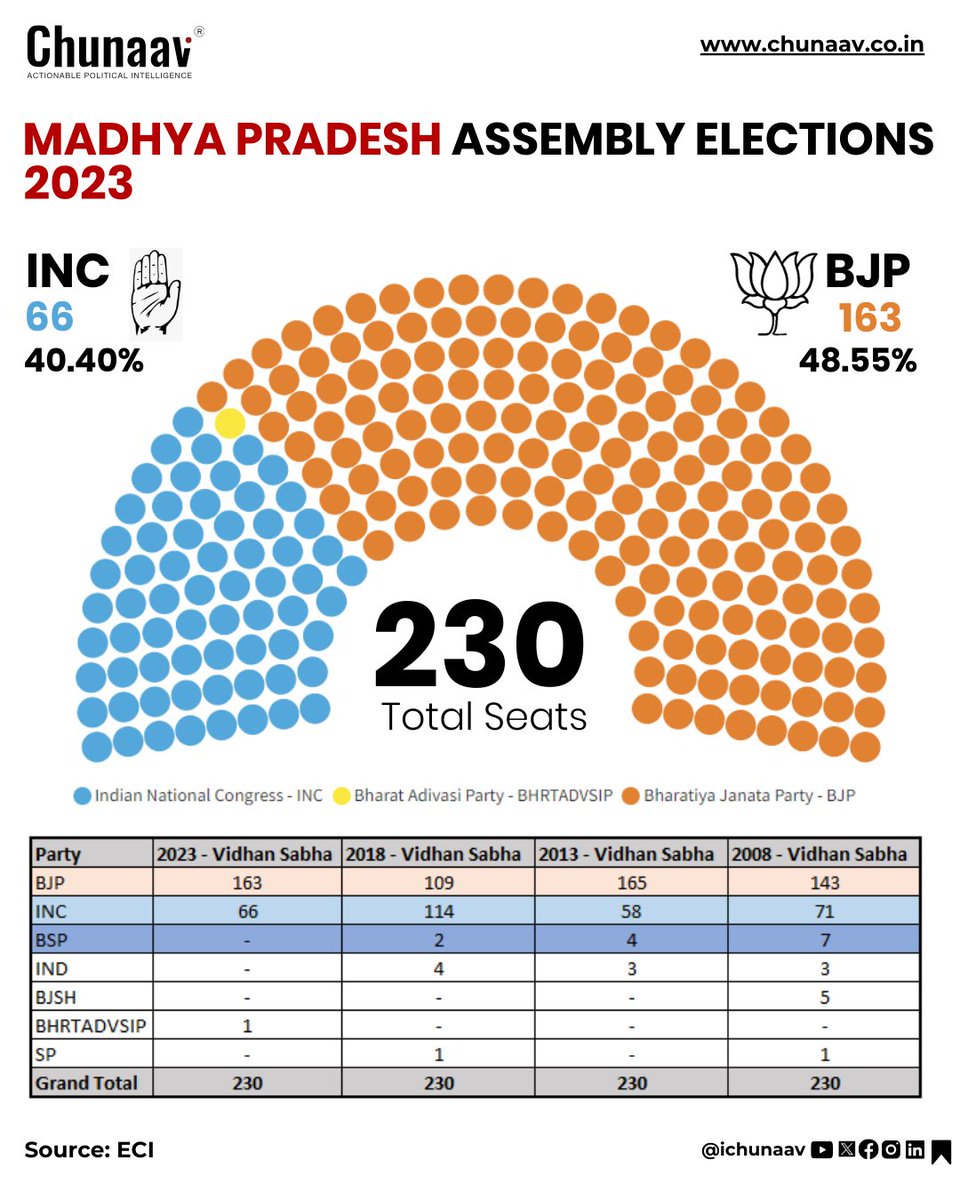
The presence of NOTA (None of the Above) and other parties like GGP, SP, BJSH, and RSMD in the vote share breakdown highlights the diversity of political options available to the electorate.
The analysis of vote share percentages further emphasizes the competitive nature of the elections, with smaller parties and independents contributing to the overall political landscape.
The INC experienced a decline in both seat count and vote share. While maintaining a significant vote share of 40.40%, the INC's seats decreased from 144 to 66. This indicates a considerable shift in voter preferences and political alliances.
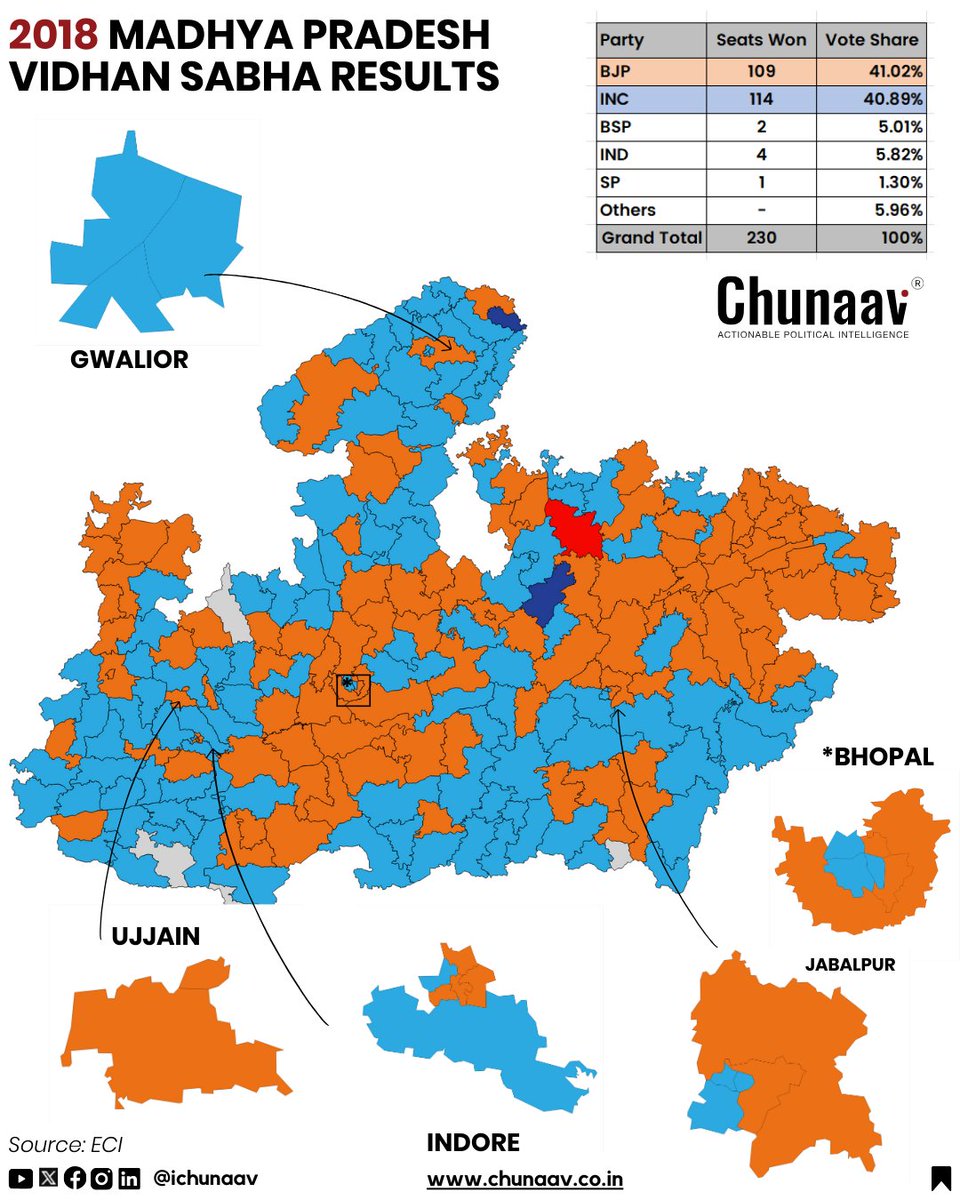
The BJP's performance in Madhya Pradesh showcased a substantial increase in both seat count and vote share, reinforcing its strong political presence in the state. The party's vote share rises from 41% in 2018 to 48.50% in 2023, seats from 109 to an impressive 163.
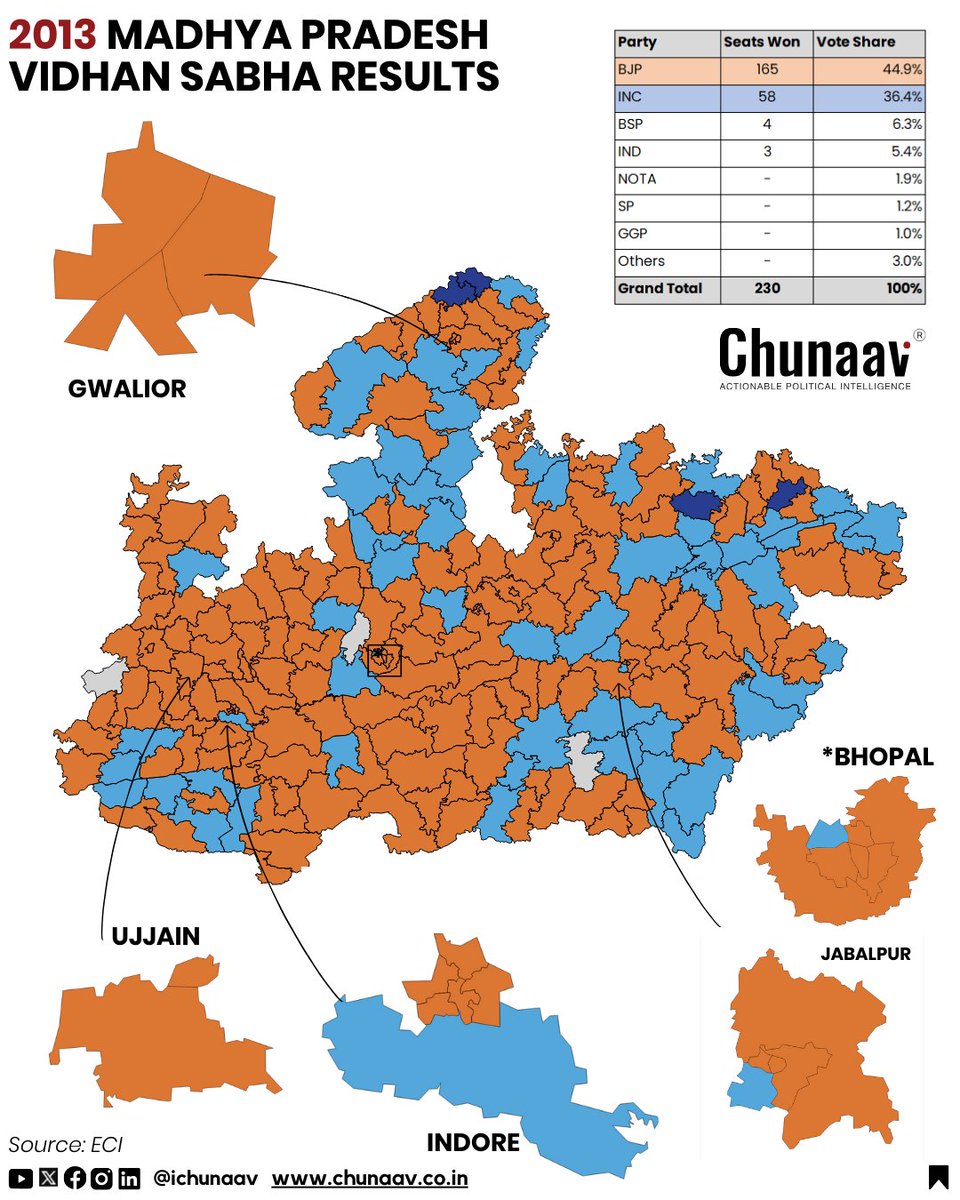
The elections covered all constituencies in the state, and the results marked noteworthy shifts in seat distribution and vote shares compared to the 2018 elections.