State visits by Leaders are not tourism, and diplomacy is not a fashion parade. Every foreign trip undertaken by a government must deliver measurable benefits to the people, including investments, technology transfer, trade agreements, factory expansion, industrial partnerships, and job creation.
During President Trump’s recent visit to China, the American delegation reportedly included a few top government officials, and many of the biggest figures in global business and technology:
Consequently, huge trade deals worth several billion dollars including about 200 Boeing orders were achieved.
The list of the entourage included
1. Donald J. Trump – President of the United States
2. Marco Rubio – Secretary of State
3. Pete Hegseth – Secretary of Defence
4. Elon Musk – CEO, Tesla & SpaceX
5. Jensen Huang – CEO, Nvidia
6. Tim Cook – CEO, Apple
7. Larry Fink – CEO, BlackRock
8. Stephen Schwarzman – CEO, Blackstone
9. Kelly Ortberg – CEO, Boeing
10. Brian Sikes – CEO, Cargill
11. Jane Fraser – CEO, Citigroup
12. Larry Culp – CEO, General Electric
13. David Solomon – CEO, Goldman Sachs
14. Sanjay Mehrotra – CEO, Micron Technology
15.Cristiano Amon – CEO, Qualcomm
16. Dina P. McCormick – President of Meta
17. Ryan McInerney – CEO, Visa
18. Michael Miebach – President, Mastercard
19. Jim Anderson – CEO, Coherent
20. Jacob Thaysen – CEO, Illumina
That is how serious nations approach diplomacy, by aligning foreign policy with economic expansion, industrial growth, innovation, and national productivity.
I hope that lessons can be learned from these recent visits comparing them with the President of Nigeria’s recent state visit to the United Kingdom.
A large entourage of politicians, aides, and government officials travelled, yet Nigerians are still asking a simple question: what exactly did Nigeria bring home?
Which factories are coming to Nigeria?
What power, technology, manufacturing, agricultural, or industrial agreements were secured?
How many direct jobs will this visit create for Nigerian youths?
What investments were attracted?
What measurable economic outcomes can the ordinary Nigerian point to?
The delegation reportedly included:
1. President Bola Tinubu
2. Senator (Mrs) Tinubu
3.12 governors
4.9 ministers
5.7 members of the National Assembly
6. Over 20 senior State House staff
7. Over 30 security personnel
8. Over 10 domestic staff
9. Several supporters and associates
It is not enough to ride horses, wear matching uniforms, attend royal banquets, and release glossy photographs. Symbolism without substance cannot feed hungry citizens.
Today, Nigeria is in decline, battling serious insecurity, food insecurity, unemployment, a weakened naira, declining industrial productivity, and worsening poverty.
At a time when millions of Nigerians struggle daily to afford food and survive economic hardship, every kobo spent on foreign trips must produce tangible national value: investments, factories, jobs, exports, infrastructure, and economic opportunities.
Nigeria needs leadership that is focused less on optics and more on productivity; less on ceremony and more on measurable economic results.
A New Nigeria is POssible. -PO
And Jacob said, Sell me this day thy birthright.
— Genesis 25:31
Some people have grown from Jacob to Thanos, collecting destinies left and right in exchange for favours. Some of the favours are smaller than porridge.
May the Lord save us.
Legacy of Light: What Pope Francis Taught the World
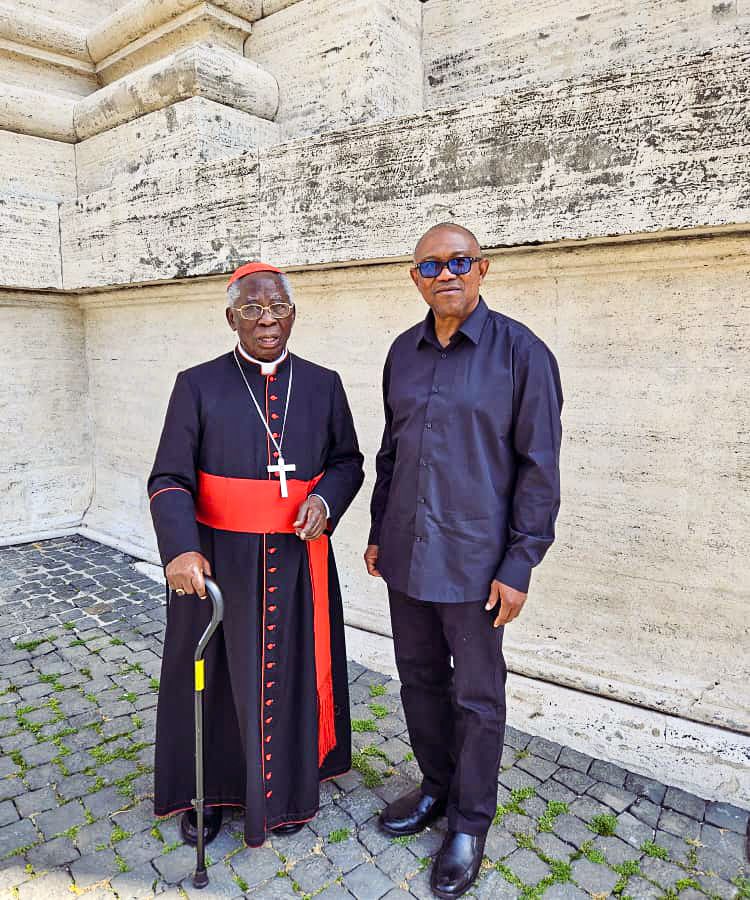
Today, I joined Francis Cardinal Arinze, global dignitaries, and thousands of mourners at St. Peter’s Basilica, Rome, to pay my final respects to His Holiness, Pope Francis, who passed away on April 21. The solemn lying-in-state ceremony was a moment of deep reflection, as the world bids farewell to a man who embodied humility, simplicity, and selfless service.
Pope Francis was more than a Pontiff; he was a moral light in a world darkened by inequality and indifference. His life was a testament to leadership as a sacred duty, one rooted in compassion, truth, and service to the poor and marginalised. He lived for others, spoke for the voiceless, and reminded us all that leadership must be about lifting others, not self-exaltation.
I came to truly appreciate what he stood for after my appointment as a member of Scholars Occultantes - an international circle of thinkers he founded during his time as Archbishop. The organisation, dedicated to truth, ethical leadership, and social transformation, gave me a deeper insight into the intellectual and moral force behind his teachings.
I was blessed to meet Pope Francis on three occasions. Each encounter left a lasting impression. He radiated peace and inspired faith, and his presence was a quiet yet powerful reminder of the divine responsibility that leadership entails. His humility was infectious, his vision deeply human.
As we mourn this great soul, I urge political, religious, and community leaders, especially across Africa, to reflect on his life and commit to the values he upheld: justice, peace, and human dignity. Let this moment not just be one of mourning, but a call to lead with conscience, walk with the people, and govern with love.
May Pope Francis’ soul rest in perfect peace, and may his legacy live on in all who seek to serve humanity selflessly. -PO
NORTHERN GOVERNORS AND THEIR ETHNICITY:
1. Adamawa State – Ahmadu Umaru Fintiri (MARGHI)
2. Bauchi State – Bala Mohammed (FULANI)
3. Benue State – Rev. Fr. Hyacinth Iormem Alia (TIV)
4. Borno State – Engr. Prof. Babagana Zulum (KANURI)
5. Gombe State – Muhammad Inuwa Yahaya (FULANI)
6. Jigawa State – Umar Namadi (FULANI)
7. Kaduna State – Uba Sani (FULANI)
8. Kano State – Abba Kabir Yusuf (FULANI)
9. Katsina State – Dikko Umaru Radda (FULANI)
10. Kebbi State – Nasir Idris (FULANI)
11. Kogi State – Usman Ododo (EBIRA)
12. Kwara State – AbdulRahman AbdulRasaq (FULANI)
13. Nasarawa State – Abdullahi Sule (FULANI)
14. Niger State – Mohammed Umar Bago (NUPE)
15. Plateau State – Caleb Mutfwang (MWANGHAVUL)
16. Sokoto State – Ahmed Aliyu (FULANI)
17. Taraba State – Arch. Agbu Kefas (JUKUN)
18. Yobe State – Mai Mala Buni (KANURI)
19. Zamfara State – Dauda Lawal (FULANI)
HERE IS THE ANALYSIS:
Northern Nigeria has 19 states and 19 governors. Out of these, 10 governors are Fulanis, while the remaining 9 governors represent over 300 other ethnic groups in the region.
Now, consider this:
The Hausa ethnic group, with a population of over 66 million according to World Atlas—that’s over 55% of the entire Northern population—has no single governor.
All their states are ruled by Fulanis, who have a population of just 13 million, barely 11% of the Northern population.
Nigeria is composed of three major ethnic groups: Hausa, Yoruba, and Igbo with Hausas having the largest population.
Yoruba have 6 governors,
Igbo have 5 governors,
But Hausas have not even one—because the Fulanis have politically and strategically enclaved them.
With this arrangement, why won't the Fulani bandits k!ll, maim and rape Hausa and other tribes peacefully and wantonly with utmost impunity?
The Hausas accepted the Fulanis peacefully, embracing them due to shared religious beliefs. But eventually, their traditional rulers were eliminated, and a Fulani oligarchy was installed.
Today, the political leadership of the Hausas is no longer theirs. Are simply reduced to beggars and gate keepers. They are robbed of even education.
Hausas have become tools in the hands of Fulanis during elections. They are mere shadows in their own land, despite their numbers.
Currently they are going through unimaginable hardship, and those of us who understand the Hausa language know the kind of lamentations they are voicing daily.
It's so funny that even Kanuri people are wiser than them. They never allow Fulanis to conquer Borno and Yobe State. That's why they can still raise their head up in their own land.
This conquest is not coincidence—it is an agenda.
They have already succeeded in Kwara and Nasarawa States—both in the Middle Belt—and are tactically spreading their tentacles to other States in our religion and extending down to the south.
This agenda has been in motion for over 200 years.
Just recently, it was funny that Benue traditional leaders, instead of acting decisively, were holding peace meetings with the same people everyone knows will never honor such peace.
You cannot negotiate peace with someone who is intentional about hurting you.
You cannot negotiate with terrorists.
Once they settle in your community, their next move is to seize your traditional and political leadership, and eventually, they will seek to erase your identity and history.
I was stunned when I saw a Fulani man contesting for the House of Representatives for Akwanga/Nasarawa Eggon/Wamba Federal Constituency. Imagine that. When I raised concerns, an Eggon friend replied, “His mother is Eggon.”
What a level of blindness!
That is exactly how the agenda works—they come to graze, settle, infiltrate, blend, and then rob you of your land and leadership.
Benue State must wake up—before it’s too late.
If you are in doubt about my research do it yourself and the outcome will shock you.
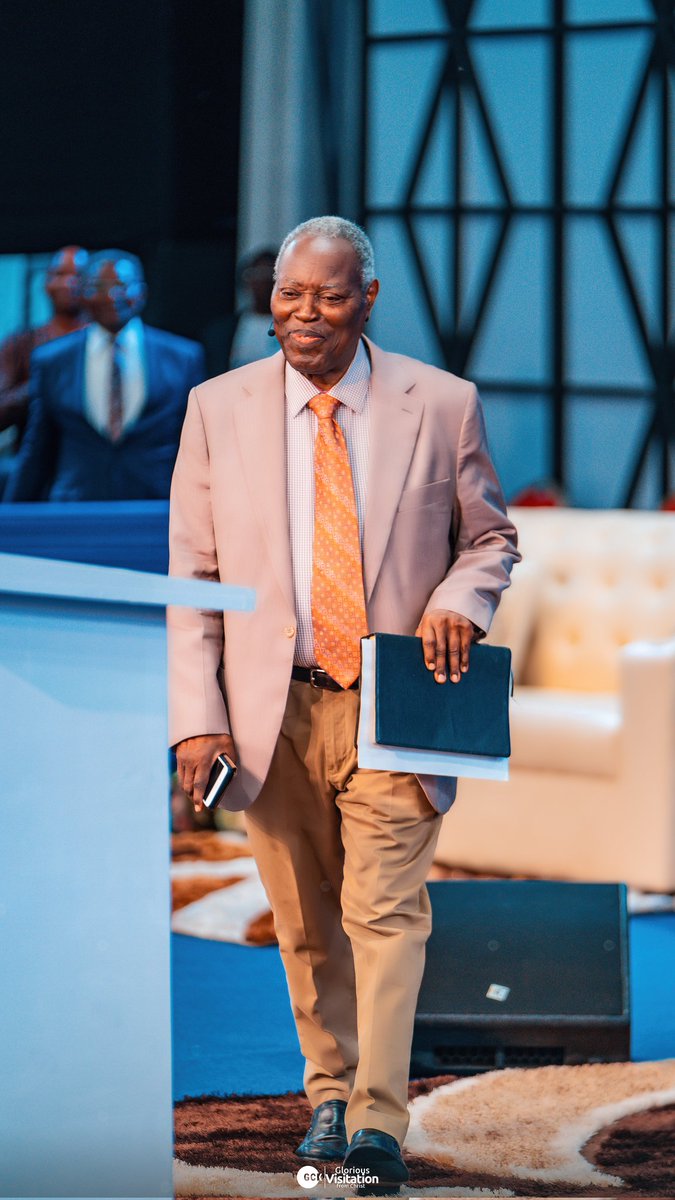
Alexander Abba
🌠Mathematics academician
🌠Over 50yrs in ministry
🌠No slander
🌠Traveled round the whole preaching the undiluted message of the gospel
🌠Never raised money on the pulpit (sowing seeds 4 himself)
🌠The only thing they can find against him is the television story.
And others
Your parents have been married for almost 30 years, they’re successful, living happily and at peace as they approach their old age. But 2face divorcing Annie has taught you not to believe in love and build with any man.
Zuzuwe.
If you're a single lady betn 24-27 & you're a graduate.
Target a legit working man between 29-34.
1) ensure your genotypes, tribe & faith align
2) Don't cheat
3) Don't beg him for money
4) Invest in & sacrifice for him
5) Respect him
He'll marry you in less than 2 yrs.
End.