University of Oxford research project on the online gig economy and the future of work. By @ViliLe @gf_corporaal @ottokassi @tom_swing @fabian_stephany
Read @ViliLe’s summary of what we discovered in the iLabour research project and what difference it has made. The project is officially concluded but we’ll continue tweeting here about research into online labour markets, remote freelancing, and gig work. https://t.co/85TRroIxGA
The #SASE2024 Digital Economy Network welcomes submissions on industrial policy, supply chains, and the materiality of the digital economy, as well as on digital economies’ geopolitical implications, including digital sovereignty, “tech war”, etc. Submit your abstract now!
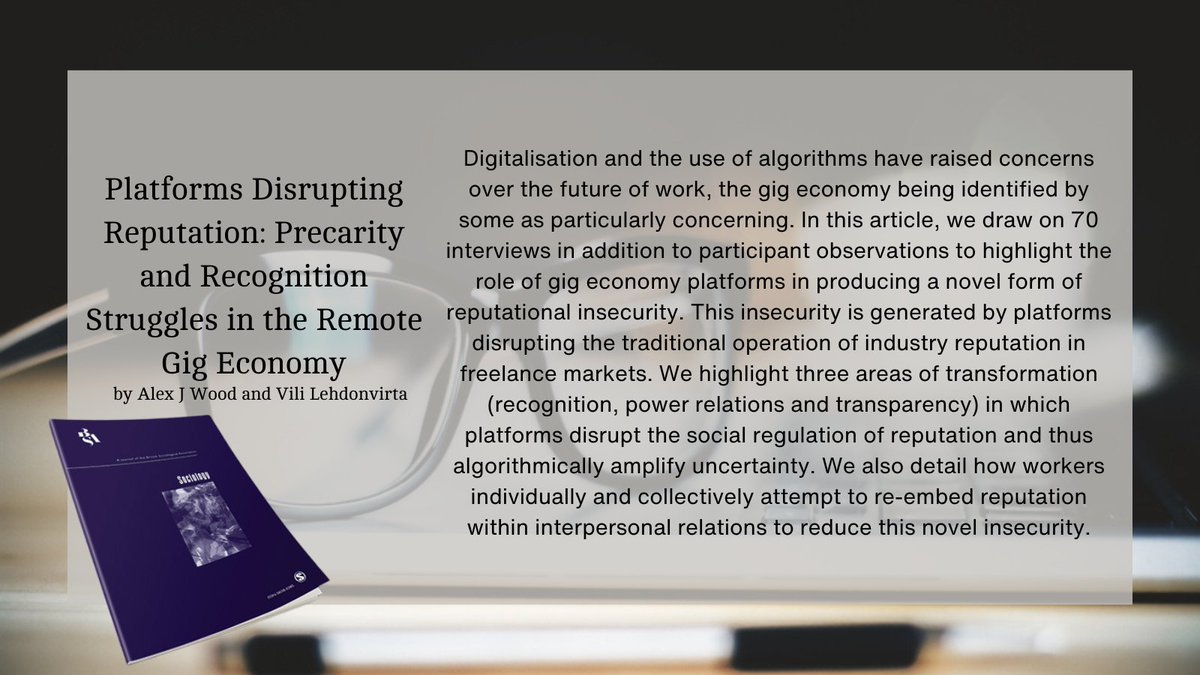
How do rating systems on gig economy platforms impact job security and freelancer reputation?
Learn now in @tom_swing and @ViliLe’s study “Platforms Disrupting Reputation”.
https://t.co/eCn0Af4qqd
Today my @Deliveroo rider “Julia” was a middle-aged man who responded “no English” when I read out the confirmation code. This article explains how undocumented migrants find work as substitute couriers in the UK: https://t.co/RArKw3eb56
🎙️ Next up is our second panel session at #HCOMP2023 and #CI2023. To kick it off, we have @ViliLe from @oiioxford sharing valuable insights on the topic "How and Why Humans in Human Computation Are Trying to Resist Their Computational Organizers."
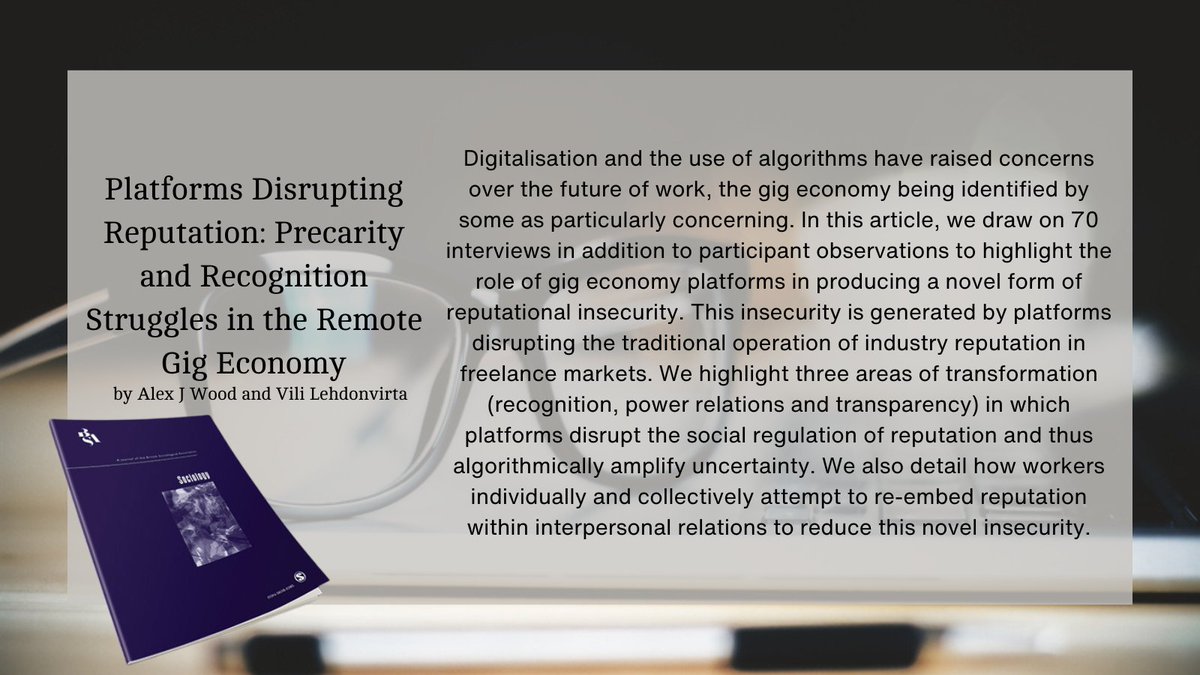
@tom_swing and @ViliLe highlight three areas of transformation that gig economy platforms disrupt social regulations of reputation in freelance markets.
Read “Platforms Disrupting Reputation” now below.
https://t.co/eCn0Af3SAF
📢We are introducing our panelists at the @hcomp_conf and @ci_acm !
Meet the distinguish speakers of the DAY 2!
Get to know what Vili Lehdonvirta @ViliLewill share in the talk and get ready for questions if you have.
“Fuentes is glued to her computer 18 hours a day to get the first pick of tasks that could arrive at any time.” Just like Amazon Mechanical Turk ten years ago. But platforms existed already then with better task allocation algos. Why didn’t they grow? https://t.co/4EkUltmBxC
‘He joined Appen at 15, using a family member’s ID, and works from 8 am to 6 pm, and another shift from 2 am to 6 am. “I need to stick to these platforms at all times, so that I don't lose work,” he says, but he struggles to earn more than $50 a month.’ https://t.co/PuXdTR1anY
I have the pleasure of discussing #CloudEmpires next Monday 10.30am CET at @DspsUnict following the publication of the book's Italian translation. The event is open to all: https://t.co/MfolNww0lc
Now in our September issue, @tom_swing and @ViliLe's “Platforms Disrupting Reputation” highlights the role of gig economy platforms in producing novel forms of reputational insecurity.
Read their article now below.
https://t.co/eCn0Af4qqd
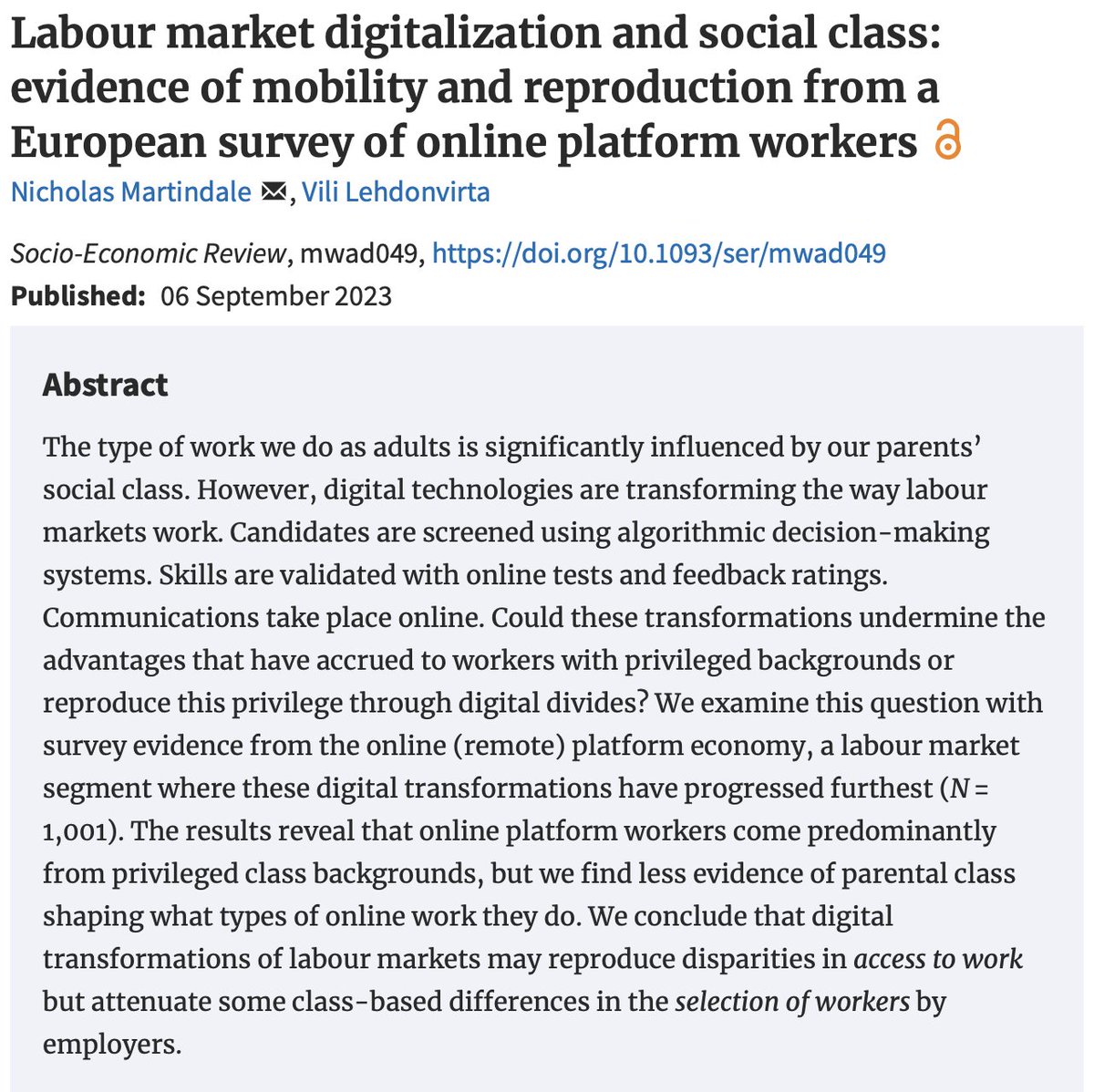
What are the class origins of online gig workers? Are different social classes associated with particular forms of online work? 📱💻
Read the article just published by Sociology alum Nick Martindale and Prof @ViliLe from @oiioxford now!
https://t.co/94n7mwJKvN
What happens to the reproduction of social class from parents to children when labour markets are digitalized? New @iLabourProject study from Nick Martindale and me just published in Socio-Economic Review: https://t.co/yeT3kwTOg0 #SER
"If you use apps from world-leading technology companies such as OpenAI, Amazon, Microsoft or Google, there is a big chance you have already consumed services produced by online remote work" https://t.co/r4t4Bse1m0 by @jonasvalente
🌟Labour Market Disruptors: Artificial Intelligence vs. Washing Machines! ☝
We dive deep into the future of the digital labour market with an interesting discussion on platform work in the digital era & its impact on the nature of work 👉https://t.co/zgM0GC11TF
#SkillsFactory
What is the link between creativity and economic performance in regions torn by war? Fascinating new research by Svitlana Slava, Uzhhorod National University, Ukraine, currently a visiting fellow at @JesusOxford and @OxfordEconDept https://t.co/TlvsA48xpZ