Anthropic engineer:
“90% of our engineers were using self‑improving loops. Now everyone shifted to building agentic Graphs"
"No more prompting”
In 10 minutes she shows her full Claude Code setup and workflow live, from a blank terminal.
Worth more than a $500 agentic course.
Watch this video, then save the article below on how to become a graph architect👇
Met a guy making $1.6 million/year as an LLM engineer.
I asked him how he learned LLMs from scratch.
He sent me the exact video that got him in. A 1 hour course on how LLMs actually work.
He shows how transformers inside LLMs like ChatGPT & Claude are actually built.
I watched it last night.
Halfway through, I realized LLM architecture is way simpler than they make it look.
Bookmark this and read the article below.
• 00:00 - LLM foundations
• 04:21 - LLM tokenization
• 05:43 - LLMs vector embeddings
• 22:16 - attention mechanism of LLM
• 43:42 - LLM multi head attention
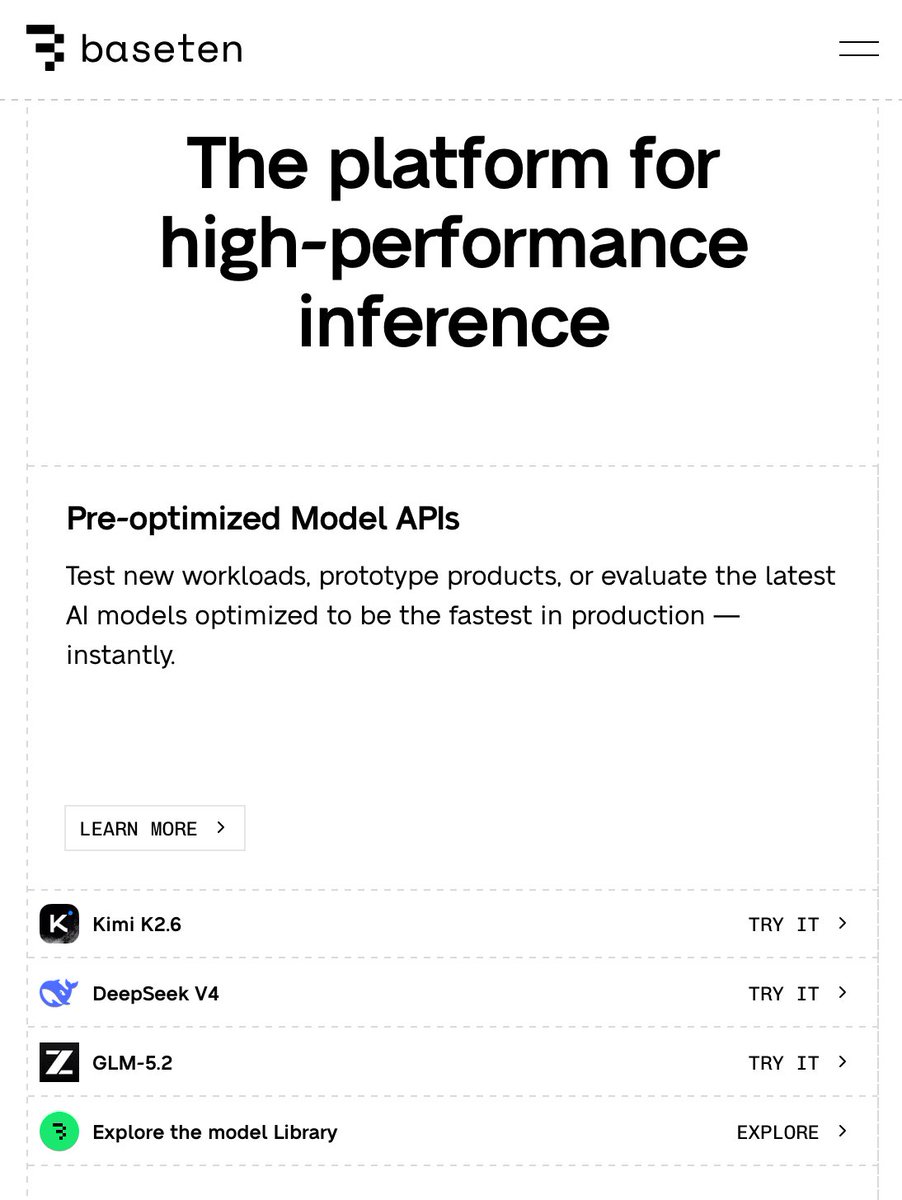
Kimi K3. $25 in free API credit. No card.
New Baseten users who join Baseten’s K3 waitlist get $25 to test it when Model API access opens (expected today).
Claim flow:
Create a Baseten account → join the K3 list → get $25 → test Kimi K3.
When access opens:
→ Check your email + Baseten account for the ~$25 credit
→ Create an API key and copy the Base URL
→ Run K3 on one real task before spending on it
Works in Cursor, Claude Code, Codex, Hermes, OpenClaw, OpenCode, and any coding tool that supports a custom provider.
New users only. Credit expires one month after redemption.
Signup links in the reply 👇
Everyone keeps asking me how to build a second brain or an LLM wiki.
Here is the easiest setup I have found.
I took my Wiki Builder skill, installed it into HyperAgent (@hyperagentapp) as a reusable skill, and asked it to build a research wiki on LLM verification from the latest 2026 papers.
Recorded a quick demo. Built with @hyperagentapp.
It planned first, asked a few sharp questions, then did the research: 29 papers curated into 21 files, a research map, a glossary, and clean subfields.
Now it is a knowledge base that my other research agents build on. HyperAgent has all the capabilities to allow your agents and skills to compound. That’s a powerful use of AI agents.
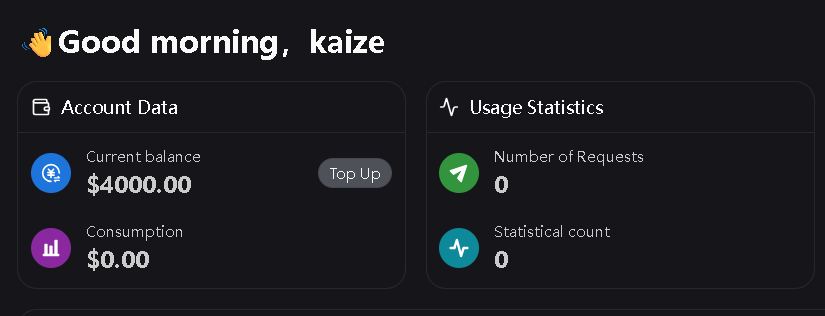
Free AI API credits & $4,000 right now
This is a limited-time offer, so you should create your accounts before it ends
1/ https://t.co/4uQXiHGjwU - claims $4,000 credit
Models: DeepSeek v4 flash, GLM-4.7
2/ https://t.co/W1e4juhslF - 100k credits (3-day window)
2,000+ open models, OpenAI-compatible
3/ https://t.co/beshLhjQEP - 3M credits on signup
Models: Sonnet 4.6, DeepSeek v4 pro
Also, If you want to use GPT-5.6 Sol, Terra, and Luna at the highest quality:
1. Go to: https://t.co/3p3Q5k7GUn
2. Sign up and select 'Agents' from the left-hand menu
3. Click: Create your first agent
Really like how they work on this service.
How to actually land a remote job in 30 days.
I've made 320+ hires.
Most candidates apply on job boards and wait.
Here's what actually moves the needle.
Step 1.
Pull companies hiring across these boards
- Wellfound
- Remote OK
- We Work Remotely
- FlexJobs
- Jobgether
- Remotive
- Working Nomads
- Jobspresso
- JustRemote
- Underdog
- Built In
- Remote co
- Skip The Drive
- Virtual Vocations
Step 2.
Verify the posting is genuine before you spend time on it. Check multiple signals.
Same role posted on the company's own careers page
Same role posted on LinkedIn
Same role also live on Wellfound
Company page on LinkedIn shows recent hiring activity, not just one stray post
Job description matches across platforms, not copy pasted from 6 months ago
More signals lining up, more real the role is.
Step 3.
Find the email of the CTO, engineering manager, or founder using Apollo.
Step 4.
Email 2 people directly. Keep it short, mention the specific role, attach your resume.
Step 5.
Follow up once after 4-5 days. Low key, just a bump, not a chase.
Step 6.
Do this for 10 companies a day, every day, for 30 days.
That's 300 companies you've reached out to directly. Not 300 applications sitting in some ATS queue.
I've seen people land offers doing exactly this while everyone else was still refreshing job boards and waiting for a response.
Happy to answer questions if you're stuck on any of this. Happy Job Hunting :)
Found a way to run GLM-5.2 for FREE with no daily limits through Cloudflare Workers AI 😳
No credit card. No monthly bills. Just one API token and you get solid usage.
What GLM-5.2 on Cloudflare unlocks:
-Strong agentic coding performance
-262k context window
-Tool use and function calling
-OpenAI-compatible endpoint
-Works with OpenCode, Cursor, Aider, Hermes, and more
What this replaces:
-Paid frontier model usage for daily coding agents
-Expensive API costs just to test workflows
How to grab it (5 min):
1. Create a free Cloudflare account
2. Go to Workers AI and copy your Account ID
3. Create an API Token
4. Add the provider in OpenCode with this base URL:
https://t.co/I06wzl3TnF
5. Select model: @cf/zai-org/glm-5.2
6. Start running agents
Works in OpenCode, Cursor, Aider, Claude Code, Hermes Agent, and any OpenAI-compatible tool.
Your buddy pays $20–200/mo for coding agents. You get strong performance for $0.
Bookmark this before Cloudflare changes the free tier.
Los 10 repos que más rápido han crecido este Junio en GitHub:
1. pewdiepie-archdaemon/odysseus
PewDiePie (111M suscriptores en YouTube) construyó un workspace de IA self-hosted y lo publicó gratis.
75.8k estrellas en tres semanas.
https://t.co/pGcXf1W1wP
2. mattpocock/skills
Las skills de Claude Code de Matt Pocock (el referente de TypeScript).
Las que usa él. En su directorio .claude. Ahora públicas.
https://t.co/z5w6vdTqOE
3. chopratejas/headroom
Creado por un ingeniero de Netflix.
Comprime todo lo que lee tu agente de IA antes de que llegue al modelo.
60-95% menos tokens. Mismas respuestas.
https://t.co/cJIsgoEBQU
4. DietrichGebert/ponytail
Hace que tu agente de IA piense como el dev senior más vago de la sala.
El mejor código es el que nunca se escribe.
https://t.co/NfiOX8elT1
5. calesthio/OpenMontage
El primer sistema de producción de vídeo agentic del mundo.
12 pipelines, 52 herramientas, 500+ agent skills.
https://t.co/9DkTYHCzGD
6. jamiepine/voicebox
Estudio de voz con IA open source y self-hosted.
Clona voces, dicta, genera audio. Sin suscripción.
https://t.co/4q8agBJCP0
7. ZhuLinsen/daily_stock_analysis
Análisis inteligente de bolsa para mercados de EEUU, China y Hong Kong.
LLM + noticias en tiempo real + dashboard. Corre gratis con cron.
https://t.co/zuJqwTlnZQ
8. mvanhorn/last30days-skill
Skill para agentes que investiga Reddit, X, YouTube, HN y Polymarket.
Sintetiza todo en un resumen con contexto real.
https://t.co/gA4Y8FG7fb
9. bytedance/deer-flow
El SuperAgente open source de ByteDance.
Investiga, escribe código y crea. Tareas de minutos a horas sin supervisión.
https://t.co/DAw5f8nW7T
10. DeusData/codebase-memory-mcp
Knowledge graph del código para Claude Code, Cursor y Codex.
Se sincroniza solo con cada cambio. 100% local. Cero tokens extra.
https://t.co/Pog64Fu7vX
Junio de 2026 en GitHub está siendo una locura.
Guarda esto.
LLM reasoning doesn’t have to be a single prompt chain.
Graph of Thoughts (GoT) is the official Python implementation of the “Graph of Thoughts: Solving Elaborate Problems with Large Language Models” paper for builders experimenting with structured LLM reasoning.
It helps you test more elaborate reasoning workflows by modeling a problem as a Graph of Operations, then letting a controller execute that graph with an LLM as the engine.
Key features:
• Graph-based reasoning flow – model complex problems as operations over thoughts instead of one linear chain
• Flexible operation graph – build GoOs that resemble GoT, Chain-of-Thought, or Tree-of-Thought-style approaches
• Ready install path – use the PyPI package with pip install graph_of_thoughts or install editable from source
• Worked examples included – sorting, keyword counting, set intersection, and document merging live in the examples directory
• Inspectable outputs – controller can write output graphs with operations, thoughts, scores, validity, token use, and cost
It’s open-source under the repository’s BSD-style license.
Link in the reply 👇