My current setup:
- Herdr
- Claude Claude (CLI)
- Ponytail (Skill)
- Caveman. (Skill only)
- Headroom (Proxy)
- Context Mode (MCP)
My crew:
- Opus 5.5 Medium (Planner)
- Sonnet 5.5 Medium (Workers)
- Opus 5.5 Medium (Reviewer)
I usually forget that a 5h window even exists. 🤷🏻♂️
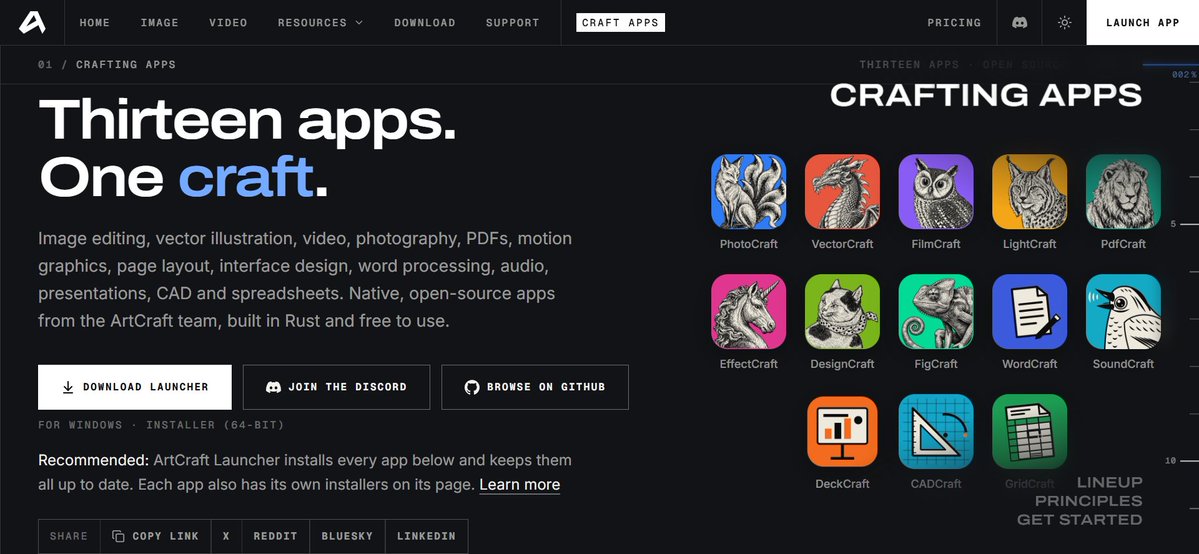
Microsoft Office is officially on notice.💀
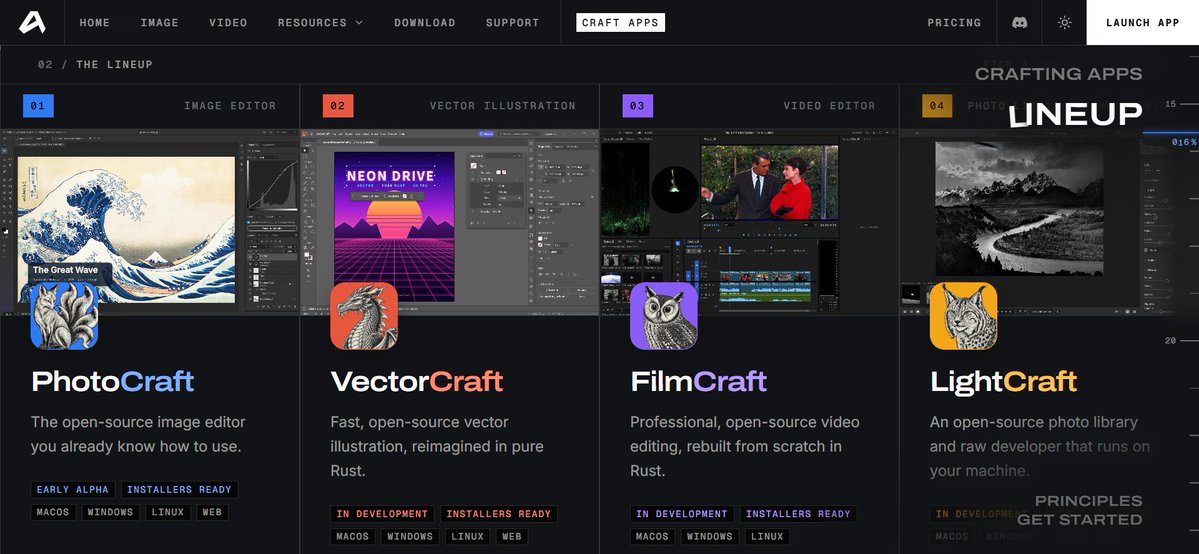
Found Artcraft — a free office suite that does it all:
• Docs, sheets & slides
• Opens Word/Excel/PPT files
• Works offline
• Clean, modern UI
• No subscription, no bloat
🔗 https://t.co/EbnLzY7yuB
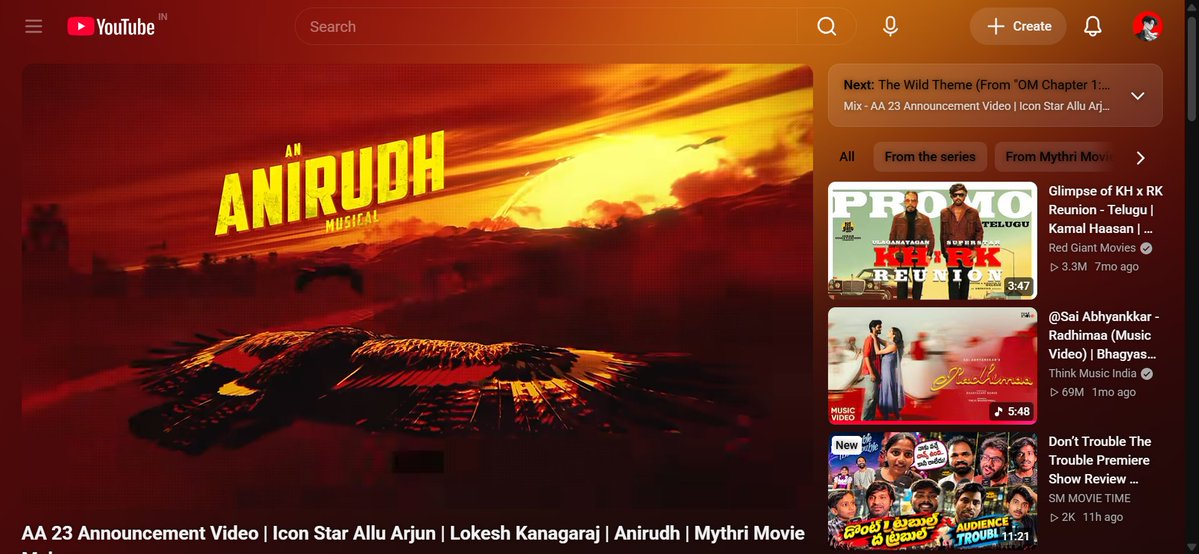
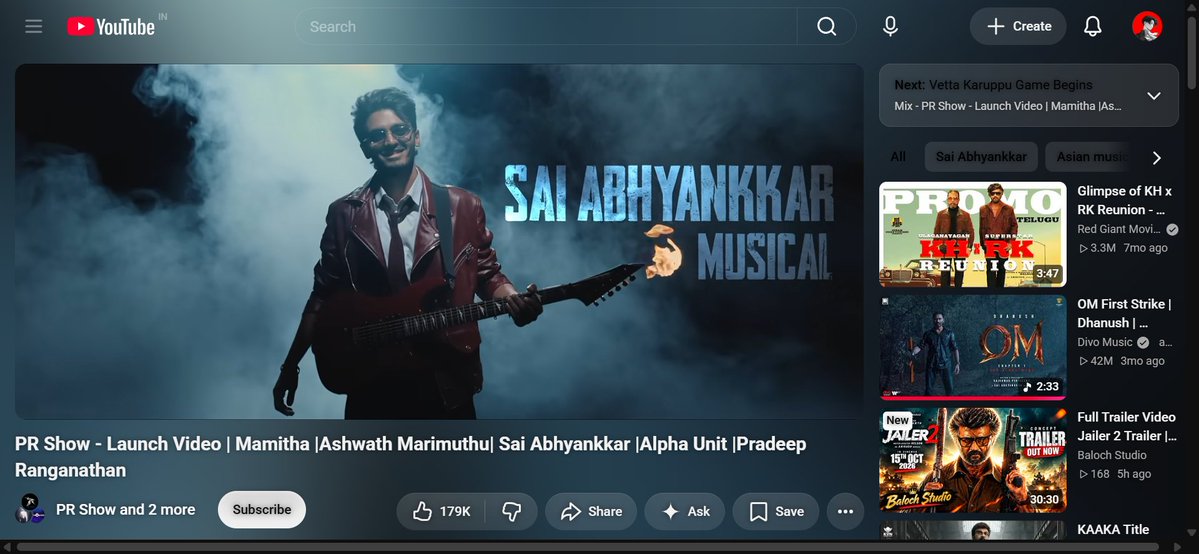
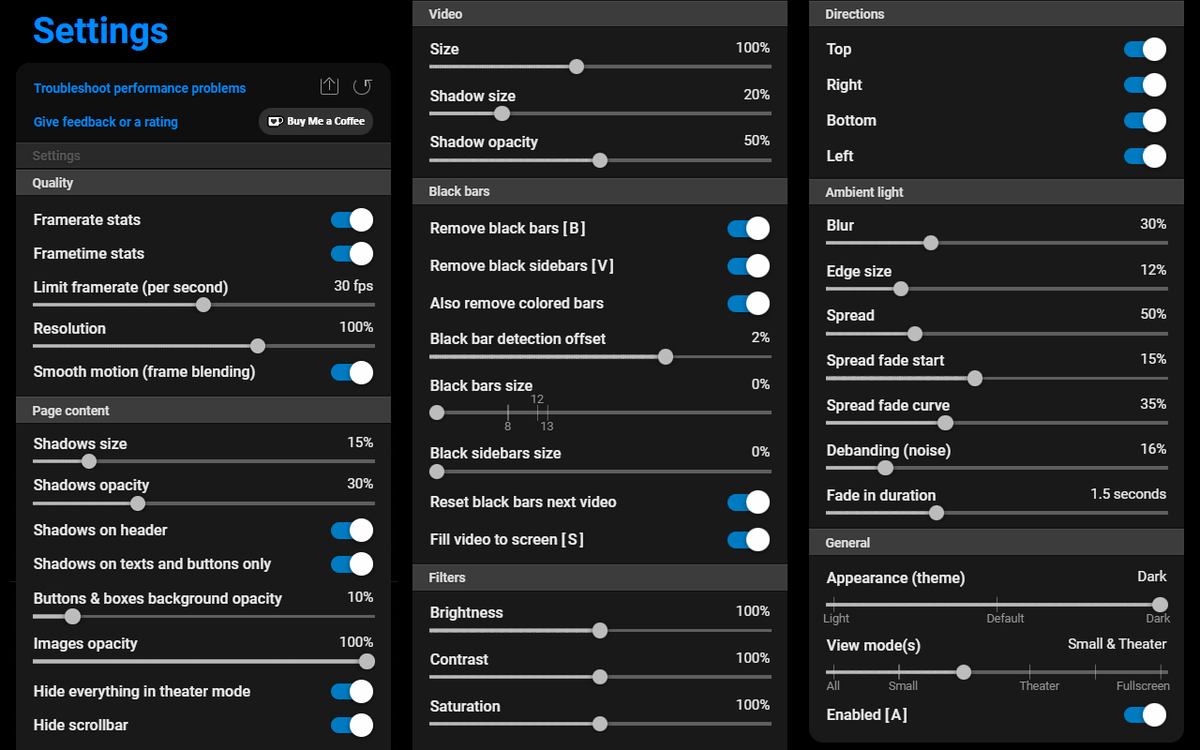
I just made YouTube look 10x better with one browser extension.🔥
Meet Ambient light for YouTube.
It surrounds the video with dynamic ambient lighting and has a ridiculous amount of customization.
https://t.co/7ibVMreWGm
If I had 6 months to become a Backend Engineer in the AI era.
I’d do this.
Stage 1: Core Languages and Concurrency
- Learn: Go, Rust or advanced Python. Goroutines, async/await, memory management, thread safety.
- Practice: Build a high-throughput HTTP server from scratch handling 10k+ concurrent connections.
- Why: AI generates code but you must architect the concurrency models that don't crash under load.
Stage 2: Modern Databases and Vector Stores
- Learn: PostgreSQL (deeply), pgvector, ClickHouse for analytics, Redis for caching, partitioning, indexing strategies.
- Practice: Build a multi-tenant database with Row-Level Security (RLS) and hybrid search (BM25 + vector).
- Why: Structured data and semantic embeddings now live in the same query engine.
Stage 3: Event-Driven Architecture
- Learn: Kafka, NATS or RabbitMQ. Pub/Sub patterns, event sourcing, dead-letter queues, exactly-once processing.
- Practice: Build an order-processing pipeline where every state change is an immutable event.
- Why: AI workloads are slow and asynchronous. You cannot block the main thread waiting for an LLM.
Stage 4: Durable Execution and Workflows
- Learn: Temporal or Inngest. State machines, saga patterns, infinite retries, checkpointing.
- Practice: Build a 3-day automated onboarding workflow that survives server restarts and API timeouts.
- Why: Background jobs are for emails. Durable execution is for multi-step AI agents.
Stage 5: AI Gateways and Semantic Caching
- Learn: API rate limiting, token budgeting, semantic caching (embedding similarity), fallback routing.
- Practice: Build a proxy that caches identical LLM prompts and automatically fails over to a cheaper model if the primary API 503s.
- Why: LLM APIs are expensive and flaky. The gateway protects your margins and your uptime.
Stage 6: Identity, Security and Zero Trust
- Learn: OAuth2, OIDC, JWTs, PII redaction, agent sandboxing, least-privilege access.
- Practice: Build an auth middleware that masks PII before it hits your logs and restricts AI agents to read-only DB roles.
- Why: When AI agents can write to your database, a bad prompt injection is a data breach.
Stage 7: Streaming and Real-Time Protocols
- Learn: Server-Sent Events (SSE), WebSockets, gRPC streams, WebRTC, backpressure handling.
- Practice: Build a real-time collaborative dashboard that streams LLM token generation and database updates simultaneously.
- Why: Time-To-First-Token (TTFT) and perceived latency are the new UX standards.
Stage 8: Full-Stack Observability
- Learn: OpenTelemetry, Prometheus, Grafana, Langfuse. Distributed tracing, custom metrics, log aggregation.
- Practice: Build a tracing pipeline that correlates a user's HTTP request with the exact LLM prompt and database query it triggered.
- Why: You cannot debug an AI hallucination if you can't replay the exact context the model saw.
Stage 9: Infrastructure as Code (IaC) and CI/CD
- Learn: Terraform or Pulumi, Docker, Kubernetes basics, GitHub Actions, ephemeral environments.
- Practice: Write scripts that spin up a complete, isolated staging environment for every pull request automatically.
- Why: Manual deployments are a liability. Infrastructure must be version-controlled and reproducible.
Stage 10: Cloud FinOps and Autoscaling
- Learn: Queue-based autoscaling (KEDA), spot instances, cost allocation tags, resource limits.
- Practice: Build an autoscaler that spins up GPU/CPU nodes based on Kafka queue depth and shuts them down when empty.
- Why: Backend engineers are now responsible for the cloud bill. Idle resources burn runway.
Stage 11: System Design and Resiliency
- Learn: Circuit breakers, bulkheads, rate limiting, chaos engineering, CAP theorem, distributed locks.
- Practice: Design a globally distributed rate-limiter using Redis that handles network partitions gracefully.
- Why: Systems fail. Your architecture must degrade gracefully not cascade into a total outage.
Stage 12: Public Portfolio and Teardowns
- Learn: Writing architecture decision records (ADRs), drawing system diagrams, benchmarking.
- Practice: Publish 3 deep-dive articles on how you scaled a specific bottleneck (e.g., "How I reduced DB latency by 80%").
- Why: Senior engineers are hired for their judgment not just their syntax.
CRUD is dead. AI writes the boilerplate.
The modern backend engineer builds the nervous system for global scale and autonomous agents.
Bookmark and Repost!
As a relative F1 noob, the rules around car construction were confusing.
So I built a tool to teach me.
Each part has restrictions on what teams can and cannot customize + what is and isn't proprietary, etc, etc. Hard to navigate for newcomers.
A visual guide.
Follow the link below to claim the credit or run /claim-credit in the CLI. You’ll need GitHub connected to start a session. Claim by Oct 7. Terms apply.
https://t.co/TzoO6fzJHB
Whole Jay Singh Rathore case for those who missed it on Twitter yesterday:
Jay made a tweet saying that his sister needed eye surgery and that they didn't have enough money for it.
The tweet went viral, and he collected around ₹1.5 lakh.
Next day, a Twitter user called the hospital and found out that it was a scam.
Jay deactivated his account after the expose tweet went viral.
People threatened to file an FIR against Jay.
He reactivated his account and said that he did all this because he needed money for his father's surgery.
He said "he is busy because he is travelling for an SSC exam the next day."
He then hosted a Space where he admitted that it was indeed a scam.
For 3 hours, he kept giving excuses like, "Wait for the net banking ID," "The Canara Bank app isn't working," and "I don't know how to download the PhonePe statement."
He kept behaving like a nonchalant, chill guy and even drank three cups of tea during the Space.
A Supreme Court lawyer in the Space told him about the alleged violations and that he could face 7+ years in jail.
People doxxed him and threatened him, saying that his career was over.
Jay, out of fear, agreed to send all the money back to the people who had sent it.
Jay wanted to send the money through GPay with maximum cashback so that he could minimise his loss.
He sent some of the money back, but his account hit a transaction limit. He said he would send the rest after 24 hours.
He left the Space saying that he was going to have another cup of tea.
Designed Google Maps from scratch.
Map tiles, Contraction Hierarchies, HMM map matching, Flink traffic aggregation, bidirectional routing on 500M nodes.
Full HLD breakdown. https://t.co/iE9HpKayq1
Learn Rust by working through 100 short exercises, one at a time.
- Start with no Rust knowledge
- Build up to writing your own programs
- Solutions available for every exercise
Explore it here:
https://t.co/jO9pSTwFwp