Atiku Abubakar’s record from 1999–2007 deserves something more useful than praise from supporters or dismissal from opponents: measurable comparison.
Nigeria should examine the period through evidence. What happened to GDP growth, public debt, private investment, telecommunications, employment, inflation and household living standards? Which reforms produced lasting gains, and which outcomes cannot fairly be credited to the vice-president alone?
That distinction matters.
Atiku served inside an administration, not as a one-man government. Claims about his experience should therefore separate policies he directly influenced from the broader achievements and failures of the Obasanjo presidency.
The same standard should apply to today’s administration.
The 2027 debate will become more serious when Nigerians compare records rather than personalities: economic growth versus living costs, debt versus productive investment, reforms versus their consequences for ordinary families.
Experience is politically valuable only when the evidence shows what was learned, what worked and what would be done differently now.
Atiku’s strongest case will not be nostalgia. It will be a record Nigerians can examine line by line.
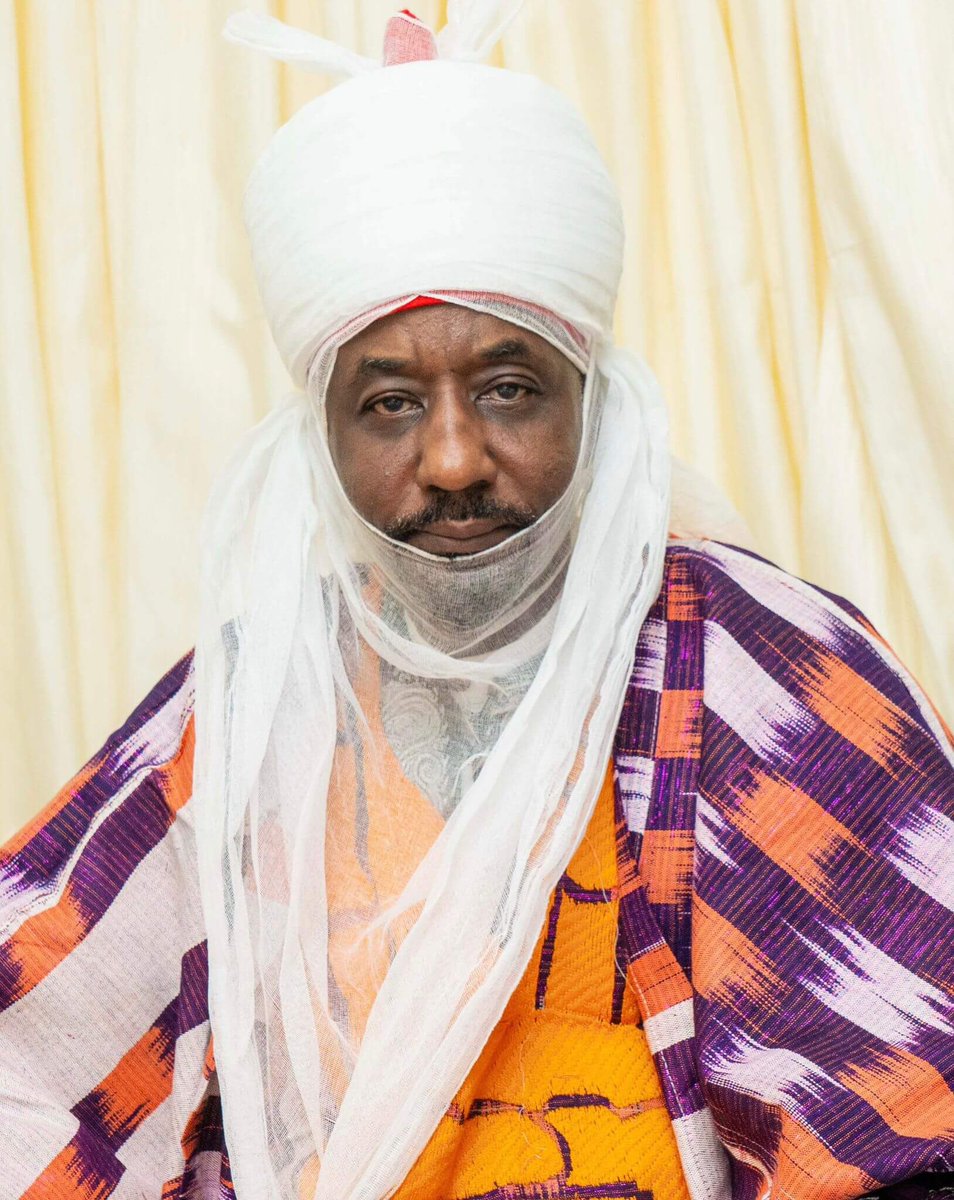
I warmly congratulate His Highness, Dr Khalifa Muhammadu Sanusi II, CON, Emir of Kano, on his 65th birthday. His scholarship, public service, and steadfast devotion have enriched our nation. May Allah grant him sound health, greater wisdom, and many more years. -AA
So Lagos now has more Customs slots than the entire North combined?
Tinubu didn’t come to lead Nigeria, he came to privatize it.
Every policy smells like tribal monopoly wrapped in corruption.
This is not governance; it’s organized injustice.
No Godfathers, No Budget Padding:
How ADC Plans to Redesign Governance
For too long, Nigerian politics has revolved around personalities rather than principles, and power has been used for patronage rather than progress. The African Democratic Congress (ADC) stands to change that narrative, not by making vague promises but by introducing a complete redesign of how governance should work in a modern democracy.
The ADC’s vision begins with one simple but radical idea: government must serve citizens, not politicians. That means every project, every policy, and every kobo spent must be judged by its direct impact on the people, not by how much it enriches those in power. Under an ADC government, a minimum of 70% of all budgeted projects will be mandated to directly benefit local communities, rather than disappearing into bureaucratic bottlenecks or inflated contracts.
We intend to make governance measurable, transparent, and accountable. Every naira spent by the government will be traceable through an open digital ledger, accessible to citizens in real time. With blockchain-backed systems, Nigerians will be able to see where public funds go from federal ministries to the smallest local projects. This transparency is not just a campaign slogan; it is the foundation of a new social contract between government and citizens.
The ADC believes that innovation and accountability must go hand in hand. We will harness Nigeria’s youth, our greatest natural resource, by channeling their creativity, digital skills, and entrepreneurial drive into the governance process. Young Nigerians will not only be employed by the government but empowered to audit it. Through public dashboards, community-driven data verification, and citizen participation platforms, governance will become an open system where the people are both the beneficiaries and the watchdogs.
Unlike the old order that thrives on secrecy and selective empowerment, the ADC’s model embraces collaboration, performance, and service delivery. Ministries and agencies will operate like value-driven enterprises, focused on measurable results rather than political favors. Ministers will be appraised quarterly, not by their loyalty to party leaders but by their impact on lives, infrastructure, and social indicators.
This is governance redesigned: a model where public service becomes a performance contract, not a reward for political allegiance. A system where competence replaces connections, merit overtakes mediocrity, and transparency replaces corruption.
Nigeria does not need another round of empty promises. It needs a system that works. The ADC is not coming to join the old game; we are coming to change the rules entirely.
We believe government should function like a well-run business, but one where the citizens are the shareholders and the dividends are better roads, safer communities, quality education, affordable healthcare, and jobs. When citizens see value for their taxes, they trust their government again.
This is not just a manifesto; it is a movement for responsible governance, where innovation meets integrity, and leadership is redefined as service.
The ADC is not asking Nigerians to dream of change. We are building it, one transparent policy at a time.
Forgery As State Policy: Tinubu, His Cabinet, And The DSS Must Be Held Accountable.
Tuesday's resignation of Uche Nnaji, Minister of Innovation, Science and Technology, has once again brought to light the deep moral crisis at the heart of the Bola Ahmed Tinubu administration. What should ordinarily be a matter of national shame is now being disguised as a “voluntary resignation”, an attempt to whitewash yet another scandal that typifies the forgery-ridden character of this government.
Let the truth be told: Uche Nnaji should not have been allowed the courtesy of resignation. He should have been summarily dismissed and prosecuted for deceit and falsification. By permitting him to quietly exit through the backdoor, the Tinubu administration has once again demonstrated that it is an assembly of forgers, impostors, and morally bankrupt individuals masquerading as public servants.
What makes this even more embarrassing is that the same Department of State Services (DSS) which screened out Mallam Nasir el-Rufai for alleged “security concerns” is the very agency that cleared this same character, Uche Nnaji. The DSS truly deserves our flowers for this national disgrace. Their failure of due diligence has made Nigeria an object of ridicule before the world and raises the question: how many more of such individuals are occupying sensitive positions in this government?
This episode is not isolated. It is a reflection of a pattern, a rot that begins from the very top. The man who occupies the office of President, Bola Ahmed Tinubu, has for decades been enmeshed in controversies surrounding his identity, age, and academic records. From the Chicago State University saga to multiple contradictory claims under oath, the world has seen ample evidence that Nigeria today is led by a man who himself has been unable to credibly defend the authenticity of his own certificates.
When a man of questionable identity leads a country, deception becomes the standard of governance. Tinubu’s personal history of alleged forgery and perjury has effectively institutionalized falsehood in public service. It is, therefore, unsurprising that his ministers and aides have taken after his example by falsifying documents, inflating records, and desecrating the moral foundation of our nation.
I, therefore, call for an independent, transparent, and comprehensive investigation into the academic and professional credentials of all members of the Federal Executive Council, beginning with President Bola Ahmed Tinubu himself. Nigerians deserve to know the truth about those who preside over their lives and resources.
Until this cleansing is done, Nigeria will continue to sink deeper into moral decay, economic ruin, and global embarrassment. The time has come to rescue our country from the grip of deceit and restore integrity to public life. -AA