💭 Something interesting happened while I was building a long-running AI agent workflow today.
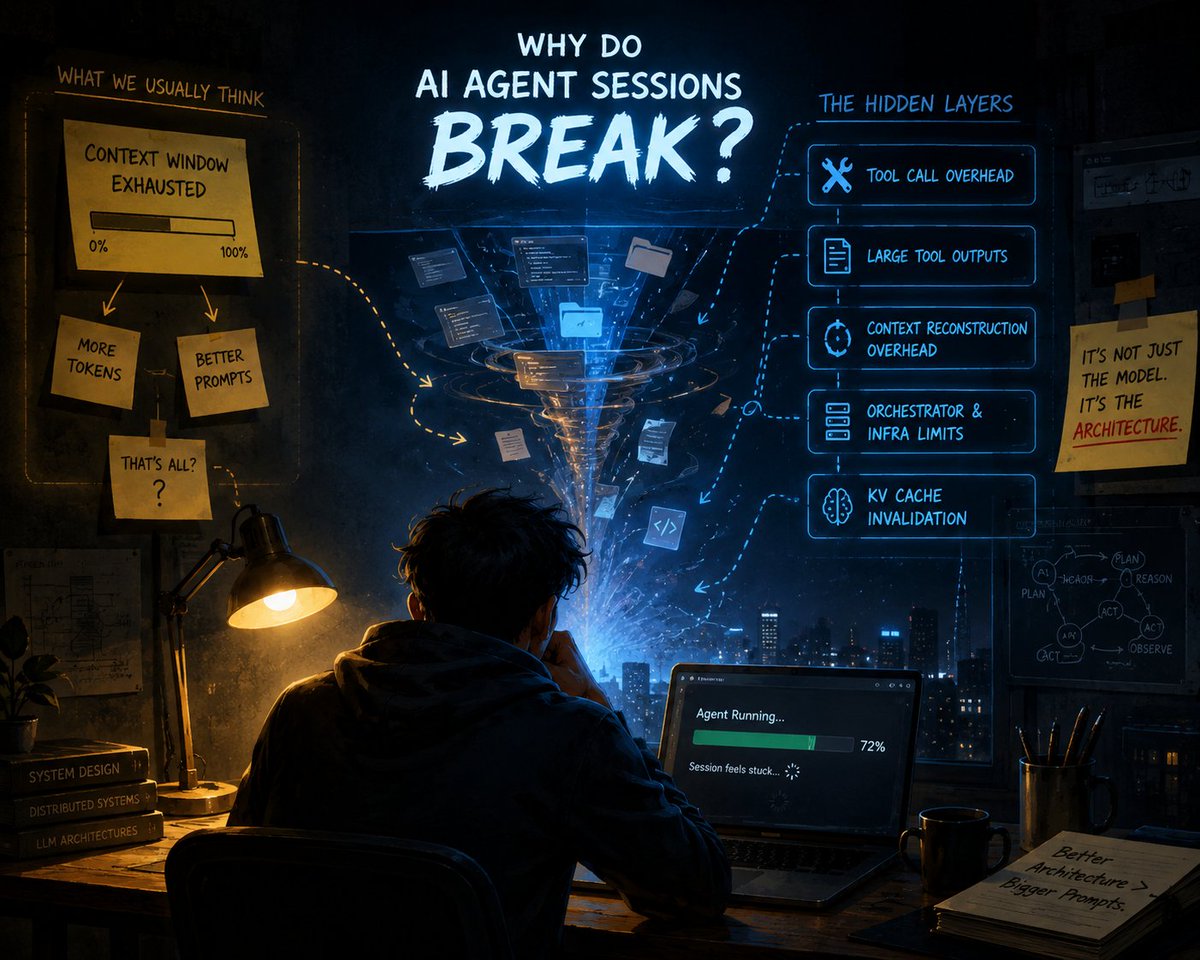
Like most people, I always assumed that if an AI agent starts slowing down or behaving strangely, it's probably because the context window is getting full.
Turns out, it's not that simple.
🕳️ My workflow started freezing even though the context utilization was only around 𝟕𝟎–𝟖𝟎%. That sent me down a rabbit hole to understand what was actually happening under the hood.
The more I read, the more I realized that context size is just one piece of the puzzle. Long-running agent sessions can also be affected by:
⚙️ 𝐓𝐨𝐨𝐥-𝐜𝐚𝐥𝐥 𝐨𝐯𝐞𝐫𝐡𝐞𝐚𝐝 – Every tool invocation introduces another request-response cycle, and dozens of chained calls can add noticeable latency.
📦 𝐋𝐚𝐫𝐠𝐞 𝐢𝐧𝐭𝐞𝐫𝐦𝐞𝐝𝐢𝐚𝐭𝐞 𝐭𝐨𝐨𝐥 𝐨𝐮𝐭𝐩𝐮𝐭𝐬 – Reading many files, search results, or diffs can flood the agent with information long before the context window is full.
🧠 𝐂𝐨𝐧𝐭𝐞𝐱𝐭 𝐫𝐞𝐜𝐨𝐧𝐬𝐭𝐫𝐮𝐜𝐭𝐢𝐨𝐧 – After each tool call, the model often has to rebuild conversational state, which becomes increasingly expensive as the session grows.
🔄 𝐀𝐠𝐞𝐧𝐭 𝐨𝐫𝐜𝐡𝐞𝐬𝐭𝐫𝐚𝐭𝐢𝐨𝐧 𝐥𝐢𝐦𝐢𝐭𝐚𝐭𝐢𝐨𝐧𝐬 – Timeouts, retries, scheduling, and orchestration logic can become bottlenecks in complex workflows.
⚡ 𝐊𝐕 𝐜𝐚𝐜𝐡𝐞 𝐢𝐧𝐯𝐚𝐥𝐢𝐝𝐚𝐭𝐢𝐨𝐧/𝐞𝐯𝐢𝐜𝐭𝐢𝐨𝐧 – Losing the cached attention state can increase recomputation, making subsequent interactions slower and less responsive.
🤯 It definitely changed the way I'm thinking about building AI agents. There's a lot more happening under the hood than just the context window.
If you're building with @cursor_ai , @claudeai Code, Codex, or any other agentic coding tool, I'd genuinely love to know if you've run into something similar or discovered other bottlenecks that aren't immediately obvious.
📝 I'm also putting together a more detailed blog where I'll dive deeper into why this happens and, more importantly, the architectural approaches and practical solutions that helped me make my workflows more stable and responsive.
#AI #GenAI #AIAgents #AgenticAI #LLM #HarnessEngineering #Cursor #ClaudeCode #Codex #MCP #AgentEngineering #ContextEngineering #LLMOps #SoftwareEngineering #BuildInPublic
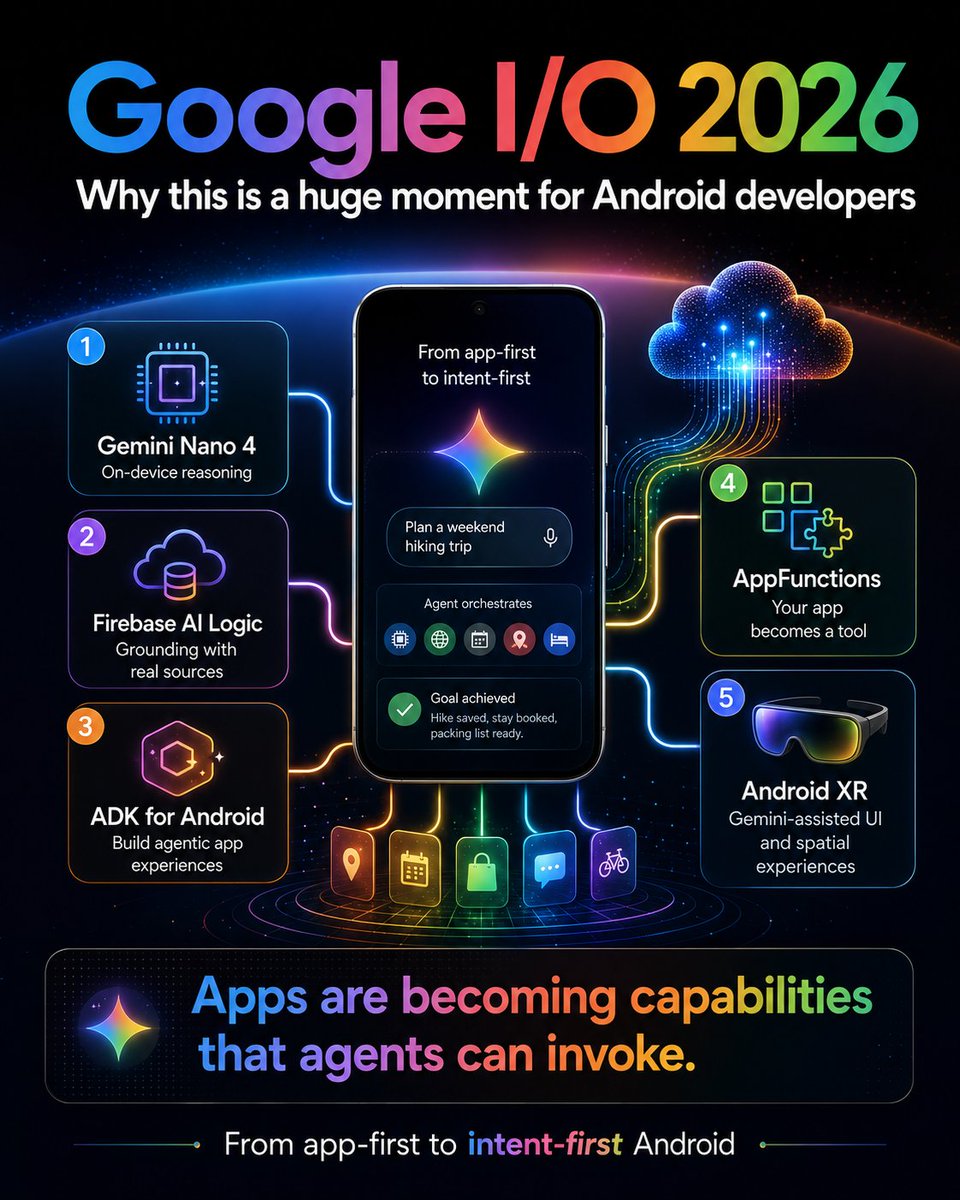
7/ This feels like MCP-style tool exposure,
That changes app discovery.
The question may shift from:
“Can users find my app?” to: “Can agents safely use my app?”
It feels like Android is becoming an intelligence layer for apps, agents, UI, and devices. 🚀
Google I/O 2026 felt less like a product event… and more like the start of a new Android era. 🚀
Apps are moving from: 📱 app-first experiences to 🤖 intent-first experiences
As an Android engineer, this one felt serious. 🧵
#AndroidDev#GoogleIO#Gemini#AgenticAI#AI
@phonescloud99 Another issue to map your project's actual files with its correct figma frame.. this doesn't workout at all.. and you have to take care of tha manually
We don’t have a coding problem anymore.
We have a harness problem.
That thought pushed me to build Screen Agent, an Android + AI agent workflow that starts from the real device, captures runtime context, and closes the loop back to code.
I wrote about the journey here 👇
https://t.co/u0PpVPapno
#Android #AgenticAI #AIEngineering #DeveloperTools #HarnessEnginerring
@phonescloud99 Agree.. I am still figuring out the right approach to match the Figma's accuracy, as the tools provided by Figma MCP are unable to match tge expectations.
It can provide you the Metadata of any frame, but the final alignment is not always satisfactory.