@slimalchemist A breakout can be valid on the entry timeframe and still run straight into higher-timeframe liquidity or a key POI.
The lower timeframe gives the trigger; HTF context gives the trade its meaning.
Why does a perfect breakout still fail?
Your timeframe may show a clean breakout, but HTF resistance or support could be waiting ahead.
Zoom out.
Check HTF market structure, liquidity, and key levels.
Your setup may not be wrong. Your context might be incomplete.
@slimalchemist Changing the strategy every time you break your rules just hides the real problem.
Fix the execution first, then judge the strategy from clean data.
Sometimes your strategy isn’t failing. Your execution is.
•Late entries.
•Ignored confirmation.
•Moved stop losses.
•Breaking your trading plan.
Before changing the strategy, fix your execution.
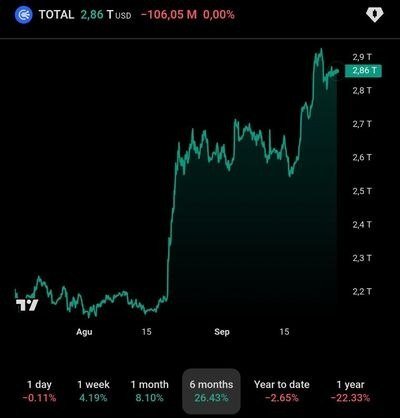
$650B added to crypto market cap in 6 months.
The headline is strong, but traders should watch whether that capital keeps flowing in or starts rotating out.
Liquidity + market structure matter.
Binance taking a $100M stake in Circle and committing to push USDC
It strengthens USDC distribution and could increase stablecoin liquidity across Binance’s ecosystem
For traders, watch USDC liquidity and stablecoin flows for signs of capital moving to crypto.
$2.39B in weekly BTC ETF inflows is a strong demand signal.
But the real question is whether that demand keeps supporting price as liquidity and market structure evolve.
Watch ETF flows alongside BTC price action and volume.
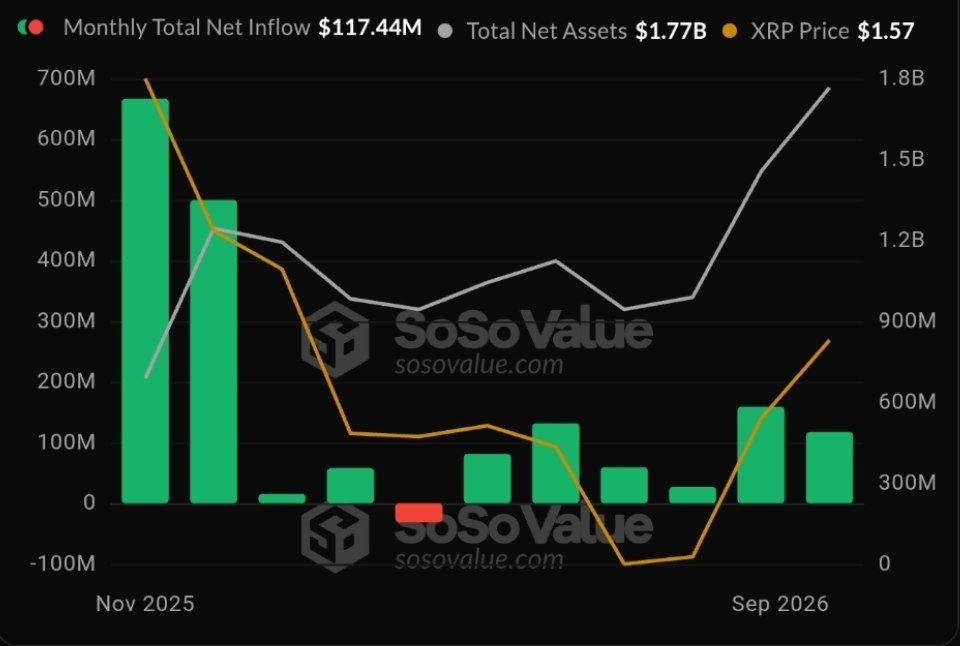
Consistent ETF inflows across BTC, ETH, SOL and XRP show sustained demand from traditional investors.
The key question now is whether that demand continues translating into stronger price structure and liquidity.
Watch ETF flows + price action together.
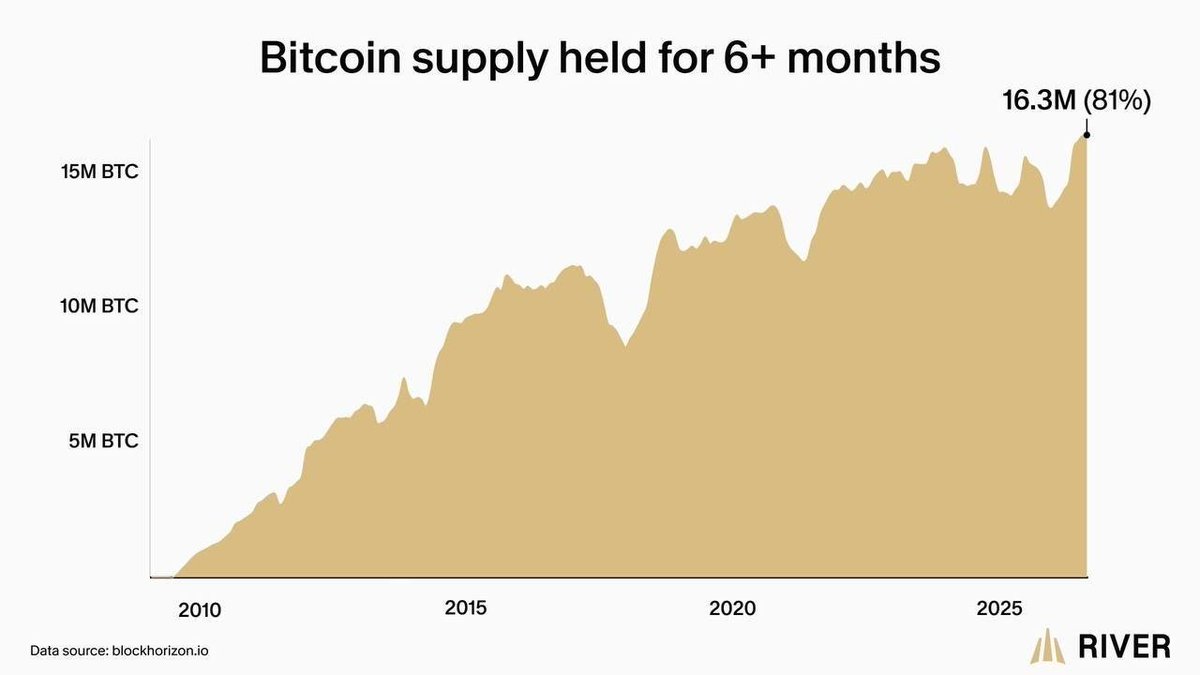
81% of BTC supply hasn’t moved in 6 months.
That means a lot of supply remains dormant.
The key now: does it stay held while demand grows, or start hitting the market?
Watch liquidity + price structure.
@slimalchemist A breakout can be valid on the entry timeframe and still run straight into higher-timeframe supply.
HTF structure and liquidity give the breakout the context needed to judge whether there’s actually room for continuation.
Your breakout didn’t fail. It hit higher timeframe resistance.
Breakouts don’t always fail because the setup is bad.
Sometimes there’s supply, resistance, or liquidity sitting above.
Check the higher timeframe before taking the breakout trade.
Do you check HTF structure?
@slimalchemist Revenge trading is usually an attempt to change how you feel, not improve your position.
Once you accept the loss, the next trade should only happen if the setup is there not because you need to feel better.
Revenge trading isn't about making money back.
It's about making the feeling go away.
After a loss, the next trade is often emotional not strategic.
That’s why risk management matters.
Don’t use money to fix an emotion.
@slimalchemist The edge isn’t in taking every decent-looking move it’s in having enough filters to know which ones actually fit your model.
Selectivity is part of the strategy.
Two traders. Same chart. Completely different results.
One trades every decent-looking move.
The other waits for market structure + price action + confirmation.
You don’t need every setup.
You need a reason to take the one you choose.
@slimalchemist Discipline is mostly doing the boring things the same way when nobody is watching.
The edge compounds when your execution stays consistent even after the motivation disappears.
Trading discipline is less dramatic than you think.
It’s not 12-hour sessions.
It’s following the same trading plan, checklist, and risk management rules every day.
Motivation fades.
Discipline repeats the process anyway.
Consistency is the real edge.