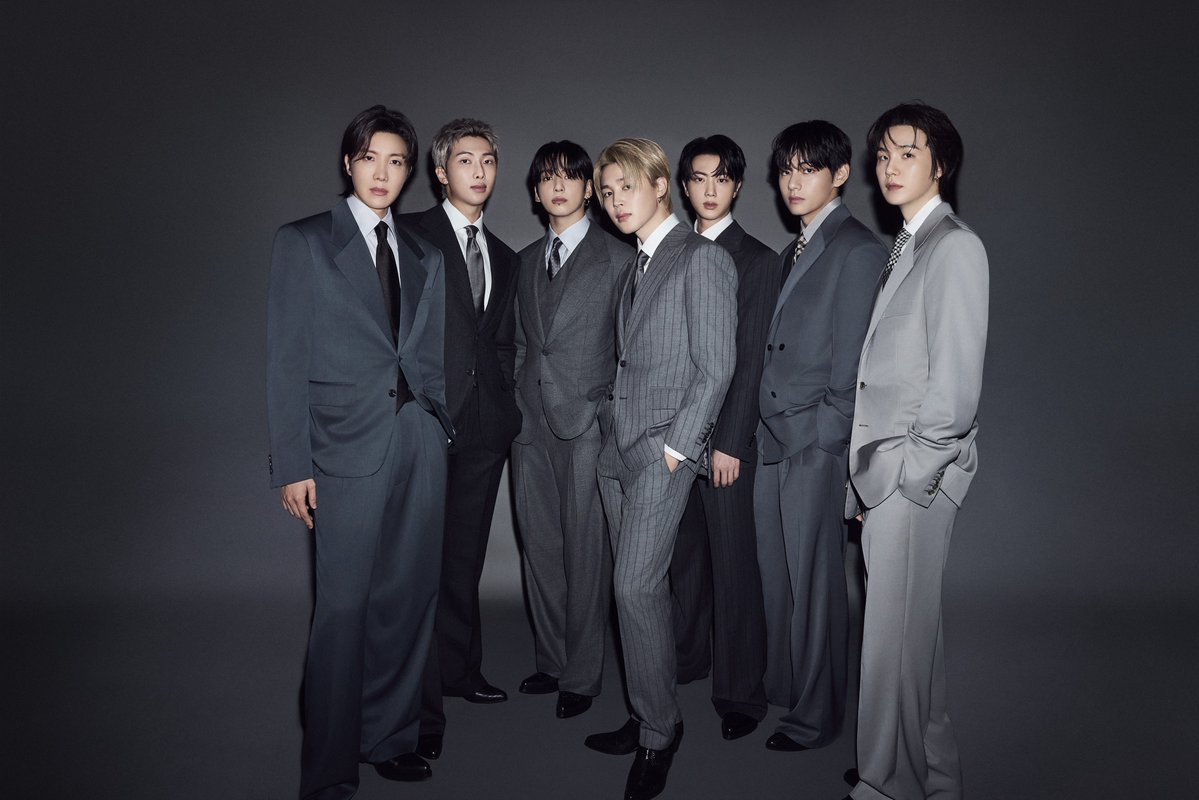
BTS’ “ARIRANG” has etched its name into history, surpassing 1 MILLION pure album copies sold in the United States — becoming the FIRST and ONLY album released in 2026 to attain this extraordinary milestone.
#KimNamjoon#KimSeokjin#MinYoongi#JungHoseok#ParkJimin#KimTaehyung #JeonJungkook #BTS_ARİRANG
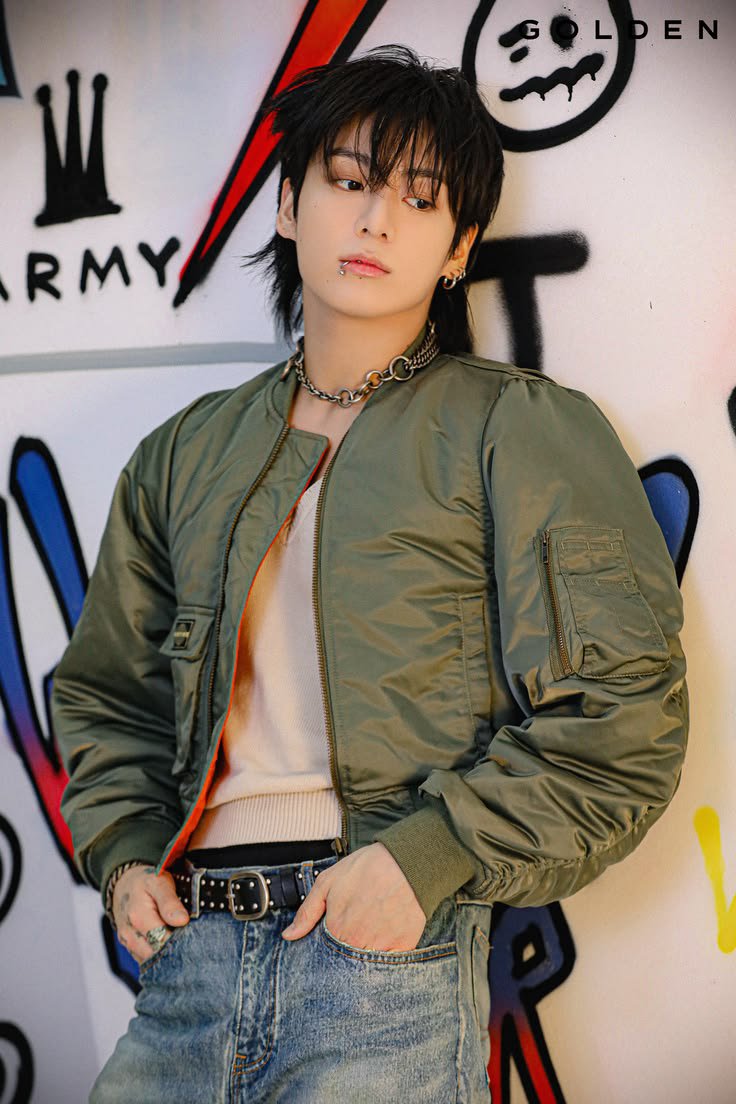
Jungkook’s GOLDEN now holds the record as the K-pop solo album with the most tracks surpassing 500 million plays on YouTube Music, with 3 songs reaching the milestone.
#JeonJungkook#JUNGKOOK#JK
[English Translation (6/6)]
6. Basic Decency and Respect
In 2026, when awareness surrounding women’s bodies and human rights has changed significantly, we never imagined that several security personnel would surround a single female concertgoer at a venue, search even intimate areas of her body, and humiliate her.
What is even more shocking is that this happened repeatedly across multiple cities.
This forces us to ask whether Asian female fans are being treated as easier targets for this kind of excessive conduct.
Would security personnel have carried out body searches that included touching the groin and chest, and coercive checks and photographing of personal information, with the same lack of hesitation if the concertgoers had been of another race or gender?
Since our faces and identifying information have already been photographed and shared, we know that making this statement public may expose us to further repercussions, and we are prepared to accept that risk.
Even so, we are speaking out because we do not want this to happen again to another fan at another concert.
Someone has to say that this was wrong. Violating a filming policy does not give anyone the right to touch a concertgoer’s body without justification, access their personal information, take their property, humiliate them, or threaten them.
Nowhere on the tickets that cost us more than $1,000 did it say that we would have to endure human rights violations like these.
We are not asking for special treatment. We are asking for the minimum level of respect and reasonable treatment we deserve as concertgoers.
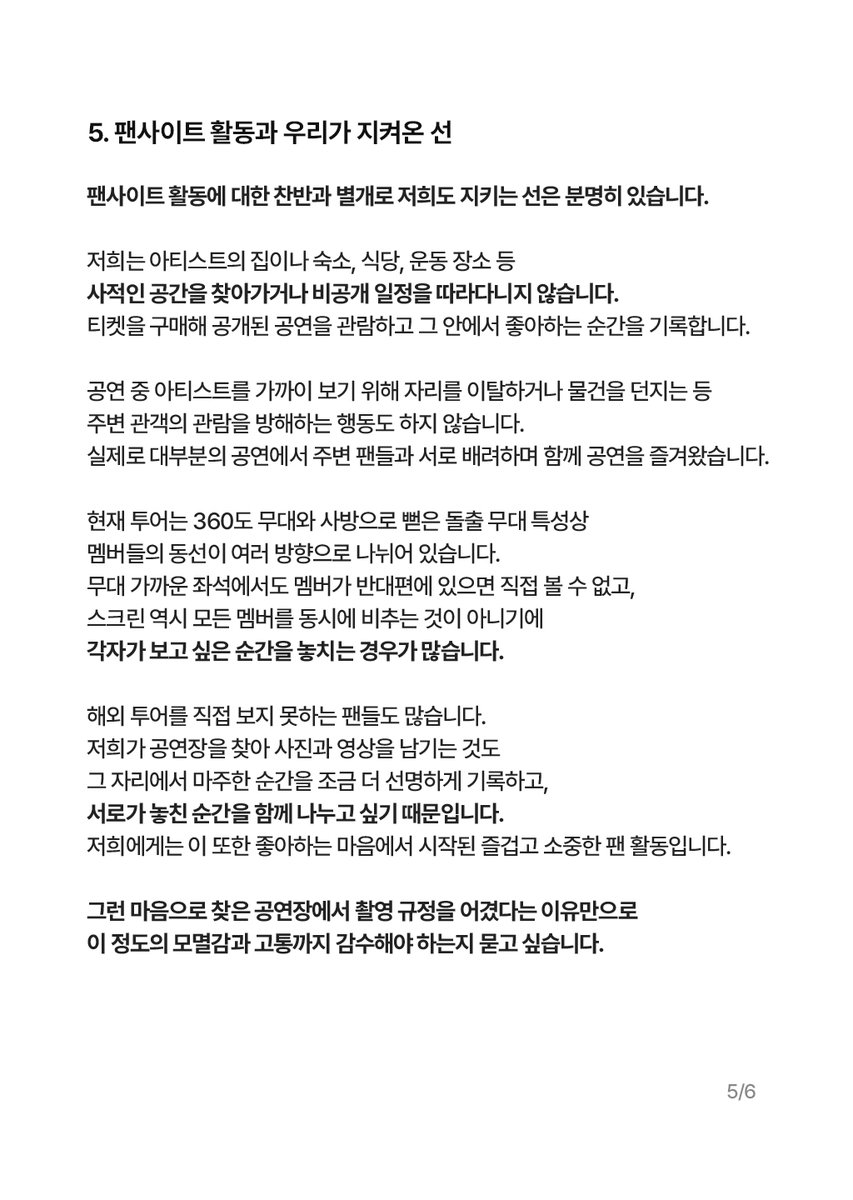
[English Translation (5/6)]
5. Fansite Activities and the Boundaries We Respect
Regardless of how people feel about fansites, we have clear boundaries that we do not cross.
We do not go to artists’ homes, hotels, restaurants, gyms, or other private spaces, nor do we follow private schedules.
We buy tickets and attend public concerts, where we document the moments we love.
During concerts, we also do not leave our seats to get closer to the artists, throw objects, or otherwise interfere with the viewing experience of those around us.
In fact, at most concerts, we have enjoyed the shows alongside other fans while being considerate of one another.
On the current tour, because of the 360-degree stage and extended stages reaching in multiple directions, the members’ movements are spread across different parts of the venue. Even from seats close to the stage, members on the opposite side may be impossible to see directly, and the screens do not show every member at the same time. As a result, we often miss moments we each wanted to see. Many fans are also unable to attend overseas concerts in person.
That is also why we go to these concerts and take photos and videos: to preserve the moments we witnessed more clearly and share with one another the moments someone else may have missed.
For us, this too is a joyful and meaningful part of being a fan, rooted in our love for the artists. We want to ask whether violating a filming policy at a concert we attended with those intentions really means we should have to endure this level of humiliation and suffering.
[English Translation (4/6)]
4. Confiscation of Personal Property, Mockery, and Threats
Even after all footage had been deleted, some of our personal memory cards—worth hundreds of dollars each—were confiscated and never returned.
Whenever we tried to object, we were met with even harsher intimidation and relentless pressure. As a result, we were unable to properly protest and could only hope that the situation would end as quickly as possible.
Some security personnel threatened to drop our expensive cameras on the ground, then laughed at and mocked us when they saw how frightened we were. They repeatedly told us that no matter which future concert we attended, they would find us and throw us out. They also laughed with other staff members and deliberately sang along loudly to songs playing in the venue.
Watching us become frightened and distressed, they laughed and appeared to enjoy it. At some point, enforcing the rules seemed to have turned into a game of humiliating and tormenting people.
Some security personnel also claimed to be police officers and repeatedly threatened us, saying that they “could arrest us,” “would send us to jail,” and “would have us deported from the country.” At the time, the security personnel making these threats were not even wearing police uniforms.
In fact, during the SPEAK YOURSELF tour, we experienced a similar situation in which we were stopped for taking photos and later encountered local police after venue staff reported us. However, the police explained that taking photos at a concert was not the kind of matter that warranted calling the police, and the situation ended easily without further issue.
Actual police officers did not even consider the matter serious enough to take further action. For venue security personnel to threaten concertgoers with arrest, jail, or even deportation, treating them like criminals over such conduct, is not reasonable enforcement of venue policy.
[English Translation (3/6)]
3. Forced Access to Personal Information and Control Over Our Ability to Document What Happened
They forced us to unlock our phones and directly accessed and photographed our personal and identifying information, including information stored in wallet apps.
They also photographed our passports, identification cards, hotel key cards, and even credit cards—items that had nothing to do with removing us from the venue.
They repeatedly flashed cameras directly into our faces at such close range that it was difficult to keep our eyes open, photographed us, and forced us to remove our hats and outerwear.
The identifying information collected and photographed during this process was shared with venue staff without our consent. At the following day’s concert, some of us were prevented from entering based on that information. At later venues, some of us were removed by staff who recognized us even though we were not taking photos.
Coercive body searches, the collection, photographing, and sharing of personal information, and the confiscation of personal property cannot simply be dismissed as “excessive treatment.” These actions go beyond the scope of enforcing venue policies and may raise issues of legal liability under the applicable laws of the jurisdictions where the concerts took place.
Meanwhile, whenever we reached for our phones to document what was happening or ask those around us for help, they immediately intimidated us and stopped us. As a result, we were unable even to inform people we knew about what was happening.
They were free to look through concertgoers’ phones and personal information and photograph our faces as they pleased, while we—the people actually subjected to this treatment—were not even allowed to document what was happening to us or seek help from outside.
[English Translation (2/6)]
2. Invasive Searches of Our Belongings and Bodies
Even after we had surrendered our cameras and memory cards, and even after searches of our bags found no additional equipment, security personnel continued searching through all of our belongings because they suspected we were hiding additional memory cards.
They even opened and inspected our sanitary pads one by one.
The searches then escalated to our bodies. Security personnel put their hands inside our pants pockets and swept across our groin areas. They pressed and touched our cleavage and bra bands and searched around our underarms.
We were made to place both hands against a wall while our shoulders were pressed down to prevent us from moving. We were also ordered to put our hands behind our heads while our entire bodies were searched.
We did not resist. We had already surrendered our equipment and agreed to leave. Yet we were physically restrained, touched in intimate areas, and treated like criminals.
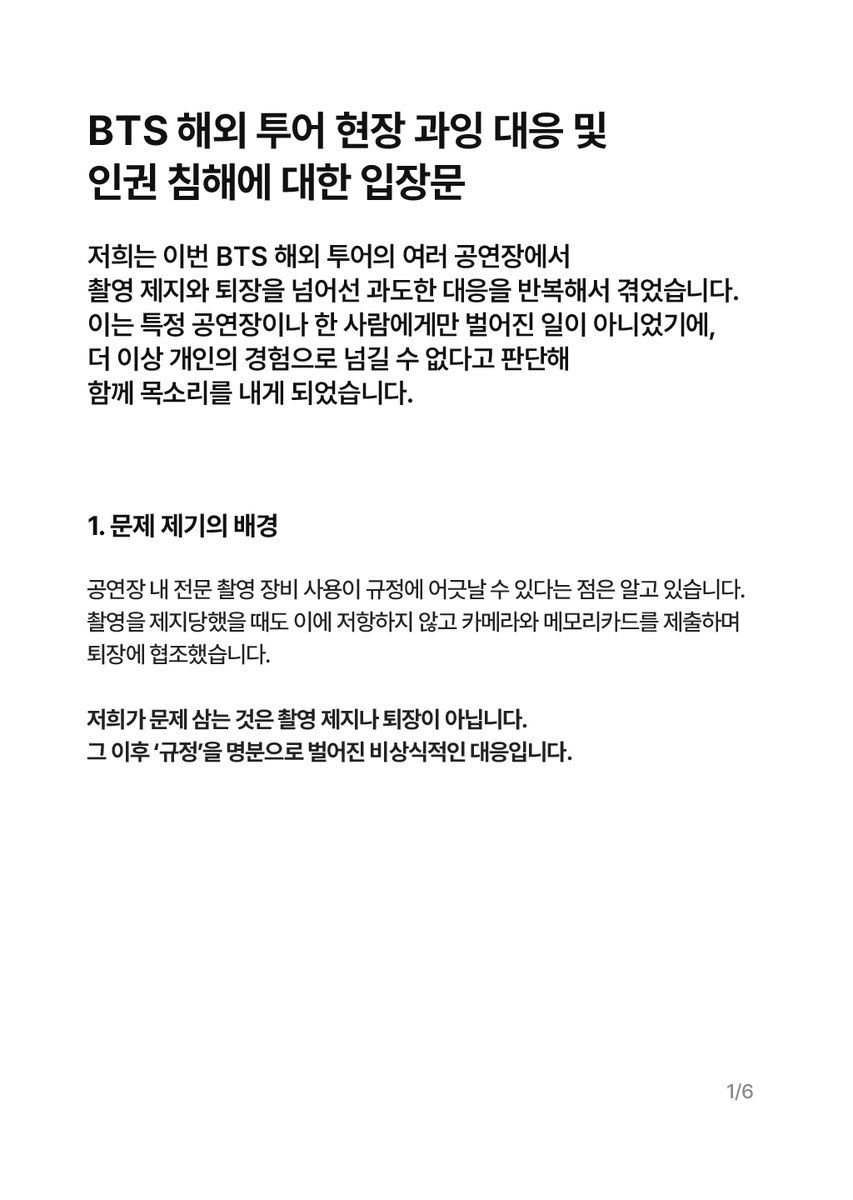
[English Translation (1/6)]
Statement on Excessive Security
and Human Rights Violations
at BTS Overseas Tour Venues
During BTS’s overseas tour, we repeatedly experienced treatment at multiple venues that went far beyond being told to stop filming or being removed from the venue.
These were not isolated incidents involving one person or one venue. The same kinds of invasive searches, intimidation, humiliation, and violations of privacy occurred across multiple cities.
We can no longer dismiss what happened as individual incidents, which is why we have decided to speak out together.
1. Why We Are Speaking Out
We understand that professional cameras may violate venue policies. When we were told to stop filming, we did not resist. We handed over our cameras and memory cards and cooperated with being escorted out.
We are not objecting to being told to stop filming or being removed from the venue. We are speaking out about what happened afterward.
A filming policy does not justify invasive body searches, forced access to personal information, confiscation of personal property, humiliation, or threats.
Amidst all the noise, criticism, and paranoia... I see only a deep and rooted love that demands to be lived fully, without lies or pretense. A love that demands to be "normal" in a world that no longer feels normal. So I admire their courage and their desire to experience everything with enthusiasm and ease. I see no difference between this and the thousand reels or videos that lovers everywhere share on social media. Because they want to be seen in their truest form. So I celebrate and defend this. Always. But above all, I respect it.
Why did the world’s largest soju brand choose Kim Taehyung? A market analysis
Do you remember the articles titled “V Becomes the Most Influential Brand Face of the Decade”?
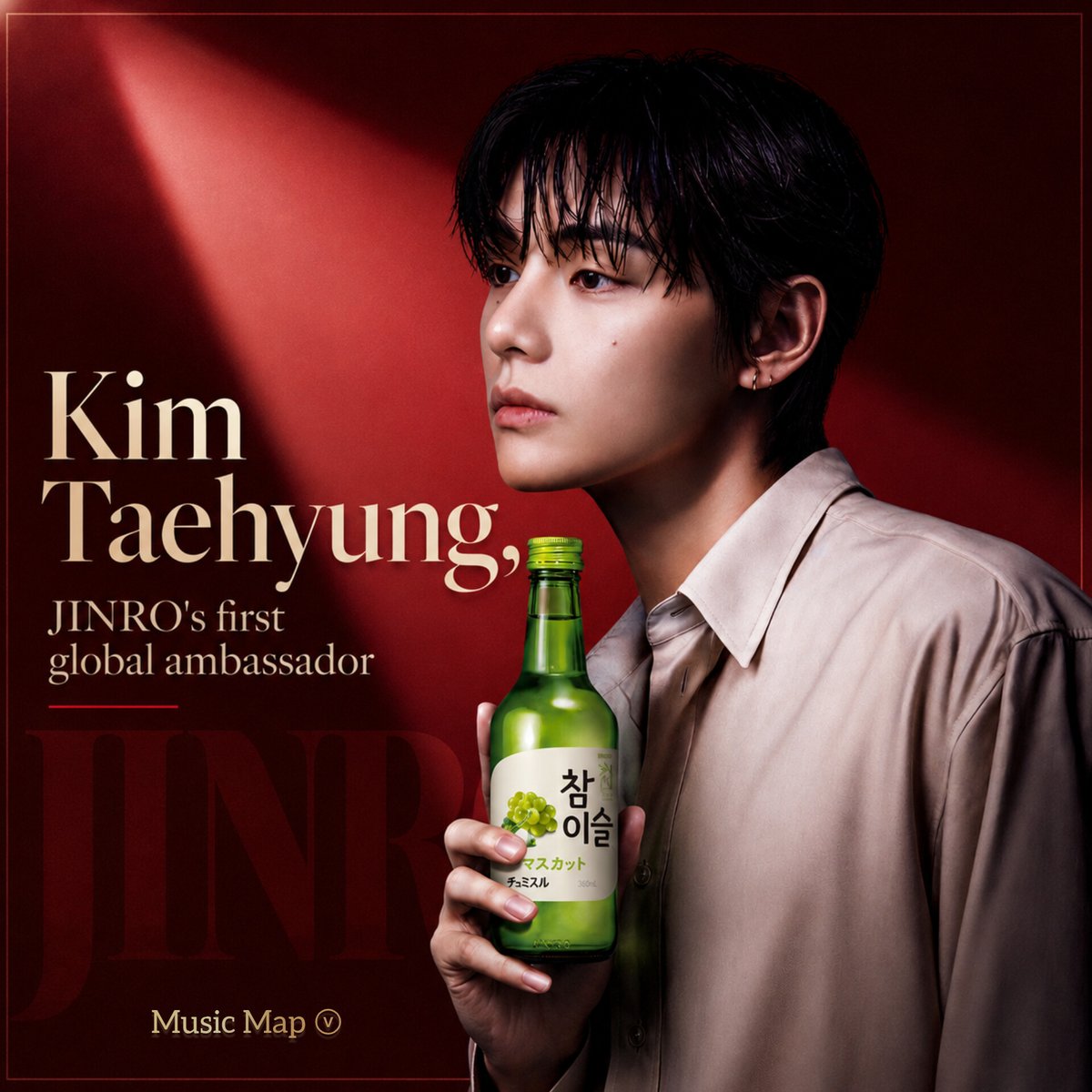
Kim Taehyung was announced as the first global ambassador for the Jinro brand — a company with over a century of history that has held the number one spot for soju in South Korea since its inception, commanding more than half of the domestic market.
It has been the world’s best-selling spirit for 25 consecutive years (since 2001, according to 2026 data from Drinks International) and is exported to over 80 countries.
Jinro is a cultural and commercial phenomenon that transformed a traditional Korean spirit into the most consumed liquor on the planet.
Choosing the face of a soju brand in South Korea reflects far more than a mere advertising decision.
Historically, these campaigns are reserved for figures who possess high public recognition, broad social acceptance, and an image capable of forging a genuine connection across different generations.
The focus lies not on promoting the drink itself, but on representing a lifestyle defined by closeness, trust, and authenticity.
This criterion makes credibility and the strength of one's public image central elements of brand strategy. In a sector so deeply ingrained in consumers' daily lives, the ambassador must inspire a sense of familiarity and convey positive values, all while strengthening the brand's identity without creating barriers to acceptance.
Viewed from this perspective, the appointment of Kim Taehyung as Jinro’s first global ambassador represents a strategically sound decision. Beyond embodying the qualities traditionally associated with major soju spokesmodels in Korea — such as broad popular appeal, charisma, a solid reputation, and audience relatability — Taehyung significantly expands the strategy's reach by bringing exceptional international influence. This is a particularly crucial factor for a brand seeking to solidify its presence in the global market. Given this context, the choice of Taehyung as Jinro’s global ambassador was not only appropriate but also an extremely well-founded branding decision.
In May, articles were published naming Taehyung the most influential commercial face of the decade.
Market analysts consider that Kim Taehyung has evolved beyond the status of a pop icon to become a pillar of the global economy, establishing himself as a major global economic driver.
Taehyung has become a strategic choice for companies seeking to enter new markets, expand their global reach, or strengthen their international competitiveness. His influence transcends specific markets and connects diverse audiences, making his image a significant asset for brands with global ambitions.
JINRO GLOBAL BRAND AMBASSADOR V
KIM TAEHYUNG FOR JINRO
#TAEHYUNGxJINRO
#VxJINRO
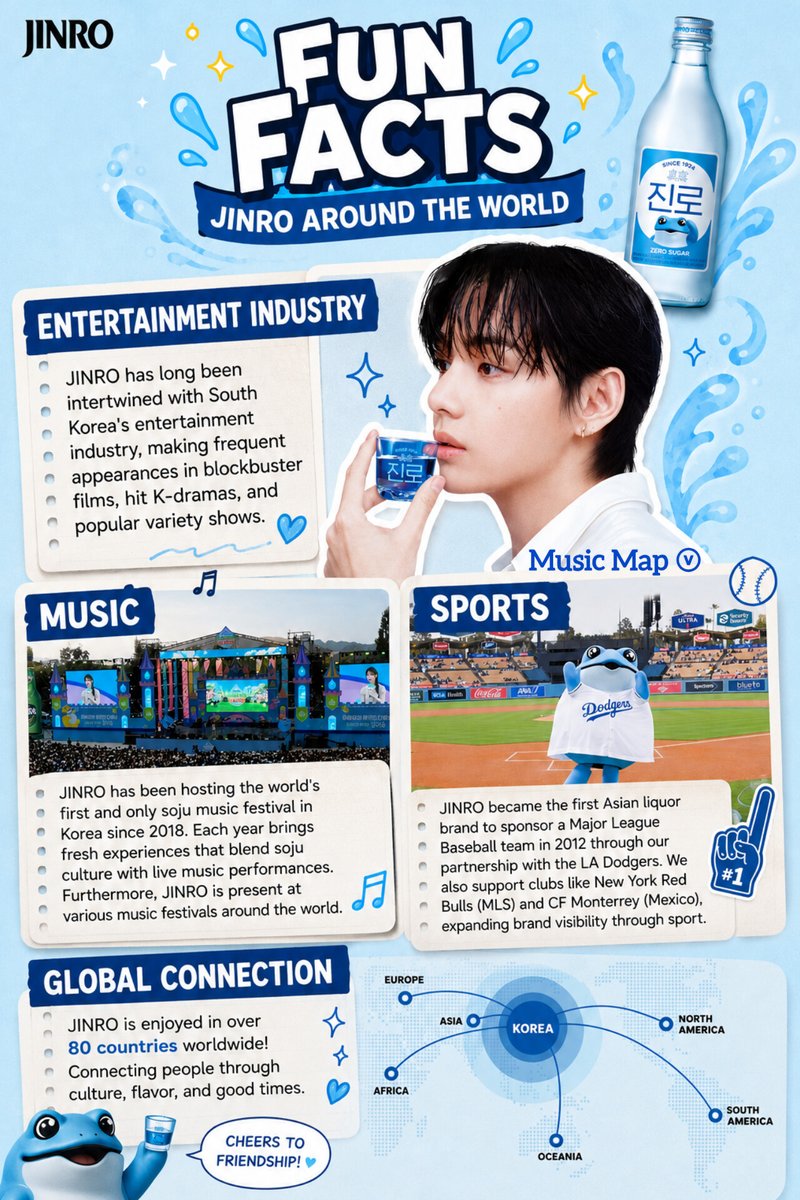
Fun Facts:
Some of Kim Taehyung's worlds come together in a single brand. 😌💡🤌🏽
→ SPORTS
JINRO became the first Asian liquor brand to sponsor a Major League Baseball team in 2012 through our partnership with the LA Dodgers. We also support clubs like New York Red Bulls (MLS) and CF Monterrey (Mexico), expanding brand visibility through sport.
→ MUSIC
JINRO has been hosting the world's first and only soju music festival in Korea since 2018. Each year brings fresh experiences that blend soju culture with live music performances. Furthermore, JINRO is present at various music festivals around the world.
→ ENTERTAINMENT INDUSTRY
JINRO has long been intertwined with South Korea's entertainment industry, making frequent appearances in blockbuster films, hit K-dramas, and popular variety shows.
JINRO GLOBAL BRAND AMBASSADOR V
KIM TAEHYUNG FOR JINRO
#TAEHYUNGxJINRO
#VxJINRO
✨️ Paris awaits the return of its defining presence, Fashion Extraordinaire Kim Taehyung.
Let’s celebrate one of the season’s most highly anticipated events with Celine’s Global Brand Ambassador V as the maison unveils its Men’s Printemps/Été 2027 show 🤍
Sunday, 19:00 KST ↓ trending details:
🐰: we used to lift 10 kg each
🐻: we even used to lift 12 kg, but now with 4 kg..
🐰: we’d do dozens of reps with 12 kg
🐻: yeah
🐰: then lower the weight and do dozens more
🐻: no i do 20 reps with 4 kg
*🐻 imitates himself working out*
🐰: ㅋㅋㅋㅋ
You know what I loved about Layover? That each beautiful song had its own MV and we got so much screen time of Tae.
That was one of the most special things about Layover. It felt like Tae invited us into an entire visual world.
Every song had its own visual identity, mood and story. Instead of feeling like separate promotional pieces, they felt connected…like chapters of the same film.
On a selfish note, it gave us an extraordinary amount of Tae screen time. 🥰
We got playful Tae, heartbroken Tae, dreamy Tae, cinematic Tae, Tae with Yeontan, introspective Tae, vintage film Tae. Every facet of him. By the time the album cycle was over, it felt less like we had watched a comeback and more like we had spent time with him. 💜
I also think that's why Layover ages so well. You don't just listen to the songs, you remember the images. The cave and sparkle in Love Me Again. The art and baguette in Rainy Days. The golden sunlight and fruit in the ocean in Slow Dancing. The melancholy darkness and lonely swing in Blue. The warmth of the behind-the-scenes moments in For Us. They all live together in your mind.
For fans who love Tae as both a musician and a visual storyteller, Layover was such a gift. It wasn't just an album. It was almost a five-part art film starring the person who inspired it. 💜
ps: Oh and let’s not forget all the different live stages we got!! Pure visual art! 🤌🏽👏🏽
BORAHAE TAEHYUNG
anan Special(June 24, 2026 issue) Feature: V & Jung Kook
Jung Kook
The purity of BTS, embodied in Jung Kook's unwavering belief that "BTS is one because we are seven."
In the documentary, Jung Kook said:-
"As BTS, it's natural to carry that pressure. But I'm not an extraordinary person myself." True to his words, "Seeing your unwavering cheers and smiles made me feel rewarded, and I couldn't help but smile," he spent the concert gazing affectionately at the audience in Tokyo Dome. That pure smile reflected the sincerity of his heart.
When all seven members stood together again, he quietly remarked:-
"I can't believe we've gathered together again. It feels like a dream." In that moment, he seemed like one of the ARMYs who had wished most fervently for BTS's return.
Jung Kook was born on September 1, 1997. Renowned for his exceptional stability and expressive vocals and dance performances, he is one of BTS's most versatile artists. When he released his solo album 《GOLDEN》 in 2023, he held a surprise performance in New York's Times Square, further cementing his presence as a global pop star.
V
Relief and determination found after overcoming the fear of change.
During BTS's hiatus, V confessed that he had worries about change, wondering:-
"Am I the only one who has changed? Maybe the fans have changed too."
However, standing before ARMY again transformed that anxiety into relief.
"I've dreamed of this moment so many times, so it's truly moving. Please appear in my dreams tonight," he said warmly.
Looking toward the future, he added:-
"All we can do is keep moving forward, one step at a time." At Tokyo Dome, he called out to ARMY, "I don't know if you remember, but let's purple each other!" With his innocent smile, he embraced both the changes that had occurred and the things that had remained unchanged between BTS and their fans.
V was born on December 30, 1995. His distinctive, one-of-a-kind voice adds depth and richness to BTS's music, while his friendly personality has earned him immense love from fans. His solo album 《Layover》 (2023), which showcased his unique musical style, achieved double-million sales in its first-week release.
Pc Credit:- @babybear_0919