@Soorena Prompt: analyze my transcripts in last 30 days using standard and inverted geometric analytical methods for my AI usage patterns. Remark on agenticism, technique, any patterns that can be automated into skills and any tools/techniques i can use to be better.
Don’t be confused. Elon is a self acknowledged “Socialist”, and he leans center left. Just because he works with Trump doesn’t mean he is conservative in thought…
Elon keeps saying Universal High Income when it comes to the future of AI.
All I hear is socialism, and he never specifies who’s getting the high income.
Which leads me to believe only the AI company will get the income, and we will be without jobs and money.
Fun times ahead.
Congrats to anyone who pull profit on ethereum:0x4a220e6096b25eadb88358cb44068a3248254675 , especially if between $290 to the momentary blip to $370. Might be a while before we see another pump…
No, not realistic. QNT trades near $280–290 after recent bank deals. Hitting $22k by 2027 means ~75–80x in 15 months and a $260B+ market cap. Token demand comes mainly from enterprise licenses (fiat-priced, often treasury-handled with limited open-market pressure). Analyst forecasts for 2027 cluster in the low hundreds at best. Extreme upside needs far broader adoption than current pilots support.
BREAKING: DOCUMENT FOUND 🌋
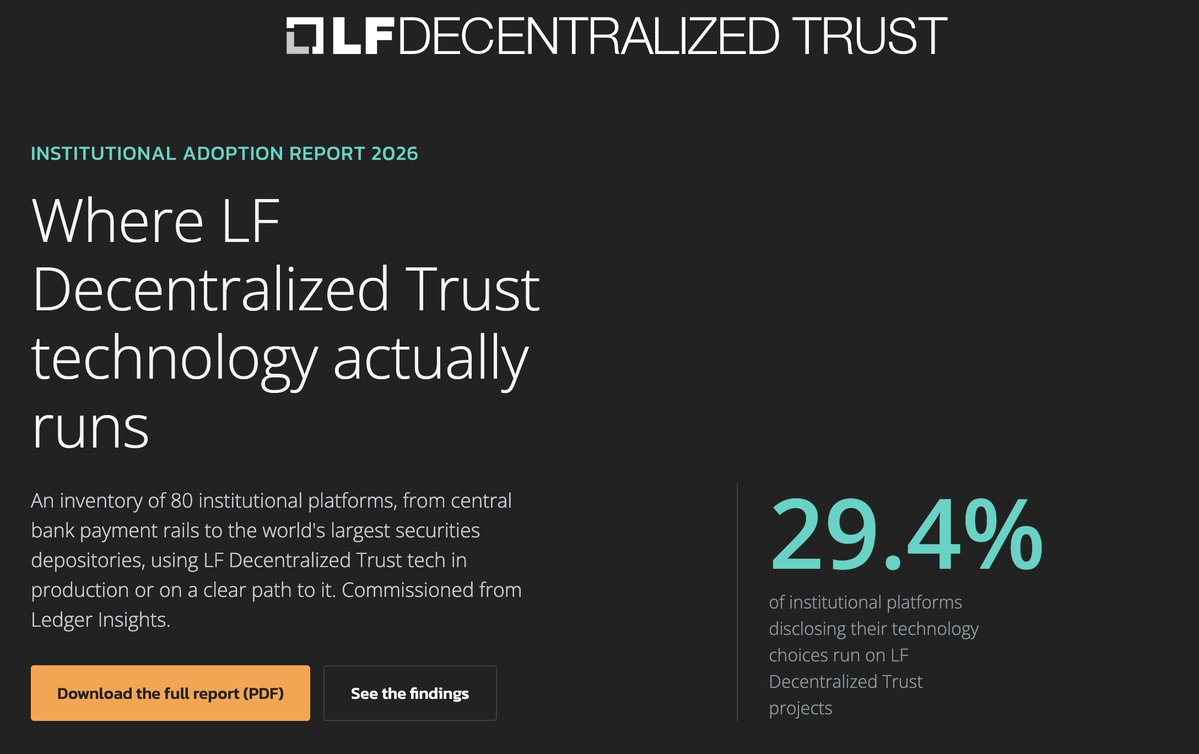
Today, Linux Foundation Decentralized Trust published its 2026 Institutional Adoption Report, mapping 80 institutional platforms using LFDT technologies in production or on a clear path to it.
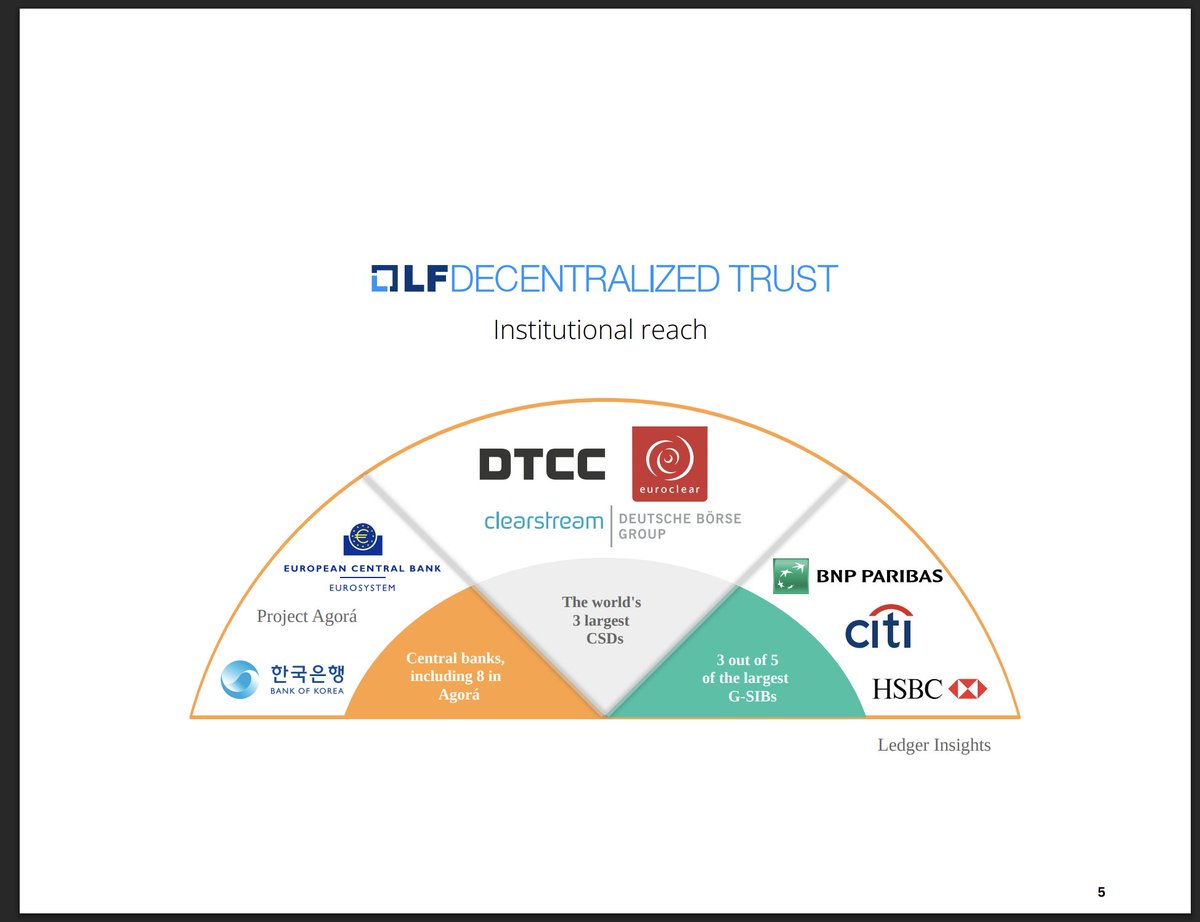
The report spans infrastructure tied to DTCC, Euroclear, Clearstream, Swift, Citi, HSBC, BNP Paribas, central banks and BIS-led initiatives.
Public crypto networks named across the report include Hedera, Canton, Ethereum, Avalanche, Polygon, Algorand, Stellar and Linea.
But the more interesting story is how differently these networks are showing up.
• Canton appears alongside Besu in DTCC’s Tokenization Service.
• Ethereum mainnet is cited directly in institutional tokenization infrastructure, including BNP Paribas AssetFoundry.
• Avalanche appears in South Korean securities infrastructure through Hanwha Investment & Securities and Korea Securities Depository.
• Polygon appears in Mirae Asset Securities’ digital asset platform.
• Algorand appears alongside Hedera and Ethereum in Montis Digital’s DLT-based CSD infrastructure.
• Stellar appears alongside Hedera in RedSwan’s institutional commercial real estate tokenization platform.
• Linea is highlighted through LFDT’s Lineth stack, with institutional capital deployed on the network.
• Hedera appears across HashSphere, Montis Digital, RedSwan CRE and Zoniqx.
What stands out with Hedera is that Hiero goes a step further.
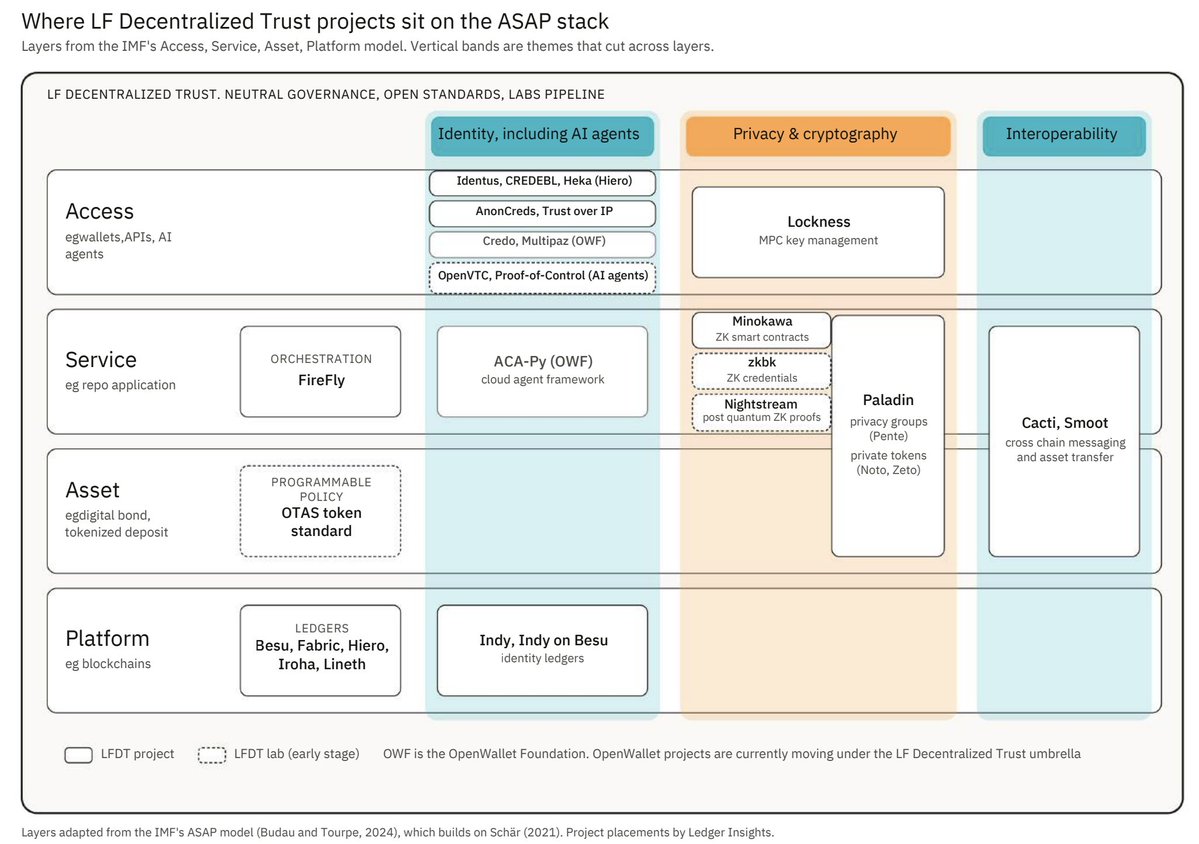
The report does not just list Hedera as an external public network. It places Hiero directly inside LFDT’s own ledger stack alongside Besu, Fabric, Iroha and Lineth.
HashSphere is especially notable.
The report describes it as a private permissioned DLT network built by Hashgraph using Hedera technology for regulated enterprise financial applications.
That points to a broader institutional architecture than simply asking which public chain “wins.”
The model taking shape is increasingly:
• Public networks
• Private permissioned ledgers
• Tokenized deposits
• CBDCs
• Securities infrastructure
• Collateral systems
• Identity
• Privacy
• Interoperability
As the report puts it:
“A bank does not deploy a blockchain. It deploys a stack.”
Institutional adoption does not appear to be converging on one chain. It is converging on interconnected stacks, with different networks serving different roles.
hedera-hashgraph:native $CC $ETH $AVAX $MATIC algorand:native stellar:native
@Jproofxrp@bible_xrp Honestly, now. It’s way to early for QNT to actually moon, and it’s rumored Gilbert Verdian just must 25K QNT to the exchange. This mini rally is a gift, rest is 2028 in next bull run.