Steering through a whirlwind of a year, I opted to create opportunities instead of waiting for them. Check out the spec commercial I produced/Directed/DP’d for @FentySkin. Shoutout to my team: Actors @ianthasherii @destinedbee, and P.A @alx_atkins. #FentySkinMagic
Three police officers went to an *elementary* school in Tennessee & arrested four Black girls.
One girl fell to her knees. Another threw up. Police handcuffed the youngest, an 8 yo with pigtails.
Their supposed crime? Watching some boys fight ��� and not stopping them. (THREAD)
Ya girl will be chatting on a amazing panel for @_MadeInHerImage and CSLA…. RSVP !!!! And the first 5 ppl to like , repost and tag me will get a 100% off promo code!
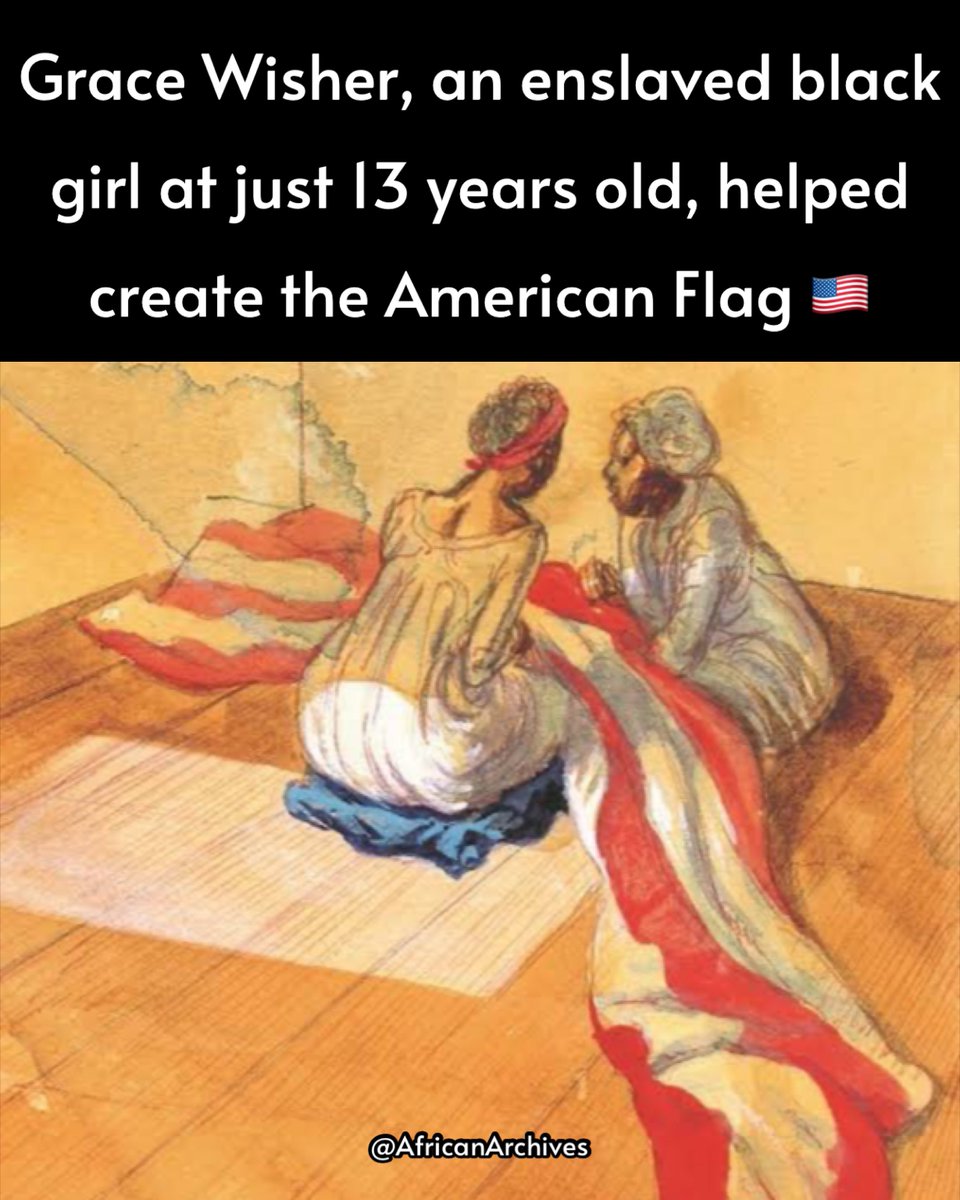
Grace Wisher, an enslaved black girl at just 13 years old, helped create the American flag which inspired the national anthem. She is often overlooked in the storytelling of the nation’s most prominent visual emblem.
Two hundred years ago, an African American girl made history—literally. She was an indentured servant named Grace Wisher in the household of Mary Pickersgill. Helen Yuen and Ms. Asantewa Boakyewa of the Reginald F. Lewis Museum share her story.
The likeness of Grace Wisher is unknown. However, the Star Spangled Banner Flag House is home to a portrait with her figure traced in, to recognize her contribution. Detail of "Placing the Stars on the Flag that Inspired Francis Scott Key to Write Our National Anthem" by Robert McGill Mackall, ca. 1962.
Mary Pickersgill is often credited with sewing the Star-Spangled Banner which flew over Fort McHenry in Maryland and inspired Francis Scott Key to write our national anthem. Less known is that Grace Wisher, an African American girl at just 13 years old, also helped make the flag. It's another testament to the deeply rooted, yet oft unmentioned, contributions of African Americans to the very core of this country.
Indenture was a waning practice in early 19th century Baltimore, although Maryland law did allow for courts to take away children of African Americans who were considered "lazy, indolent, and worthless free negroes" to bind the youngsters into apprenticeship. Orphans usually met a similar fate.
The size of the Star-Spangled Banner and its six-week timeline for completion would have necessitated many people working on the flag, including Mary Pickersgill's three nieces and Grace Wisher. The household also had an enslaved person, whose name we do not know.
The home where Pickersgill and Wisher lived is now a museum called the Star-Spangled Banner Flag House. It holds a 1962 painting by famed Baltimore artist Robert McGill Mackall. The portrait features the Pickersgill household and the three men who commissioned the garrison and storm flags for Fort McHenry: Commodore Joshua Barney, General John Stricker, and Colonel George Armistead. As a tribute to Wisher, the Star-Spangled Banner Flag House drew in a ghost figure into the painting that represents the young girl. Due to our uncertainty of what she looked like, the placeholder is a traced line, but the recognition is tangible.
Great to see so many country and company leaders around the world interacting with people on this platform!
This is a great way to get useful feedback, learn about new ideas and connect with a smart, savvy audience.
You can now connect to Stargate using the OKX wallet 👝
The OKX wallet's native DEX has also launched cross-chain swaps, allowing you to swap and bridge in one-click routing through Stargate!