Most supplement brands bet you won't read the label.
Thorne has been betting the opposite since 1984.
Four rounds of testing per product. Mayo Clinic research partner. Trusted by 47,000+ healthcare professionals and 100+ professional sports teams.
For most of its life, nobody outside of clinical settings knew it existed.
The stock market priced it like a generic vitamin company. L Catterton paid a 94% premium to take it private. Shifted from B2B to DTC. $500M in revenue. 63% DTC growth. $4B exit target. Under three years.
The brand didn't change. The consumer did.
Full breakdown: https://t.co/ts3qOdtGLT
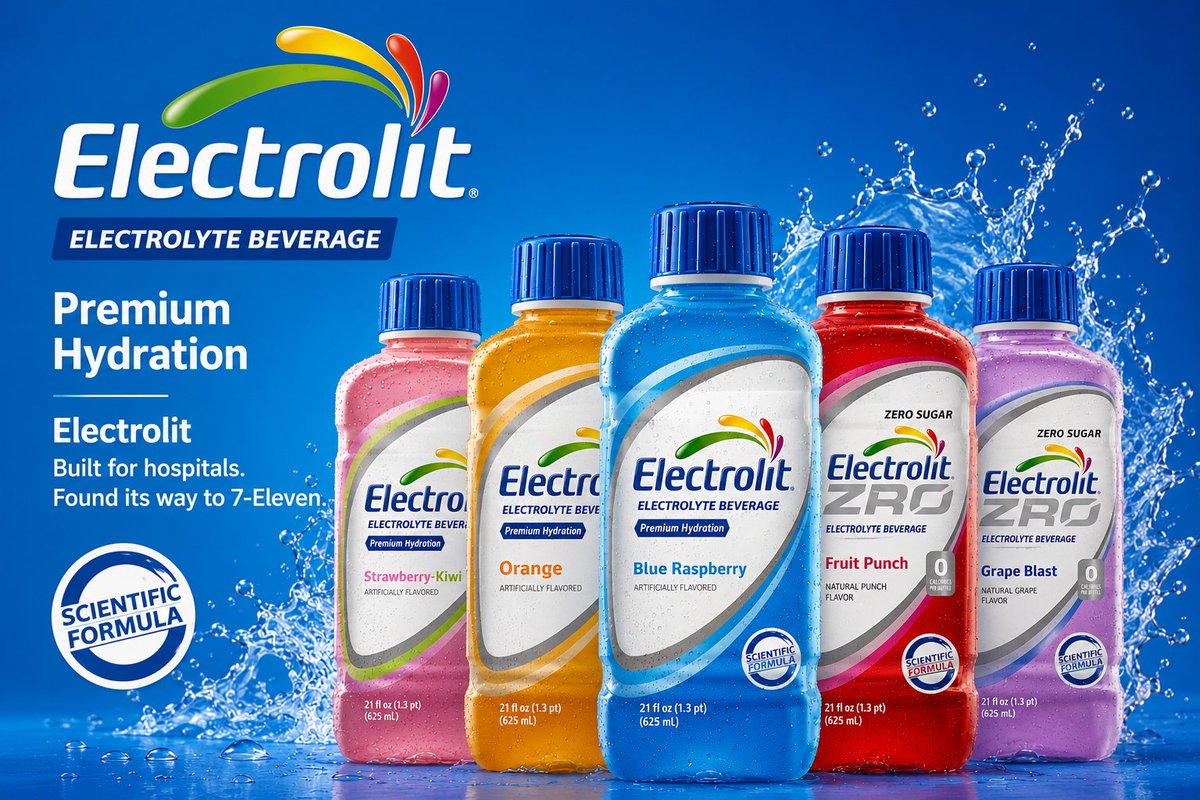
Electrolit was built in a Mexican pharmaceutical lab in 1950.
Just a clinical rehydration formula with 6 electrolytes that quietly entered the US in 2014 and started taking shelf space from Gatorade.
Electrolit self-funded the entire US expansion. 26% sales growth. $617 million in revenue. A $400 million production facility now under construction in Waco, Texas, the first American plant for a brand that ran out of capacity trying to meet US demand.
No celebrity deals. No advertising. Just regional convenience store distribution, mostly in Hispanic communities where the brand already had decades of trust. Word spread.
Full breakdown here: https://t.co/cGo9wqbcUY
A landscaper in California nearly lost his house bringing his grandmother's sauce to market.
$250K borrowed from family. Credit cards maxed. Daily-compounding loans. Every dollar went into Facebook ads.
$35K in year one. $1.5M in 2020. $87M by 2025. $400M acquisition in 2026.
Full breakdown: https://t.co/H8EqkPHI5G
Why would Celsius pay $1.8 billion for another energy drink?
Because they needed a consumer they couldn't reach.
Two energy drinks. Two completely different consumers. One company that finally understood it needed both.
Full breakdown: https://t.co/jQZA61yKdw
Olive oil has been sold the same way for 200 years.
Dark glass bottle. Awkward pour. Half the time, it goes rancid before you finish it because the bottle was too inconvenient to use daily.
Andrew Benin fixed it. A squeeze bottle.
That idea became the entire product. Sizzle for cooking. Drizzle for finishing. Single-origin Spanish olive oil at an accessible price point.
The category wasn't broken. It was just boring.
The container was the product all along.
Full breakdown here: https://t.co/WWbdyANSP7
The protein bar solved hunger. The protein shake solved recovery. Nobody solved this: real protein in something that actually feels like a drink, not a supplement, not a compromise. Koia just did.
Protein Pop, clear pea protein, 10g per can, 2g sugar. No collagen. No shortcuts. First of its kind in the US. Launched January 2026. The brands that follow will cut corners on the protein source. Koia didn't. This is the window.
Full breakdown here: https://t.co/c86t9nWI3g
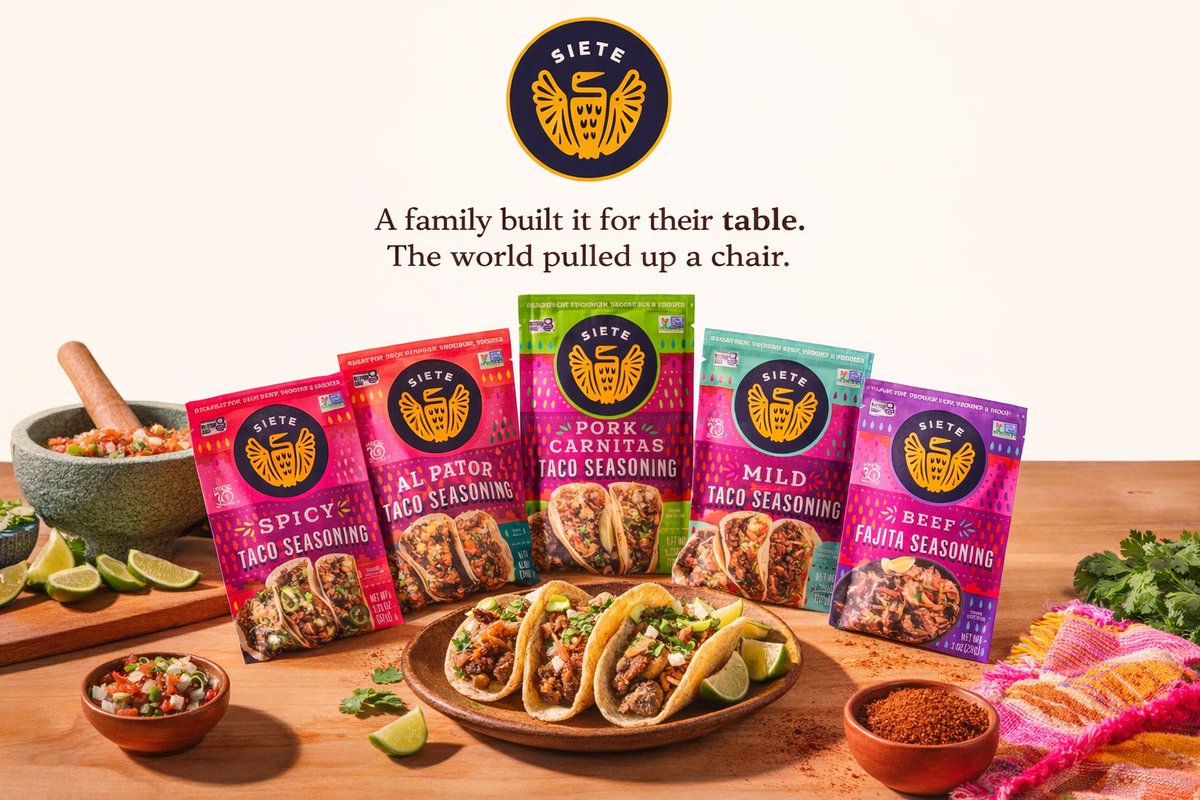
Siete didn't start as a brand. It started as a problem. Veronica Garza was diagnosed with lupus as a teenager. Healing meant losing the food tied to her identity. That's not a dietary inconvenience, it's a cultural one. So she made her own grain-free almond flour at a CrossFit gym in Laredo. A decade later. $500M in revenue. $1.2B exit to PepsiCo. Fastest-growing Latino food brand in the US. Does that survive sitting next to Doritos?
Full breakdown: https://t.co/fJZ78fVZ99
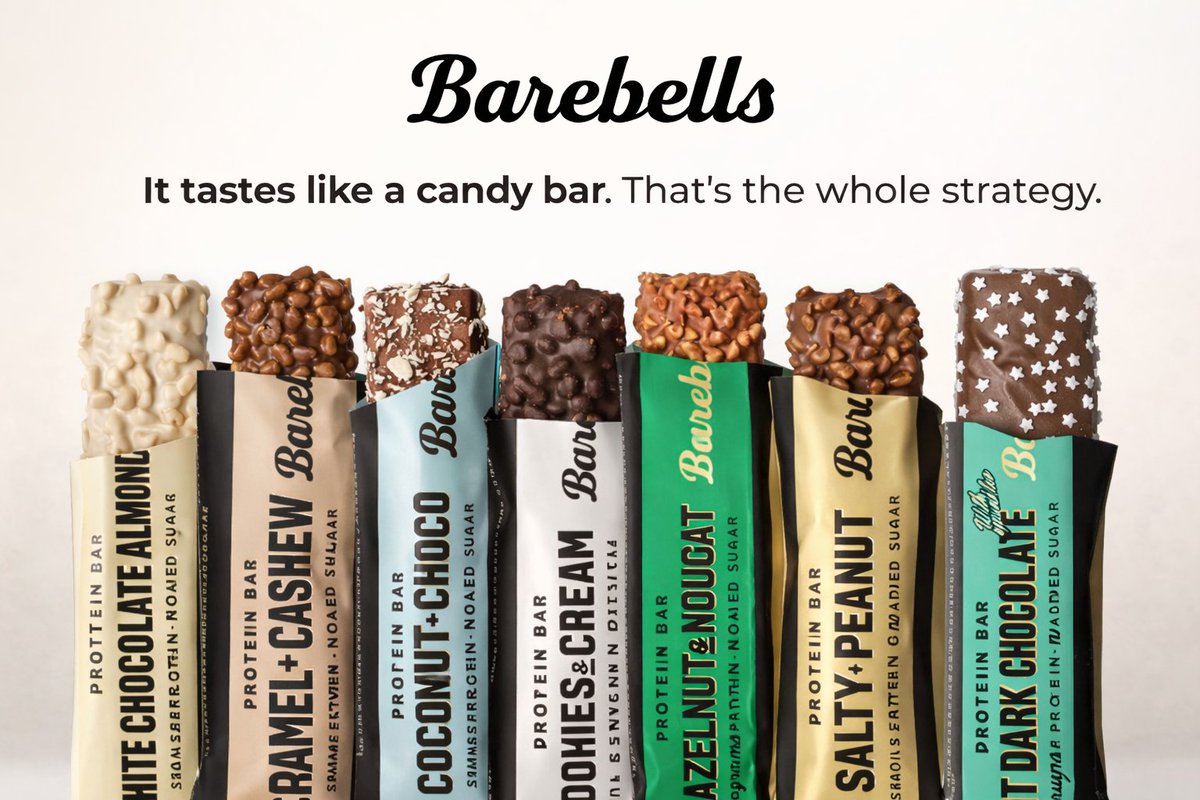
Every protein bar brand kept fighting on the same lane: cleaner ingredients, more protein, simpler labels. Barebells changed the lane entirely. US revenue went from roughly $50M to nearly $100M in a single year. That’s not a nutrition story. That’s a positioning story.
Full breakdown: https://t.co/epNXX1xRMj
The entire meat snack category marketed to men for decades. 70% of the buyers were women.
They grew from under $50M to nearly $1B, bootstrapped by proving the business model worked before they scaled it. Most brands do it the other way around.
Full breakdown: https://t.co/xfKYBZ6jdr
Everyone else in protein water is selling collagen. Collagen isn't a complete protein. It doesn't build muscle. It supports skin and joints. That's a beauty supplement, not a protein supplement. Protein2o has been the quiet outlier since 2013. Whey protein isolate. The real thing. The formula was never the problem. The silence was. Full breakdown: https://t.co/vXWz2iDueu
The supplement industry built itself around a specific type of customer for decades. Bloom noticed who was left out. The answer was most of the market.
Brand breakdown: https://t.co/uFXbQPE9nH
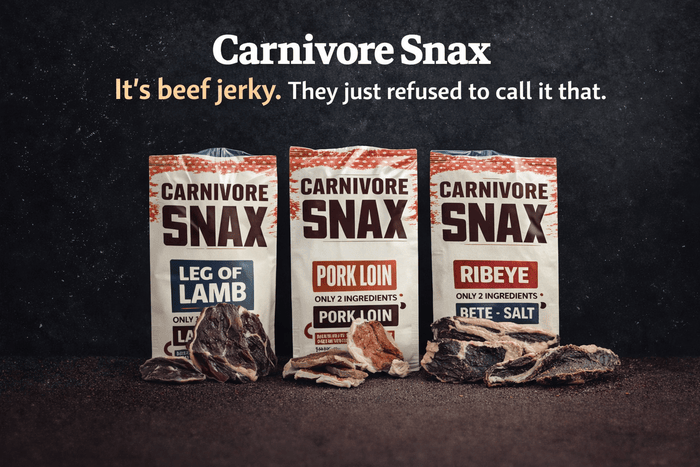
Carnivore Snax built a $20M+ brand selling beef jerky. The trick? Never calling it jerky. Better cuts, cleaner sourcing, less done to it. No proprietary formula. No revolutionary technology. What made it work was who they chose to talk to first.
Read more: https://t.co/mZ2Ha2imtf
Most brands chase the acquisition.
Olipop turned down PepsiCo and Coca-Cola.
Either they know something, or they're about to find out the hard way.
Read now: https://t.co/gtKsm1vD9W
I noticed Hims & Hers before the GLP-1 conversation. The model impressed me then. A personal doctor vibe without the waiting room. Turns out most people wanted exactly that.
Full breakdown: https://t.co/3TYGapcLU2
Oat milk didn’t get big because it tasted good; it got big because it felt like the smarter choice. Once people started comparing the backs of cartons, not just the fronts, the edge shifted.
Broke it all down - https://t.co/I1qoHIH7sP
You can learn a lot from how a brand enters the world.
Sanzo didn’t chase attention, it chased the right accounts in the right order.
That discipline rarely gets talked about, but it’s usually what wins.
Full breakdown: https://t.co/lifQJep2rG