There is an old curiosity of mountaineering literature: the unseen companion. Particularly on Everest, high in the death zone (above 8,000 metres), where the air has roughly a third of the oxygen available at sea level. It’s been described as an extra presence. It appears when your body is a sack of broken glass and your mind a leaking battery in the howling waste. The phenomenon has been reported often enough to have acquired a name: the Third Man Factor. Neurologists call it a hallucination. But one notices (in reports) that the hallucination is invariably constructive. It doesn’t urge men and women to lie down and die. What’s remarkable is the number of times it’s been reported. The newcomer arrives as a fellow traveller. Someone walking just off your shoulder, matching your pace. Oddly calm and professional, encouraging you onwards. Even their silence is reassuring rather than ominous.
The upper reaches of Everest have produced many such accounts. Frank Smythe, descending from the mountain in 1933, became so convinced of a companion’s presence that he broke off a piece of mint cake to share with him. More than seventy years later, the British physician Jeremy Windsor, exhausted and hypoxic near the summit, found himself accompanied by climber whom he named Jimmy and had a full conversation with him. Others have reported the same phenomenon in Antarctica, at sea, in deserts, in disaster zones, in the lonely aftermath of accidents and shipwrecks.
We’ve always been reluctant to accept that the most mysterious experiences may arise from ordinary tissue. The neurological explanation is less mystical than it is strange. Our sense of being a self and occupying a body, moving through space, is a given. But to achieve that the brain must constantly integrate signals from vision, touch, balance, proprioception and memory into a coherent account of who and where we are. Under conditions of severe stress, that integration can falter.
One region that has attracted particular interest is the temporoparietal junction, a patch of cortex involved in constructing the boundary between self and other. Neuroscientists have shown that disrupting activity in this area can produce the vivid sensation that another person is standing nearby, mirroring one’s movements. The figure is not seen in the ordinary sense, but felt. The brain appears to externalise part of its own representation of the self and then experiences it as a companion.
The combination of hypoxia and sleep deprivation may make such misfires more likely.
Yet the phenomenon has another aspect that neuroscience doesn’t fully capture: the presence being helpful, shepherding people through circumstances in which they might otherwise surrender. Why should there be a voice suggesting the next crevasse to avoid? Why a steadying hand at the small of the back when the legs have turned to water? One is tempted to think that the brain, faced with conditions for which evolution made little provision, is manufacturing the thing most likely to improve the odds of survival: another human being.
Whether Dawa Sherpa encountered such a figure is known only to him. Perhaps there was no phantom, only a lifetime of mountain knowledge operating below consciousness. Either way, one hopes he has many years ahead of him: many more climbs and many more evenings spent telling stories that sound impossible.
Honored to be an @AMAs winner 🎶 Thank you ARMY for your continued love & support❤️
Check out the show on demand now on @ParamountPlus!
#BTS#방탄소년단#AMAs
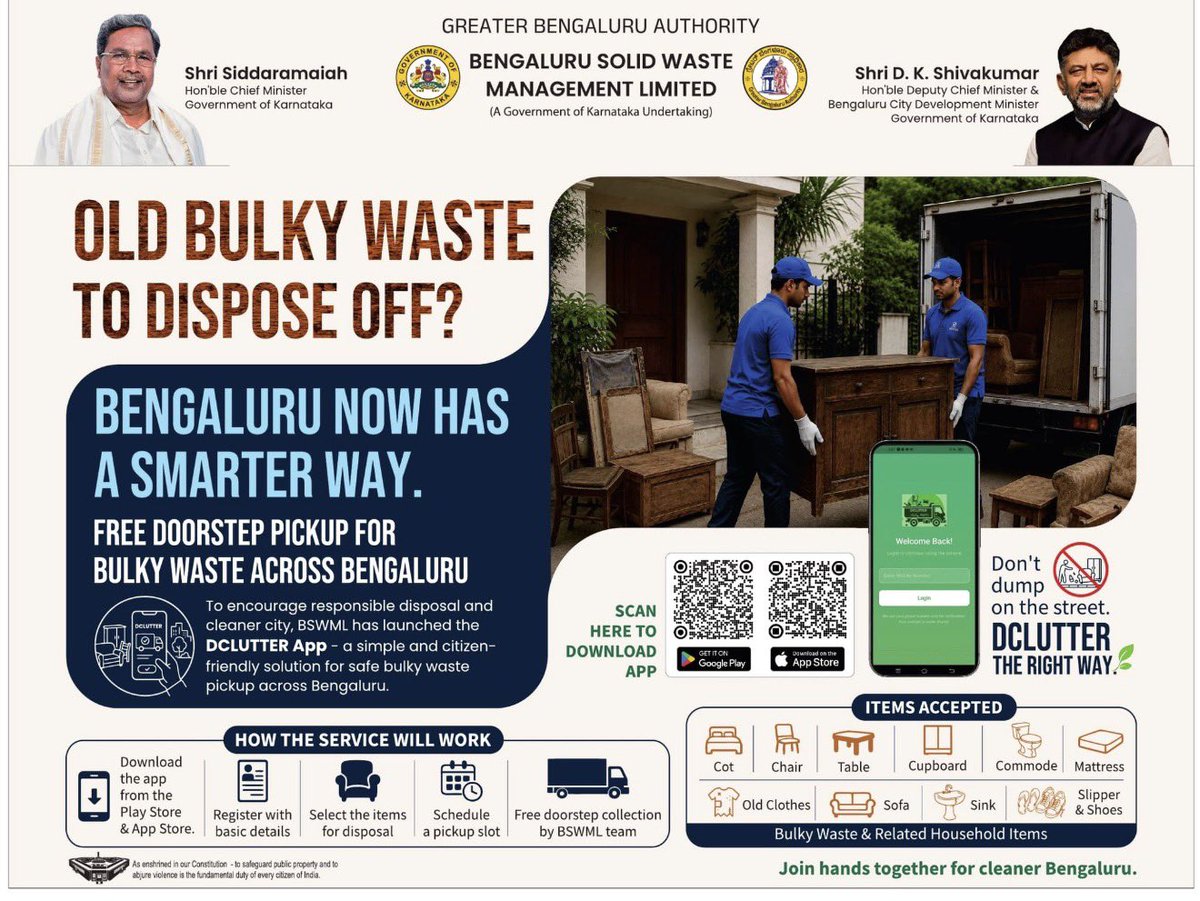
Getting rid of your old mattress or a broken table or a worn out sofa in #Bengaluru has been made easy, free doorstep pickup available — says GBA.
Download the new DCLUTTER App 👇
@timesofindia
The Unique Disability ID (UDID) is a centrally sponsored initiative aimed at creating a national database for Persons with Disabilities. It has also become essential for accessing various social welfare schemes and government benefits.
The UDID card is an important step towards recognition, inclusion, and easier access to entitlements for persons with disabilities. However, many people are still unaware of the process, benefits, and required documentation.
As @akeel_usmani , Legal Aid Coordinator at NCPEDP, highlighted in @ThePrintIndia , India needs large-scale awareness campaigns on disability rights and UDID registration in mission mode.
Watch the full video: https://t.co/BJQytlfNCc
For queries related to applying for UDID or accessing disability-related entitlements, contact the NCPEDP Helpline: +91-9217345677, Monday to Friday, 10 AM to 6 PM
@Mphasis@MSJEGOI@socialpwds@PIB_India@armanaly@drag_org
#NCPEDP #UDID #RPwDAct
Presenting Rolling Stone's biggest cover ever: @bts_bighit for May 2026 💜
How did the world’s biggest band reclaim their crown? By overcoming doubt & returning to their roots on an adventurous album. #방탄소년단 #BTS
Cover story: https://t.co/bc0v3QCNYF
Video interview:
https://t.co/Mf1kyq2bgD


![bts_bighit's tweet photo. [#오늘의방탄]
260613 BTS WORLD TOUR 'ARIRANG' IN BUSAN
#방탄소년단 #BTS #BTS_WORLDTOUR_ARIRANG
#BTS_WORLDTOUR_ARIRANG_BUSAN https://t.co/XNRSCDbX0l](https://pbs.twimg.com/media/HKsxooZaQAAsNU5.jpg)
![bts_bighit's tweet photo. [#오늘의방탄]
260613 BTS WORLD TOUR 'ARIRANG' IN BUSAN
#방탄소년단 #BTS #BTS_WORLDTOUR_ARIRANG
#BTS_WORLDTOUR_ARIRANG_BUSAN https://t.co/XNRSCDbX0l](https://pbs.twimg.com/media/HKsxooVa8AA3PsU.jpg)
![bts_bighit's tweet photo. [#오늘의방탄]
260613 BTS WORLD TOUR 'ARIRANG' IN BUSAN
#방탄소년단 #BTS #BTS_WORLDTOUR_ARIRANG
#BTS_WORLDTOUR_ARIRANG_BUSAN https://t.co/XNRSCDbX0l](https://pbs.twimg.com/media/HKsxooSbAAAhdhh.jpg)


![bts_bighit's tweet photo. [#2026BTSFESTA]
BTS Family Photo
(https://t.co/LyLixBUGD8)
#BTS #방탄소년단 #BTS13thAnniversary https://t.co/ZK4RAepGjl](https://pbs.twimg.com/media/HJ5cWrqaMAArq9U.jpg)


![bts_bighit's tweet photo. [#오늘의방탄]
260417 BTS WORLD TOUR 'ARIRANG' IN JAPAN
#방탄소년단 #BTS #BTS_WORLDTOUR_ARIRANG
#BTS_WORLDTOUR_ARIRANG_JAPAN https://t.co/eEIYawXMny](https://pbs.twimg.com/media/HGHAb9ea4AEbOgA.jpg)
![bts_bighit's tweet photo. [#오늘의방탄]
260417 BTS WORLD TOUR 'ARIRANG' IN JAPAN
#방탄소년단 #BTS #BTS_WORLDTOUR_ARIRANG
#BTS_WORLDTOUR_ARIRANG_JAPAN https://t.co/eEIYawXMny](https://pbs.twimg.com/media/HGHAb9dawAA-oeI.jpg)
![bts_bighit's tweet photo. [#오늘의방탄]
260417 BTS WORLD TOUR 'ARIRANG' IN JAPAN
#방탄소년단 #BTS #BTS_WORLDTOUR_ARIRANG
#BTS_WORLDTOUR_ARIRANG_JAPAN https://t.co/eEIYawXMny](https://pbs.twimg.com/media/HGHAb9VbwAA-vEA.jpg)





![bts_bighit's tweet photo. [#오늘의방탄]
260613 BTS WORLD TOUR 'ARIRANG' IN BUSAN
#방탄소년단 #BTS #BTS_WORLDTOUR_ARIRANG
#BTS_WORLDTOUR_ARIRANG_BUSAN https://t.co/XNRSCDbX0l](https://pbs.twimg.com/media/HKsxooebQAAySjX.jpg)

![bts_bighit's tweet photo. [#2026BTSFESTA]
20130613 Congratulations BTS🎉
#BTS #방탄소년단
#BTS13thAnniversary https://t.co/HZXALKi0tF](https://pbs.twimg.com/media/HKnwB50aYAAjQ2_.jpg)

![bts_bighit's tweet photo. [#2026BTSFESTA]
BTS Family Photo
(https://t.co/LyLixBUGD8)
#BTS #방탄소년단 #BTS13thAnniversary https://t.co/ZK4RAepGjl](https://pbs.twimg.com/media/HJ5cXRoakAAiq7U.jpg)


![bts_bighit's tweet photo. [#오늘의방탄]
260506 BTS visited the National Palace in CDMX
#방탄소년단 #BTS #BTSatTheNationalPalace https://t.co/DjwO71Vf5U](https://pbs.twimg.com/media/HHrcIQXbcAA66Ea.jpg)
![bts_bighit's tweet photo. [#오늘의방탄]
260417 BTS WORLD TOUR 'ARIRANG' IN JAPAN
#방탄소년단 #BTS #BTS_WORLDTOUR_ARIRANG
#BTS_WORLDTOUR_ARIRANG_JAPAN https://t.co/eEIYawXMny](https://pbs.twimg.com/media/HGHAb9hbMAERWyA.jpg)


