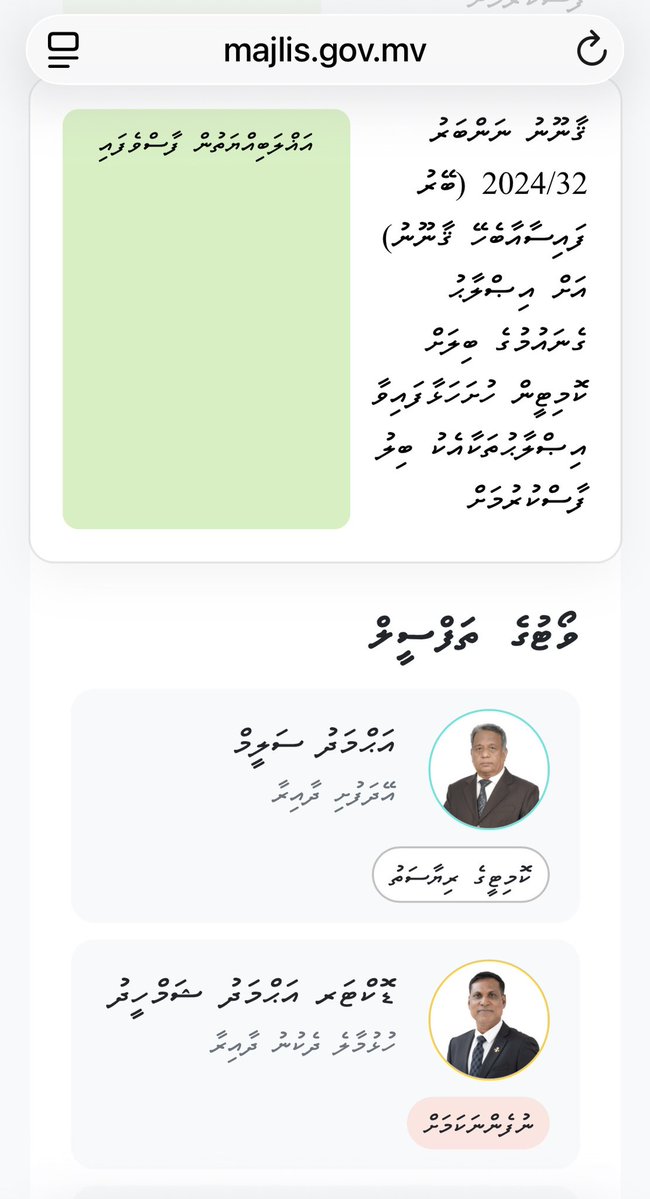
From a working class party member to a leader determined to safeguard our ideology, unite our movement, and carry its values forward.
#Faya2028#Bodubadhalu
🚨 BREAKING: Claude can now build your entire mobile app like a professional development team — for free.
Use these 8 prompts to plan, design, code, test, and launch mobile apps faster than most developers and agencies.
(🔖 Save this before your next app idea).
Sovereign wealth funds have become some of the most powerful players in global finance, with $16 trillion in assets. Law should guide their operations and governance to ensure the institutions support financial stability. See our new blog. https://t.co/sK6yiwPOAT
🇨🇳 Believe it or not, this is AI-generated content.
The scene is made using Seedance 2.5 (a video generation model developed by China's ByteDance).
Can you imagine trying to distinguish AI from reality a few years from now, when it's even better? 🤯
Writer: Mhedi
7. Why was Henley & Partners selected?
Given the international controversies surrounding investment-migration programmes with which Henley & Partners has been associated, Government must explain why this particular company was selected.
Was there a competitive process?
What exactly is Henley’s role?
How much does Henley earn from each successful application, and how much does the Maldivian State receive?
Does Henley receive a commission for every successful applicant?
These are matters of public interest.
Publish the agreement between the Government and Henley & Partners.
8. Stop comparing this with ordinary investment-residency programmes
This is perhaps the most misleading argument being made.
We are not opposing investment-residency programmes in principle.
Many countries have them.
But an ordinary investment-residency programme allows a foreigner to invest and live within the country’s existing economy and legal environment.
What is being created here is fundamentally different:
SEZ, isolated territory , foreign-owned residences, tax and customs concessions, self-contained services, a residency programme attached to that ecosystem.
That distinction matters.
Do not compare an ordinary investment visa with the creation of an entire tax-privileged residential enclave.
9. Our islands and lagoons are our scarcest national resource
Maldives does not have unlimited land.
Our islands, reefs and lagoons are among the most valuable assets we can pass to future generations.
We have already seen how sensitive the Maldivian public is to proposals involving large areas of territory and foreign development, including the previous Faafu Atoll controversy.
For a project of this scale, involving foreign residency and long-term use of Maldivian territory, public opinion matters.
Why was there no meaningful public consultation?
Why are the agreements not public?
Why are Maldivians being kept in the dark?
10. Are we creating an economic zone or an enclave within the State?
When one development combines:
foreign residents, private residential property, isolated territory, special taxation, customs concessions, schools, healthcare, marina access, commercial services and a dedicated residency programme,
Parliament has every right to ask:
At what point does a Special Economic Zone stop being an investment project and begin to resemble a foreign enclave within the Maldives?
Economic development should strengthen Maldivian sovereignty not create exceptions to it.
11. Where is the successful international precedent?
Government should identify a genuinely comparable country where an isolated, privately developed SEZ township has been combined with foreign residential property, extensive fiscal privileges and a residency mechanism and demonstrate that the model produced substantial long-term benefits for the host country’s citizens.
Do not simply tell Parliament that Malaysia, Portugal or other countries have investment visas.
Show us a genuinely comparable project.
One of the closest international comparisons is the ZEDE experiment in Honduras, where unusually autonomous economic zones generated an enormous controversy over sovereignty and constitutional authority. Honduras ultimately repealed the ZEDE framework, and its Supreme Court subsequently declared the model unconstitutional.
That experience should be a warning that economic incentives cannot be considered separately from sovereignty, democratic accountability and the authority of the State.
Before creating something that could remain for generations, Government has a duty to prove three things:
Is it legal?
Does it produce greater economic benefit for Maldivians than the project it replaced?
And does it fully protect the sovereignty and national security of the Maldives?
Until Government can answer those three questions transparently, Parliament and the Maldivian public have every reason to question this project.
Questions the Government Must Answer on Project AYLA the SEZ Township and Pearl Visa Program.
The MDP Government originally awarded this lagoon comprising 11 islands for the development of Project AYLA, a 262-room ultra-luxury resort.
Such a resort could potentially generate MVR 60–70 million or more annually in direct government revenue through land rent, TGST, Green Tax and Income Tax.
While reclamation work for the resort was already underway, the Government introduced an amendment to the SEZ law creating a new category called a “Sustainable Township.”
Within approximately one month of the amendment taking effect, the existing AYLA project was granted SEZ status and transformed into a Sustainable Township.
This raises serious questions that the Government must answer.
1. Was the conversion legal?
If the relevant SEZ provisions were intended for new investments and new projects, how was an already-awarded and ongoing 262-room resort development converted into an SEZ township?
Under exactly which provision of law was this tourism project converted, and who authorised the conversion?
2. Why was a revenue-generating resort converted into a tax-privileged SEZ?
Before approving the conversion, did the Government calculate how much revenue Maldives would lose by abandoning the original resort model?
What was the projected annual government revenue from the resort, and what is the projected annual government revenue from the township today?
Industry experts argue that, because of the extensive SEZ tax and customs concessions, the State may receive only a fraction of what the same development could have generated as an ultra-luxury resort.
Publish both calculations and let the public compare them.
3. Why should foreign property purchasers receive better tax treatment than Maldivians?
A Maldivian purchasing property in the ordinary domestic market may face the normal 8% GST burden.
Yet property transactions within these townships may benefit from dramatically lower taxation, potentially around 1%.
Why should a Maldivian buying property in Maldives face a higher tax burden than a wealthy foreigner buying luxury property inside an SEZ?
4. Where is the benefit to the wider Maldivian economy?
Government repeatedly describes the purchase of these properties as an “investment.”
But if somebody pays US$250,000 for an apartment, that US$250,000 principally goes to the developer.
How much actually reaches the Maldivian Treasury?
How much must enter the Maldivian banking system?
And how much of that investment is actually required to circulate through the wider Maldivian economy?
5. What are the Customs and border-security arrangements?
SEZs receive significant customs privileges.
Government must therefore explain exactly what authority Maldives Customs retains over goods entering these townships.
Can Customs inspect any shipment, warehouse, residence or commercial facility whenever legally required?
Who monitors goods arriving through the township’s marina?
The Government must demonstrate that SEZ concessions can never become a loophole through which prohibited, undeclared or dangerous goods enter Maldivian territory.
6. Who is ultimately responsible for national security?
We are potentially creating a self-contained community of foreign residents on Maldivian territory, with housing, schools, healthcare, commercial facilities, marinas and potentially financial service all under a single master development.
Who knows who is actually residing in each property?
Who conducts the background checks, source of wealth checks, sanctions screening and beneficial ownership checks?
Questions the Government Must Answer on Project AYLA the SEZ Township and Pearl Visa Program.
The MDP Government originally awarded this lagoon comprising 11 islands for the development of Project AYLA, a 262-room ultra-luxury resort.
Such a resort could potentially generate MVR 60–70 million or more annually in direct government revenue through land rent, TGST, Green Tax and Income Tax.
While reclamation work for the resort was already underway, the Government introduced an amendment to the SEZ law creating a new category called a “Sustainable Township.”
Within approximately one month of the amendment taking effect, the existing AYLA project was granted SEZ status and transformed into a Sustainable Township.
This raises serious questions that the Government must answer.
1. Was the conversion legal?
If the relevant SEZ provisions were intended for new investments and new projects, how was an already-awarded and ongoing 262-room resort development converted into an SEZ township?
Under exactly which provision of law was this tourism project converted, and who authorised the conversion?
2. Why was a revenue-generating resort converted into a tax-privileged SEZ?
Before approving the conversion, did the Government calculate how much revenue Maldives would lose by abandoning the original resort model?
What was the projected annual government revenue from the resort, and what is the projected annual government revenue from the township today?
Industry experts argue that, because of the extensive SEZ tax and customs concessions, the State may receive only a fraction of what the same development could have generated as an ultra-luxury resort.
Publish both calculations and let the public compare them.
3. Why should foreign property purchasers receive better tax treatment than Maldivians?
A Maldivian purchasing property in the ordinary domestic market may face the normal 8% GST burden.
Yet property transactions within these townships may benefit from dramatically lower taxation, potentially around 1%.
Why should a Maldivian buying property in Maldives face a higher tax burden than a wealthy foreigner buying luxury property inside an SEZ?
4. Where is the benefit to the wider Maldivian economy?
Government repeatedly describes the purchase of these properties as an “investment.”
But if somebody pays US$250,000 for an apartment, that US$250,000 principally goes to the developer.
How much actually reaches the Maldivian Treasury?
How much must enter the Maldivian banking system?
And how much of that investment is actually required to circulate through the wider Maldivian economy?
5. What are the Customs and border-security arrangements?
SEZs receive significant customs privileges.
Government must therefore explain exactly what authority Maldives Customs retains over goods entering these townships.
Can Customs inspect any shipment, warehouse, residence or commercial facility whenever legally required?
Who monitors goods arriving through the township’s marina?
The Government must demonstrate that SEZ concessions can never become a loophole through which prohibited, undeclared or dangerous goods enter Maldivian territory.
6. Who is ultimately responsible for national security?
We are potentially creating a self-contained community of foreign residents on Maldivian territory, with housing, schools, healthcare, commercial facilities, marinas and potentially financial services—all under a single master development.
Who knows who is actually residing in each property?
Who conducts the background checks, source-of-wealth checks, sanctions screening and beneficial-ownership checks?