Unpopular opinion: If you're an ambitious professional, your obsession with "reading more" is a trap.
We are constantly sold a lie that reading more is the ultimate habit for successful people. Yet, in the rush to consume volume, you often end up collecting titles rather than acquiring wisdom. The fact of the matter is that your mind only retains a fraction of the knowledge by the time you reach the last page of any book.
This isn't for people who read to be entertained. This is for people who read to act upon it consciously.
When you stop obsessing over book counts and start re-reading the same high-impact texts, something shifts. You stop forgetting, and you start articulating ideas without missing the essence of what the author was trying to convey. You start taking action on autopilot because the wisdom is finally hardwired into your brain.
Don't map out a massive reading list. You don't need a complete path.
Just take the first step: Pick the ONE book that solves your biggest current problem, or that you think aligns with your future self, and commit to reading it a second time.
~ Two Cents
- Understanding the scale of the system is also crucial here to make a feasible retrieval system. As your corpus grows, the infra. cost of storing, indexing, and updating those vectors goes up significantly. The trade-off extends beyond retrieval metrics into system constraints, especially with memory-intensive indices like HNSW.
- Implementing preprocessing filters like MinHash/LSH for deduplication, semantic outlier removal, and document structure normalization preserves index sparsity, stabilizes query latency, and ensures that the computational cost of vector maintenance scales predictably with actual information gain.
One lesson from building retrieval systems - adding more documents doesn't always improve performance.
If your corpus contains duplicates, outdated information, noisy chunks, or inconsistent formatting, retrieval quality can actually get worse. Relevant documents get pushed lower in the rankings, hurting metrics like MRR and Recall@k.
Sometimes the best way to improve a retrieval system isn't adding more data, rather cleaning the data you already have.
- Students who are looking to build open-source contributions credentials are encouraged to open an issue to detail their approach before implementing a feature
- Follow the constraints outlined in CONTRIBUTING.md and start here:
https://t.co/s7nZLAF4HL
Although not a big fan of Vibe coding, I still decided to quench my curiosity with @emergentlabs
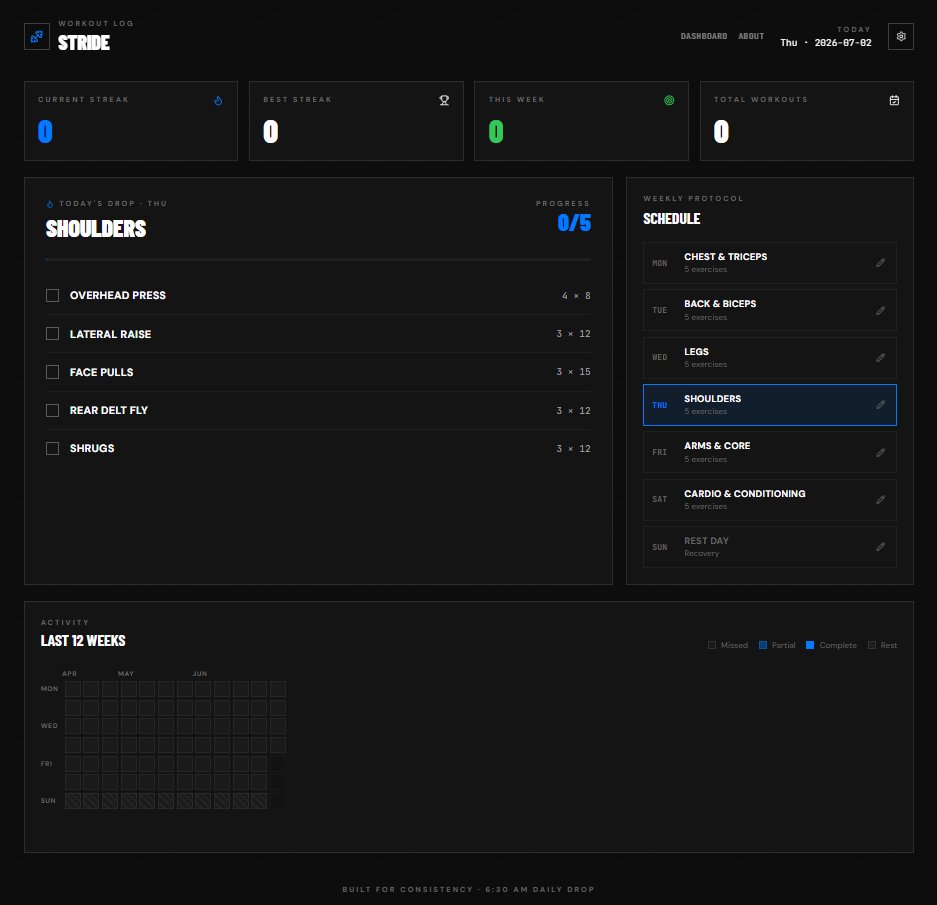
- Just shipped Stride, which delivers your day's exercises like a daily mission briefing. Mon–Sat workouts, Sunday rest, streak tracking that respects rest days, and a 12-week activity heatmap
Features
- Streak Algorithm: Walks backwards from today to calculate streaks. Protected rest days (Sundays) are skipped
- Automated Drops: An APScheduler cron job runs at 06:30 server time, triggering the @resend to deliver the day's payload as a styled HTML email
-Data Visualization: Incorporates a 12-week GitHub-style heatmap that renders complete, partial, missed, and rest cells
Roadmap
- Dynamic scheduler honoring reminder_time setting
- Per-exercise weight tracking + progress graphs
- Telegram bot integration for daily plan sharing
- Pre-built program templates (PPL, 5x5, Upper/Lower)
- Personal record (PR) tracker
- Rest timer
- Export progress to CSV/PDF
- Multi-user auth
Open Source & Developer Contributions
- The project is fully open source. Now inviting developers to contribute and optimize the build.
- To set up your local environment, review the container configurations, schema validations, and PR workflows outlined directly within README.md and CONTRIBUTING.md.
- Fork the repository, test your endpoints end-to-end via Swagger or curl, and ship tight code!
I was recently listening to Kevin O'Leary:
He discussed the signal-to-noise ratio of leaders like Steve Jobs and Elon Musk, which is beyond >90%
It clearly explains why the rest of the business world sounds so loud.
Most LLM issues are not model issues; they’re evaluation issues
I just published a post describing how one can approach when dealing with LLM evaluations.