Wondering why there were so many empty Patron seats @ The Rose concert when it showed sold out when I bought mine?😭 only saw 1 side Patron seat & 2–3 Cntr Left available, so I grabbed the side one. Were those empty seats scalped and left unused? 👀 @LSquaredProdPH#RosetopiaMNL
@ktyjhm Bought ticket last minute & was able to get patron 105 seat, last nearest seat available, i was standing the whole time enjoying d concert & didn't think of d people behind me coz i thought they're also standing but i was wrong, the security told me to sit down😭 kinda ruin d xp
For many tennis fans abroad, the reaction can seem puzzling.
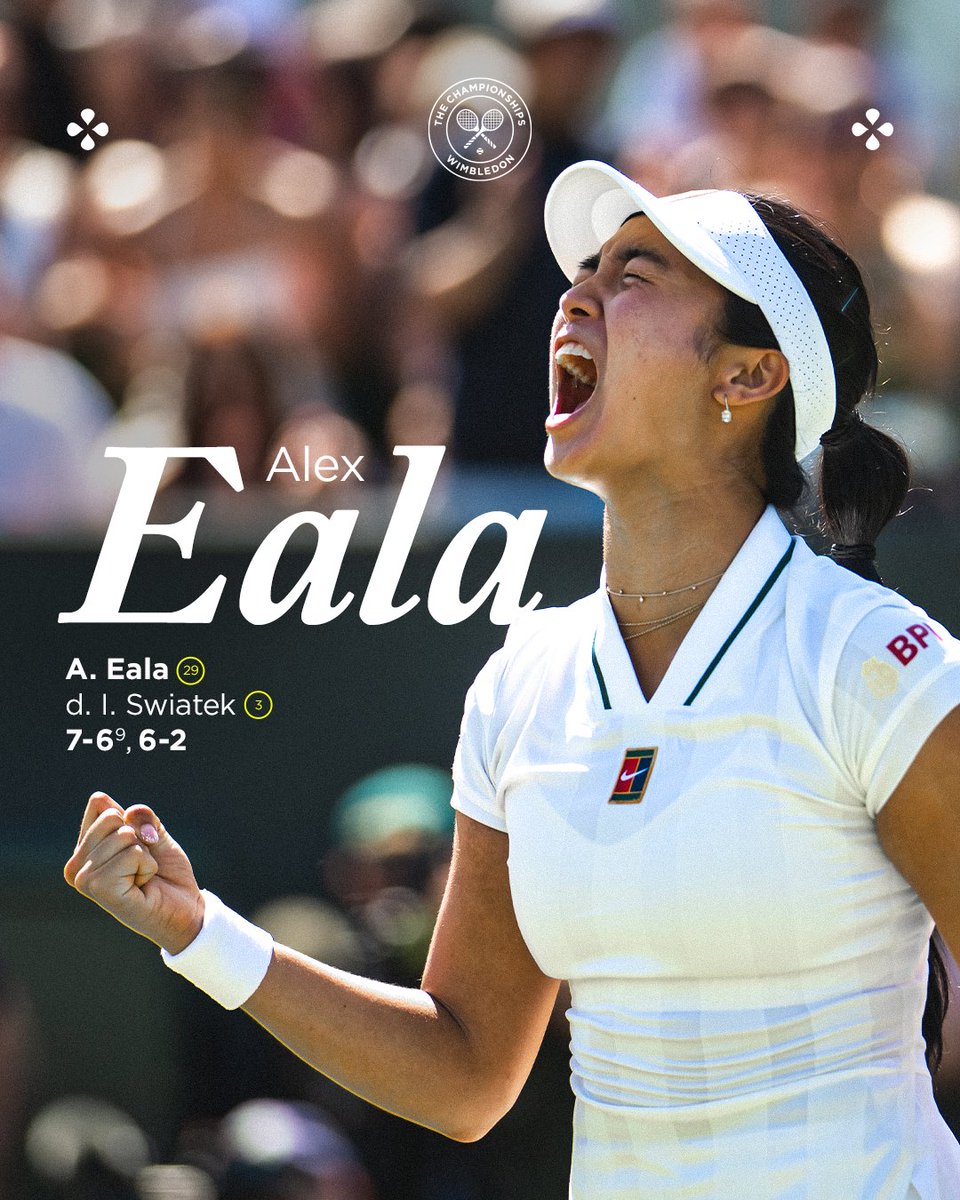
Alex Eala wins another match, and suddenly social media in the Philippines erupts. News alerts multiply. Celebrities post congratulations. Even people who rarely watch tennis begin sharing clips of her victories as if she had already won a Grand Slam.
To outsiders, the celebration may appear excessive.
But to understand why Filipinos react this way, you first have to understand what tennis has represented in the Philippines for generations.
Unlike basketball, where children can improvise a hoop from a rusted rim and play barefoot on neighborhood streets, or boxing, where many champions began in makeshift gyms, tennis has always carried a reputation as a sport reserved for those who could afford it.
A tennis racket costs far more than an ordinary basketball. Balls wear out quickly. Proper courts are scarce. Coaching is expensive. Competitive players must constantly travel, enter tournaments, and train year-round—costs that are simply beyond the reach of most Filipino families.
For decades, these barriers quietly shaped the country’s sporting culture.
It’s not that Filipinos disliked tennis.
Most simply never had the opportunity to play it.
Ironically, the Philippines once had a proud tennis tradition. Before the professional Open Era began in 1968, Filipino stars like Felicisimo Ampon and Raymundo Deyro competed with the world’s best, reaching deep rounds at Grand Slam tournaments. But as professional tennis became increasingly commercialized, the country struggled to provide the financial and institutional support needed for players to compete internationally.
Meanwhile, public tennis courts gradually disappeared. After World War II, basketball’s affordability and popularity led many community courts to be converted into basketball courts, while tennis increasingly retreated behind the gates of private clubs. Over time, it became known as a “rich person’s sport”—not because it was intended to exclude people, but because economics did. Tennis became one of the least accessible mainstream sports in the country.
That is why Alex Eala’s rise feels different.
She isn’t simply winning matches.
She is succeeding in a sport where Filipinos have long believed the odds were stacked against them.
Her journey required extraordinary sacrifices—from training at the Rafa Nadal Academy in Spain at a young age to competing on an expensive international circuit that very few Filipino athletes ever get the chance to experience.
Every milestone she achieves chips away at an old belief that world-class tennis is something only wealthier nations—or wealthier Filipinos—can produce.
When she wins on courts at tournaments like Wimbledon Championships or the US Open, many Filipinos are not just watching an athlete.
They are watching someone prove that a Filipino belongs there.
That emotional investment explains why every victory feels historic, even if it comes in the early rounds of a tournament.
For countries with a long tradition of producing elite tennis players, a second-round win may barely make headlines.
For the Philippines, where generations grew up believing the sport was beyond their reach, every breakthrough carries symbolic weight.
Alex Eala represents more than rankings or trophies.
She represents possibility.
Perhaps that is why every point she wins echoes far beyond the tennis court.
Because in the eyes of millions of Filipinos, she isn’t just defeating another opponent.
She’s defeating decades of barriers that once convinced an entire nation that this sport belonged to someone else.
#radarPHLifestyle #radarPH
“Maybe for someone like Iga who has won so many slams … or maybe someone like Serena or Venus this achievement may seem small, but for someone who grew up in the Philippines. … for her this is everything.”
Alexandra Eala after her win ❤️
What do yo mean unstable? Ibig sabihin may buhay pa? May pulso pa ba yung mga pasyente nung nakuha niyo sila? Humihinga ba? May dala bang automated external defibrillator (AED) ang rescue team? Kasi very important na well equipped ang LGU ng mga kagamitan para sa mga life and death situations. May nag-assess ba sa pulso nung mga pasyente pagkaahon sa dagat? Assessment muna sana pagka-ahon. Marami pwede gawing life-saving measures pagka-ahon, hindi kailangan itakbo kaagad sa hospital. Assess muna kung may pulso, assess muna kung may spontaneous breathing. Pwede mag chest compression at defibrillator kung walang pulso. Kung meron pulso at may spontaneous breathing pwede lapatan ng supplemental oxygen (high flow). Pag nagawa lahat ng resuscitative measures at wala parin, saka itakbo sa hospital. Kasi minsan, habang tinatakbo, wala namang nagagawang resuscitative measures. Sayang sa oras. Pag-ibayuhin ang training sa LGU. Marami pondo. Paglaanan natin ang training. Sayang ang buhay 🧐
BAWAL MATARANTA ANG RESCUE TEAM. MABILIS ANG KILOS NGUNIT KALKULADO. Naaaral naman yan via training🙏
@tanjiruu_@HaponesaHime You can't label someone toxic based on clips. Were you with them 24/7? Struggling emotionally isn't the same as being harmful. Boundaries matter, but so does compassion.