Imagine Hamas bombing Jewish children on Purim. Imagine Russia bombing Christian kids on Christmas. The world would rightly erupt.
But today, as Palestinian children dressed up for Eid, excited for sweets & gifts, Israeli bombs killed them & the world stays silent. #GazaGenocide
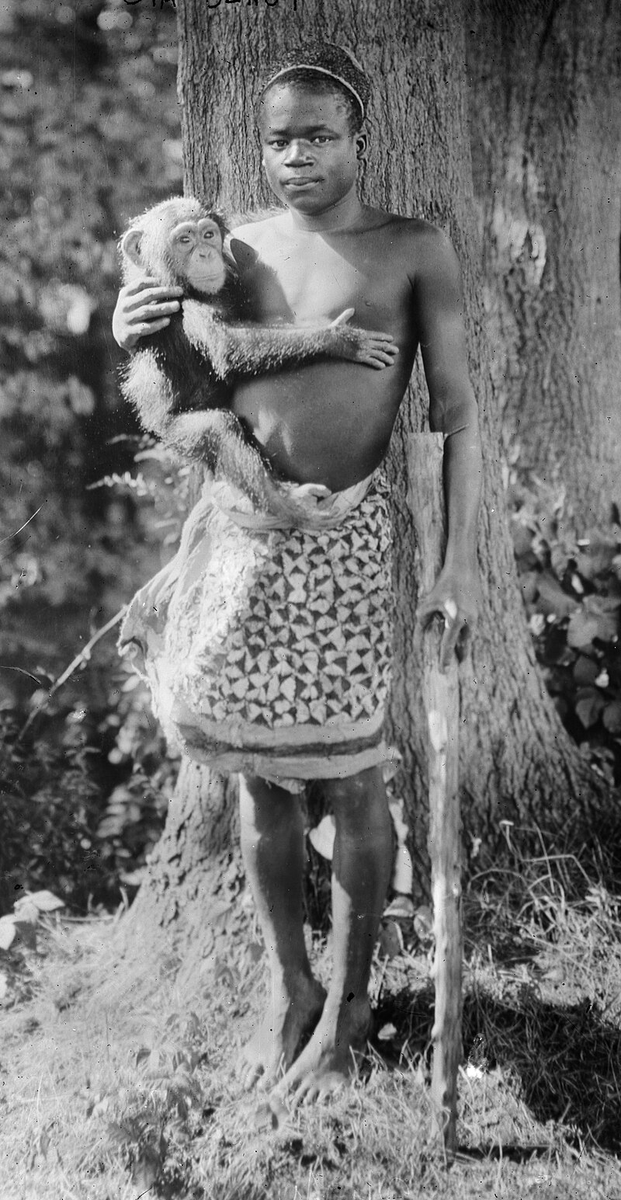
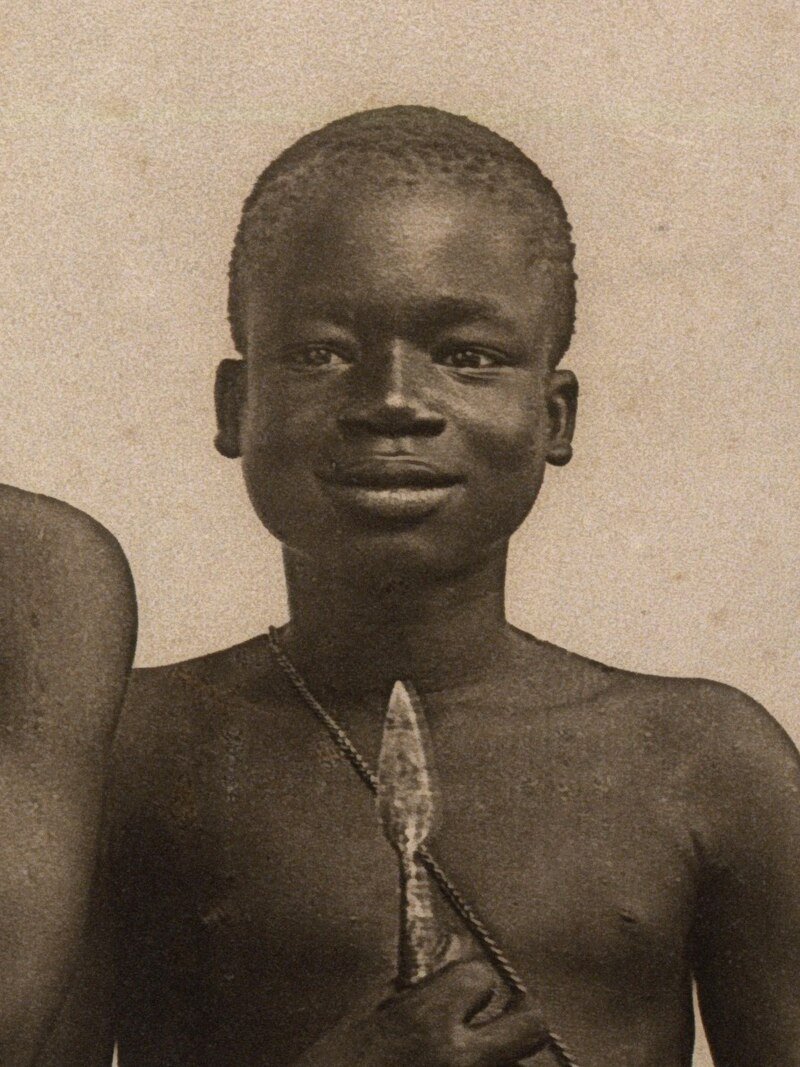
The story of his life:
Ota Benga was born around 1883 in the Ituri Forest of the Congo Free State, which is now the Democratic Republic of the Congo. He belonged to the Mbuti people, a group of Congo pygmies known for their nomadic lifestyle.
After returning from a hunting trip to find his village destroyed and his family killed, Benga was captured and sold into slavery. In 1904, he was discovered by American businessman and explorer Samuel Phillips Verner at a slave market. Verner brought Benga to the United States to be displayed at the Louisiana Purchase Exposition in St. Louis, Missouri, and later at the Bronx Zoo in New York City, where he was exhibited alongside an orangutan.
Following protests against his inhumane treatment, Benga was released from the zoo and placed in the care of James H. Gordon, who supervised the Howard Colored Orphan Asylum in Brooklyn. Benga was later moved to Lynchburg, Virginia, where he received tutoring in English and worked at a tobacco factory.
Benga longed to return to Africa, and efforts were made to facilitate his journey back. However, the outbreak of World War I in 1914 halted passenger ship travel, trapping him in the United States.
Struggling with depression and unable to return home, Ota Benga took his own life on March 20, 1916, in Lynchburg, Virginia. He was approximately 33 years old.
Benga’s story is a stark reminder of the dark aspects of colonialism and the exploitation of individuals for entertainment.
This amazing foal was born with a patch by his mane that looks like another horse. The pattern is such a work of art that the foal's owners have called him Da Vinci, or Vinny for short. He was born at the start of May at Fyling Hall riding school at Robin Hood's Bay, North Yorkshire.🌱
On November 24, 2009, John Edward Jones tragically lost his life in the Nutty Putty cave following a harrowing 28-hour ordeal.
While exploring with his brother Josh, Jones accidentally entered a constricted tunnel, mistaking it for another tight passage known as the "Birth Canal."
He became lodged upside-down in a 10 by 18 inches (25 by 46 cm) opening approximately 400 feet (120 m) from the cave's entrance.
Jones was trapped in a position resembling a hook, where any movement could cause severe injury due to the unnatural angles of his body.
A large team of rescuers responded, employing an advanced rope-and-pulley system in their efforts to save him. However, the operation faced a setback when a pulley malfunctioned during the extraction process.
Jones eventually suffered cardiac arrest, a consequence of the prolonged stress on his body from being in an inverted and compressed position.
The rescuers, realizing the high risk involved, decided against attempting to recover his body. An agreement was reached between the landowner and Jones's family to seal the cave permanently, turning it into a memorial for Jones.
To secure the area, explosives were used to collapse the ceiling near where Jones was located, and the entrance was filled with concrete, ensuring no further access.