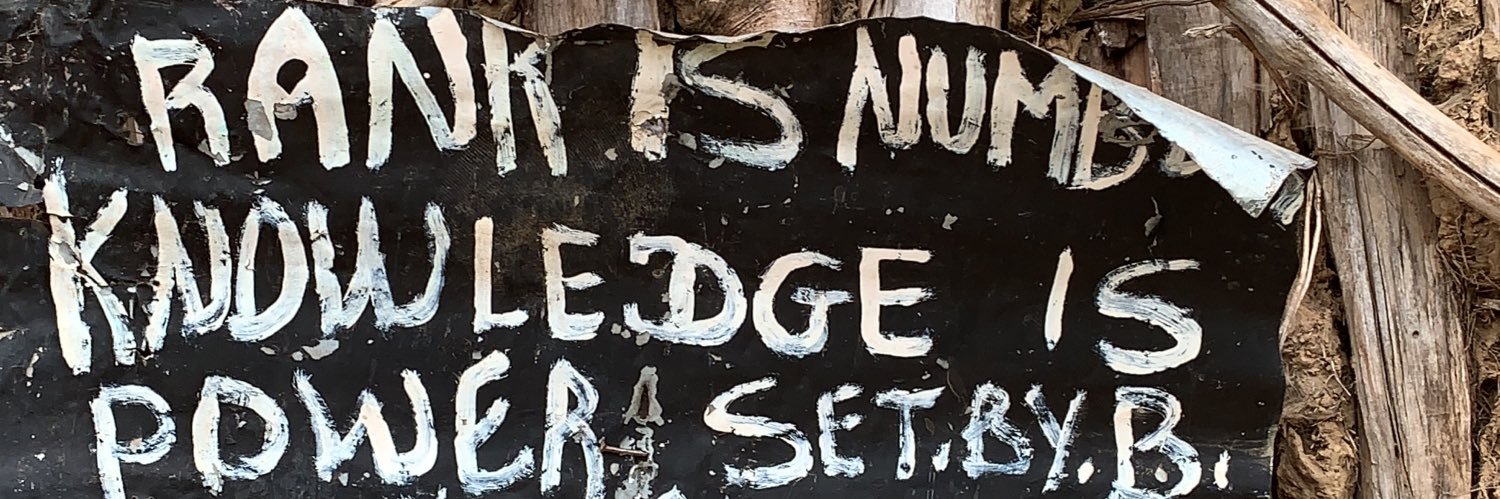
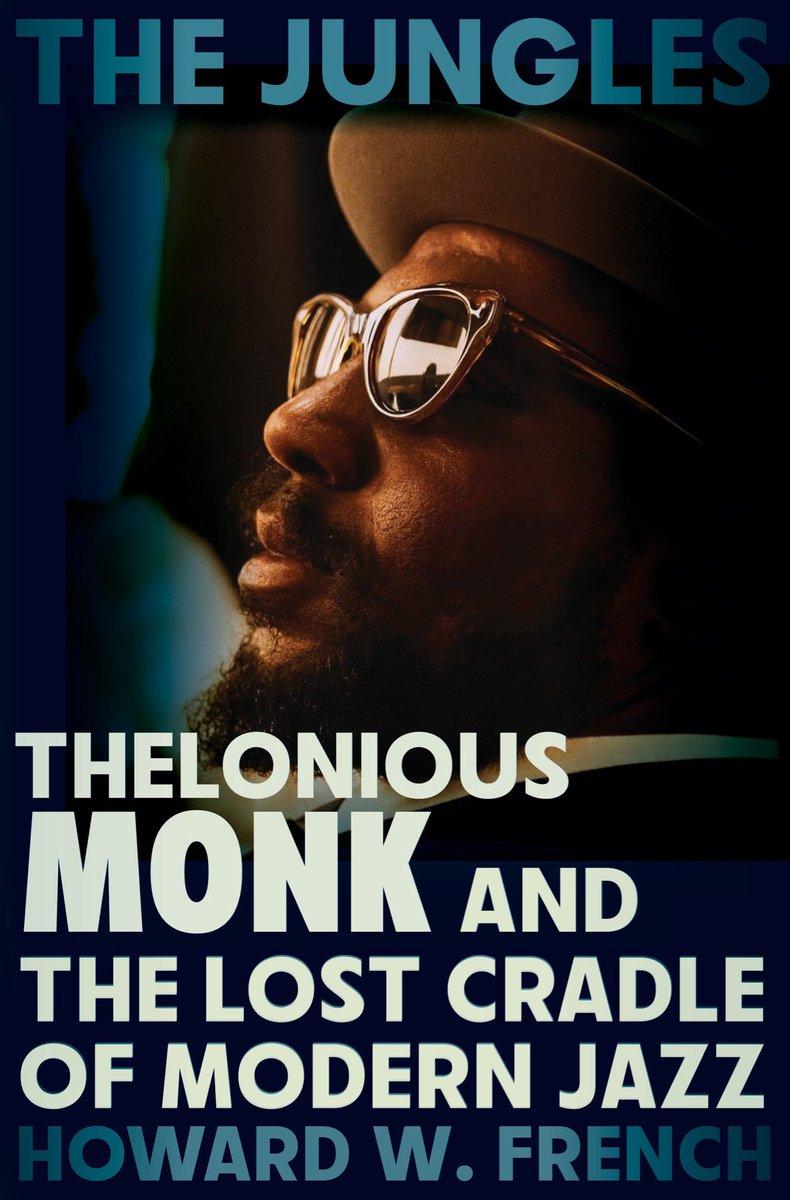
When you stop reading books, you start losing verbal dexterity, depth of thought and imagination. A closed book is a closed mind. Don't EVER stop reading.
I hate when people at work ask you what books you are reading for professional development. I am reading books to counteract the effects of being professionally developed. I am reading books that bring me back to being human.
Cassandra was a great voice: luminous, intense, intelligent and moving. She was proud of her Mississippi artistic heritage and she made them proud. She was hard working, curious and creative. With one intentioned note she could put grits and gravy on an unfriendly table, put lace curtains up in a juke joint, and stained glass widows in a storefront church.
Soul is in shorter supply as a result of her passing.
https://t.co/RZus6TIMk2
Last night’s Kennedy Center performance of Max Roach’s “We Insist! The Freedom Now Suite” was indescribable. Sonia Sanchez’s poetic Dobale bound Cassandra Wilson, Ravi Coltrane, Rashawn Carter and comrades’ virtuosity. Melvis Santa’s verbal libation was a lesson in Africana.
“I came to this country to pursue my education. I didn’t come here to commit a crime or hurt anyone. Now I’m walking through the streets of the United States with a GPS monitor on my leg, carrying a feeling of shame and humiliation that I never imagined I would experience.” -Pierre Damas Bel, a 20-year-old Haitian college student who died by suicide after walking into traffic on an Ohio highway
His family says he’d been struggling after losing Temporary Protected Status and being placed in an ankle monitor by ICE.
What a preventable tragedy that is a result of xenophobic propaganda and racism.
Suicide & Crisis Lifeline: https://t.co/kLXLNe34lm or call or text at 988
Story details: @thegrio
The Southern University School of Nursing in Baton Rouge, Louisiana was named the #1 Best Nursing School in the United States by https://t.co/YIfqR4f5WS for two consecutive years, 2025 and 2026‼️
94% of the students in the program are Black Americans‼️
The Chronicle of Higher Education @chronicle recently published an article titled, "The Research Cuts No One Is Talking About."
The funding reductions affecting minority-serving institutions and HBCUs are real, consequential, and worthy of national attention. But the article also raises a larger issue: the editorial decisions that continue to shape how HBCUs are understood. Too often, HBCUs command national attention only when the story can be told through the language of controversy or uncertainty. Our institutions are more frequently asked to explain what has been taken from us than invited to demonstrate what we have built.
The stories media choose to amplify shape public understanding. When adversity becomes the primary lens through which HBCUs are presented, audiences come to expect resilience but rarely anticipate leadership. They recognize struggle, but too often overlook strategy. They acknowledge difficulty while missing the collaboration, innovation, and institutional excellence that have defined HBCUs for generations.
In April 2026, 15 leading HBCU research universities launched the Association of HBCU Research Institutions (AHRI)—an unprecedented collaboration established to strengthen research capacity, expand strategic partnerships, and advance America's research enterprise. Although AHRI is referenced in the article, The Chronicle made an editorial decision not to cover its launch. That decision reflects a broader pattern in which HBCU ambition, innovation, and institutional leadership are too often overlooked while HBCU adversity is elevated as newsworthy.
I am proud to serve as President of the fourth-largest HBCU in the nation as Prairie View A&M University @PVAMU celebrates 150 years of academic excellence, research innovation, and student success. Every day, our faculty conduct research that addresses society's most pressing needs. Our students are preparing to lead across every sector of our economy. Our partnerships extend the reach of innovation beyond our campus and into communities, industries, and government. Prairie View A&M University is not unique. Across the country, HBCUs are advancing consequential research, forging transformative partnerships, expanding opportunity, and producing graduates whose impact reaches every sector of American society despite shifts in funding and priorities.
HBCU leaders have never hesitated to address the issues affecting our institutions. We simply believe those conversations should occur on terms that fully reflect the breadth of our mission, the significance of our contributions, and the complexity of the moment. We will not allow adversity alone to become the defining narrative of HBCU existence. Perhaps the more important question is not whether HBCU leaders are willing to speak, but whether there is equal interest in hearing the full story once we do.
The Chronicle has every right to report on matters affecting HBCUs. It also has a responsibility to present a complete picture of institutions that continue to shape this nation's intellectual, scientific, economic, and civic future.
When one of higher education's most influential publications consistently gives greater visibility to HBCU adversity than HBCU achievement, it does more than shape a news cycle. It shapes perception.
The Chronicle has the opportunity—and, I would argue, the responsibility—to tell the fuller story. Until it does, its coverage of HBCUs will remain incomplete—not because our institutions lack stories worthy of national attention, but because too many of those stories never make it onto its pages.
I look forward to a Chronicle of Higher Education committed not only to reporting the challenges confronting HBCUs, but also to telling the fuller story of institutions whose research, innovation, and leadership continue to shape higher education and strengthen our nation.
#HBCUs
In 1960:
— Black poverty rate was 55 percent (overall poverty rate was 22 percent).
— Black unemployment rate was 12.4 percent (twice as high as white people)
— Only about 4 percent of Black people had a college degree.
I don’t have to explain the indignities and the violence that Black Americans suffered under Jim Crow.
He is saying that affirmative action was worse than that.
Clown is too good of a word for him.
#HBCU: The fact that people are on Twitter debating and fighting over which SEC school is the most racist or has the most racist history makes me so appreciative of HBCUs 🔥
#JSUGrad26: Class of 2026, this is more than a ceremony—it’s your moment. 🎓
To our new master’s, specialist, and doctoral graduates: You’ve put in the work, and now the world gets to see the result.
It's time to lead, innovate and set #THEEStandard™ in your careers!