Poxa @FundacaoCasper libera mais inscrições pra São Silvestre! A centésima tinha que receber mais gente.. o amadorismo da ticket sports não pode manchar esse evento
@TNTSportsBR Nesse mesmo jogo ele ainda pegou um pênalti enquanto tava 2x0 pro Cruzeiro e depois fez dois gols, empatando a partida em 2x2.
Esse jogo foi logo após perdermos a final da libertadores pro Inter. Após isso o SPFC arrancou para ser campeão brasileiro no final do ano. Ceni é lenda
🔥 Most applications need to export and import large amounts of data.
It is very easy to:
- Waste lots of memory
- Perform hundreds or thousands of unnecessary DB queries
You can avoid them by learning some pretty simple techniques.
🧵 Keep Reading
CSS Tip! 🤙
You can use mask-composite and some JavaScript to create this pointer proximity following glow border ✨
.glow {
mask-composite: intersect;
mask-clip: padding-box, border-box;
mask:
linear-gradient(#0000, #0000),
conic-gradient(#0000 0deg, #fff, #0000 45deg);
}
The trick is to mask a background-image with a combination of mask layers. mask-composite: intersect; means the mask used will be the intersection of the layers 🔥 use source-in, xor; in browsers that don't support intersect;
In this demo, you can use pseudoelements and rely on scoped custom properties to do a lot of the heavy lifting for you 🙌
Once you've masked the background, you need to update the starting angle of the conic-gradient on pointermove 👆
You can work that out by getting the center point of each card and then calculating the angle between that and the pointer with Math.atan2 🤓
let ANGLE = Math.atan2(
event?.y - CARD_CENTER[1],
event?.x - CARD_CENTER[0]
) * 180 / Math.PI
ANGLE = ANGLE < 0 ? ANGLE + 360 : ANGLE;
CARD.style.setProperty('--start', ANGLE + 90)
You plug that into your conic-gradient mask as a custom property accounting for --spread ⚡️
conic-gradient(from calc((var(--angle) - (var(--spread) * 0.5)) * 1deg), #000 0deg, #fff, #0000 calc(var(--spread) * 1deg));
To get the blur, you apply a blur to the glow container on each card 🤙
.glows {
filter: blur(calc(var(--blur) * 1px);
}
That's it! Layers of masks that are clipped and composited before being blurred 😎 The added trick is to fade each one in when the pointer is in the defined proximity of the card. For example, don't show unless within 100px of a card. You can see that in the video. Check out the JavaScript code for that 🫶
Couldn't resist making this one 😁
@CodePen link below! 👇
Don't go to a System interview if you don't know these concepts.
Throughput & Latency
Throughput is the amount of data a system processes within a given period.
It's measured in transactions per second (TPS), requests per second (RPS), or data units per second.
High Throughput means the system can handle more requests in less time.
Things that will help you to increase Throughput:
- Horizontal Scaling (Adding More Machines)
- Load Balancing
- Asynchronous Processing or message queues
Latency is the time taken to process a single operation or request.
It's usually measured in milliseconds or microseconds.
Low Latency is essential in systems with critical response time, like high-frequency trading systems.
Things that will help you reduce Latency:
- Optimizing Code
- Using Faster Storage
- Database Performance Tuning
- Caching
Balancing these two often involves trade-offs.
Asynchronous processing can increase Throughput but might add to Latency for individual tasks.
Extensive caching can reduce Latency but requires more memory resources if not managed.
There's often a trade-off between maximizing Throughput and minimizing Latency.
����𝗲𝗮𝗿𝗻 𝗳𝘂𝗻𝗱𝗮𝗺𝗲𝗻𝘁𝗮𝗹𝘀 𝗻𝗼𝘁 𝗳𝗿𝗮𝗺𝗲𝘄𝗼𝗿𝗸𝘀
We, as developers, like to learn new stuff and try it ASAP. That stuff is mostly some new frameworks and tools (such as React, Angular, Spring, Web Forms, ...). Yet, those frameworks usually have 𝗮 𝘀𝗵𝗼𝗿𝘁 𝗹𝗶𝗳𝗲, 𝟮 𝘁𝗼 𝟱 𝘆𝗲𝗮𝗿𝘀 𝗮𝘁 𝘁𝗵𝗲𝗶𝗿 𝗯𝗲𝘀𝘁. Instead of learning frameworks, which are needed to some extent, we should focus more on learning fundamentals.
𝗟𝗲𝗮𝗿𝗻𝗶𝗻𝗴 𝘁𝗵𝗲 𝗳𝘂𝗻𝗱𝗮𝗺𝗲𝗻𝘁𝗮𝗹𝘀 𝗼𝗳 𝘀𝗼𝗳𝘁𝘄𝗮𝗿𝗲 𝗱𝗲𝘃𝗲𝗹𝗼𝗽𝗺𝗲𝗻𝘁 allows a developer to understand the underlying principles and concepts common across different frameworks and programming languages. This understanding allows for more flexibility and adaptability when working with new technologies or when faced with problems that may not be easily solved by a specific framework.
Additionally, a strong understanding of the fundamentals can lead to 𝗺𝗼𝗿𝗲 𝗲𝗳𝗳𝗶𝗰𝗶𝗲𝗻𝘁 𝗮𝗻𝗱 𝗲𝗳𝗳𝗲𝗰𝘁𝗶𝘃𝗲 𝘂𝘀𝗲 𝗼𝗳 𝗳𝗿𝗮𝗺𝗲𝘄𝗼𝗿𝗸𝘀, as the developer can better understand how to customize and extend them to meet specific needs.
Take an example of a web application that allows users to upload and share images, e.g., Ruby on Rails, and its functionalities for image processing. If the number of users increases, we could struggle with performance issues if we know only the framework well. Yet, if we understand the fundamentals of web development, we could try to identify bottlenecks and try different solutions, such as using CDN-s, optimizing image sizes, using different storage solutions, etc.
So, which fundamentals to learn:
🔹 𝗔𝗹𝗴𝗼𝗿𝗶𝘁𝗵𝗺𝘀
🔹 𝗗𝗮𝘁𝗮 𝘀𝗼𝘂𝗿𝗰𝗲𝘀
🔹 𝗖𝗹𝗲𝗮𝗻 𝗰𝗼𝗱𝗲
🔹 𝗗𝗲𝘀𝗶𝗴𝗻 𝗽𝗮𝘁𝘁𝗲𝗿𝗻𝘀
🔹 𝗗𝗶𝘀𝘁𝗿𝗶𝗯𝘂𝘁𝗲𝗱 𝗖𝗼𝗺𝗽𝘂𝘁𝗶𝗻𝗴 𝗣𝗮𝘁𝘁𝗲𝗿𝗻𝘀
🔹 𝗧𝗲𝘀𝘁𝗶𝗻𝗴
🔹 𝗦𝘆𝘀𝘁𝗲𝗺 𝗗𝗲𝘀𝗶𝗴𝗻
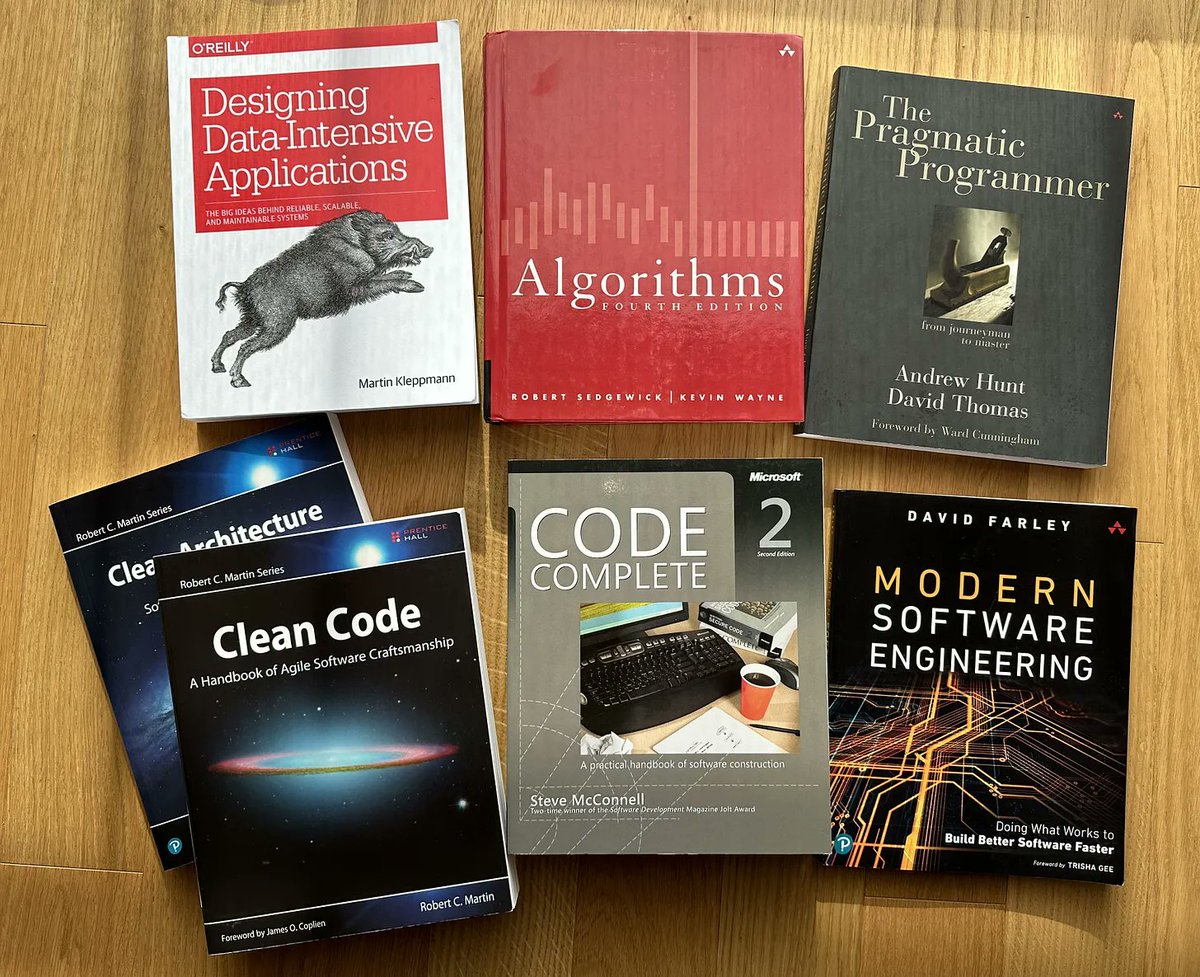
Try to learn those fundamentals, buy and read these books:
🔸 𝗖𝗹𝗲��𝗻 𝗖𝗼𝗱𝗲
🔸 𝗧𝗵𝗲 𝗣𝗿𝗮𝗴𝗺𝗮𝘁𝗶𝗰 𝗣𝗿𝗼𝗴𝗿𝗮𝗺𝗺𝗲𝗿
🔸 𝗖𝗼𝗱𝗲 𝗖𝗼𝗺𝗽𝗹𝗲𝘁𝗲
🔸 𝗗𝗲𝘀𝗶𝗴𝗻 𝗣𝗮𝘁𝘁𝗲𝗿𝗻𝘀: 𝗘𝗹𝗲𝗺𝗲𝗻𝘁𝘀 𝗼𝗳 𝗥𝗲𝘂𝘀𝗮𝗯𝗹𝗲 𝗢𝗯𝗷𝗲𝗰𝘁-𝗢𝗿𝗶𝗲𝗻𝘁𝗲𝗱 𝗦𝗼𝗳𝘁𝘄𝗮𝗿𝗲
🔸 𝗜𝗻𝘁𝗿𝗼𝗱𝘂𝗰𝘁𝗶𝗼𝗻 𝘁𝗼 𝗔𝗹𝗴𝗼𝗿𝗶𝘁𝗵𝗺𝘀
#softwareengineering
6 API Architectural designs You Must Know
1. REST 🌐
Representational State Transfer - REST is like a classic library where you request specific books and receive them as they are. It's simple and widely used for web APIs, like ordering a la carte from a menu 🍽️.
2. GraphQL 🚀
GraphQL is like a customizable buffet 🍴 where you ask for exactly what you want and get a tailored plate. It allows clients to request only the data they need, reducing over-fetching.
3. SOAP 🧼
SOAP (Simple Object Access Protocol) is like sending a letter 💌 with detailed instructions, complete with a table of contents. It's more structured but can be heavier than REST or GraphQL.
4. gRPC 🚄:
gRPC is like a high-speed train 🚄 for communication between services. It uses Protocol Buffers for efficient data exchange and supports streaming and bidirectional communication.
5. WebSockets 🌐💬
WebSockets are like real-time phone calls ☎️ for the web. They enable two-way communication, perfect for chat apps and live updates.
6. MQTT 📡
MQTT (Message Queuing Telemetry Transport) is like a radio broadcast 📻, designed for low-bandwidth, high-latency, or unreliable networks. Ideal for IoT devices and sensor data.
▷ 👍🏿 Subscribe to our newsletter - https://t.co/hxARDoA98l
#systemdesign #coding #interviewtips
The perfect photo - after 3 years of attempts, photographer Leonardo Sens finally succeeded in capturing an awe-inspiring image of Christ The Redeemer seemingly 'holding' the moon with both hands.
Constructed over a nine-year period between 1922 and 1931, the statue stands an impressive 30 meters (98 feet) tall, not accounting for its 8-meter (26-foot) pedestal. With arms outstretched to a wingspan of 92 feet, this breathtaking monument is crafted from a combination of reinforced concrete and soapstone, serving as a symbol of both religious devotion and artistic brilliance.
I overhauled the @supernotesapp website navigation this week 🔥
Often, nav menus are just directories – boring and static. This new take communicates our values and shows live sneak peeks of each section, pulling from our pages & RSS feeds #UI #UX#Update