💻 Welcome to Amigoscode 💻
In 2010, Nelson started uploading YouTube videos while he was studying at university to help other students struggling with their coding experience. 10 years later, Nelson has amassed over 500k+ subscribers, with over 28+ million views. Nelson is one of the most popular and influential entities globally and is at the forefront of the coding community. With this being said, we are so excited to finally present Nelson's latest merchandise collection for all his amazing community.
To this day, thousands of people have benefitted from the teaching method and content provided by Nelson, which has landed them in top-tier positions in companies such as Google, Amazon, Spotify and much more!
We hope to see you follow this journey and become top-tier coders through the help of Nelson's courses!
You can absolutely do this in a week.
Here's the plan I'd follow:
Day 1: Spring Initializr (Web, JPA, Postgres/H2, Validation), and get a 'hello' endpoint running.
Day 2–3: one entity, with Controller → Service → Repository and CRUD.
Day 4: validation + a global exception handler
Day 5: a second entity with a relationship.
Day 6: a few tests (MockMvc). Day 7: README + clean-up.
Don't touch security or microservices unless the brief needs them. The official Spring guides ("Building a RESTful Web Service", "Accessing Data with JPA") are short and match this flow well. Drop your questions here if you get stuck on anything!
Really sorry, mate. 60 applications with no interviews is brutal, and it says more about the market than about you. A few things that usually move the needle: 1) Fix the CV first. Zero interviews usually means it isn't passing the first filter. Keep it to one page, lead every bullet with impact and numbers ("cut API latency 40%", not "worked on APIs"), mirror the keywords from each job description, and put your strongest project and tech stack near the top. 2) Pick one stack and go deep. If it's backend, a polished Spring Boot or Node project with tests, Docker and a live deployment does a lot for 2 years of experience. 3) Mix in direct outreach: message engineers at companies you like and ask for 10 minutes, not a job. Referrals get far more replies than cold applications. 4) Track every application in a simple spreadsheet so you can see which kinds of roles actually respond, and double down there. You've got this.
Hey! Final year + Java/Spring is a great combo, honestly one of the most hireable stacks right now. My take: 1) Yes, learn LLD basics (SOLID, a few patterns, designing classes for something like a parking lot or a URL shortener). It comes up in interviews and makes your Spring code cleaner. 2) Build ONE serious project: a Spring Boot REST API with Postgres, Spring Security + JWT, tests, Docker, deployed somewhere. Put a proper README on it. 3) Off-campus: apply directly on company careers pages, message engineers (not just recruiters) with your project link, and keep applying every week. 4) Brush up on DSA basics and core Java questions (collections, equals/hashCode, exceptions, streams), because they come up in almost every fresher interview. Happy to look at your project when it's up 🙌
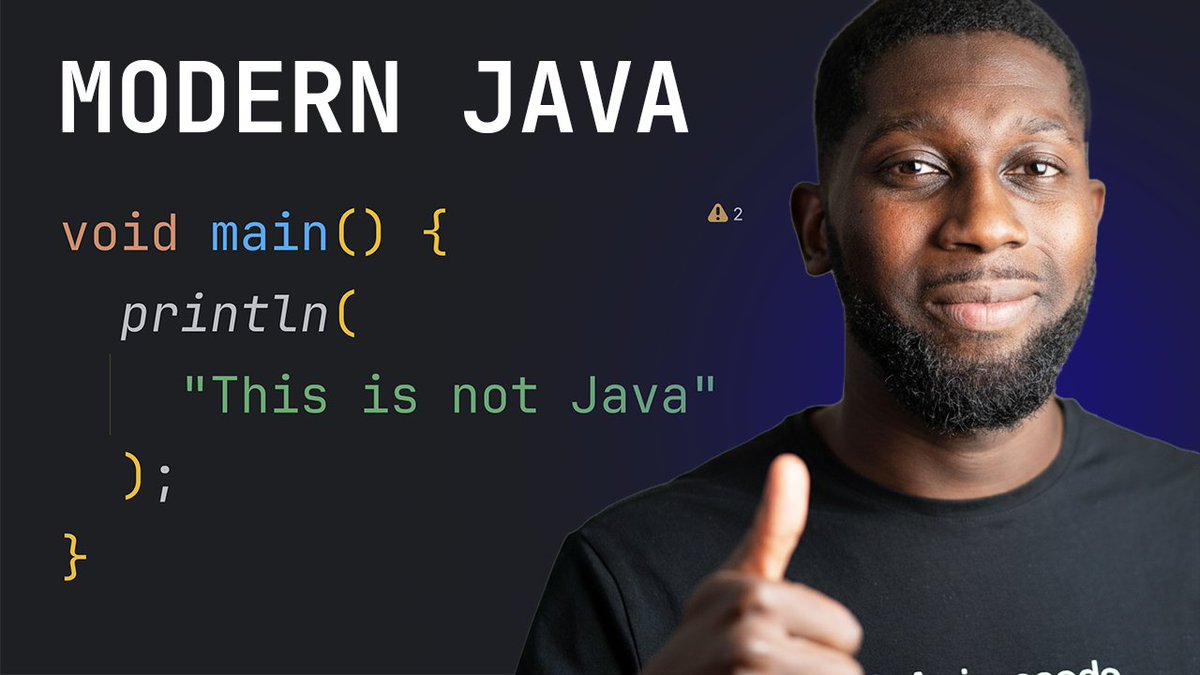
Java Crash Course - https://t.co/nLWcgCTVmg
In this quick crash course, I’ll teach you the Java programming language from scratch. Whether you’re a beginner or just curious about how Java works, this video covers everything you need to know to get started — fast.
👍🏿 Join our free community to learn and grow - https://t.co/TLeEMeabLb
#java #coding #interviewtips
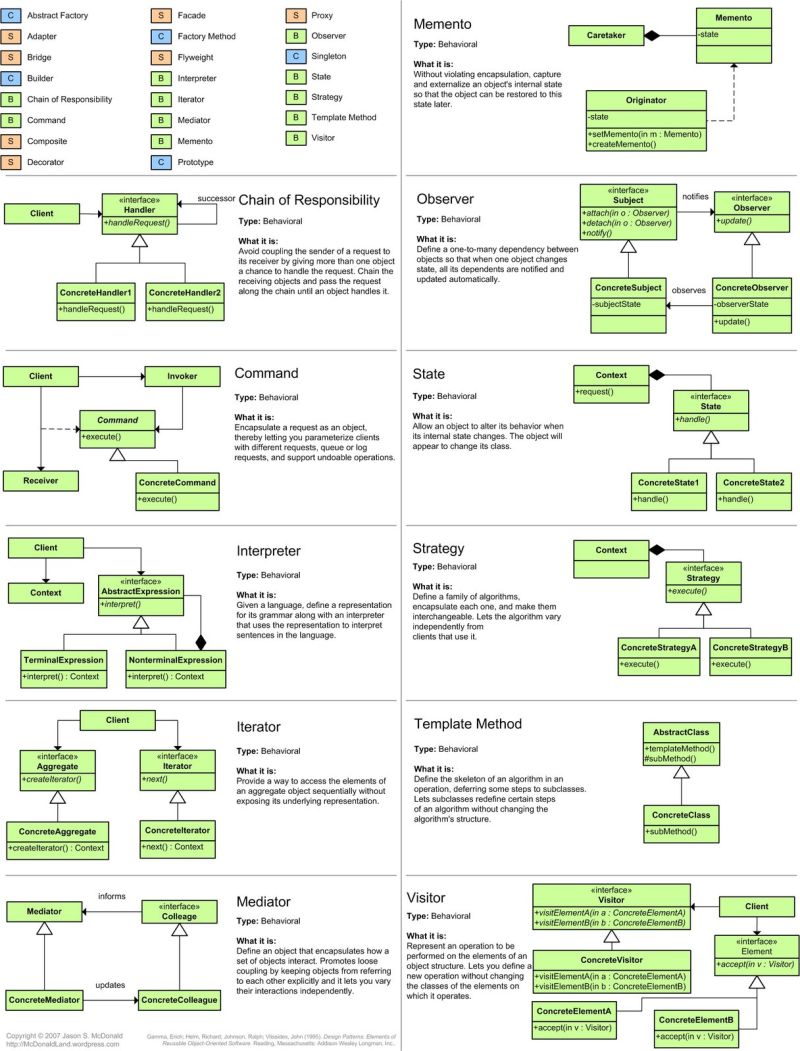
12 Essential Behavioral Design Patterns Every Software Engineer Should Know
1 - Memento: Capture and restore an object’s internal state without violating encapsulation.
2 - Chain of Responsibility: Pass requests along a chain of handlers until one handles them.
3 - Observer: Define a dependency so when one object changes state, dependents are notified automatically.
4 - Command: Encapsulate a request as an object to support parameterization, queuing, and undo operations.
5 - State: Allow an object to change its behavior when its internal state changes.
6 - Interpreter: Define a grammar and interpret sentences in that language.
7 - Strategy: Define a family of algorithms, encapsulate them, and make them interchangeable.
8 - Iterator: Access elements of a collection sequentially without exposing its internal structure.
9 - Template Method: Define the skeleton of an algorithm, letting subclasses fill in the steps.
10 - Mediator: Encapsulate how a set of objects interact to promote loose coupling.
11 - Visitor: Represent operations to perform on elements of an object structure without changing their classes.
Which one do you most use?
#systemdesign #coding #interviewtips
🚀 New Video: How to Build APIs Using Spring AI, ChatGPT, and OpenAI - https://t.co/0HXDYdzUdQ
AI is reshaping the future of software — and now you can bring that power into your Java applications. In this video, I walk you through how to integrate ChatGPT with Spring Boot using Spring AI and OpenAI's API.
🔧 You’ll learn:
- How Spring AI simplifies working with LLMs
- Setting up your Spring Boot backend
- Connecting to ChatGPT via OpenAI’s API
- Building intelligent, production-ready APIs
Whether you're a Java dev exploring generative AI or building smarter backend systems — this tutorial is for you.
📺 Watch here: https://t.co/0HXDYdzUdQ
Let me know what you think — and if you'd like to see more AI + Java content!
#springai #springboot #chatgpt #openai #java #backenddevelopment #generativeai #llm #api #javadeveloper
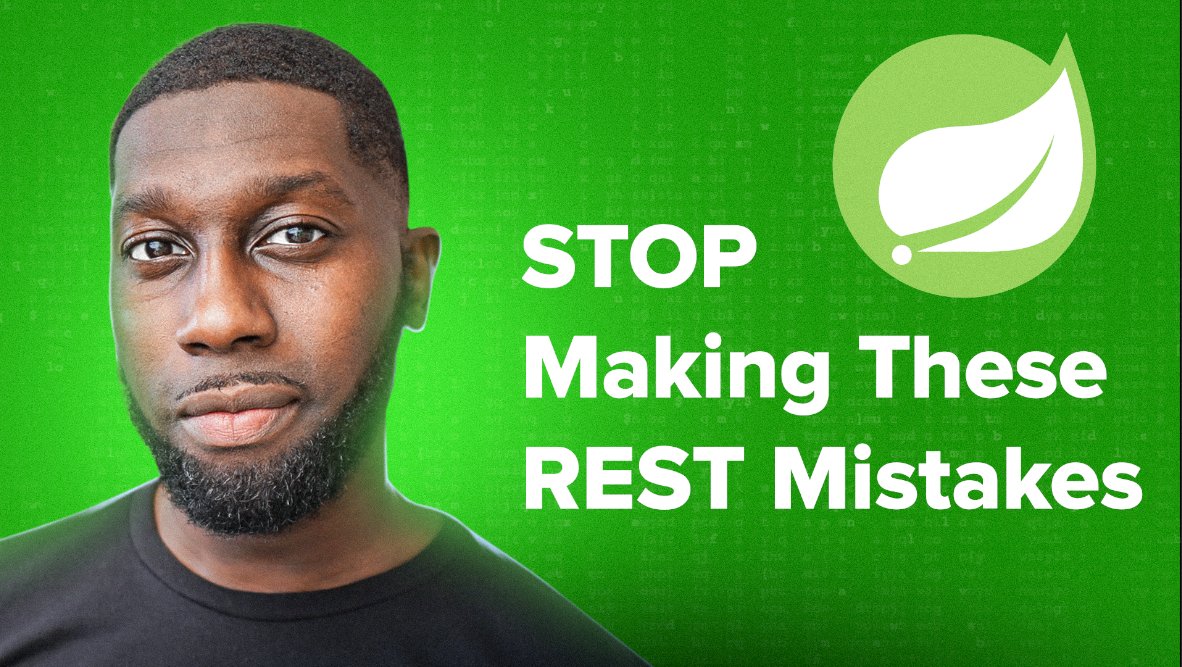
Most Spring Boot developers make these REST API mistakes... Are you one of them? 📺 Watch the full video here: https://t.co/pa3SaNXukI
After reviewing dozens of Java backend projects, I noticed the same issues again and again:
❌ Inconsistent resource naming
❌ Wrong HTTP status codes
❌ Exposing entities instead of using DTOs
❌ Missing pagination, validation, and security
❌ No API versioning or documentation
So I put together a video showing the Top 10 Spring Boot REST API Best Practices every developer should follow in 2025.
✅ Clean architecture
✅ Proper status codes
✅ Global exception handling
✅ Secure and scalable APIs
🎯 Whether you're a beginner or shipping production apps, this will level up your backend game.
#java #springboot #coding #interviewtips
Hey Amigos,
🚀 Want to take your coding skills to the next level?
Join Amigoscode in collaboration with STEM Muslims Imperial College London at Imperial College London for an exciting workshop, designed to take you from idea to production.
What’s in Store?
🔹 Build & Deploy an App from Scratch – Learn the step-by-step process of software development, from setting up an API to deploying a fully functional app.
🔹 Live Coding Demo & Interactive Exercises – Follow along as we walk through coding a real project, with opportunities to code live during the session.
🔹 DevOps & Cloud Technologies – Gain insights into modern software deployment techniques.
🔹 Exclusive Giveaways – Sneakpeek into some amazing resources available.
🎯 Who Should Attend?
University students looking to build practical skills in software engineering.
Anyone wanting a project to showcase on their resume or in technical interviews.
Anyone looking to build out their idea from 0 to 100 🦾
📢 Limited Spots Available – Sign Up Now https://t.co/4kqtjnSuzE
📍Location
Sir Alexander Fleming Building. Imperial College Rd, South Kensington, London SW7 2AZ, UK
See you there iA! 💻🔥
#systemdesign #coding #interviewtips
This is how we designed and implemented the video player for Amigoscode 2.0
Lock in your access now! Pre-order today and level up your dev skills for life.
Any toughts?
👉 Pre-order NOW - https://t.co/XNkZKcAKh4
#systemdesign#coding#interviewtips
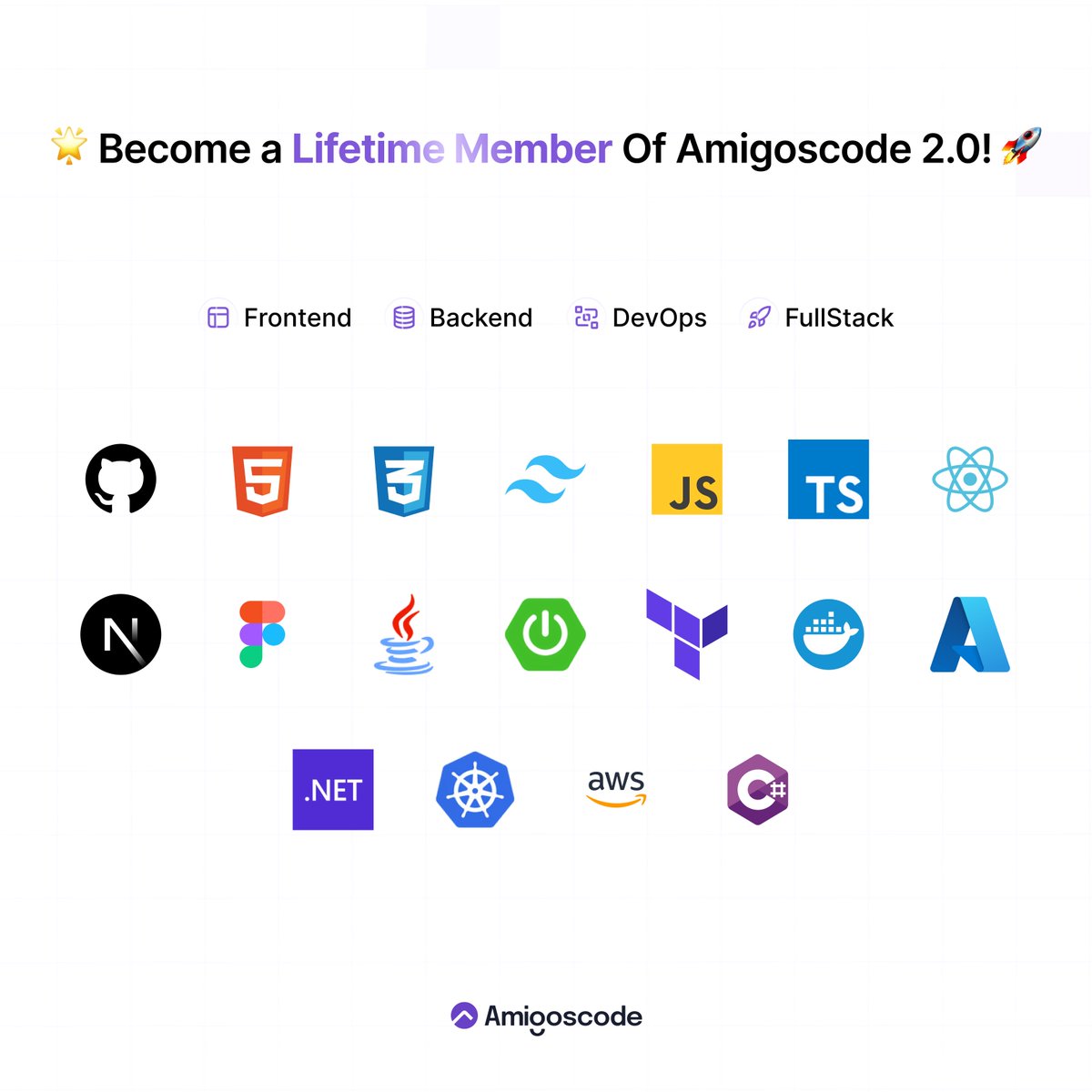
We’re excited to introduce brand new coding courses on Amigoscode 2.0! From beginner to advanced, dive into our comprehensive developer tracks and start building your skills today.
✅ Web Development
✅ Backend Development
✅ DevOps
✅ Full-Stack
Lock in your access now! Pre-order today and level up your dev skills for life.
👉 Pre-order NOW - https://t.co/SalRPYGWvB
#systemdesign #coding #interviewtips
🚀 A Year in the Making: Developer Learning Platform – Built by Developers, for Developers! 💻
It's been an incredible journey building a platform designed to empower developers, and I couldn’t have done it without the amazing support from my team and community. A huge shoutout to:
🙌 @OuhraOmar
🙌 @Amine0mari
🙌 @imadoualla
As we prepare for a major shift to a monthly subscription model, this is your LAST CHANCE to get lifetime access at an unbeatable price! 🕒
🎯 What’s Coming Next:
🔥 Brand New Courses
🔥 Expert Instructors
🔥 Enhanced Learning Experience
Lock in your access now! Pre-order today and level up your dev skills for life.
👉 Pre-order NOW - https://t.co/SalRPYHul9
#systemdesign #coding #interviewtips
SQL Joins YOU MUST KNOW
1. Inner join: Retrieves only matching records from both tables.
2. Left join: Retrieves all records from the left table and matches from the right table.
3. Left join with NULL check: Retrieves records from the left table with no match in the right table.
4. Right join: Retrieves all records from the right table and matches from the left table.
5. Right join with NULL check: Retrieves records from the right table with no match in the left table.
6. Full outer join: Retrieves all records where there is a match in either table.
7. Full outer join with NULL check: Retrieves records with no match in either table.
👍🏿 Subscribe to our newsletter - https://t.co/c8wbDRZiXN
#systemdesign #coding #interviewtips
🚀 Understanding SQL Query Execution Order 🚀
In SQL, the order in which different clauses are processed can significantly impact the results of your queries.
Here’s a breakdown of the typical execution order:
1. Source: This is where the data originates. It includes the tables involved in the query.
2. Merged: The `FROM` and `JOIN` clauses are processed here, merging data from different sources.
3. Filtered: The `WHERE` clause is applied to filter out unwanted rows, ensuring only relevant data moves forward.
4. Grouped: When we need aggregates, the `GROUP BY` clause groups the filtered data.
5. Having: The `HAVING` clause is used to filter groups based on aggregate conditions.
6. Selected: The `SELECT` statement determines which columns to return in the final result.
7. Ordered: The `ORDER BY` clause sorts the final result set according to specified columns.
8. Limited: Finally, the `LIMIT` and `OFFSET` clauses are applied to control the number of rows returned.
Understanding this execution order helps in writing efficient queries and debugging issues.
Keep this in mind next time you're working with SQL💡
👍🏿 Subscribe to our newsletter - https://t.co/c8wbDRZiXN
#systemdesign #coding #interviewtips