Bollywood bias!
A study by IIM Prof. Dheeraj Sharma analyzing films from 1960 to 2010 reveals a fixed code of demographic stereotypes:
> 58% of corrupt politicians were given Brahmin surnames.
> 62% of corrupt businessmen were associated with Vaishya surnames.
> 84% of Muslim characters were portrayed as strongly honest and religious.
> 78% of Christian women were hyper-sexualized and portrayed as promiscuous.
> 74% of Sikh characters were reduced to mere comic relief.
> 90% of films featuring Pakistan projected them as welcoming and courteous.
Cinema is not just reflecting reality, but it is actively shaping our biases.
What are your thoughts on this?
@anushiyaxx There is a saying in kannada, "Rameshwaram ge hodru shanishwaran kaata thapplilla". Meanings shanishwaran follows u even if u go to rameshwaram 😂 blast movie promotion yet people are glued to her previous blockbuster album.
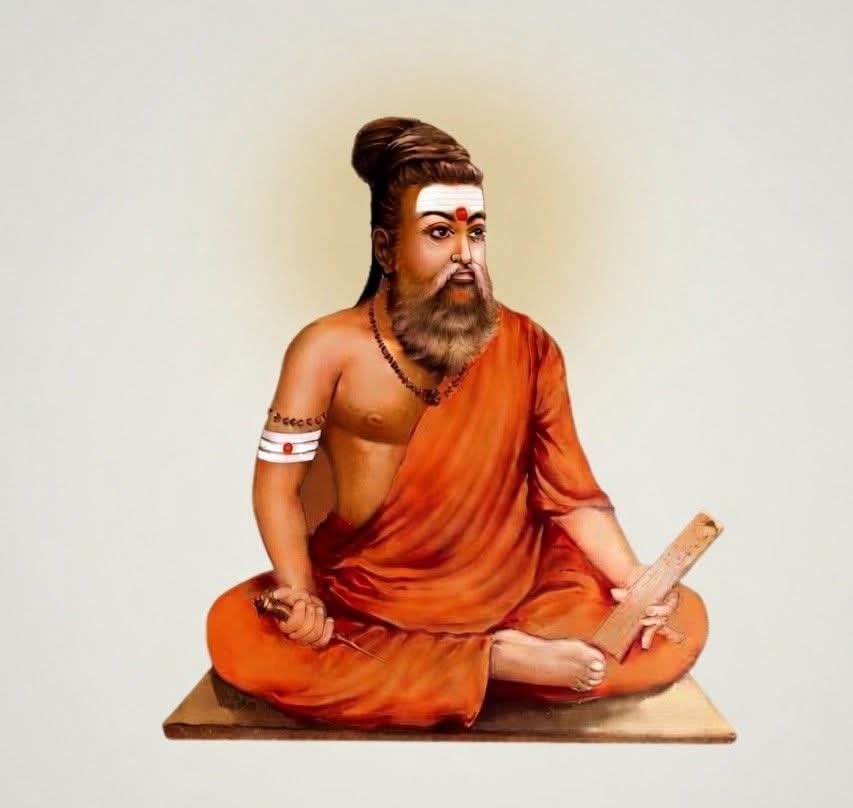
🧵 Reclaiming History: Why Gen Z is Calling out the Thiruvalluvar Narrative
The ongoing controversy surrounding Thiruvalluvar in a saffron robe has sparked a massive debate. But the most refreshing part of this discourse? Watching Gen Z step up, dig into the data & fearlessly dismantle decades of political whitewashing.
Let's look at the facts. 👇
The De-Hinduization of a Saint
For years, we’ve been handed a sanitized, completely neutralized version of Thiruvalluvar. But as exposed in 62223.mp4 and 62224.mp4, the official 1932 Tamil Nadu government portrait showed him exactly as he was: a Tamil Shaivite Hindu ascetic with Thiruneeru (holy ash) and a rudraksha mala.
The Hypocrisy of "Secular" Outrage
The sudden panic over a saffron robe is pure political theater. As a Gen Z creator in 62224.mp4 brilliantly points out: where was this outrage when revisionists tried to claim Thiruvalluvar was secretly baptized or influenced by St. Thomas? Why is his actual heritage the only thing censored?
His Own Words Defend the Saffron
You cannot separate the poet from his poetry. In 62224.mp4 and 62225.mp4, the creators highlight that the Thirukkural is fundamentally built on the Vedic pillars of Aram (Dharma), Porul (Artha), and Inbam (Kama). He dedicated an entire chapter to Thuravaram (renunciation)—the very definition of a saffron-clad ascetic.
The Kural Names the Deities
To claim he was entirely detached from faith ignores the text. 62225.mp4 breaks down direct literary proofs: he praises God in Chapter 1, names Maavishnu in Kural 610, Kamalakannan (Krishna) in Kural 1103, and references Indra, Lakshmi, and Yaman. Depicting him as a Hindu saint isn't "appropriation"; it's literacy.
Kudos to Gen Z
Seeing young creators reject manufactured 20th-century political narratives in favor of genuine historical and literary research gives me immense hope. History isn't what politicians tell us it is—it's what is written in the texts. 📚✨