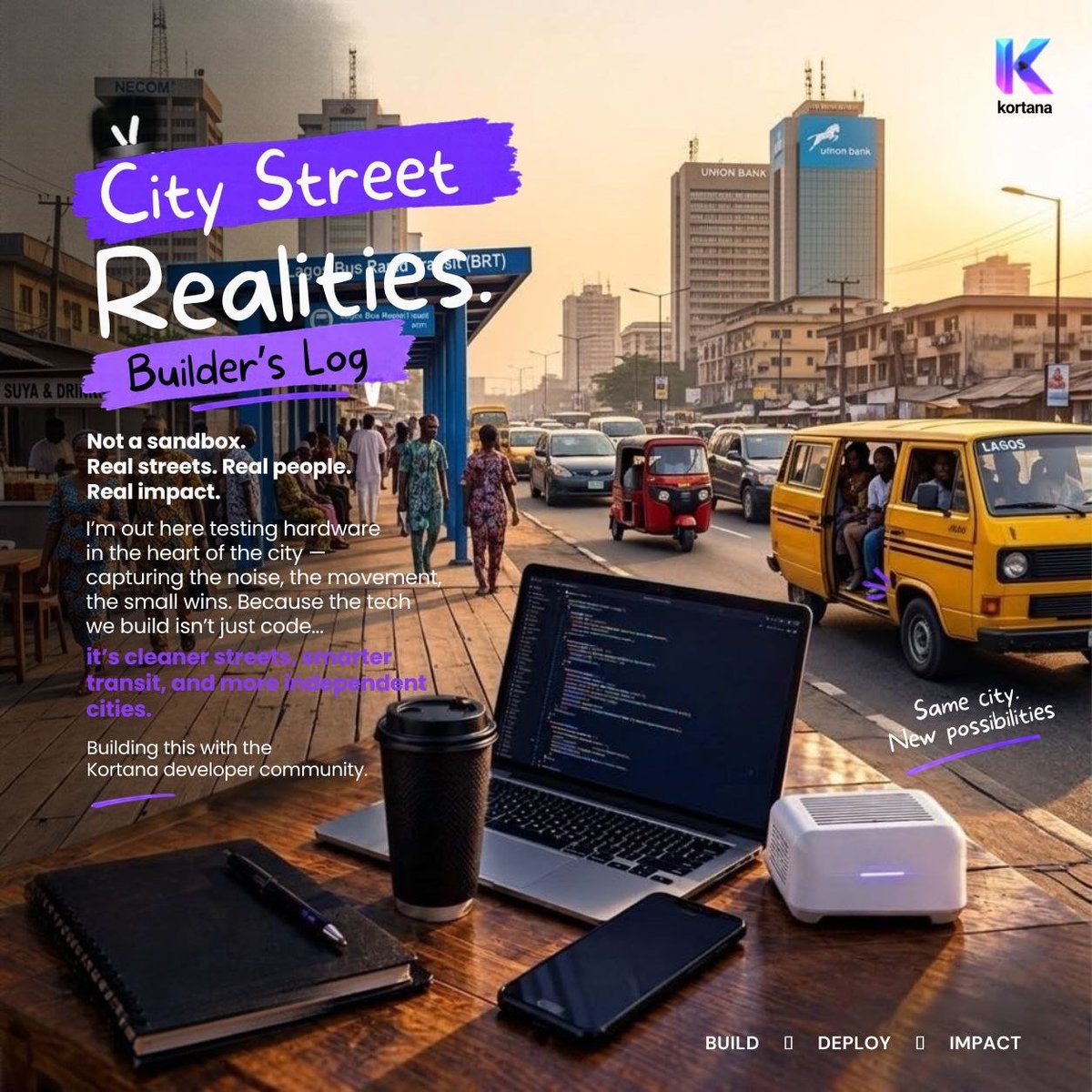
Ever written code that only lived inside a laptop… then suddenly realized the real test is the noisy street right outside your window?
That’s the energy when you’re building for actual cities instead of digital sandboxes. Coffee on the desk, street sounds in the background, and a small testing device pointed at the real world traffic flow, air quality on the block, neighborhood power use. It’s exciting (and a little humbling) because the “users” are the streets themselves.
With @KortanaChain, that code isn’t just sitting in a folder. It becomes part of the live urban layer helping real streets run a bit cleaner, smarter, and more independently. Building alongside the Kortana developer community makes it feel collaborative instead of solitary. You’re not just shipping features; you’re dropping tools into the actual city.
Kortana turns the street outside into the ultimate proving ground. One day it’s a quick test from your desk, the next it’s interacting with real people and real traffic.
What’s the coolest “this has to work on the actual street” moment you’ve had while building? And if you could drop one piece of community-owned tech on your local block with Kortana, what would it be?
Gm folks 💕 I've got something valuable to share with y'all ...read patiently 😉
You know that feeling when a city is growing faster than the government or big companies can even draw up the plans? Instead of waiting 15–20 years for someone else to “upgrade” the streets, neighborhoods are just… doing it themselves.
Across rapidly growing urban hubs (especially in places like West Africa and other high-density markets), people aren’t sitting around for municipal red tape or megacorp rollouts. They’re crowd-building modern urban tools right now local environmental trackers, neighborhood connectivity, responsive micro-grids from the bottom up.
@KortanaChain is the quiet backbone letting that happen. Citizens can deploy and connect the hardware that makes their city actually respond to real life, without waiting for permission from the usual gatekeepers. Kortana keeps the focus on people owning the infrastructure instead of leasing it forever from outsiders.
It’s a different kind of city-building: faster, closer to the ground, and owned by the people living in it.
Have you seen a neighborhood skip the old infrastructure waiting game and just build what it needed? Which city or community do you think should leapfrog next with Kortana?