@uygun_tunc Congratulations on this article! Although I notice my work exploring Meehl's political philosophy has earned me a "critic" status of methods reform (specifically methods reform [or its roots] as neoliberal). I don't believe in that. Seems more communal and Mertonian to me.
We reviewed the measures used in all original and replication studies included in the Reproducibility Project: Psychology to get a snapshot of measurement practices and develop empirically based recommendations for improving the validity of replication research. A take-away🧵
@RayLuongQuant This is fascinating, and very useful for methods instructors. Now I'll be suggesting r/samplesize to students' projects next term. Kudos!
In less than 30 minutes I'll be yammering on (with some other members) about the data and methods committee at the @PsySciAcc, what we do, and our latest work on metascience and measurement! Hope to see some #PSACON2020 tweeps there. I've got my tshirt on, is this vintage yet?
@Quant_Liz_Lemon I am happy to share a copy with anyone who wants to take a look! I'm hoping to expand parts of the dissertation for future research, and possibly an academic book.
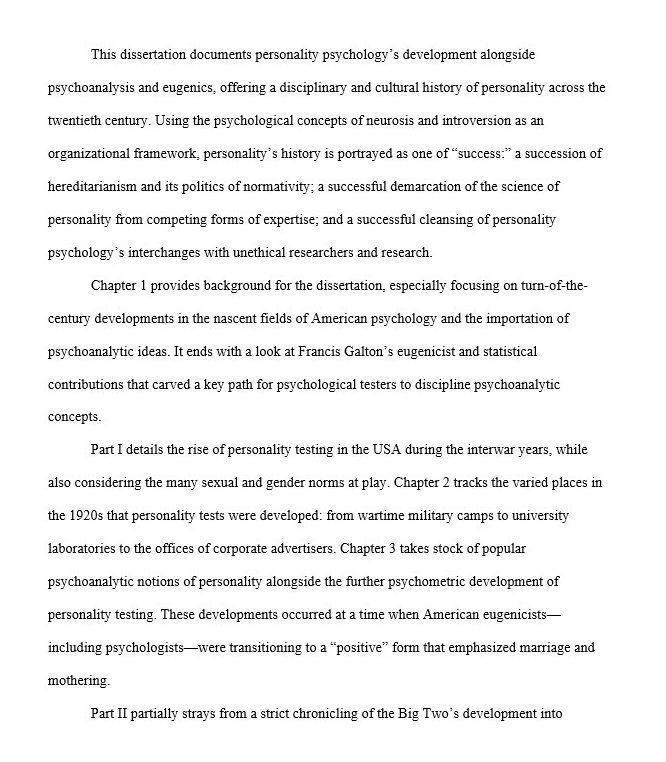
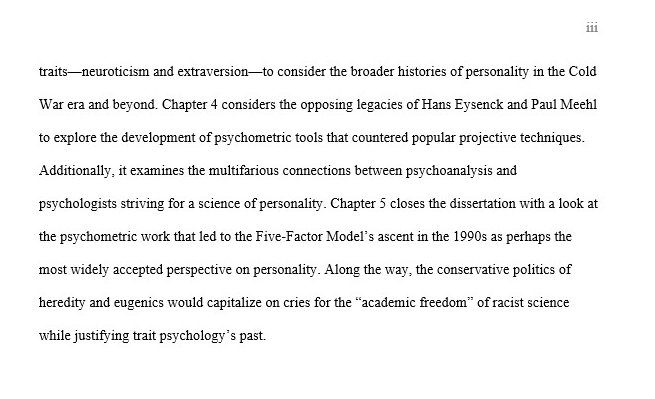
A final version of my dissertation has been accepted! Thanks as always to my many supporters. Attached is the abstract for "Personal Politics: The Rise of Personality Traits in the Century of Eugenics and Psychoanalysis"
Building a More Cumulative Psychological Science: Forthcoming Special Issue of Canadian Psych., Ed. by @VGoghari & Don Sharpe, articles on line now: https://t.co/KwMpwxlGTB
ft @dstephenlindsay @Krista_BH@JkayFlake @R__INDEX & many others, incl. this one w/ ⭐️ @randy_jamieson
@JameCWiley Thanks for those replies and your thoughts! Yes, I was indeed thinking of eugenics and racism, or other forms of dehumanization; though camps are an extreme instance of this. And yes the scale of mechanisms might be worth considering (family to communities to "societies").
@JameCWiley "... or attempts of suicide more seriously" holds true across historical-cultural places. I'm thinking here of social-historical situations where the value of a person's (or a people's) life is deemed low or null. I don't know enough about the history of suicide to answer that.
@JameCWiley This is an interesting perspective, though I wonder about what is missed when analogizing insect-to-human behaviour esp. in such high-stakes topics. As an outsider to your perspective, I wonder if statements like "a suicide may condition society to take future threats or..." 1/2
@bmwiernik @MarcusCrede @hardsci @ee0112@FredOswald The only psychometric angles on the MBTI I knew about were attempts at understanding it from within a FFM framework (like McCrae & Costa, 1989, Jn. of Per.). Though around that time they seemed to be extending FFM all over (Murray's needs; Wiggins' circumplex).
@bmwiernik @MarcusCrede @hardsci @ee0112@FredOswald This thread added so much insight into present day MBTI operations that is absent from the sparse historical/critical work on it. My impression is that the inner-operations the MBTI is pretty sealed off to outsiders not willing to buy in (literally).