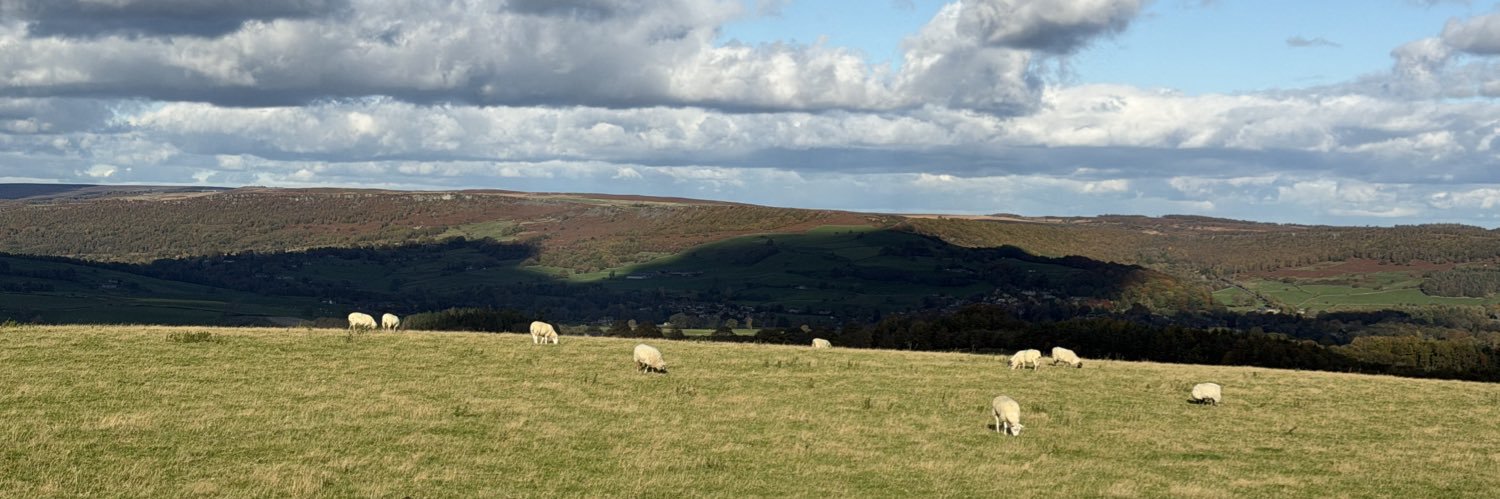
A tenant farmer in the Cairngorms says land that sold for £500 an acre a few years ago now goes for £5,000. He is being moved off ground his family has worked for generations, because he cannot outbid the people buying it. The buyers are corporations, and they have no intention of farming a single acre of it.
Here is how the trick works. A company keeps emitting carbon exactly as before. Same factories, same flights, same supply chain, same product. Then it buys a Scottish hillside, plants some trees, and announces to the world that it is now carbon neutral, or, if it is feeling brave, carbon negative. The emissions never fell. It simply bought a landscape to point at.
Take BrewDog. In 2020 it bought a 9,300-acre Highland estate, propped up with public grant money, and promised a million trees and the crown of the world's first carbon negative beer business, removing twice the carbon it emitted, forever. By 2023 roughly half of the 500,000 trees it had managed to plant were dead, killed by drought, with critics noting the planting was drying out the peat and releasing carbon of its own. The advertising regulator ruled its carbon-negative claims misleading. In 2024 it quietly dropped the badge and dismissed the entire carbon credit market as a flood of cheap schemes whose benefit was "questionable, maybe even non-existent." Then it sold the estate to a firm whose actual business is selling carbon offsets.
That is the whole model in one story. Public money in. Dead trees out. A green halo worn for four years and then dropped. The farmer who used to be on that land, gone. The hillside passed to a company that exists purely to sell other people the right to keep polluting.
This is no fringe case. In one recent year, half of every estate sold in Scotland went to investment funds, corporations and charitable trusts rather than anyone who would farm it. A third of the deals for plantable land are now done off-market, in secret, precisely so the local community never gets the chance to bid.
So this is what net zero looks like on the ground. A man who produced food is priced out of his own glen. A corporation that produced emissions buys the glen, calls itself a force for good, and sells the carbon. The land stops feeding anyone. Nobody's emissions actually went down by a gram.
The food was real. The farmer was real. The carbon saving is a line in a slide deck.
And we have somehow decided the villain in all this is the man with the sheep.
A farmer dies in April 2026.
His son inherits the farm. The farm has been in the family since 1847.
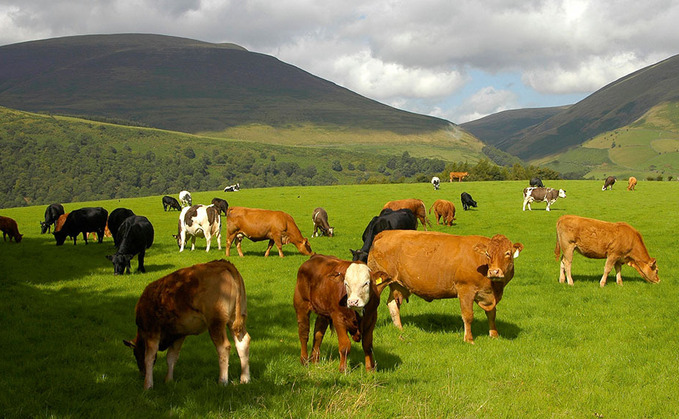
The farm consists of: 300 acres of grazing pasture, a farmhouse built in 1892, a barn, a milking parlour, two tractors of varying ages, a Land Rover that runs about 70% of the time, and a herd of 180 Hereford-cross cattle.
On paper, the farm is worth approximately £3.2 million. This is because land near him has been bought recently by a London hedge fund looking for carbon credits, which has dragged the comparable value of every field within forty miles upward to a number nobody local can justify.
In cash, the farm produces a profit of about £28,000 a year in a good year. In a bad year it loses money. The son also works as a fencing contractor three days a week to keep the operation viable.
The inheritance tax bill on a £3.2 million estate, even at the reduced 20% rate, comes to approximately £140,000 after the increased threshold is applied. The son does not have £140,000. The son has never had £140,000. The son has £4,200 in his current account and an overdraft.
The son sells 60 acres to a developer to pay the tax. The developer puts solar panels on the 60 acres. The remaining herd cannot be sustained on the reduced land. The herd is sold. The barn becomes a holiday let.
A different family eats Brazilian beef this Christmas without knowing why the price went up.
The Treasury collects £140,000.
The land never produces British food again.
This roadside verge reveals:
A total absence of personal responsibility
A rejection of the notion of community pride
A failure of legal enforcement against criminals
A complete embarrassment for Britain
It cannot go on. @benonwine
I have listened to Sir Olly Robbins evidence for last hour and forty minutes and am seeing the very best of the civil service. I am left incredulous that the decision was made to fire him. Has there been a more egregious and shameful decision by a political master desperate to save his own skin?
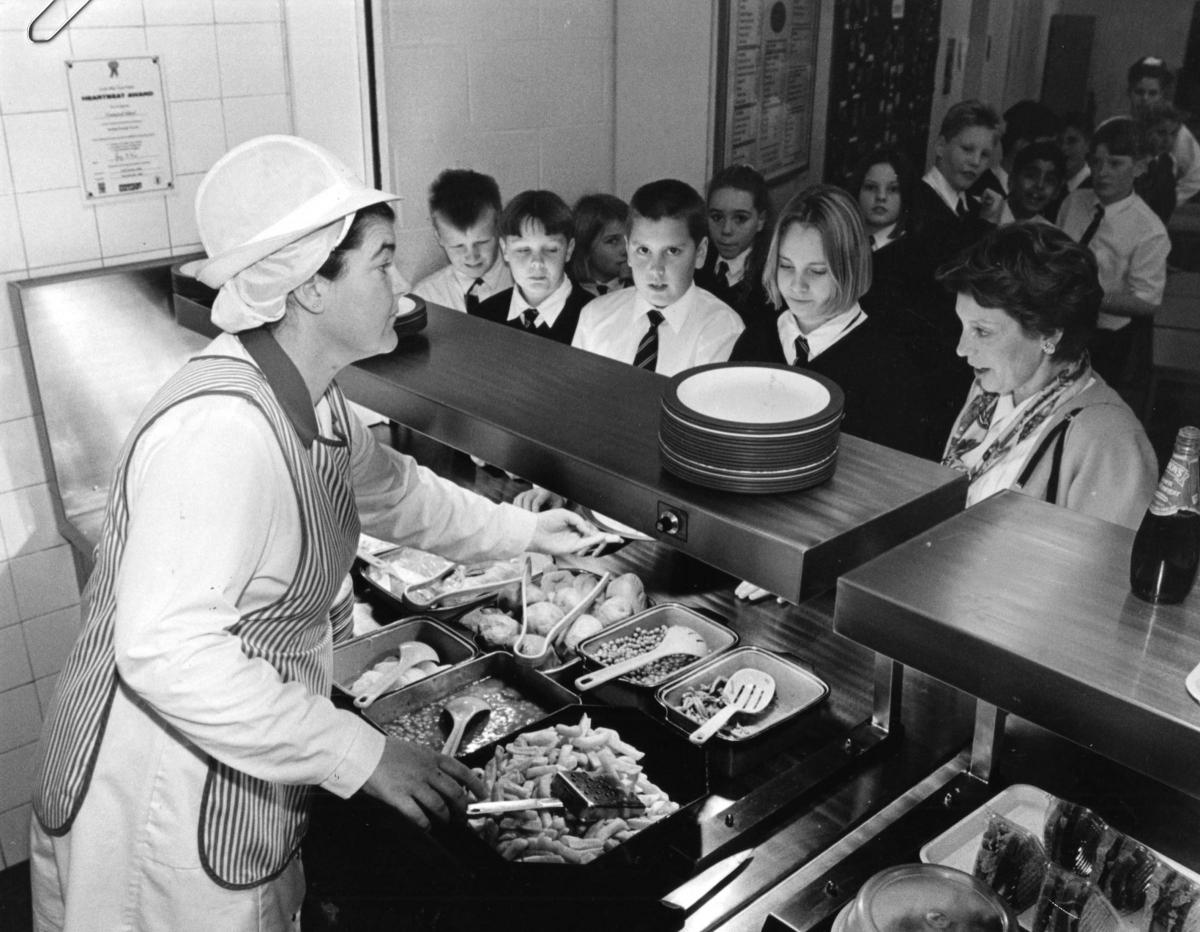
A British school dinner in 1975 was cooked on-site, from whole ingredients, by a dinner lady who knew, without consulting a nutritional database, what a growing child needed to eat.
The dinner was: roast beef, gravy from the drippings, boiled potatoes, cabbage, and sponge pudding with custard made from eggs and milk. Or shepherd's pie from real mince. Or liver and onions. Or fish on Friday, battered and fried in beef dripping.
In a single sitting: haem iron from the meat, calcium from the custard, B12 from the liver, vitamin A from the gravy fat, vitamin D from the eggs, zinc from the beef, omega-3 from the fish, collagen from the gravy, complete protein from every component, and roughly 800 calories dense enough to carry a child through an afternoon of running around a playground in January.
Then the system changed.
In the 1980s and 1990s, local authority catering was outsourced. On-site kitchens closed. Dinner ladies were made redundant. Central production kitchens began manufacturing meals reheated in convection ovens.
The roast beef became a turkey twizzler. The shepherd's pie became a pre-formed disc of processed potato and reconstituted meat product. The liver disappeared entirely. The fish was coated in breadcrumbs and fried in vegetable oil. The custard was made from powder, water, and yellow colouring. The sponge pudding was replaced by a yoghurt tube.
Jamie Oliver's 2005 campaign filmed children who could not identify a tomato. Kitchens where the only equipment was a deep fryer and a microwave. Menus that contained less nutritional value in a full week than the 1975 dinner contained in a single sitting.
The government pledged reform. But the on-site kitchen did not come back. The dinner lady did not come back. The roast beef and the liver and the custard made from eggs did not come back.
The 1975 dinner lady, who had no nutritional qualification and had never heard of a DIAAS score, was producing, at approximately 30p per serving, a meal that contained more bioavailable nutrition than anything the modern system produces at three times the cost.
She has been replaced by a supply chain.
The supply chain is more expensive.
The children are less well fed.
The dinner lady knew what she was doing.
Nobody asked her.
@LNER@EastMidRailway
What a shocking performance from you guys this weekend.
Delays, cancellations, lack of drivers, trespassers.Just needed leaves on the track for a Full House.
The EFL has sanctioned Sheffield Wednesday consistently since 2018.
Over that period, the club has been hit with multiple transfer embargoes spanning nearly a decade. By October 2025, Wednesday were under six simultaneous embargoes — the most any club has ever faced.
On top of that, the club has suffered repeated points deductions. A -12 deduction in 2020/21 severely damaged recruitment and momentum going into that season. Although it was later reduced to -6 on appeal, the damage had already been done — those points ultimately proved the difference between survival and relegation to League One.
In 2025, the situation worsened further. The club received:
•-12 points for entering administration, after the former owner failed to meet basic financial obligations such as paying wages and bills on time
•A further -6 point deduction, again due to the owner’s failure to uphold his responsibilities
This is not a case of a club gaining an unfair advantage — quite the opposite. The club has been placed at a significant competitive disadvantage for years due to sustained mismanagement.
Sheffield Wednesday has endured one of the most damaging ownership periods a club of its size is likely to experience. The former owner’s approach has not only harmed the club financially but also created a toxic environment for staff and supporters alike.
And yet, despite this, there is now an expectation that the same owner should be repaid — while the club continues to face further punishment.
How can that be justified?
The new ownership group should not be penalised for the failures of the previous regime. They should be given the opportunity to restore stability to a club that has lacked it for nearly 26 years.
Imposing further sanctions — such as another -15 point deduction, spending caps, business plan restrictions, and transfer limitations — would only deepen the damage. It risks condemning the club to yet another relegation and prolonging the cycle of instability.
At some point, there has to be recognition that continued punishment is no longer corrective — it is excessive.
The club, its staff, and its supporters deserve the chance to move forward.
#FairDealForWednesday
@storchyowl
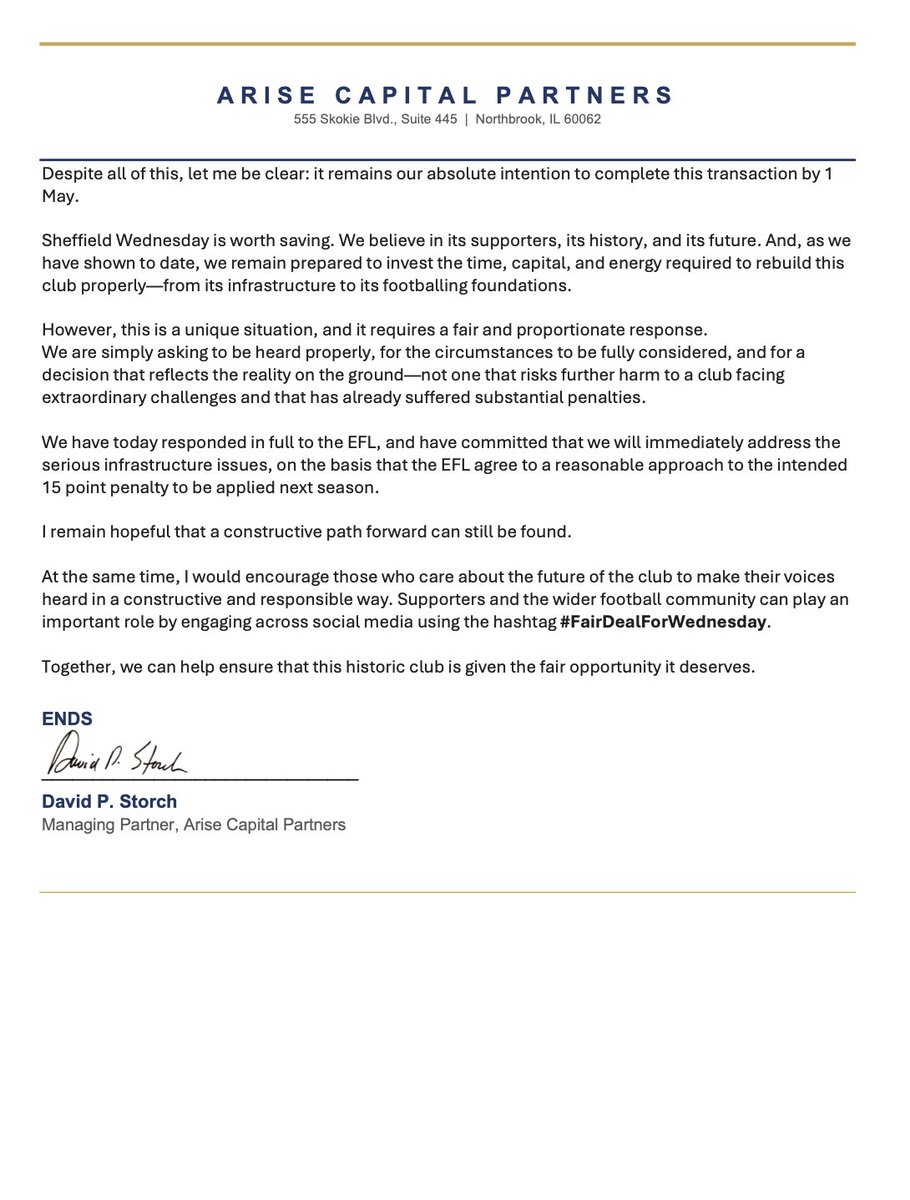
The man who wants to rescue Sheffield Wednesday, American businessman David Storch, says he has been “informed that a 15-point penalty is set to be imposed at the start of next season” in League One. The outgoing owner Dejphon Chansiri should hang his head in shame at the damage he has inflicted on Sheffield Wednesday. He can’t have a conscience. Otherwise he’d accept a compromise on bid price.
The EFL should have been tougher with Chansiri quicker. The FA should remember it is supposed to be custodians of the game and protect clubs. The importance of an Independent Football Regulator, much delayed by vested interests, is highlighted again by events at Wednesday.
At the moment, the people being punished at Wednesday are fans, players, staff and the man who wants to save them. Shameful situation engulfing a historic club which could have been avoided with stronger leadership by the authorities. And Chansiri locating some principles. #SWFC
Drive-home thought…
Yes, Britain has become poorer.
Years of foolish decisions and short-sighted governments will do that to a country.
But the decline you see everywhere now isn’t just economic.
It’s something far more embarrassing.
We’ve lost our pride.
There was a time when people had less — smaller homes, older cars, wages that barely stretched to the end of the week — yet they still cared about their street, their town and the place they lived.
People swept their front step.
They cut the grass outside the gate.
And they didn’t throw rubbish out of the car window like a toddler emptying a toy box.
Now look around.
Fast-food boxes in hedges.
Energy drink cans rolling down the gutter.
Plastic bags tangled in trees like pathetic little flags of surrender.
If you want the clearest example, just take a look at motorway exit roads.
Come off any motorway in Britain and the verges look like someone’s opened the car window and emptied a bin bag at 70mph.
Coffee cups.
Burger cartons.
Plastic bottles.
Lottery tickets.
Entire takeaway meals apparently jettisoned mid-journey.
And every single one of those bits of rubbish came from someone sitting in a perfectly good car who simply couldn’t be bothered to take it home.
It’s not poverty.
It’s laziness and a complete lack of self-respect.
Previous generations didn’t need recycling apps, environmental campaigns, or a bin collection calendar that looks like the invasion plan for Normandy.
They just understood one simple rule:
Don’t live like a scruffy bastard.
Take your rubbish home.
Put it in a bin.
Show a bit of pride in where you live.
Because governments might make a country poorer…
…but only its people can turn it into a tip.
@SenseiChanning Yes I got paid as did Turlough but there is always 5% at the back of your mind thinking the worst. Hope you are having a good Cheltenham week.
@SenseiChanning I had the same issue following a tournament cash from a WSOP event in Marrakech. It took a month to get paid. Setting expectations and clear communication with players would have removed some of the potential anxiety especially for one guy who came 4th in the Main.