Heart disease is the leading cause of death in women — killing far more than breast cancer — yet it's still coded as a "man's disease," so both women and clinicians under-suspect it. Before menopause women have far lower coronary rates than same-age men; in the decade after, that gap closes fast. The real danger is that it happens silently: plaque and arterial stiffening build for years without symptoms, and when signs finally appear, women more often show atypical ones — fatigue, breathlessness, jaw, back, or upper-abdominal discomfort, nausea — instead of classic chest pain, leading to delayed diagnosis, delayed treatment, and higher death rates after heart attack. Women are also less likely to be referred for testing, prescribed statins, revascularized, or sent to cardiac rehab. The risk is higher still with early menopause (before 45), premature menopause (before 40), or surgical menopause, which all mean longer estrogen deprivation, and frequent severe hot flashes and night sweats flag worse vascular health too. But menopause is also a window of opportunity — a scheduled, predictable transition when these risks surface and can be caught and managed before they ever cause an event.
https://t.co/p8727UWIme
Your doctor said, ‘Your cholesterol is normal.’
So you think your heart is safe… right?”
What if it isn’t?
Because some of the most dangerous heart problems can stay completely silent—with no chest pain, no warning, and no obvious symptoms.
And that routine cholesterol test you get every year?
It may be missing critical information about your actual heart risk.
There are 3 tests that can reveal what a standard check-up may not.
One can uncover dangerous cholesterol particles.
One can detect silent inflammation.
And one can actually show the plaque hiding inside your arteries.
So the real question is…
Have you really had your heart checked?
Watch our full video to know more.
Most people over 50 walk out of their annual physical with "your cholesterol looks fine" — and six months later, they're in the ER. Here are the 3 tests that catch what a standard checkup misses. A normal cholesterol number does NOT mean your heart is safe. Heart disease is still the #1 killer of adults over 50, and the standard lipid panel most doctors run was designed decades ago. It catches obvious problems. It misses the quiet ones. In this video, Dr. Indranil Basu-Ray — a cardiac electrophysiologist with 34+ years of experience — walks you through the three tests cardiologists actually use, but most general doctors don't order unless you ask. Plus, the exact words to say to your doctor to get them.⚠️ DISCLAIMER: This video is for educational purposes only and does not constitute medical advice. Always consult your own doctor about which tests are right for your specific situation. Watch full video: https://t.co/MLkxfSS8Hj #preventivecardiology #doctoradvice
https://t.co/NS7TZGM5nE
Welcome to The Cardiologist's Brief - your trusted source for evidence-based health information.
Every week, I'll share simple, easy-to-understand updates on heart health, based on real medical evidence, not hype.
Breaking News ✓ · Deep Dive (Measles) ✓ · Breakthroughs ✓ · Lifestyle Medicine ✓ · Food as Medicine (Coffee) ✓ · Doctor Reacts (Cortisol) ✓ · Exercise (Weekend Warrior) ✓ · Biotech & Markets ✓ · Ask the Cardiologist ✓ · Newsmaker ✓
Deep Dive: measles raging-learn how it can be deadly!
Breaking News: West Nile: Killer Infection from mosquitoes- no treatment, no vaccine. Be careful when you are doing your outdoor activities.
Breakthroughs: Weight-loss drug causes kidney damage; New Drug for Stage IV breast cancer.
Exercise (Weekend Warrior): Is weekend-only exercise as good as regular 5 days a week? Learn the latest fitness trend
Ask the Cardiologist: Is Coffee damaging your heart?
Doctor Reacts: Cortisol damaging your face? Learn from the Cardiologist.
Newsmaker: Aortic Dissection: A disease with Chest pain that can kill suddenly- what you need to know?
Biotech & Markets: What’s new in the biotech market- learn the latest news.
“Harness the Power of Yoga: Key Benefits. Yoga improves flexibility and strength, enhances heart health and circulation, and reduces stress, anxiety, and depression. It boosts immunity, promotes better sleep, supports balanced posture, increases energy, sharpens focus."
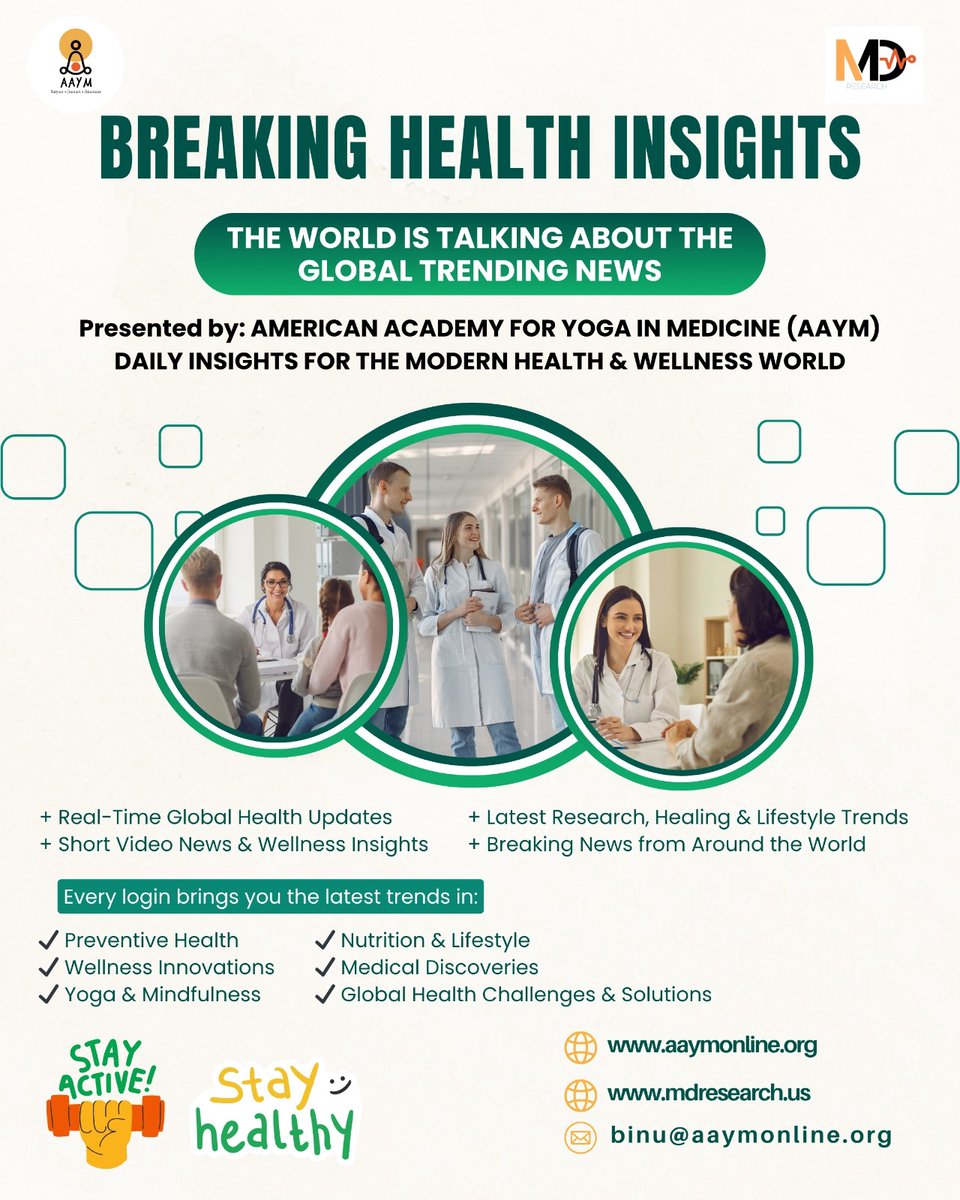
Breaking Health Insights from the American Academy for Yoga in Medicine (AAYM). Get real-time global health updates, short video news, and wellness insights covering preventive health, nutrition, yoga, mindfulness, medical discoveries, and global health challenges.
HYPERTENSION? NO TENSION. THERE IS A SOLUTION
.
.
Modern stress and sedentary habits have turned hypertension into a silent, global epidemic .Processing power replaces physical activity, driving blood pressure levels steadily upward.
Watch Full Video:
https://t.co/Zu1fT3CWY8
Perfectionism doesn’t always feel like stress.
Sometimes it feels like discipline, responsibility, or “just doing your best.” ✨️
🔬 But research shows that constant internal pressure to perform keeps the body’s stress pathways subtly switched on even when you don’t feel anxious. Over time, this silent activation can increase inflammation, disturb autonomic balance, and quietly strain the heart.
Your heart doesn’t respond only to emotions you consciously notice. 🫀
It responds to inner demands, self-criticism, and the absence of rest.
Learning flexibility, self-compassion, and nervous system regulation helps reduce this hidden load, protecting both mental and cardiovascular health. ✨️
Heart care isn’t just about numbers.
It’s also about how much pressure you carry inside.
Explore more science-backed insights at https://t.co/fEHUPaslhE - link in bio!
#PerfectionismAndHealth
#HiddenStress
#HeartMindConnection
#CardiacRiskAwareness
#NervousSystemRegulation
#StressAndInflammation
#AutonomicHealth
#PreventiveHeartCare
#MindBodyMedicine
#SelfCompassionScience
#HolisticHeartHealth
#YogaForWellness
#HealYourHeartWithYoga
Perfectionism doesn’t always look like anxiety.
Sometimes it looks like always being “fine”, always performing, always pushing quietly. 👀
🔬 Research shows that chronic internal pressure activates stress pathways even when you don’t feel anxious. This low-grade stress can increase inflammation, disrupt autonomic balance, and place an invisible load on the heart. Your nervous system responds to expectation and self-demand, not just emotions you consciously notice.
The heart listens to internal narratives — how safe, allowed, and flexible you feel in your own body. ✨️
Practices that cultivate self-compassion, nervous system regulation, and flexibility aren’t indulgent. They’re protective.
Healing the heart isn’t only about exercise or diet.
It’s also about softening the pressure you carry silently. 🪷
Read more evidence-based insights at https://t.co/fEHUPaslhE - link in bio!
#PerfectionismAndHealth #HiddenStress #HeartMindConnection #CardiacWellness #NervousSystemHealth #StressAndInflammation #AutonomicBalance #MindBodyMedicine #ScienceOfStress #EmotionalLoad #SelfCompassionPractice #PreventiveCardiology #HolisticHeartHealth #HealYourHeartWithYoga
Your heart doesn’t just respond to workouts and diet, it responds to memories too. ❤️🩹
Nostalgia isn’t an emotional myth; it’s a parasympathetic switch. When you revisit meaningful moments, your body releases dopamine and serotonin, slowing your heart rate, easing blood pressure, and calming your nervous system.
Think of old photos, handwritten letters, childhood songs… as tiny emotional prescriptions.
Science says your memories can heal, one warm moment at a time. ✨
#HeartHealth #MindBodyConnection #NostalgiaTherapy #ParasympatheticNervousSystem #StressReliefTips #EmotionalWellbeing #CardiacWellness #HolisticHeartHealth #HealingWithScience #YogaForHeartHealth #MindfulnessMatters #CalmYourNervousSystem #WellnessBlog #HealthyHeartHabits #ScienceBackedHealing #HeartMindHealing #HealYourHeartWithYoga