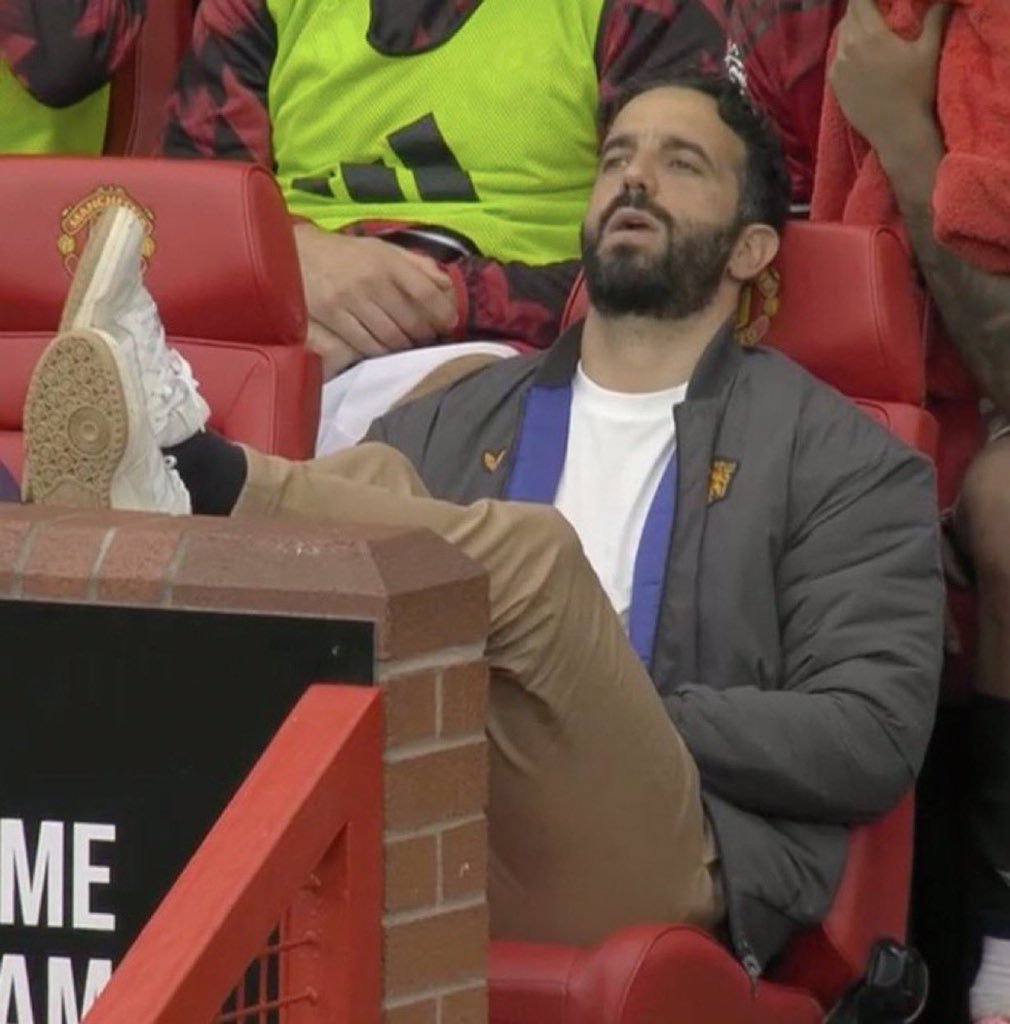
I’m your host on @SuperSportTV tonight with the Champions league semi-final coverage. + a legendary panel.
⚽️ PSG Vs Bayern Munich.
See you later tonight Africa. 👊🏿
#SSFooball
Man United now have five players on double digits for goal contributions this season:
Bruno Fernandes (26)
Bryan Mbeumo (12)
Casemiro (10)
Benjamin Sesko (10)
Matheus Cunha (10)
💻 @StatmanDave
The Federal High Court of Nigeria, sitting in Warri, held that Nigerians may record police officers performing public duties in public spaces; that police may not harass, threaten, arrest, or seize devices for such recording; that officers conducting patrols, stop-and-search operations, and other public interactions without visible names and force numbers act unlawfully; and that the police authorities must issue directives, training guidelines, and disciplinary measures to enforce these rights and identification requirements.
In Maxwell Nosakhare Uwaifo v Inspector-General of Police & 3 Others, Suit No. FHC/WR/CS/87/2025, judgment delivered on 17 March 2026, Justice H. A. Nganjiwa held that, under section 39 of the Constitution, the applicant and all Nigerian citizens are entitled to freely express themselves, including by recording and publishing matters of public interest, particularly the conduct of law enforcement agents performing public duties in public spaces. The court also held that any attempt by officers of the Nigeria Police Force to prevent or punish such recording, under threat of arrest, harassment, or seizure of devices, is unconstitutional, unlawful, and a violation of fundamental rights.
The court further declared that the acts of police officers engaging in patrols, stop-and-search operations, and other public interactions without wearing uniforms that visibly display their names and force numbers are unconstitutional, illegal, and in breach of sections 34, 35, and 36 of the Constitution and the Police Act.
It granted perpetual injunctions restraining the respondents and those acting under them from harassing, intimidating, threatening, arresting, or otherwise infringing the rights of the applicant or any Nigerian for recording police officers on duty in public, and from conducting stop-and-search or checkpoint operations without ensuring that all operatives wear uniforms bearing their full names and force numbers.
The court also directed the 1st to 3rd respondents to issue a clear directive and training guideline affirming the public’s right to record and report police activities conducted in public spaces, ordered the 2nd and 3rd respondents to discipline officers who breach that right, and ordered the Police Service Commission to issue a circular or directive mandating officers on public engagement duties to wear full uniforms with identification and to initiate disciplinary action against defaulters.
Major Takeaway for Uganda: Policing in public spaces must align with constitutional accountability; citizens should be free to peacefully record police conduct without harassment, arrest, or seizure of their devices, and officers must remain clearly identifiable by wearing uniforms with visible names, service numbers, and unmasked faces, as anonymous policing undermines transparency, public trust, and the rule of law.
Read full judgment here: https://t.co/Unae7dgYZU
High Court finds that a caretaker who remains in occupation of land after the owner withdraws consent, without justification, becomes a trespasser and is not entitled to compensation for expenses allegedly incurred in maintaining the property where there is insufficient evidence of an agreement with the owner of the suit land for such compensation.
In Mugoda Patrick v Benon Kyeyune Mukasa & Another, Civil Suit No. 1462 of 2023 (10 Feb 2026), the Plaintiff, who had been appointed as a caretaker of the 1st Defendant’s land and the house thereon, sued, seeking compensation for various expenses allegedly incurred in maintaining the property, including compensating occupants, hiring surveyors and guards, and paying lawyers. He argued that the parties had orally agreed that he would be reimbursed before granting vacant possession.
The Defendants contended that the Plaintiff was merely appointed as a caretaker and was not responsible for hiring surveyors, guards, or settling squatters, and that he had no entitlement to remuneration or any portion of the land.
The Court found that although the plaint disclosed a cause of action and the Plaintiff had locus standi to bring the claim, he was not entitled to the compensation sought due to a lack of sufficient evidence proving the existence of an oral agreement with the owner of the suit land for such compensation.
In his counterclaim, the 1st Defendant sought a declaration that the Plaintiff was a trespasser, an order for vacant possession, damages, mesne profits, a refund of guarding expenses, and costs. The Court further found that although the Plaintiff initially occupied the land lawfully as a caretaker, the permission was withdrawn when he was asked to vacate the suit land, and any continued occupation against the 1st Defendant’s consent without justification amounted to trespass.
Accordingly, the Court dismissed the Plaintiff’s suit with costs to the Defendants. Judgment was entered for the 1st Defendant/Counterclaimant on the counterclaim, declaring the Plaintiff a trespasser on the suit land, ordering him to give immediate vacant possession to the 1st Defendant, and awarding the 1st Defendant general damages of UGX 70,000,000, together with costs.
Read the full judgment here: https://t.co/RhmQHdCO0N
BREAKING: NUP’s Ronald Balimwezo has been declared the winner of the Kampala Lord Mayoral race having obtained the highest number of votes.
#NBSUpdates#UgVotes2026