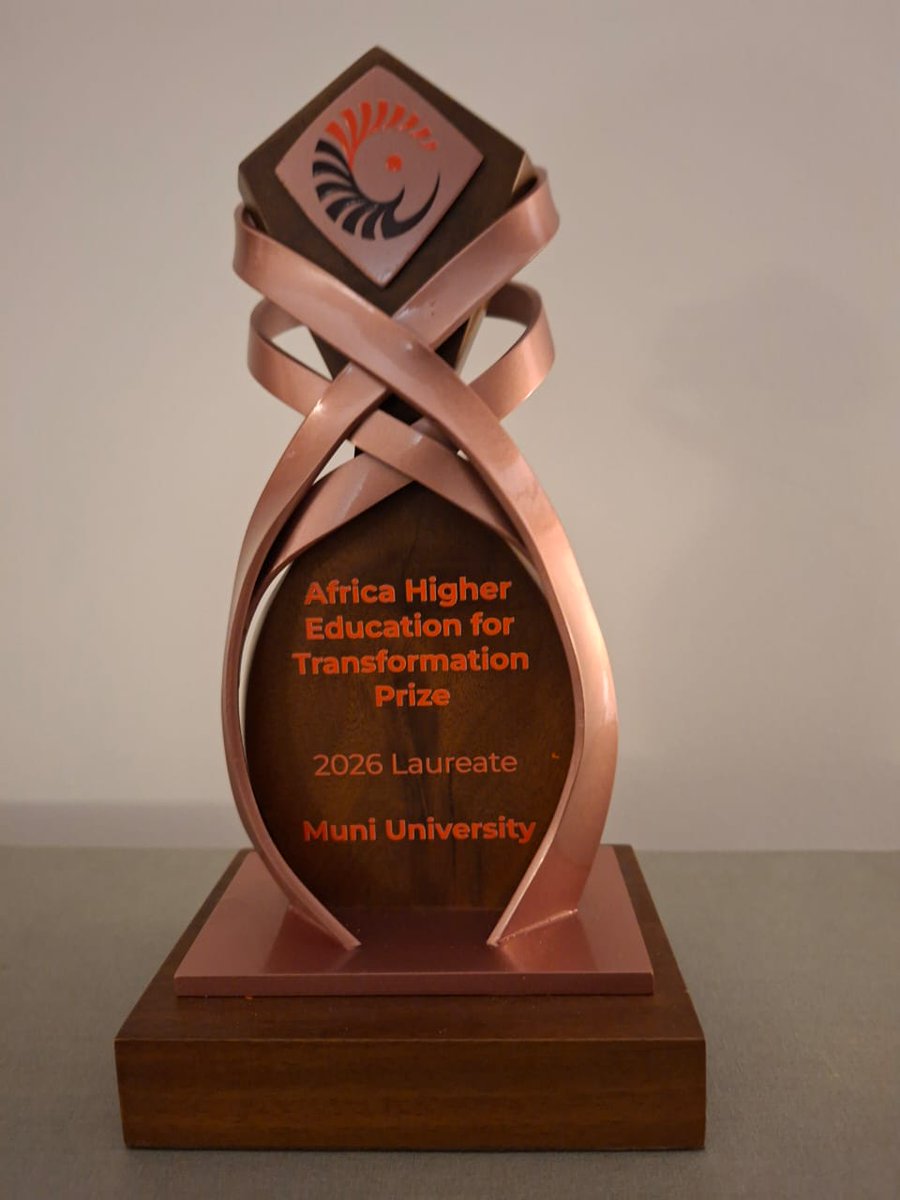
Muni University invites staff, students, guests, the community and Ugandans at large this Friday, 25 September 2026, at 4:00 p.m., to welcome Vice Chancellor Assoc. Prof. Simon Anguma Katrini and the delegation returning from Accra with the inaugural AHEFT Prize.
Some of the new infrastructure/equipment at @UgandaCancerIns. Gradually, we are seeing meaningful progress across the different areas of healthcare. While challenges remain, it is a continuous process just like constructing a house, where each phase builds on the previous one until everything takes shape. #MOHatWork
We are deeply honoured to welcome
Dr.Kabweru W.M. National Chief Surgeon, our Special Guest of Honor, at the inaugural UUSSC Surgical Skills Inter-University Competitions. One shared vision:Where skill meets precision,excellence takes the stage. 26.9.26, DLT, MakCHS.
At #CPHIA2026, Hon. Dr. Chris Baryomunsi (@CHRISBARYOMUNS1), Minister of Health of the Republic of Uganda, will join African leaders and experts to discuss stronger health security, regional cooperation and how countries can better prepare for public health emergencies.
Uganda’s experience during Ebola Outbreak offers important lessons on working across borders, strengthening preparedness and building systems that can respond when health threats emerge.
Be part of the conversation in Addis Ababa, 23–27 November 2026.
Africa is Ready. Are you ready?
🔗 https://t.co/C2850qoxL5
#CPHIA2026 #AfricaReady #HealthSecurity #AfricaCDC
And they don’t have to be limited to walls.
Breeze blocks can shade courtyards, terraces and even roofs, filtering harsh sunlight while still letting air through.
One simple material. So many possibilities.
AN OPEN LETTER TO THE EXECUTIVE DIRECTOR OF KCCA.
Dear @KCCAED,
I commend you and KCCA for advancing Kampala’s air-quality monitoring alongside improvements in roads, drainage and traffic management. Your public leadership on clean air deserves recognition. It gives an essential public-health concern a place in the city’s infrastructure agenda and creates a valuable opportunity to connect engineering investment with measurable improvements in people’s lives.
I propose that KCCA fund a civil engineering PhD at Makerere University to investigate how Kampala’s infrastructure choices shape air pollution and people’s exposure to it.
The central question is:
Which changes to road surfaces, drainage, construction practices and traffic management would reduce people’s exposure most effectively, and at what cost?
What the research would investigate.
A paved road can still collect dust from unfinished shoulders, adjoining unpaved roads, construction sites and deposited sediment. Improving the carriageway alone may therefore leave other sources of exposure unresolved. The study would test how these conditions interact and which combinations of engineering measures produce lasting improvements.
The research would focus on selected road corridors and nearby homes, schools and markets. It would examine pavement condition, shoulder treatment, surface dust, drainage performance, construction activity and traffic. Flooding would be investigated as a possible pathway through which sediment reaches road surfaces and later becomes airborne when it dries.
The location of people matters as much as the location of pollution. The researcher would therefore examine how exposure varies between someone passing through a corridor, a trader spending the day beside it and a child attending a nearby school.
How the study would work.
One doctoral researcher at Makerere University would undertake the study, with civil engineering supervision and specialist guidance in air-quality measurement and public-health exposure assessment.
Measurements would cover wet and dry periods and include fine and coarse airborne particles, commonly reported as PM₂.₅ and PM₁₀. Road and sediment samples would help explain dust generation, while traffic counts, weather records and information on other pollution sources would support the analysis. Additional instruments would be calibrated and used alongside existing monitoring resources.
Selected KCCA projects would provide opportunities to compare conditions before and after an improvement, with similar corridors monitored over the same period. This would help establish whether changes in exposure resulted from the engineering intervention, while accounting for weather, traffic and other influences.
What makes this a doctoral study.
The intended original contribution is a tested engineering model linking infrastructure condition, dust generation and people’s exposure. Its predictions would be checked against measurements from locations or periods not used to develop it.
That model would then help compare practical options, such as improving shoulders, controlling construction dust, managing sediment or changing traffic operations. The study would estimate the exposure reduction achievable from each option alongside its construction and maintenance costs.
This gives the research both academic depth and a clear purpose for KCCA.
What KCCA would receive.
The proposed outputs would include evidence on which interventions work, maps of exposure around the studied public spaces, and recommendations for road maintenance, drainage and construction dust control. A practical method for ranking interventions by cost and expected exposure reduction would help inform future investment decisions.
Interim technical briefs could make findings available during the research, allowing KCCA to benefit before the thesis is completed.
Indicative study budget.
A 36-month study could be planned at approximately UGX 286 million, with the following provisional allocation:
1. Tuition, university fees and examination costs (UGX 30,000,000),
2. Researcher’s stipend, UGX 1.5 million monthly for 36 months (UGX 54,000,000)
3. Supplementary monitoring equipment, calibration and maintenance (UGX 60,000,000)
4. Field transport, surveys, sampling and technical assistance (UGX 42,000,000)
5. Laboratory testing of dust, sediment and road materials (UGX 24,000,000)
6. Data management, mapping and modelling (UGX 18,000,000)
7. KCCA technical workshops, guidance and dissemination (UGX 12,000,000)
8. Research approvals and institutional administration allowance - my money 😋😋😋 (UGX 20,000,000)
Subtotal (UGX 260,000,000)
Contingency, 10% (UGX 26,000,000)
Total indicative funding (UGX 286,000,000). Let's make it 300 million Uganda shillings to cater for more dissemination workshops.
These are preliminary estimates for this concept. Final costs would depend on the approved research design, applicable university charges, equipment quotations and available shared facilities. The estimate assumes access to existing monitoring data and reference instruments. Infrastructure works being evaluated would remain within KCCA’s existing project budgets.
Madam Executive Director, this is an opportunity to give practical meaning to industry–academia partnership. Public investment can generate research questions, doctoral research can test solutions, and engineering practitioners can apply the findings to improve design, construction and maintenance.
It would also develop Ugandan expertise and generate knowledge that could strengthen procurement requirements and the capabilities of local consultants and contractors.
I encourage KCCA to consider sponsoring a doctoral researcher to pursue this concept, with the academic and funding arrangements established through the appropriate institutional processes.
Your leadership can help Kampala build a lasting practice of learning from its infrastructure investments and applying that knowledge to the next decision. That is what leading with knowledge should mean for a growing city.
The 10th National Conference on Communications (NCC 2026) is now live in the Yusuf Lule Central Teaching Facility Auditorium.
Theme: Accelerating Market-Driven Innovation for Uganda's Development
Unable to make it? Follow Live proceedings here: https://t.co/69KKURZAwl
Use of testosterone by women, especially menopausal women, continues to expand, despite the lack of long-term safety data and the lack of an approved product for women in the US, according to experts.
During a public workshop on testosterone use in menopausal women hosted by the FDA Office of Women’s Health and the Center for Drug Evaluation and Research, clinicians and researchers reviewed the current evidence and called on the FDA for additional research and expanded approvals of testosterone products for women. https://t.co/fHc3ZdsUX3
Dr Deo Ssenkumba, a cancer specialist at the Aga Khan University Hospital Nakawa Specialty Centre in Kampala, says people with a family history of cancer and those considered to be at a higher risk of cancer require more frequent cancer screening.
https://t.co/2BZZchsiFt
#MonitorUpdates
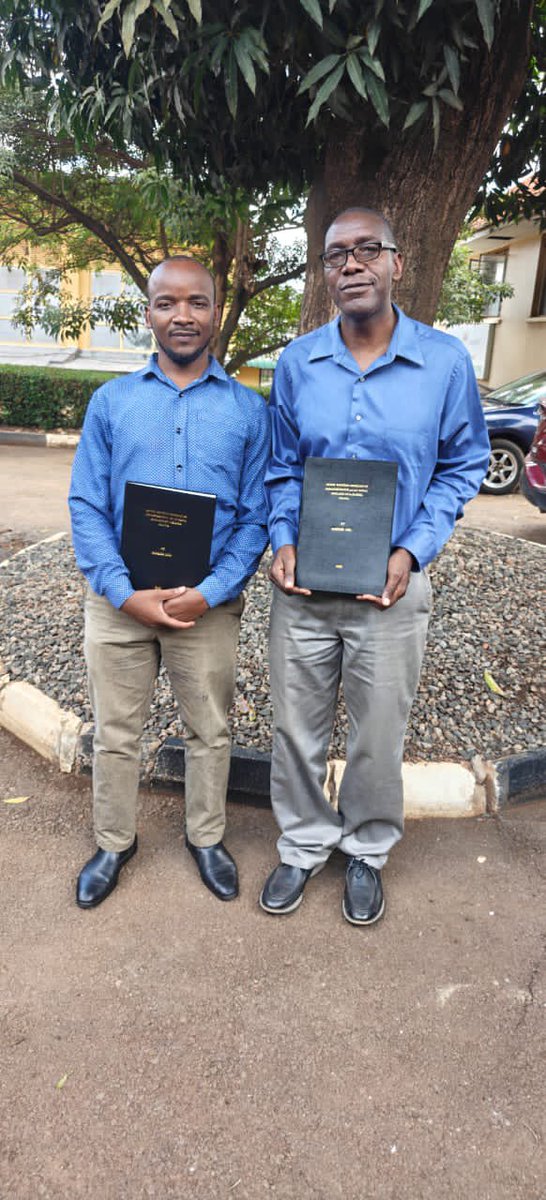
The book (MSc. Dissertation) was successfully handed in and approved by the university and Prof. Kalyesubula Robert, my main supervisor and Chair of the Department of Physiology. My study focused on profiling kidney function among prehypertensives in rural areas. We found early kidney function abnormalities to the tune of 28%, and age was the factor associated with it.
@rkalyes1@APSPhysiology@AdvPhysiolEduc
My prediction is that humanities and social sciences PhDs will become increasingly valuable. You cannot automate primary source interviews and deep archival research (ie, knowledge and data creation). You also cannot automate critical and original thought. You cannot mass replicate social status and elite human networks (half the utilitarian value of an elite PhD).
You can automate the function of most STEM folks, perhaps with the exception of the cutting edge doing original biochemical/ medical research.