UN’s Warning on Northern Nigeria’s Food Crisis
The recent report from the UN about the impending food crisis in northern Nigeria is disheartening, more so because it is avoidable. Northern Nigeria is the nation’s food basket, and nothing short of incompetent and irresponsible leadership could have created this tragedy.
In a recent post on my X handle, I urged our national leaders to reassess their priorities and address the dire circumstances facing our citizens. I called on the Federal Government and state leaders to move beyond mere political discourse and make transparent, upfront investments to secure agricultural corridors, support smallholder farmers with accessible resources, and collaborate vigorously with organisations like the World Food Programme (WFP) to bridge funding gaps before this crisis escalates and claims more lives, especially those of children.
A prosperous Nigeria, free from hunger, is achievable, but it requires leadership that prioritises the welfare of its citizens.
I am deeply troubled by the latest report from the UN’s World Food Programme, indicating that northern Nigeria is experiencing its most severe hunger crisis in nearly a decade. Over 17 million people in nine northern states face crisis-level hunger, with more than 35 million Nigerians nationwide at risk during this challenging season.
The fact that over 10,000 residents of Borno State have entered “catastrophic” hunger conditions represents not only immense human suffering but also a profound national failure. Nigeria should not rank among the world’s hungriest nations, given its abundant resources, particularly the vast stretches of fertile, uncultivated land in the North.
This food crisis stems from two critical structural failures: insecurity and farmers’ inability to access their lands. Banditry and insurgency have turned agrarian communities into displacement zones. Until we secure our agricultural areas, we cannot secure our future.
Our global hunger ranking continues to worsen because of our proclivity for adopting superficial measures that do little to boost agricultural productivity or transform rural infrastructure. We need to adopt policies that address the structural barriers to agricultural productivity and transform our land resources into agro-industrial output. We can overcome hunger and poverty if we urgently shift our focus from consumption to production.
A New Nigeria, devoid of hunger and mass poverty - a Nigeria where we transform our arable land into productive acreage - remains attainable, but it demands leadership that prices the lives and livelihoods of the Nigerian people above grandiose road dualisation projects.
A New Nigeria is POssible. -PO
What Truly Should Be Our Priority Now as Leaders of a Nation?
This question has become necessary, given where we are today as a nation and where we are supposed to be.
While completing my INEC nomination form yesterday, Section E, Question 1 caught my attention. It asks: “Have you ever been adjudged a lunatic or been declared a person of unsound mind?” The answer is either Yes or No. That question got me thinking: Can we, as the political leaders of today’s Nigeria, truly say we are exhibiting the characteristics of a sound mind?
When Nigerians, including children and security personnel, are being abducted into the bushes, citizens cannot travel safely on our highways, several million Nigerians are uncertain where their next meal will come from, and several billions are being siphoned frivolously through non-existent agencies and projects, should politics really be our primary preoccupation?
A sound-minded leadership would have declared these existential challenges a national emergency and immediately mobilised all relevant institutions, security agencies, experts, community leaders, and other critical stakeholders to confront them with urgency and resolve. At a moment like this, the survival, security, and stability of Nigeria must take precedence over every other consideration. This is a time for decisive action, not political calculation or the pursuit of partisan advantage.
Further in the same Section E, Question 6, was: “Have you ever presented a forged certificate to INEC?” Again, the answer is either Yes or No. This raises another important question: Why shouldn’t INEC, in the interest of ensuring that our leaders are exemplary in following the rules and to strengthen public confidence in our electoral process, publish the academic certificates and credentials submitted by every candidate seeking elective office?
Transparency strengthens democracy and builds public trust. Nigeria’s problems are too serious for politics as usual. It is time for leadership defined by competence, character, capacity, compassion, and commitment to service.
A New Nigeria is POssible. -PO
My Stance on Road Development
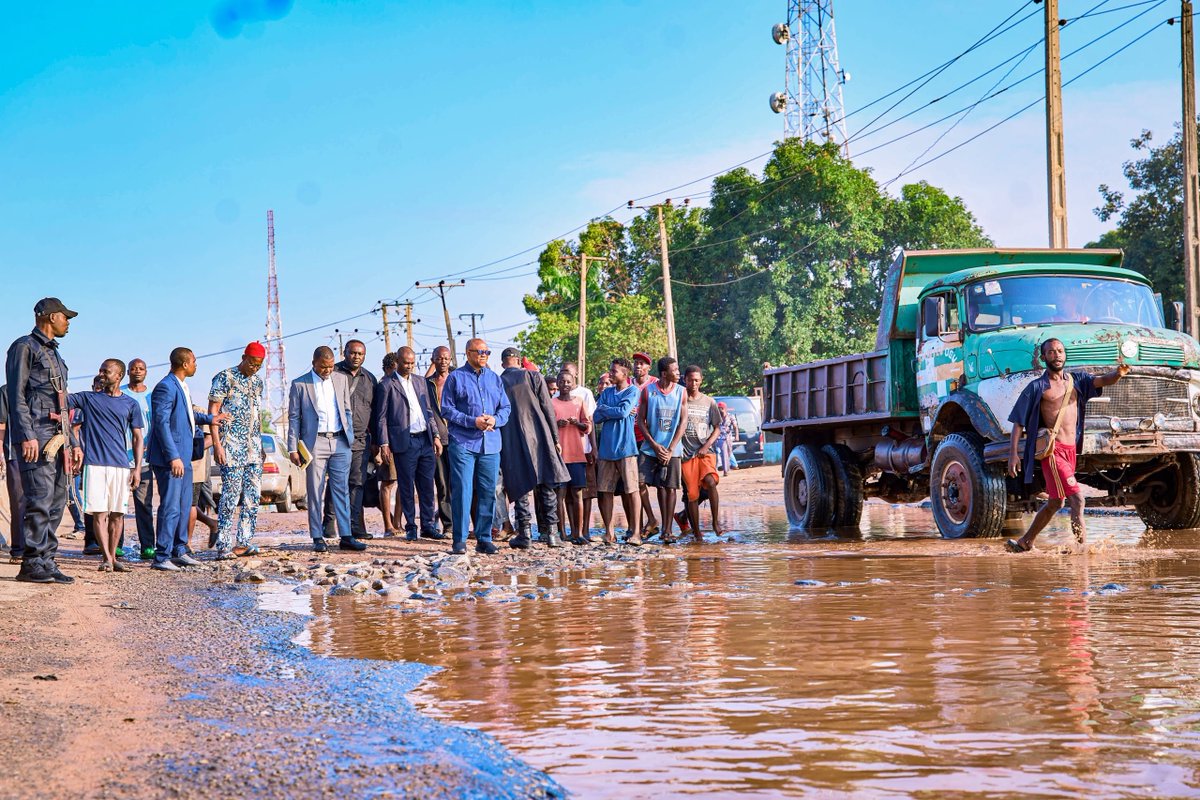
There is a pertinent reason I have consistently advocated that we should refrain from initiating new road construction projects until we have thoroughly rehabilitated and maintained our existing road network. Instead of undertaking new ventures and dualization projects that offer marginal benefits, our primary focus ought to be on repairing the critical roads already in place.
Consider, for instance, the Asaba–Benin Road. This thoroughfare is a vital artery within Nigeria's transportation infrastructure. Travellers traversing from Akwa Ibom, Anambra, Rivers, Imo, Ebonyi, Cross River, Abia, Enugu, and portions of Benue and Kogi States to Lagos are compelled to utilise this route.
Despite its significance, substantial sections of this road are in a lamentable condition. It has become a major impediment, precipitating persistent traffic congestion and inflicting undue hardship on travellers, businesses, and transport operators.
Regrettably, this situation is not unique; it reflects the reality on many of our busiest national highways.
Our efforts should be directed towards the reconstruction and maintenance of our current road infrastructure before we announce plans for new road projects. The Nigerian populace requires functional and motorable roads, not merely projects that garner public attention.
Efforts aimed at superficial improvements for political gain should not supersede the urgent need to address the condition of our existing, critical roadways.
A new Nigeria is POssible. -PO
Engaging Tomorrow’s Leaders at Madonna University
Yesterday, I continued my engagement with future leaders in the country. I was at Madonna University, Okija Campus, where I had the privilege of interacting with students at the NextGen Mentorship & Leadership Initiative on the theme: “Beyond Now: Raising the Next Generation of Leaders.”
The session was highly engaging, with students asking thoughtful and probing questions. Their concerns reflected the frustration of many young Nigerians who feel constrained by poor governance and widespread corruption, which have denied them opportunities to realise their full potential. However, I was equally encouraged by their optimism and determination to be part of the solution.
I reminded them that leadership is the greatest determinant of a nation’s progress. A true leader must possess the character, competence, capacity, and compassion to make sacrifices for the good of the people. Nigeria’s future depends on leaders committed to safeguarding lives, investing in education, creating opportunities, and building effective institutions.
I encouraged the students to take their education seriously, to prepare themselves for leadership, and to see themselves not merely as spectators but as agents of change. Through active participation in the democratic process, they have the power to enthrone leaders with integrity and the capacity to propel our nation forward.
As part of my ongoing commitment to education, I presented a cheque of ₦15 million to the university to support its educational mission. Investing in education remains one of the most effective ways to develop the human capital necessary for national progress.
Together, by raising a new generation of responsible and visionary leaders, we can build the Nigeria of our dreams that is POssible. -PO
Peter Obi during his visit to the School of Nursing Sciences, Emekuku, donated the sum of ₦15 million to support the training of future healthcare professionals and strengthen the institution’s capacity.
#NigeriaWillBeOk
Delighted to Return to School of Nursing Sciences, Emekuku, Owerri, Imo State.
In continuation of my itinerant visits to educational and healthcare institutions in the country, yesterday, I visited the School of Nursing Sciences, Holy Rosary Hospital, Emekuku, where I met with the management, staff, and students, and presented a donation of ₦15 million to the institution.
I reminded the students that the world needs them more than they need the world because healthcare is one of humanity’s most fundamental needs. Any nation that truly desires development must invest in the education and training of healthcare professionals, who remain indispensable to the well-being and productivity of society.
I was delighted to inspect the computer laboratory, which I had previously supported, and to witness the remarkable progress the institution has made. It was also encouraging to reflect on other health institutions, such as Iyi-Enu and Borromeo, which I supported over the years and which have now grown into teaching hospitals. Their transformation reinforces my belief that sustained investments in health and education can produce enduring results. I look forward to seeing Holy Rosary Hospital attain the same status.
Our vision must be to build a Nigeria where functional institutions produce competent professionals, where investments are directed to critical sectors that lift people out of poverty, and where every child, regardless of background, has the opportunity to succeed. That is how we will build a nation where the son of nobody can become somebody without knowing anybody.
A New Nigeria is POssible. -PO
Lokoja Judgment: An Unnecessary Serious Setback for Nigerian Democracy
Today was an exceptionally busy day. I left Lagos in the early hours for Emekuku, where I visited the School of Nursing Sciences, an institution I have consistently supported over the years. It was gratifying to inspect projects funded through my previous interventions, including the school’s computer laboratory. Such investments reaffirm my belief that education remains one of the strongest foundations for national development.
From there, I attended the 80th birthday celebration of the Emeritus Archbishop of Owerri, Most Rev. Dr Anthony Obinna, whose commitment to justice, peace, and the common good has inspired many, before proceeding to Madonna University for another engagement.
It was at Madonna University that I received the court news of the Lokoja court rulings through my brother, Senator Rabiu Musa Kwankwaso.
Every Nigerian committed to the country’s progress should be deeply concerned. This judgment represents another setback for our democracy and the institutions upon which our future depends.
It is regrettable that some who claim to champion democracy now appear determined to weaken the very institutions that sustain it. In doing so, they are undermining public confidence and endangering the future of millions of Nigerians.
The legislature and the judiciary are increasingly being drawn into this pattern of institutional decline. Democracy cannot thrive where institutions lose their independence and credibility.
Those who seek to weaken Nigeria’s democratic foundations will not ultimately prevail. When a similar situation recently affected the ADC, I condemned it without hesitation. I do so again today because my position has always been guided by principle.
My concern is not about who becomes President. My concern is that Nigeria works. Our politics must move beyond the quest for power and focus instead on building a united nation founded on justice, strong institutions, the rule of law, and equal opportunity. That is the Nigeria we owe ourselves and the one we must leave for future generations.
I therefore urge all well-meaning Nigerians to rise above partisan interests and defend our democracy. The survival of our institutions is inseparable from the survival of our nation. It's when we work together that a new Nigeria of our dream is made POssible. -PO
State Police: Commendable Step, but Disorderly Legislation Raises Concerns of Political Misuse
The recent passage of the State Police Bill by the National Assembly marks a significant legislative milestone in addressing a long-standing demand of the Nigerian people. For years, many of us, alongside security experts and regional stakeholders, have consistently argued that a highly centralised policing structure is fundamentally unsuitable for a country as vast, diverse, and complex as Nigeria. However, the legislative and constitutional implementation appears shaky and raises legitimate concerns.
The process should involve greater community participation. Policing should be more visible at the local government and community levels. The mechanism for passing the law appears highly disorganised, with no public hearing on such a sensitive issue. Indeed, the rush to enact the law without proper legislative procedures fuels suspicion among many observers about the political motives behind it.
The greatest concern does not arise from logistical issues; it stems from history. There is a widespread, justifiable fear that state police forces could become instruments in the hands of governors. The suspicion is that a state-controlled police force could be weaponised to suppress political rivals, disrupt opposition rallies, and manipulate elections.
For state policing to evolve from a risky political gamble into a genuine security solution, the law must not only permit states to establish police forces but also clearly provide for independent oversight bodies, such as a state-level Police Service Commission that is entirely free from executive influence, to ensure that policing serves the public interest rather than the interests of the ruling elite.
Going by what Nigerians have seen so far, there is no guarantee that this administration can resist the temptation to take advantage of state policing to influence the 2027 general election by proxy. In view of that possibility and the danger it poses to the polity, it is necessary to defer its implementation until after the general election.
A New Nigeria is POssible. -PO
Happy birthday to illustrious and distinguished Nigerians.
A highlight of my weekend was attending the special birthday celebrations of two distinguished Nigerians whose lives continue to reflect service, leadership, and nation-building.
The first was His Royal Majesty, Igwe Nnaemeka Alfred Ugochukwu Achebe (Agbogidi), CFR, the Obi of Onitsha and Chancellor of Ahmadu Bello University. He is a respected symbol of cultural heritage, enterprise, and traditional leadership, who marked his 85th birthday. I worked closely with him in my eight years as Governor, where he showed a passion for good governance. His life and reign continue to represent dignity, continuity, and the preservation of our rich cultural identity.
Also celebrated was Chief Yomi Edu, former Minister of the Federal Republic, who turned 80. His years of public service and contributions to the corporate world and national development were duly honoured by family, friends, and well-wishers.
The occasion was further graced by eminent personalities, including former President Olusegun Obasanjo, the former President of Ghana, the Governor of Lagos State, captains of industry, former governors, and other distinguished guests from across Nigeria and Africa at large. It was a gathering that reflected deep respect across political, cultural, and generational lines.
Moments like this remind us of the value of longevity, service, and the importance of celebrating those who have contributed in various ways to the growth of our nation and continent.
We continue to pray that God grants them good health, strength, and many more fruitful years ahead. -PO
Today is World Refugee Day.
Yet, millions of Nigerians have become refugees in their own country. Across the North and other parts of Nigeria, communities have been displaced by terrorism, banditry and violent attacks, with IDP camps now a painful symbol of our national failure to protect our people.
Many of these camps are grossly underfunded and inadequate for the thousands forced to live there. Families struggle daily for food, healthcare, education and basic dignity. For many, survival has become their only reality.
Children are abducted from schools. Families are forced to flee their homes. Farmers abandon their lands. Citizens live in fear of kidnapping and violence.
Worse still, with insecurity continuing to spread and intensify, there is little hope for many displaced Nigerians to return to their communities and rebuild their lives safely. This is not OK
On this World Refugee Day, we must remember that behind every statistic is a human life disrupted, a family uprooted, and a future put on hold. Nigerians deserve safety, dignity and the right to live peacefully in their own country.
A new Nigeria is POssible. -PO
In Support of Healthcare Delivery and Human Dignity
Today, I visited the Mother of Christ Specialist Hospital, Enugu State, which was recently affected by a devastating fire incident. During the visit, I inspected the damaged sections of the hospital, including the children’s ward, and made a donation of ₦10 million to support the ongoing renovation efforts.
I commend the Reverend Sisters of the Immaculate Heart of Mary and the hospital management for their commitment to healthcare delivery and service to humanity. Their sacrifice and dedication, often carried out with little recognition, remain invaluable to our society.
Healthcare and education are among the most critical needs of any nation. No meaningful development can occur where these sectors are neglected. It is, therefore, imperative that we continue to support institutions and individuals working tirelessly to provide quality healthcare and educational services to our people.
I encourage the management not to relent in their noble mission despite the challenges they face. As a society, we must collectively invest in and strengthen facilities for healthcare, education, and poverty alleviation.
A new Nigeria is POssible. -PO
I have just received the sad news of the death of one of our Obidient family members from Edo State, Comrade Benedict Inaede.
On behalf of my family and the Obidient Movement family, I sincerely condole with his immediate family and the entire Obidient family. His death is a painful and irreplaceable loss to us all.
May Almighty God, who has called him home, grant him eternal rest and grant his family and all of us the fortitude to bear this profound loss.
May we continue to remember his family in prayers for God Almighty's continued blessings. -PO
NDC presidential candidate, Mr Peter Obi just arrived right now at Mother of Christ Specialist Hospital in Enugu State to support the management, weeks after a fire incident affected part of the building.
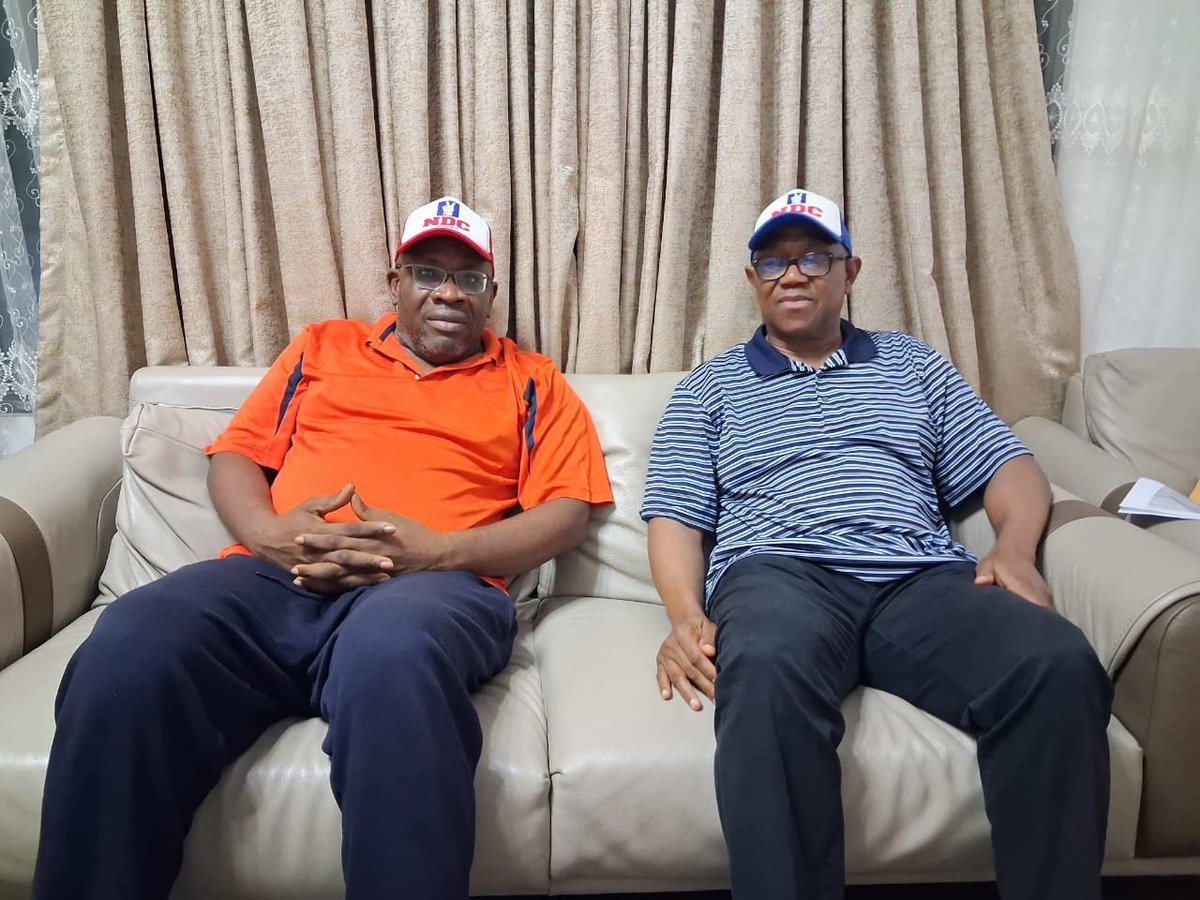
It is with deep sorrow that I learned last night of the passing of DSP Zamani Tanko (Rtd) who was a faithful aide to my dear brother and our Party Leader Senator Henry Seriake Dickson for over 15 years.
This morning, I visited Senator Dickson to share in his grief and that of his entire team. DSP Zamani served with loyalty and dedication, and his loss will be felt by all who knew him.
On behalf of myself and my family, I extend heartfelt condolences to Senator Dickson, DSP Zamani's family, and everyone touched by his life.
May God Almighty who called him home grant him eternal rest in His kingdom; and continue to bless his family always. -PO
Accountable Borrowing: The South Africa Example.
I have consistently maintained that borrowing, in itself, is not a bad thing. Every nation borrows. The critical issue is not the act of borrowing, but what the borrowed funds are used for and whether citizens can clearly see and measure the impact of such borrowing in their daily lives.
There is a lot to learn in the open and transparent manner in which South Africa handled its recently secured a $1 billion loan from the New Development Bank, with a clearly defined purpose. Publicly announcing the targeted purpose of the loan for all to know and monitor, upgrading water supply systems, modernising sanitation infrastructure, improving electricity distribution, and strengthening waste management services across eight major metropolitan cities, including Johannesburg, Cape Town, and Durban.
This is indeed what accountable borrowing should look like; the purpose is clear, the projects are identifiable, and the expected benefits to citizens are measurable. Such investments directly improve living conditions, enhance productivity, and stimulate economic growth.
In Nigeria, however, the opposite is the case: public debt has risen dramatically under the current administration, and its deployment is shrouded in secrecy from the people who will indeed pay back the loan. Today, our total public debt has increased from about ₦87 trillion in 2023 to nearly ₦200 trillion.
Yet, despite this unprecedented accumulation of debt, Nigerians are often left without a clear and detailed account of how these borrowings are being deployed to improve critical sectors such as education, healthcare, power, security, and infrastructure.
Borrowing must never become an end in itself. Every loan obtained in the name of the Nigerian people must be tied to specific, productive investments capable of generating economic value, creating jobs, reducing poverty, and improving the welfare of citizens.
Good governance demands transparency and accountability. The government must be able to clearly explain what was borrowed, where it was invested, and what measurable outcomes have been achieved. The ordinary Nigerian should be able to see and feel the benefits of every debt incurred on their behalf.
At a time when millions of Nigerians are struggling with rising costs of living, unemployment, insecurity, and declining purchasing power, fiscal discipline and prudent management of public resources are no longer optional; they are imperative.
Every borrowing decision should answer one simple question: How does this improve the life of the ordinary Nigerian? If that question cannot be convincingly answered, then we risk merely transferring today's burdens to future generations.
A New Nigeria is POssible. - PO
BRICS bank approves $1 billion lifeline for South Africa’s struggling cities | Business Insider Africa https://t.co/VN0C0Xo8zp
Happy Birthday to a dogged soldier in faith, Anthony Cardinal Okogie.
Today, I joyfully join the Catholic community in Nigeria, in particular the Archdiocese of Lagos and the entire nation, in celebrating a true soldier of Christ and an exemplary leader, His Eminence, Anthony Cardinal Okogie, Emeritus Archbishop of Lagos, on his Triple Milestones.
We give immense thanks to God as His Eminence marks his 90th Birthday Anniversary, 60th Priestly Ordination Anniversary, and 55th Episcopal Ordination Anniversary today, June 16, 2026.
Cardinal Okogie’s life has been a remarkable testament to inimitable faith, courage, and deep commitment to justice and the welfare of the common man. His fearless voice in defence of truth and good governance continues to inspire generations.
May the Almighty God grant him continued good health, peace, and abundant blessings as he continues to guide us with his wisdom.
Happy Birthday, Your Eminence! -PO
Reflecting on the Prison Exchange with Ethiopia
The news of the conclusion of the prisoners exchange between Nigeria and Ethiopia is refreshing.
Every life is precious, and ensuring the constitutional right to human dignity for all Nigerians - regardless of where they are or the circumstances they find themselves in - must remain a cornerstone of our national foreign policy.
I must therefore appreciate the efforts of our Foreign Affairs Minister, Amb. Bianca Odumegwu-Ojukwu, Attorney General Lateef Fagbemi (SAN), and their Ethiopian counterparts for finally concluding these protracted negotiations.
However, we must reflect deeply on this development. It is heartbreaking to learn that at least four Nigerian citizens lost their lives in custody while this diplomatic and administrative process dragged on over the past few years. My heart goes out to their families, who had to endure the ultimate pain of losing loved ones in a foreign land.
While we commend this humanitarian intervention, it serves as a reminder of a larger systemic crisis. The overwhelming majority of these citizens are young Nigerians. A significant number were arrested while transiting through Addis Ababa’s Bole International Airport in search of green pastures. While we must continuously urge our citizens to remain law-abiding and respect the laws of host nations wherever they travel or reside, we must also ask ourselves a hard question: What drives our young and productive population into desperate circumstances across the globe?
Until we build a New Nigeria that offers genuine economic opportunities, a functional educational framework, and an environment where hard work is rewarded, we will continue to grapple with the tragic consequences of mass emigration and its associated vulnerabilities.
As these citizens are brought home to serve out their terms, our correctional facilities must be properly managed with a focus on genuine rehabilitation and societal reintegration. Let us use this moment not just for short-term relief, but as an urgent call to build a nation that protects, values, and empowers its citizens here at home.
With the right policies and leadership, a New Nigeria is POssible. -PO
Coping with the systematic collapse of our institutions.
When the controversy surrounding the removal of former Chief Justice of Nigeria, Walter Onnoghen, unfolded, I expressed a concern to a friend: that the greatest damage might not be immediate, but the message it sends about the sanctity and independence of our institutions to the world.
Strong economies are built on trust. Investors can manage security risks, policy risks, and even market risks. What they fear most is uncertainty in the rule of law and a judiciary that is perceived to be vulnerable to political pressure.
Today, many Nigerians have lost confidence in systems that should protect them. Businesses increasingly request that their contracts be governed by foreign jurisdictions because they have greater confidence in those institutions than in our own. That should concern every patriot.
We must never sacrifice our sacred institutions on the altar of politics. Nations rise when institutions are stronger than individuals. "The federal High Court Judgement ordering the de-registration of the ADC and other political parties is just one of those activities that further reduces the common man's trust in our legal systems" it should be reversed.
I pledge that we will restore the dignity, independence, and integrity of the Judiciary. The common man must have a voice. The business community must be protected from legal uncertainty and intimidation. Justice must be impartial, accessible, and respected by all.
To our judges, legal luminaries, senior advocates, and lawyers: this is your moment. Rise, defend the rule of law, take back your country!
A New Nigeria is POssible. -PO
Sustainable Success Is Built on Competence, Integrity, Discipline and hardworking.
On Saturday, I had the privilege of interacting with young entrepreneurs, professionals, business leaders, and members of the emerging generation at the This Generation Conference hosted by Summit Bible Church in Abuja.
Our discussion focused on what it takes to thrive in the marketplace despite prevailing economic challenges. I shared insights from my years in business and public service, emphasizing that sustainable success is built on integrity, competence, discipline, and a commitment to creating value for society.
I reminded participants that no nation develops by consumption alone. Nations progress when their citizens are productive, innovative, and committed to excellence. Our young people must resist the temptation of shortcuts and instead embrace education, skills acquisition, entrepreneurship, and ethical leadership.
The future of Nigeria depends largely on the quality of leadership and enterprise this generation is willing to build. We must move from a culture of sharing poverty to one of creating prosperity through production, innovation, and responsible governance.
I left encouraged by the energy, intelligence, and determination of the young people I met. Their questions, ideas, and aspirations reaffirmed my belief that Nigeria’s greatest resource remains her people.
Together, through hard work, integrity, and purposeful leadership, we can build the New Nigeria that is POssible. -PO